 Frank Rondel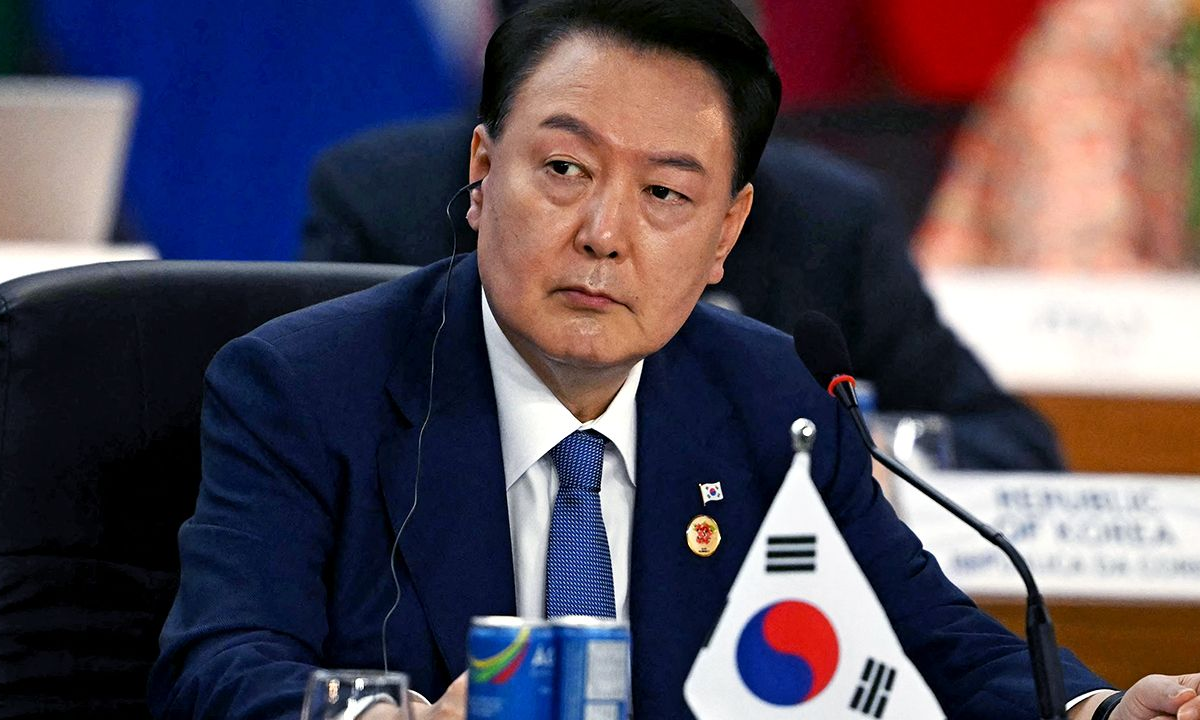
A South Korean court on Thursday sentenced former President Yoon Suk Yeol to life imprisonment after finding him guilty of orchestrating an insurrection during his December 2024 attempt to impose martial law, reports customreceipt.com via Rueters. Prosecutors had initially sought the death penalty, emphasizing the gravity of Yoon’s actions, which plunged the nation into a severe political crisis and tested South Korea’s democratic institutions.
Judge Jee Kui-youn, speaking for a panel of three judges, stated that Yoon colluded with then-Defence Minister Kim Yong-hyun to undermine the constitutional order by deploying armed troops to parliament, intending to incapacitate its operations. “Sending armed troops to parliament and employing equipment to attempt arrests constitutes acts of insurrection,” Jee said in a packed courtroom. The court noted that Yoon and several officials participated in criminal activities on December 3, 2024, with the short-lived martial law declaration causing substantial societal disruption.
Yoon, 65, wearing a dark navy suit without a tie, appeared ashen-faced as the sentences were read. Seven other defendants, including Kim, who received 30 years, as well as former senior police officials, were also sentenced. Yoon’s legal team indicated they would discuss whether to appeal, with lawyer Yoon Kab-keun arguing that the ruling disregarded fundamental legal principles requiring evidence-based findings. Kim’s attorney confirmed the former minister would appeal.
Prosecutors had asserted in January that Yoon’s “unconstitutional and illegal emergency martial law undermined the National Assembly and Election Commission, effectively destroying the liberal democratic constitutional order.” Under South Korean law, masterminding an insurrection carries a maximum penalty of life imprisonment or death. While South Korea has not executed anyone since 1997, the death sentence remains legally permissible, last handed down in 2016.
Yoon denied wrongdoing, claiming that his presidential authority permitted the martial law declaration, which he said was meant to warn against obstruction by opposition parties. He is expected to remain at the Seoul Detention Centre, where he is currently held, with the ability to appeal to higher courts, including the Supreme Court. Judicial guidelines stipulate that trials should conclude within six months, with the entire process, including appeals, within two years, though delays are common. Yoon is also appealing a separate five-year sentence received in January for obstructing authorities after the martial law declaration.
Although the martial law attempt lasted roughly six hours before street protests and parliamentary rejection, it reverberated across South Korea, a major U.S. ally and the fourth-largest economy in Asia. President Lee Jae Myung, elected in a snap June election following Yoon’s removal, praised the public for resisting martial law, stating on X that the actions of the Korean people set a historical example for nonviolent civic defense. His post referenced a newspaper report noting that some academics suggested a Nobel Peace Prize nomination for the Korean public’s demonstration of democratic resilience.
Earlier we wrote that Bruce Springsteen kicks off 2026 “Land of Hope & Dreams” tour in Minneapolis with E Street Band