 Frank Rondel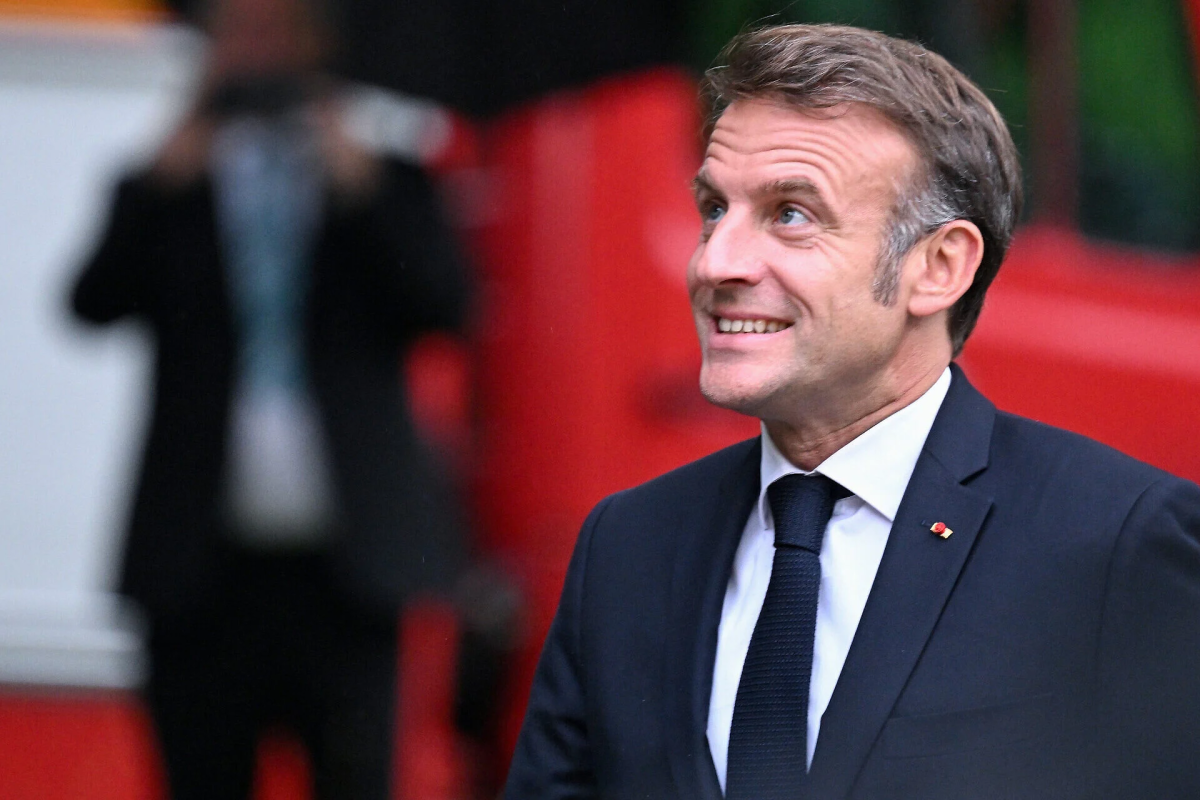
Emmanuel Macron has strongly defended Europe’s AI regulatory approach and promised measures to shield children from “digital abuse” during France’s G7 presidency, reports customreceipt.com with reference to the Guardian. Speaking at the AI Impact Summit in Delhi, the French president highlighted the urgency for stricter safeguards following international backlash over Elon Musk’s Grok chatbot, which was used to generate tens of thousands of sexualised images of minors, while emphasizing concerns about the growing concentration of AI power among a few major companies.
Macron’s comments aligned with those of UN Secretary-General António Guterres, who addressed delegates, including several US tech leaders, stating that “no child should be a test subject for unregulated AI” and asserting that “AI must belong to everyone.”
The summit drew leading figures from the tech industry, although Bill Gates withdrew at the last moment amid renewed scrutiny over his past connections to convicted sex offender Jeffrey Epstein. Meanwhile, Sriram Krishnan, senior AI adviser to the White House, reiterated the Trump administration’s criticism of EU AI regulations, particularly the AI Act, describing it as restrictive to innovation.
Responding to this criticism, Macron stressed that Europe balances regulation with innovation: “Opposite to what some misinformed friends have been saying, Europe is not blindly focused on regulation. Europe is a space for innovation and investment, but it is a safe space, and safe spaces win in the long run.”
Recent research conducted by Unicef and Interpol across 11 countries revealed that over 1.2 million children reported having their images manipulated into sexually explicit deepfakes over the past year, equating to roughly one child in every classroom in some regions. Macron added: “There is no reason our children should be exposed online to what is legally forbidden in the real world. Our platforms, governments and regulators should be working together to make the internet and social media a safe space. This is why, in France, we are embarking on a process to ban social networks for children under 15 years old.”
Tech executives present included Sam Altman, CEO of OpenAI, which faces legal challenges following the death of 16-year-old Adam Raine, who discussed suicide with ChatGPT. Dario Amodei, co-CEO of Anthropic, expressed concern about AI models’ autonomous behaviors, potential misuse by governments or individuals, and the risk of economic disruption.
Indian Prime Minister Narendra Modi emphasized that AI must be “child safe and family-guided,” comparing the technology’s emergence to the discovery of fire and describing it as a transformative moment in human history. India is aiming to become the world’s third AI power, behind the US and China, with Google announcing a $15bn investment in data centers and subsea cables connecting India to the US and other regions.
Modi stressed the importance of content authenticity in digital spaces, urging that “people must know what is authentic, and what has been generated by AI.” He also highlighted the need to prevent monopolization, noting that many nations treat AI as a strategic asset developed confidentially, while India seeks a more open approach: “Technology will only truly benefit the world when it is shared and when open source code becomes available.”
These discussions come amid growing global concern over AI’s societal impact, with the most advanced models still largely controlled by four US firms and a handful of Chinese competitors such as DeepSeek and Qwen, which are broadly open-source.
Earlier we wrote that NYC Mayor Mamdani Proposes 9.5% Property Tax Hike if Wealth Tax on Millionaires Fails