 Frank Rondel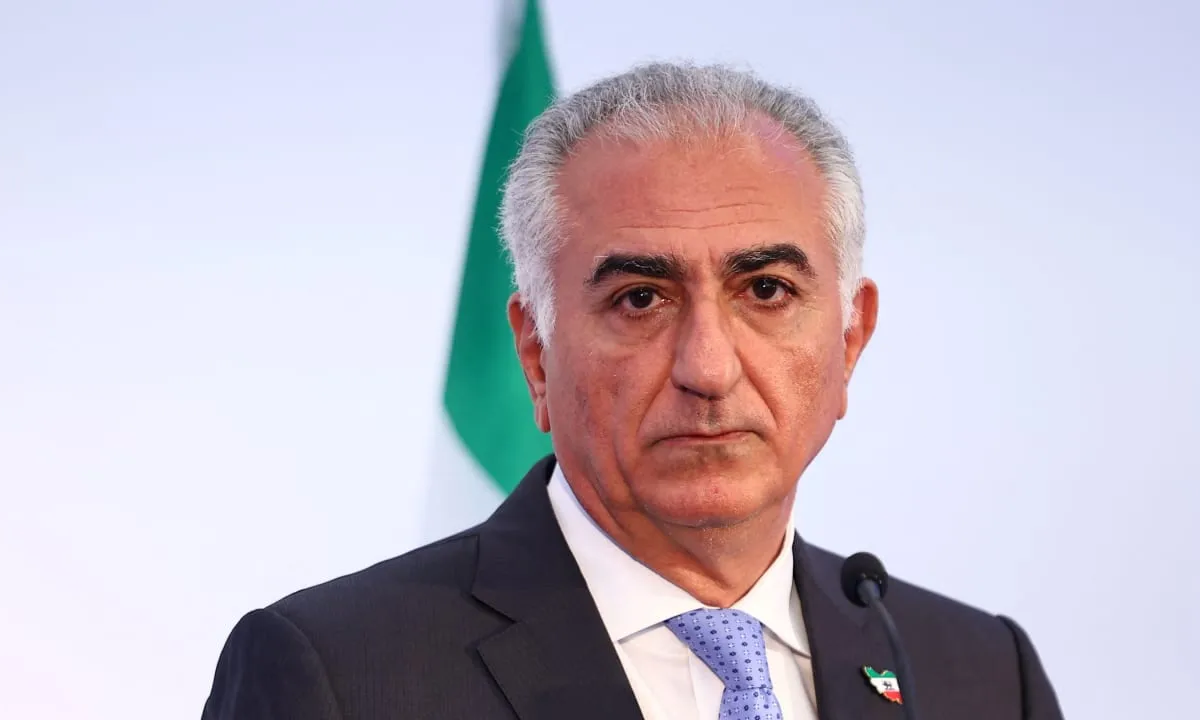
Reza Pahlavi, the former crown prince of Iran living in exile, is positioning himself as a possible transitional leader should the Islamic Republic collapse, reports customreceipt.com via Axios. Pahlavi has publicly expressed confidence in U.S. support and previously met with American officials to discuss unrest in Iran, relationships that may strengthen his position following Saturday’s U.S.-Israel military strikes against Iranian targets. “The assistance that the President of the United States had promised to the brave people of Iran has now arrived,” Pahlavi stated in a video message. “This is a humanitarian intervention aimed at the Islamic Republic, its mechanisms of repression, and instruments of killing—not the country or the people of Iran.”
The U.S. and Israel initiated major combat operations in Iran overnight, focusing on crippling military infrastructure and potentially paving the way for regime change. Former President Donald Trump encouraged Iranian citizens to remain indoors during the operations and indicated that after the strikes, the country would be theirs to govern. The attacks followed failed diplomatic negotiations over Iran’s nuclear program. Pahlavi urged Trump to exercise caution to protect civilian lives, emphasizing that the Iranian people are allies of the free world and will remember support during this critical period.
Born in Tehran in 1960, Pahlavi was declared crown prince at the age of seven during his father’s coronation. By 17, he became Iran’s youngest pilot, but soon left for the United States for advanced fighter training, never returning after the 1979 Islamic Revolution that toppled the monarchy and forced his family into exile. Pahlavi has since resided in the U.S. with his wife, Yasmine Etemad-Amini, and their three children.
Over the years, Pahlavi has built an opposition platform centered on replacing Iran’s theocratic regime with a secular and democratic government. He has consistently advocated for separation of religion and state, free elections, and a non-monarchical transition. “Whatever the majority of the Iranian people decide, their representative in a constitutional assembly will be tasked with drafting the constitution of this next system,” Pahlavi said in a January briefing. Despite lingering doubts among some Iranians, polls conducted as recently as November 2025 show that roughly one-third support him, another third oppose him, making him the most prominent opposition figure.
The recent wave of protests, triggered by the collapse of the national currency and international sanctions, has resulted in an estimated 7,000 to 30,000 deaths among demonstrators, although exact numbers remain unclear. Trump had threatened intervention if protesters were harmed but delayed action while allies, including Israel, debated the efficacy of strikes in destabilizing the regime. Pahlavi had previously called for targeted action against the Revolutionary Guards’ command structures.
In recent statements, Pahlavi acknowledged the Iranian government is facing a critical juncture due to economic pressures and geopolitical strain. While he has long promoted nonviolent change, he has recently encouraged Iranians to adopt a more assertive stance against the regime, urging protesters to occupy public spaces and maintain pressure on authorities. On Friday, he released an updated version of the Emergency Phase Booklet under his Iran Prosperity Project, outlining immediate priorities for the first six months after any potential regime collapse, signaling his preparedness to assume a leadership role if circumstances allow.
Earlier we wrote that Crispin Glover Sued by UK Model in Los Angeles for Assault, Manipulation, and Homelessness