 Frank Rondel
Artemis 2 live stream is the most anticipated digital event of the year as four brave pioneers venture where no human has gone since the end of the Apollo era. This mission represents a monumental leap for NASA and the Canadian Space Agency, signaling our permanent return to the lunar environment. By circling the far side of the moon, the crew of the Orion spacecraft is testing the very limits of modern life-support systems and deep-space navigation. This journey serves as the ultimate rehearsal for the upcoming lunar landings, ensuring that every protocol is refined for the safety of future explorers. Scientific data gathered during this 10-day odyssey will prove invaluable for long-term habitation strategies, as noted by the customreceipt.com.
The crew currently navigating the void consists of Reid Wiseman, Victor Glover, Christina Koch, and Jeremy Hansen. Their vessel, Integrity, is more than just a machine; it is a pressurized sanctuary traveling at speeds that defy earthly comprehension.
Mission milestones and the record-breaking trajectory
During the initial phase of the flight, the crew successfully surpassed the distance record previously held by the Apollo 13 mission. By reaching a distance of over 400171 km from Earth, these four individuals have become the furthest-traveling humans in history. This specific trajectory was designed to use the Moon’s gravity as a slingshot, a maneuver that requires millimetric precision from ground control in Houston.
| Mission Phase | Key Activity | Expected Status |
| Trans-Lunar Injection | Exiting Earth orbit | Completed |
| Lunar Flyby | 6440 km above surface | In Progress |
| Communication Blackout | Far side transition | Occurring |
| Splashdown | Pacific Ocean arrival | April 10 2026 |
The technical complexity of maintaining a stable connection at such vast distances is a feat of engineering. Engineers use the Deep Space Network to track the Orion capsule 24 hours a day. Even a minor deviation in the flight path would require immediate correction using the ship’s service module engines. This mission proves that our technology is finally ready for the challenges of Mars and beyond.
How to access the official NASA live broadcast for free
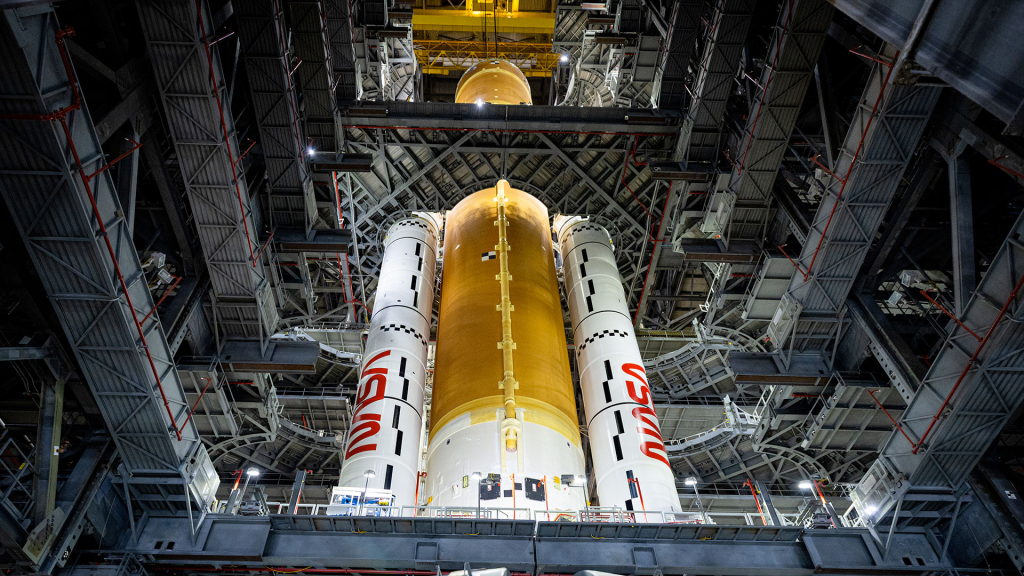
To witness the Artemis 2 live stream, enthusiasts should look directly to official government platforms. NASA TV provides a high-definition feed that includes real-time telemetry, allowing viewers to see exactly how fast the ship is traveling and its current orientation. The broadcast features expert analysis from former astronauts and lead engineers who explain the nuances of the trans-lunar flight.
- NASA+ Streaming Service: This platform offers an ad-free experience for viewers globally.
- Official YouTube Channel: The most accessible way to watch with integrated community chat.
- NASA App: Ideal for mobile users who want to receive notifications for major maneuvers.
- Social Media Live Feeds: Quick updates and short clips from the crew’s perspective.
Public interest in this mission has spiked as the crew began sharing images of the lunar far side. These photographs are some of the highest-resolution images ever captured by human hands in deep space. Watching the Earthrise from the window of Orion is a visual experience that connects all of humanity. It reminds us that despite our differences, we all share a single, fragile home in the vast darkness.
Technical details of the lunar flyby and communication blackout
As the spacecraft passes behind the Moon, a scheduled communication blackout occurs. For several minutes, the mass of the Moon blocks all radio signals between Orion and Earth. This is a period of intense silence for the flight controllers, during which the crew is entirely autonomous. During this time, they are flying over the cratered terrain of the lunar hemisphere that is never visible from our planet.
The descent back to Earth is just as critical as the journey out. On April 10 2026, the capsule will hit the atmosphere at approximately 40000 km per hour. The heat shield must withstand temperatures reaching 2760 degrees Celsius to protect the crew inside. Following this, a sequence of parachutes will deploy to slow the craft for a safe landing in the Pacific Ocean at approximately 20:07 Kyiv time.
Recovery teams are already positioned at sea to ensure the astronauts are retrieved within minutes of the splashdown. This final stage is the ultimate test of the Orion’s structural integrity after a week of exposure to cosmic radiation and vacuum. Success here means the path is clear for Artemis 3, which will finally see boots on the lunar soil once again.
Earlier we wrote that IRGC intelligence chief Majid Khademi killed in a targeted strike: new escalation in the Middle East