 Frank Rondel
Sweaty feet can turn an ordinary day into a quiet source of discomfort. Wet socks, slippery shoes, strong odor, and irritated skin are not only cosmetic problems. They can affect work, sport, travel, sleep, and even confidence in social situations. The main keyword is sweaty feet, but the real issue is often wider than moisture alone. Excessive sweating may come from heat, stress, footwear, hormones, or plantar hyperhidrosis. In some cases, the body produces sweat even without exercise or warm weather.
That is why treatment should begin with routine, shoes, socks, and skin care. If the problem becomes constant, medical advice can prevent infections and recurring irritation. Foot health also connects with daily habits, including movement, recovery, and sleep quality, as noted by the customreceipt.com.
Why sweaty feet happen
Sweaty feet are common because the soles contain many sweat glands. These glands help the body control temperature and protect the skin. The problem begins when sweating becomes too strong or too frequent. A person may notice damp socks after short walking, office work, or public transport. Shoes may smell bad even after regular cleaning, as it wrote https://swiatskarpet.pl.
The cause is often simple. Tight footwear traps heat and moisture around the toes. Synthetic socks keep sweat close to the skin. Long standing hours increase pressure and warmth inside shoes. Stress can also activate sweat glands quickly. People with anxiety may sweat even in cool rooms.
There is also a medical reason called plantar hyperhidrosis. It means excessive sweating of the feet. This condition may appear without a clear trigger. It can run in families and may begin in youth. When sweat affects daily life, it should not be dismissed.
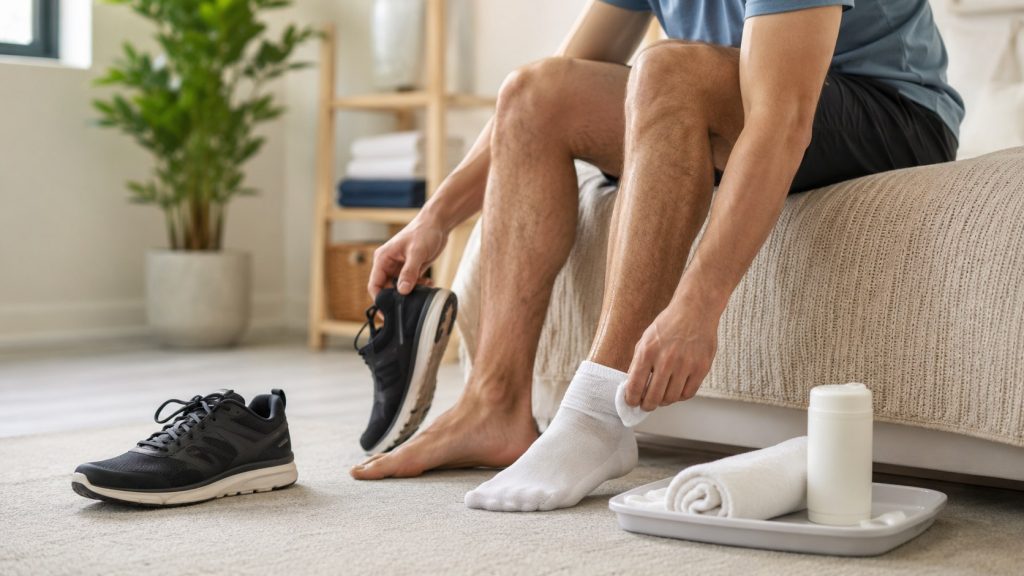
Main causes of foot sweating
Before choosing treatment, it helps to understand the trigger. Many people buy sprays, powders, and insoles without checking the pattern. That can reduce odor for a while. Still, the real cause may remain active. A good first step is watching when sweating starts. It may appear after stress, sport, hot weather, or certain shoes. It may also happen at night or without any visible reason. If sweating is sudden, severe, or linked with other symptoms, medical advice is safer.
| Cause | What usually happens | What may help |
|---|---|---|
| Heat and sport | Socks become wet after activity | Breathable shoes and dry socks |
| Stress | Feet sweat before meetings or travel | Relaxation habits and antiperspirant |
| Tight shoes | Moisture stays trapped all day | Wider shoes and better ventilation |
| Synthetic socks | Skin remains damp for hours | Moisture-wicking socks |
| Hyperhidrosis | Sweat appears without clear reason | Dermatologist treatment |
| Fungal irritation | Itching, peeling, odor, redness | Antifungal care and medical review |
This overview helps separate daily causes from medical concerns. If sweating depends on footwear, better shoes may solve much of the problem.
If sweating happens without heat or movement, hyperhidrosis becomes more likely. Repeated itching, peeling, and cracking can signal infection. In that case, powders alone may not be enough. People who stand for long hours should also care for posture and recovery. A useful related guide is this article on how to relieve back pain at home, because long standing often affects both feet and the lower back.
How to treat sweaty feet at home
Home treatment works best when it becomes a daily routine.
Washing the feet once a day is a basic step. The skin should be dried carefully, especially between the toes. Damp spaces between toes allow odor and irritation to develop faster. Socks should be changed after sport, work shifts, or long walks. Shoes need time to dry before the next use.
The goal is not only to hide smell. The goal is to reduce moisture and protect the skin barrier. If the feet remain wet every day, the skin becomes softer and easier to damage. Blisters can appear faster in tight shoes. Small cracks may also become painful. Regular care reduces these risks.
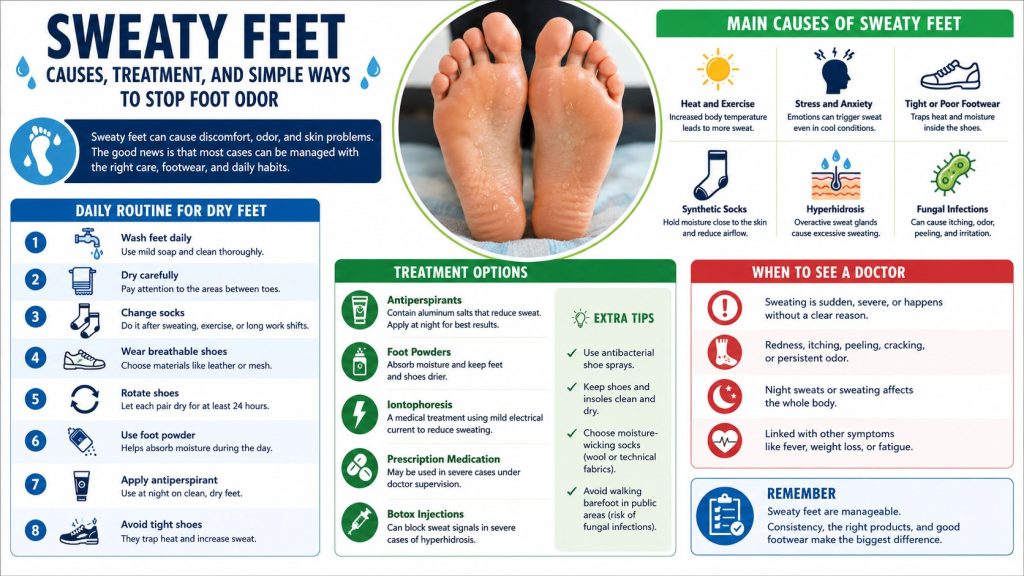
Use this routine for 2 to 3 weeks:
- Wash feet daily with mild soap.
- Dry carefully between all toes.
- Change socks after sweating.
- Wear breathable shoes when possible.
- Rotate shoes every 24 hours.
- Apply foot antiperspirant at night.
- Use powder if shoes stay damp.
- Avoid shoes that squeeze the toes.
After this routine, many people notice less odor first. Sweat may reduce more slowly.
That is normal because skin and footwear need time to dry. Antiperspirant should be applied only to clean, dry feet. If irritation appears, stop using the product for several days. People with sensitive skin should choose gentle formulas. If the problem continues, stronger treatment may be needed.
Socks, shoes, and hygiene mistakes
Footwear is often the hidden reason sweaty feet stay wet. Plastic-like materials and poorly ventilated sneakers trap heat. Tight shoes also increase friction around the toes. This makes the skin warmer and more vulnerable. A second pair of shoes can help because each pair dries fully. Insoles should also be removed and aired when possible.
Socks deserve the same attention. Cotton feels pleasant, but it can stay wet for hours. Merino wool and technical sports fabrics often manage moisture better.
The right choice depends on climate, activity, and skin sensitivity. People who work in closed shoes should keep spare socks nearby. This small habit can prevent strong odor by evening.
Hygiene at home matters too. Damp bathrooms, wet floors, and poorly dried towels can worsen skin problems. If household moisture is an issue, readers may find practical ideas in this guide on removing sofa stains and odors safely. The topic is different, but the principle is similar. Moisture control reduces odor and protects materials. Shoes, socks, towels, and floors all need drying time.
When antiperspirants and powders are useful
Antiperspirants are different from deodorants. Deodorants mainly reduce smell. Antiperspirants reduce sweat at the skin surface. For sweaty feet, they are usually applied before bedtime. Night use often works better because the feet are drier.
The product should not be used on cracked or irritated skin.
Foot powders can also help during the day. They absorb moisture inside socks and shoes. They do not stop sweat production, but they improve comfort. Powders are useful for office shoes, sports shoes, and travel days. They should not be poured onto infected or bleeding skin.
Some people also use antibacterial shoe sprays. These may reduce odor in footwear. Still, sprays do not replace washing feet or changing socks. Shoes must dry fully after spraying. Otherwise, moisture stays trapped inside. The best result comes from combining several simple measures.
When sweaty feet may need a doctor
Sweaty feet need medical attention when they become severe or unusual. See a doctor if sweating starts suddenly. Do the same if it happens at night or affects the whole body. Redness, peeling, itching, burning, and cracks also matter. These signs may point to fungal infection or irritated skin.
A dermatologist can check whether the problem is hyperhidrosis. Treatment may include prescription antiperspirants, iontophoresis, or other medical options.
Iontophoresis is often used for sweating of hands and feet. It uses a mild current through water under professional guidance. Some cases may also need oral medicine, but side effects must be discussed.
Daily stress and poor sleep can make sweating feel worse. The nervous system reacts strongly to fatigue and tension. Better evening habits may support overall control. For readers who notice sweating during stress or poor rest, this guide on how to sleep better at night can be useful. Sleep will not cure hyperhidrosis alone, but recovery affects the body’s stress response.
Practical daily plan for dry feet
A realistic plan is better than an aggressive one. Start with washing, drying, clean socks, and shoe rotation. Add antiperspirant at night if moisture remains heavy. Keep spare socks in a bag, drawer, or car. Choose shoes with ventilation whenever the dress code allows it.
People who exercise should change socks immediately after training. They should also dry shoes outside the gym bag. Travel days require extra care because feet stay enclosed for hours. A small towel, spare socks, and foot powder can help. If odor returns quickly, inspect the shoes, not only the feet.
Do not ignore repeated skin changes. Sweaty feet are manageable, but damaged skin needs care. If simple steps fail after several weeks, a doctor can suggest stronger options. The right treatment depends on the cause. For most people, comfort improves when moisture, footwear, and skin care are addressed together.
FAQ
Why do my feet sweat so much even when it is not hot?
Feet may sweat heavily because of stress, tight shoes, synthetic socks, or overactive sweat glands. If sweating happens without heat, sport, or clear triggers, it may be plantar hyperhidrosis. This condition can make feet wet even during normal daily activity. If the problem affects work, sleep, or social life, it is better to speak with a dermatologist.
How can I stop sweaty feet fast?
The fastest practical step is to wash and dry the feet carefully, change socks, and wear breathable shoes. Foot powder can absorb moisture during the day. Antiperspirant should be applied at night to clean and fully dry feet. It is also important to rotate shoes, because damp footwear keeps the problem going.
What is the best treatment for sweaty feet?
The best treatment depends on the cause. Mild sweating often improves with better socks, breathable shoes, foot powder, and antiperspirant. Stronger cases may need prescription antiperspirants, iontophoresis, or medical treatment. If there is itching, peeling, redness, or cracking, a doctor should check for infection.
Can sweaty feet cause bad odor?
Yes, sweaty feet often cause odor because bacteria grow faster in damp shoes and socks. Sweat itself is not always the main source of smell. The odor usually appears when moisture stays trapped for hours. Regular sock changes, shoe drying, and foot hygiene can reduce the smell.
Are sweaty feet a sign of a health problem?
Sometimes they are just a normal reaction to heat, sport, or closed shoes. But sudden, severe, or unexplained sweating can signal a medical issue. Night sweats, whole-body sweating, fever, fatigue, or unexplained weight loss should not be ignored. In such cases, medical advice is important.
What socks are best for sweaty feet?
Moisture-wicking socks are usually better than thick synthetic socks. Merino wool and technical sports fabrics can help move moisture away from the skin. Cotton may feel comfortable, but it can stay wet for a long time. People with heavy sweating should keep spare socks for work, travel, or sport.
When should I see a doctor about sweaty feet?
See a doctor if sweating is severe, sudden, painful, or difficult to control. Medical help is also needed if the skin becomes red, itchy, cracked, or starts peeling. Persistent odor despite good hygiene can also be a warning sign. A dermatologist or podiatrist can check for hyperhidrosis, fungal infection, or another cause.
Earlier we wrote about How to Make Pappardelle With Sous Vide Beef and Asparagus: Restaurant-Style Pasta Recipe at Home