 Frank Rondel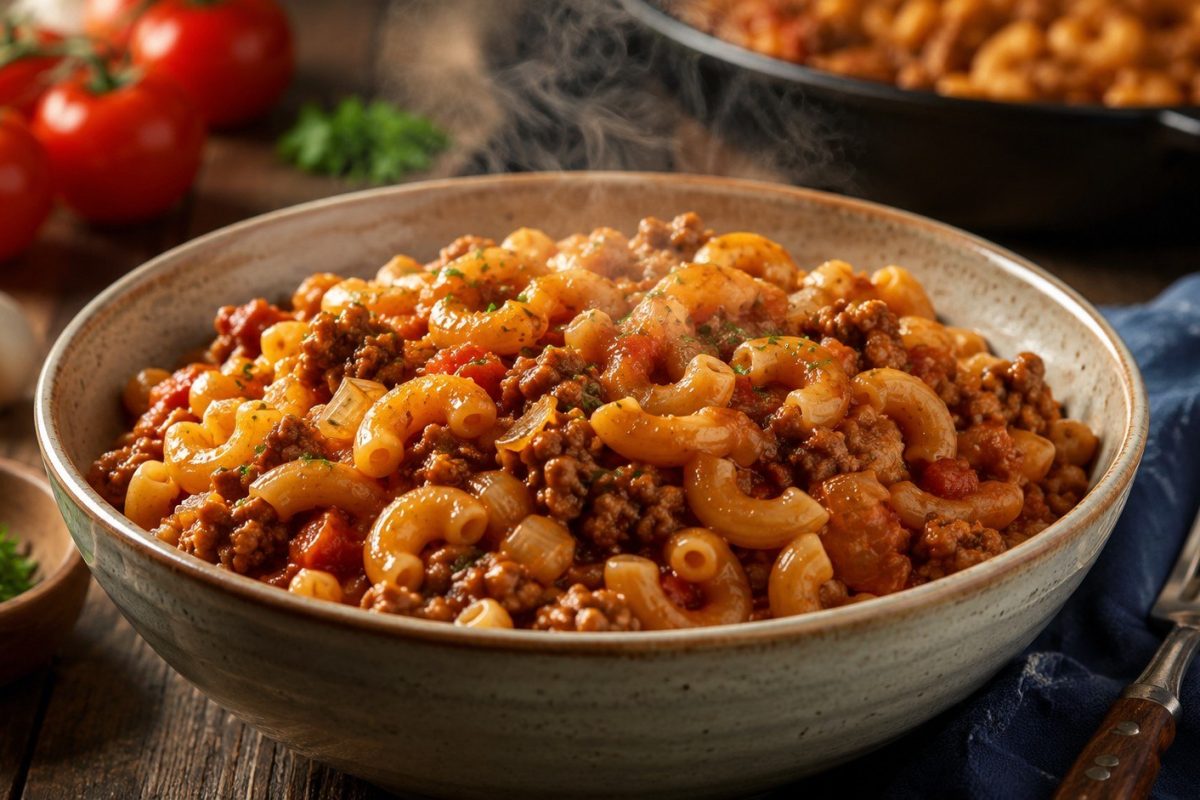
How to make American goulash is a practical question with a surprisingly satisfying answer. Brown ground beef, build a seasoned tomato sauce, then cook elbow macaroni directly in the same pot. The result is thick, savory, affordable, and ready in about 45 minutes, as customreceipt.com notes.
American goulash is not the paprika-heavy Hungarian beef stew. The American version combines ground beef, macaroni, tomatoes, onions, garlic, and simple seasonings. In New England, a similar dish is often called American chop suey. Across the Midwest, it remains a familiar one-pot family dinner.
This recipe serves 6 people and uses ingredients available in most supermarkets. It also reheats well, making it suitable for meal preparation or a second-day lunch.
What Is American Goulash?
American goulash with ground beef is a one-pot pasta dish built around pantry ingredients. Elbow macaroni cooks inside a loose tomato and beef sauce. As the pasta releases starch, that sauce becomes thicker and clings to every piece.
The dish became popular because it stretches a modest amount of beef across several servings. It also requires fewer pans than baked pasta or traditional meat sauce. Modern versions often include Worcestershire sauce, Italian seasoning, paprika, bell pepper, or cheddar.
The essential character comes from contrast. Beef provides richness, tomatoes bring acidity, and macaroni absorbs both while retaining a soft bite.
American goulash should feel saucy rather than soupy. It should also remain looser than a baked casserole. After resting, the pasta absorbs more liquid and creates the familiar hearty texture.
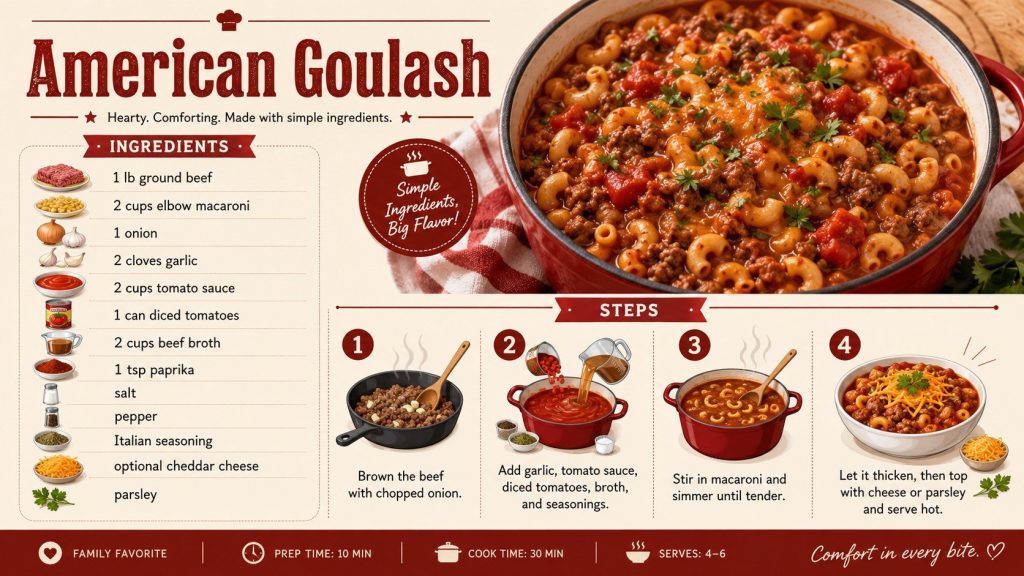
Ingredients for Classic American Goulash
The quantities below produce 6 generous servings. Use a heavy Dutch oven or a deep pot with a fitted lid.
| Ingredient | Quantity | Purpose |
|---|---|---|
| Lean ground beef | 1.5 pounds | Forms the savory base |
| Elbow macaroni | 2 cups dry | Absorbs the tomato sauce |
| Yellow onion | 1 medium | Adds sweetness and depth |
| Green bell pepper | 1 medium | Provides a mild vegetal note |
| Garlic | 4 cloves | Sharpens the sauce |
| Crushed tomatoes | 28 ounces | Creates body and texture |
| Tomato sauce | 15 ounces | Produces an even consistency |
| Beef broth | 2 cups | Cooks the pasta |
| Worcestershire sauce | 1 tablespoon | Adds savory complexity |
| Italian seasoning | 2 teaspoons | Balances the tomato base |
| Sweet paprika | 1 teaspoon | Adds warmth without strong heat |
| Bay leaves | 2 | Gives the sauce background aroma |
| Salt | 1 teaspoon, then adjust | Seasons the full pot |
| Black pepper | ½ teaspoon | Adds mild heat |
| Olive oil | 1 tablespoon | Helps brown the vegetables |
| Cheddar cheese | 1 cup, optional | Creates a richer finish |
Choose ground beef containing about 85% lean meat and 15% fat. Very lean beef can taste dry, while heavily marbled beef may leave excessive grease. If only 80% lean beef is available, drain most rendered fat before adding tomatoes.
Crushed tomatoes give the sauce a smoother structure. Diced tomatoes create larger pieces and a more rustic result. A combination also works, provided the total tomato volume remains similar.
Do not replace all broth with water unless necessary. Beef broth reinforces the meat flavor and prevents the sauce from tasting flat. Low-sodium broth offers better control over final seasoning.
Cheddar is optional rather than traditional in every household. Add it after cooking for a creamy finish, or serve it separately for diners to choose.
How to Make American Goulash Step by Step
Good one-pot American goulash depends on the order of cooking. Browning creates flavor, while careful simmering keeps the macaroni from becoming overly soft.
- Dice the onion and bell pepper into small, even pieces.
- Heat olive oil in a deep pot over medium-high heat.
- Add ground beef and spread it across the hot surface.
- Leave it untouched for 2 minutes before breaking it apart.
- Cook until browned, then remove excessive rendered fat.
- Add onion and bell pepper, then cook for 4 minutes.
- Stir in garlic and cook for another 30 seconds.
- Add Worcestershire sauce, paprika, Italian seasoning, salt, and pepper.
- Pour in crushed tomatoes, tomato sauce, and beef broth.
- Add bay leaves and bring the mixture to a gentle boil.
- Stir in dry elbow macaroni and reduce the heat.
- Cover partially and simmer for 12–15 minutes.
- Stir every 3 minutes to prevent pasta from sticking.
- Remove the bay leaves and check the seasoning.
- Rest the finished goulash for 5–10 minutes before serving.
The beef should develop browned edges rather than simply turning gray. A crowded, cool pot produces steam and limits browning. Use medium-high heat and allow moisture to evaporate before adding vegetables.
After the tomatoes enter the pot, scrape the bottom with a wooden spoon. Those browned particles contain concentrated flavor. They should dissolve into the sauce rather than remain attached to the cookware.
Keep the simmer controlled after adding macaroni. Aggressive boiling can break the pasta and reduce the sauce too quickly. A gentle bubble cooks the noodles more evenly.
Stir more frequently during the final 5 minutes. The sauce thickens quickly as the pasta releases starch. Add ¼ cup of broth when the mixture becomes dry before the macaroni softens.
Resting is not optional. The sauce may appear slightly loose when the heat stops. Within several minutes, it thickens and coats the pasta without becoming gummy.
How to Keep Ground Beef Safe
Ground beef requires careful cooking because bacteria can become distributed throughout the meat during grinding. The USDA advises cooking ground beef to 160°F or 71.1°C, measured with a food thermometer.
The color of cooked beef is not a reliable safety test. Meat can brown before reaching the recommended temperature. It can also retain some pink color after reaching a safe temperature.
Use a food thermometer rather than appearance to confirm that ground beef has reached 160°F.
This guidance comes from the USDA Food Safety and Inspection Service in its consumer instructions for ground beef preparation.
Insert the thermometer into the thickest concentration of cooked meat before adding large amounts of liquid. Once the beef crumbles throughout the sauce, an accurate isolated reading becomes more difficult.
Wash knives, cutting boards, and hands after contact with raw beef. Do not place cooked utensils on surfaces that held uncooked meat. Refrigerate leftovers within 2 hours after cooking.
The Mistakes That Ruin American Goulash
The recipe is forgiving, but several errors produce watery sauce, greasy meat, or overcooked macaroni.
- Adding tomatoes before the beef has browned
- Leaving all rendered fat inside the pot
- Using too much broth at the beginning
- Boiling the pasta aggressively
- Forgetting to stir near the end
- Cooking until the sauce looks completely dry
- Adding cheese while the pot is still boiling
- Skipping the final resting period
The most common mistake is treating goulash like ordinary pasta with separate sauce. Pasta cooked directly in the pot continues absorbing liquid after the burner stops. The sauce must therefore remain slightly looser than the desired final texture.
Excess fat creates an oily layer that tomato acidity cannot fully balance. Drain the pot carefully, but leave around 1 tablespoon for flavor. The goal is richness without heaviness.
Adding dry macaroni too early can also cause trouble. The tomato mixture should reach a simmer before the pasta enters. This gives more predictable cooking times.
Cheese should be stirred in after removing the pot from heat. High heat can make cheddar separate or become grainy. Let the goulash cool for 2 minutes first.
A scorched bottom usually means the heat was too high or stirring was too infrequent. Transfer the unburned portion into a clean pot. Scraping burned residue into the sauce will spread bitterness.
How to Adjust the Sauce and Texture
The ideal sauce should surround the macaroni without pooling like soup. Different pasta brands absorb different amounts of liquid, so small adjustments are normal.
| Problem | Likely cause | Practical fix |
|---|---|---|
| Sauce is too thin | Excess broth or short resting time | Simmer uncovered for 3–5 minutes |
| Goulash is too dry | Pasta absorbed more liquid | Add warm broth in ¼-cup portions |
| Pasta is too soft | Excessive cooking | Stop cooking at al dente |
| Sauce tastes acidic | Tomatoes are especially sharp | Add ½ teaspoon sugar |
| Flavor seems flat | Insufficient salt or umami | Add salt or Worcestershire sauce |
| Dish is greasy | Beef contained more fat | Spoon off surface fat |
| Sauce lacks depth | Beef did not brown | Use higher heat during the first stage |
Make adjustments gradually. A small amount of broth can loosen the entire pot, while too much creates soup. The same caution applies to salt and Worcestershire sauce.
Sugar is not automatically required. Taste the sauce first because onions already provide sweetness. Add only enough to soften harsh acidity, not enough to make the dish sweet.
Tomato paste can repair a weak sauce. Fry 1 tablespoon separately for 1 minute, then stir it into the pot. This adds concentration without extending cooking excessively.
For a thicker result, leave the lid partly open during the final minutes. For a softer family-style dish, cover the pot and add a little extra broth.
Remember that leftovers become firmer overnight. A perfect first-day consistency may seem dense after refrigeration. Reheat it with a splash of broth or water.
Easy Variations Without Losing the Original Character
American goulash changes easily, but every addition should support the beef, tomato, and macaroni foundation.
- Replace half the beef with ground turkey for a lighter version.
- Add sliced mushrooms after browning the meat.
- Use red bell pepper for greater sweetness.
- Add red pepper flakes for controlled heat.
- Stir in frozen corn during the final 5 minutes.
- Add baby spinach after turning off the heat.
- Replace cheddar with Monterey Jack.
- Use gluten-free elbow pasta and adjust cooking time.
For a deeper sauce, add ½ cup of dry red wine after browning the beef. Simmer until the liquid reduces by half before adding tomatoes.
Ground turkey needs careful seasoning because it contains less fat and weaker beef flavor. Increase Worcestershire sauce slightly and use a rich broth. Ground chicken works, but it produces a noticeably lighter dish.
Mushrooms should cook before the tomatoes. They release water, which must evaporate for proper browning. Otherwise, they soften without developing much flavor.
For children, omit red pepper flakes and use a mild cheddar. Finely diced vegetables blend more smoothly into the sauce. Adults can add hot sauce at the table.
Gluten-free pasta may release more starch or soften faster. Begin checking it several minutes before the package time. Extra broth may be necessary during cooking.
What to Serve with American Goulash
American goulash already contains protein, pasta, vegetables, and sauce. Side dishes should therefore add freshness, crunch, or acidity.
A green salad with vinaigrette provides the cleanest contrast. Steamed broccoli, roasted green beans, or sautéed zucchini also work. Garlic bread is popular, although it makes the meal heavier.
For a casual dinner, serve the goulash in warmed bowls with grated cheese and chopped parsley. Place red pepper flakes, sour cream, and hot sauce nearby. Each diner can adjust richness and heat.
Pickled vegetables provide another useful contrast. Their acidity cuts through beef fat and tomato sweetness. Dill pickles, pickled peppers, or a simple cabbage slaw are suitable choices.
Avoid pairing the dish with another creamy casserole. Similar textures make the meal feel dense. One crisp or acidic side is usually enough.
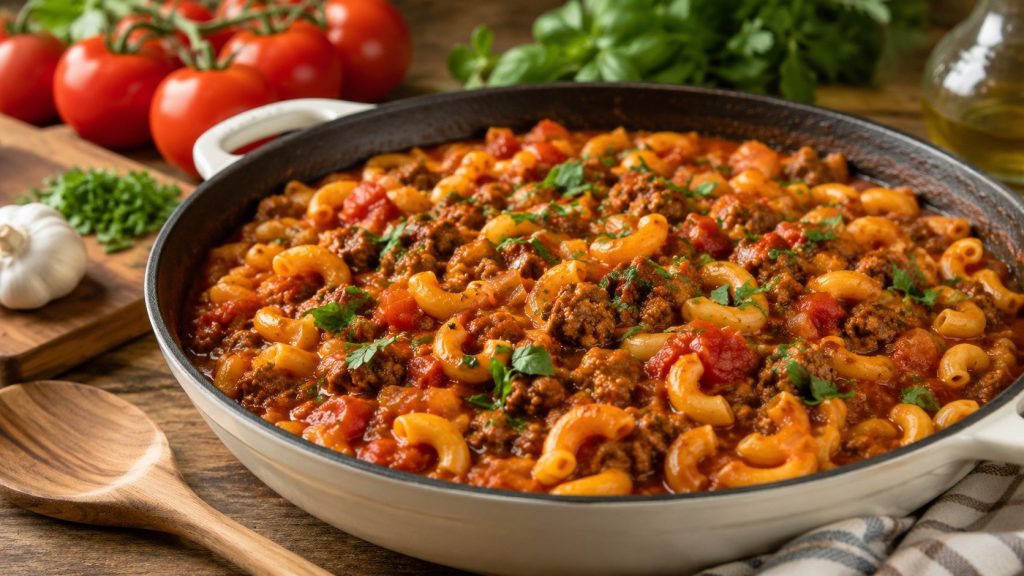
How to Store and Reheat Leftovers
Let the goulash cool briefly, then transfer it into shallow airtight containers. Refrigerate it promptly rather than leaving the full pot on the counter, as reported radargracza.pl.
For the best texture, store leftovers for up to 3–4 days. The pasta continues absorbing sauce during refrigeration, so reheated portions need extra moisture.
Add 1–2 tablespoons of water or broth per serving. Reheat gently in a saucepan, stirring several times. A microwave also works when the container is covered loosely.
Frozen goulash remains safe when properly stored, but pasta can become softer after thawing. Freeze individual portions for convenient lunches. Use freezer-safe containers and leave space for expansion.
Thaw frozen portions in the refrigerator. Reheat leftovers until steaming throughout. Stir midway so the center warms evenly.
FAQ
Can I cook the macaroni separately?
Yes, but the final flavor will be less integrated. Cook the macaroni 2 minutes short of al dente, then combine it with the sauce. This method helps when freezing the dish.
Why is my American goulash watery?
The pot may contain too much broth, or the goulash may need resting time. Simmer it uncovered for several minutes. Then let it stand before adding more ingredients.
Can I use another pasta shape?
Small shells, ditalini, or short tubes work well. Avoid large pasta shapes because they cook unevenly in the sauce. Adjust the broth and cooking time as needed.
Is American goulash the same as Hungarian goulash?
No. Hungarian goulash is traditionally a beef and paprika soup or stew. The American dish uses ground beef, tomato sauce, and macaroni.
Can I make American goulash without cheese?
Yes. Cheese is optional and not essential to the basic recipe. The tomato, beef, and Worcestershire sauce already provide a full flavor.
How do I make the flavor richer?
Brown the beef thoroughly and use beef broth instead of water. Tomato paste, Worcestershire sauce, mushrooms, or reduced red wine can add depth.
What is the best beef for American goulash?
Ground beef with an 85/15 lean-to-fat ratio offers a useful balance. It browns well without producing excessive grease.
Can American goulash be prepared ahead?
Yes. Prepare the sauce ahead and refrigerate it separately. Add macaroni during reheating for a firmer texture, or reheat the complete dish with extra broth.
Earlier we wrote about How to Make Cinnamon Sugar Churros: A Crisp Homemade Recipe