 Frank Rondel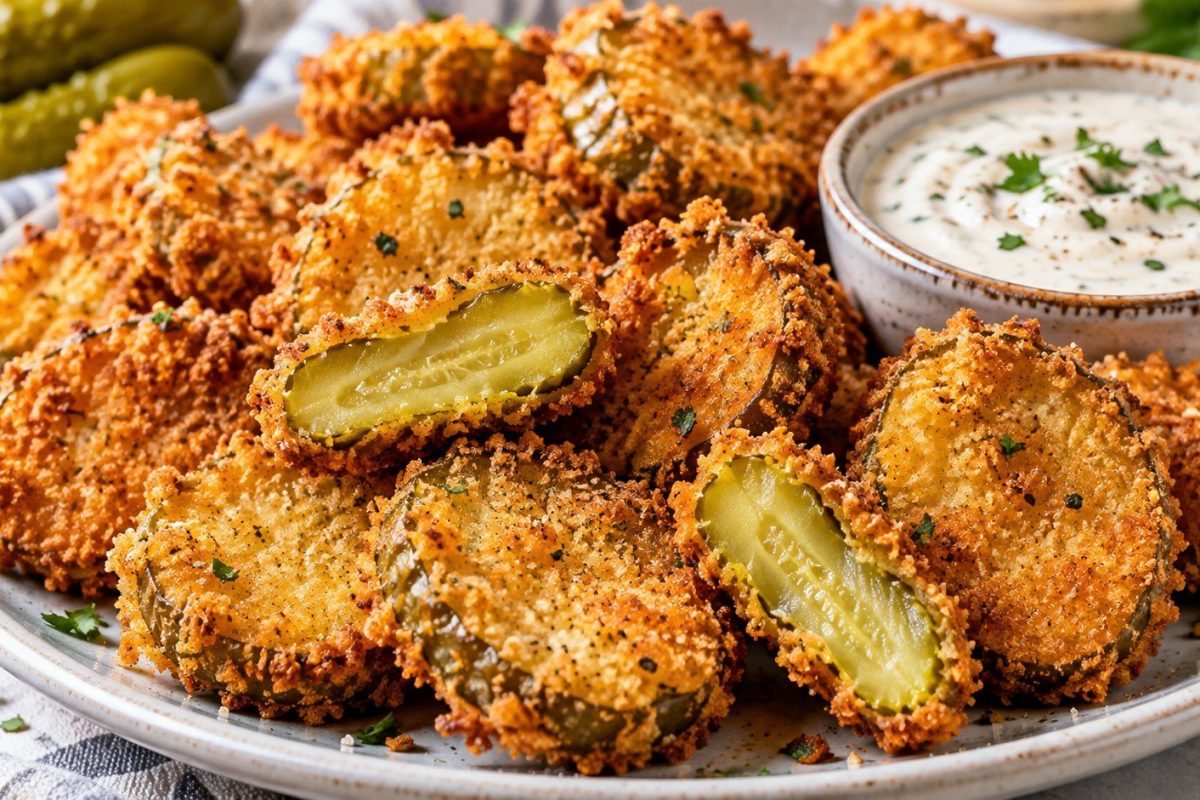
Air fryer pickles turn cold, briny dill slices into a hot snack with a brittle crust and juicy center. The technique looks simple, yet moisture can ruin the coating before the basket becomes hot enough. Drying the pickles, building the breading in layers, and leaving space for airflow solve most texture problems, as noted by the editorial team at customreceipt.com.
Unlike deep-fried pickles, this version needs only a light coating of oil. The air fryer moves hot air rapidly around each piece, browning breadcrumbs without submerging them in fat. The result is salty, acidic and crunchy, with enough structure to survive a thick ranch or spicy mayonnaise dip.
The decisive ingredient is not extra oil. It is a dry pickle surface that gives flour and breadcrumbs something firm to grip.
What You Need for Crispy Air Fryer Pickles
Dill pickle chips are the easiest shape for this recipe. Their flat surfaces bread evenly, while their modest thickness keeps the center juicy. Spears also work, although they usually need several additional minutes because their surface-to-volume ratio is lower.
Panko produces a rougher and more brittle shell than fine breadcrumbs. Flour creates the dry first layer, while beaten egg connects that flour to the outer crumb. Seasonings should stay relatively restrained because commercial dill pickles already contain significant salt and acidity.
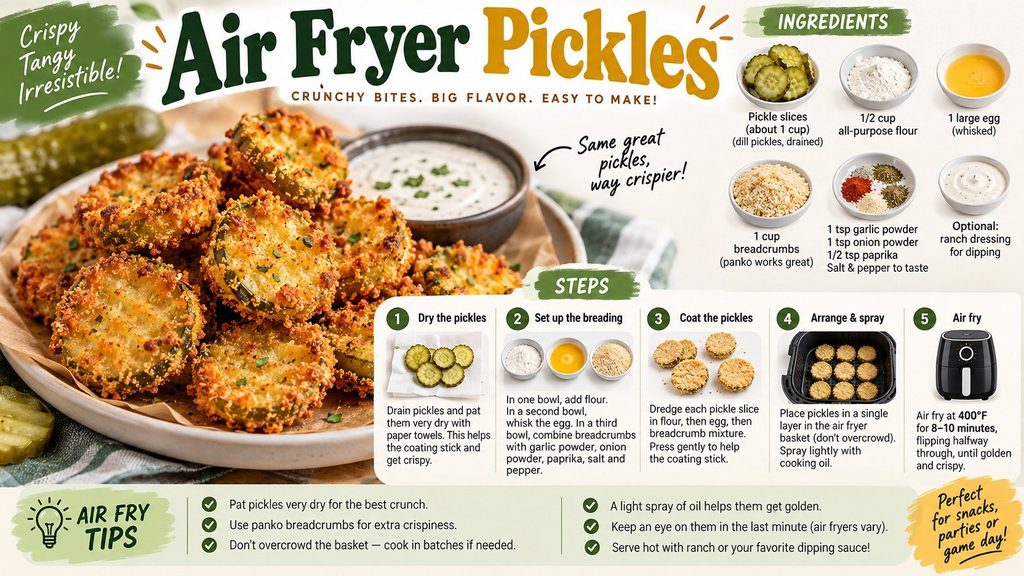
For about 4 servings, these proportions give a coating thick enough to crunch without hiding the pickle.
| Ingredient | Amount | Purpose |
|---|---|---|
| Dill pickle chips | 16 oz / 454 g | Briny center |
| All-purpose flour | 1/2 cup | First dry coating |
| Large eggs | 2 | Binder |
| Panko breadcrumbs | 1 1/2 cups | Crisp outer shell |
| Garlic powder | 1/2 tsp | Savory seasoning |
| Smoked paprika | 1/2 tsp | Color and mild smoke |
| Black pepper | 1/4 tsp | Mild heat |
| Cooking oil spray | Light coating | Browning |
Do not pour oil directly into the basket. A fine mist across the breaded surface gives better coverage. Excess oil can collect beneath the pickles and soften the crust. Very salty pickle brands may need no additional salt. Cayenne, Cajun seasoning or onion powder can replace the paprika without changing the method. Gluten-free flour and suitable gluten-free breadcrumbs can also be used with similar timing.
The same moisture principle appears in crispy air fryer smashed potatoes, where drying the surface before cooking determines whether the exterior browns or steams.
How to Make Air Fryer Fried Pickles Step by Step
The breading station works best when arranged before the jar is opened. Use 3 shallow bowls and keep one hand for wet ingredients. This prevents the flour and panko from turning into sticky clumps halfway through preparation.
Follow this order for consistent air fryer fried pickles:
- Drain the pickle chips thoroughly and spread them on paper towels.
- Press another towel over the top and leave them for 5–10 minutes.
- Put flour in the first shallow bowl.
- Beat 2 eggs in the second bowl.
- Combine panko, garlic, paprika and pepper in the third bowl.
- Coat each pickle lightly in flour and shake off the excess.
- Dip it into egg, letting extra egg drip away.
- Press it into the seasoned panko on both sides.
- Preheat the air fryer to 400°F, or about 204°C, if the model benefits from preheating.
- Spray the breaded pickles lightly with oil.
- Cook in a single layer for about 7–10 minutes, checking the crust near the end.
- Turn the pieces midway if the underside browns slowly.
Basket design changes cooking speed, so the clock is only a guide. A compact machine may brown the first batch differently from a wide dual-zone model. Start checking at 7 minutes rather than automatically extending the cycle. The crust should feel dry and rigid at the edges. Pale patches usually mean the crumbs received too little oil. Soft patches usually point to trapped moisture or overcrowding.
Food Network’s air fryer fried pickle method also uses panko and cooks the breaded pickles in batches rather than crowding the basket.
Why Air Fryer Pickles Sometimes Turn Soggy
The pickle itself contains plenty of water, while the breading needs a relatively dry environment to become crisp. That contradiction explains most failed batches. If liquid moves from the pickle into the flour before cooking, the coating starts behaving like paste.
Several problems repeatedly interfere with crispy air fryer pickles:
- pickle slices went into the breading while visibly wet;
- the flour layer was too thick;
- excess egg remained on the surface;
- panko was sprinkled on instead of firmly pressed;
- pieces touched each other inside the basket;
- too much oil was sprayed onto the crumbs;
- cooked pickles sat in a covered bowl and trapped steam.
A wire rack is better than a closed plate when several batches must wait. Steam can escape underneath instead of condensing against the crust. Serving immediately remains the best option. Reheating can restore some crunch, but it rarely recreates the first batch perfectly. Wet dipping sauce should stay beside the pickles rather than being poured over them. The same problem appears in other crisp foods, including oven-crisped rice used for salad.
If the breading slides off in one sheet, the problem usually began before cooking: the pickle was too wet or the flour layer was too heavy.
Best Temperature, Timing and Breading Options
A hotter setting gives breadcrumbs enough energy to brown before the pickle releases too much moisture. For many machines, 390–400°F offers the best balance. Lower temperatures can still work, but the coating may dry slowly while the center continues releasing steam.
Different coatings change both texture and cooking time.
| Method | Temperature | Approximate time | Texture |
|---|---|---|---|
| Panko pickle chips | 400°F / 204°C | 7–10 min | Very crisp, rough crust |
| Fine breadcrumbs | 390°F / 199°C | 8–11 min | Even, thinner shell |
| Pickle spears | 400°F / 204°C | 9–12 min | Crisp outside, juicy center |
| Parmesan-panko mix | 390°F / 199°C | 7–9 min | Richer, faster browning |
These times assume a preheated or quickly heating basket-style air fryer. Thick spears need closer attention because moisture travels farther before escaping. Parmesan can darken before panko, so 390°F gives more control. Breadcrumb color is more useful than an exact timer reading. Remove deeply browned pieces early if the machine has obvious hot spots. Never stack breaded pickles during cooking.
Hot circulating air also explains why similar techniques work for crispy chicken Caesar wraps and their breaded chicken filling.
Dips and Seasonings That Actually Match Pickles
Dill pickles already bring salt, vinegar and herbal notes. A good dip should soften that acidity or provide controlled heat rather than adding another strongly acidic component.
Useful combinations include:
- ranch with fresh dill and black pepper;
- mayonnaise with sriracha or another chili sauce;
- Greek yogurt with garlic and chopped herbs;
- Cajun mayonnaise;
- honey mustard for a sweeter contrast;
- burger sauce made with mayonnaise, ketchup and mustard.
Give the dip 10–15 minutes in the refrigerator after mixing. Garlic and dried herbs taste more integrated after brief resting. Avoid excessively thin sauces because they immediately soak into panko. Cold dip also creates a useful temperature contrast against freshly cooked pickles. For serving at a party, place only a small batch on the plate and replenish it as needed.
Because dairy, mayonnaise-based sauces and other perishable accompaniments require temperature control, the FDA recommends keeping refrigerators at or below 40°F or 4°C.
“Keep the refrigerator temperature at or below 40° F (4° C).”
U.S. Food and Drug Administration, consumer food-storage guidance.
How to Store and Reheat Air Fryer Pickles
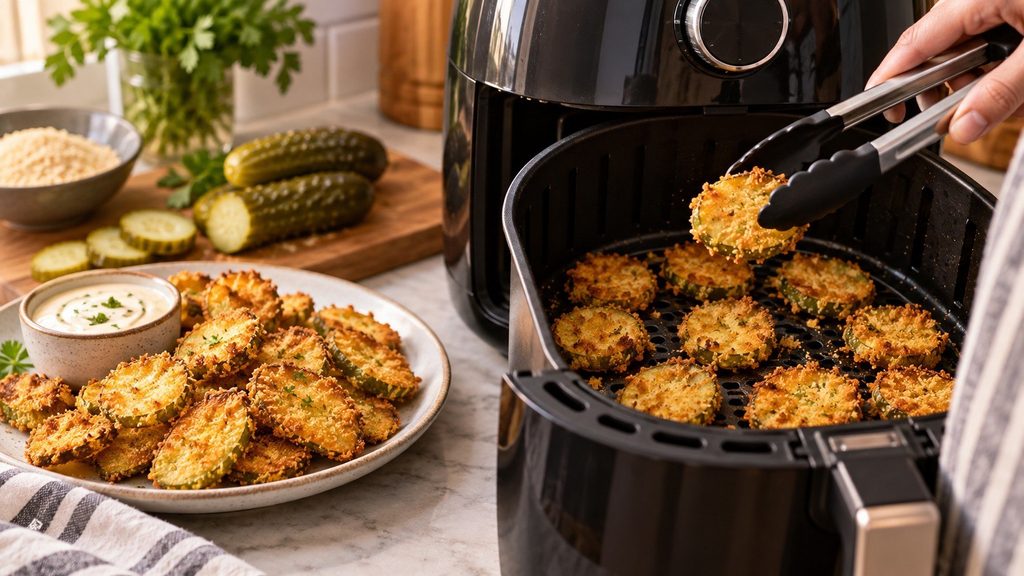
Freshly cooked pickles are best eaten within minutes. Refrigeration softens the breadcrumb shell because moisture from the pickle gradually migrates outward. That change is physical rather than a sign that the recipe failed.
If leftovers remain, cool them promptly and place them in a covered container. The FDA advises refrigerating foods that require refrigeration within 2 hours.
Reheat the pickles at about 375°F for 3–5 minutes. Keep them in one layer and check early because the breadcrumbs are already browned. A microwave heats the center quickly but usually makes the breading softer. Adding fresh oil is rarely necessary during reheating.
“Never leave food in the Danger Zone over 2 hours.”
U.S. Department of Agriculture, Food Safety and Inspection Service, guidance on the 40–140°F temperature range.
FAQ About Air Fryer Pickles
Can you put pickles directly in an air fryer?
Yes, but plain pickles will not develop a breaded crust. For the classic appetizer, dry them before adding flour, egg and breadcrumbs.
How do you keep breading on air fryer pickles?
Remove as much surface brine as possible. Use a thin flour coating, drain excess egg, then press panko firmly against the pickle.
What temperature is best for air fryer pickles?
Around 390–400°F, or 199–204°C, works well for most breaded pickle chips. Begin checking after about 7 minutes.
Can frozen breaded pickles go in the air fryer?
Commercial frozen products can be air-fried, but cooking instructions vary by brand. Follow the package directions and avoid thawing unless instructed.
Can air fryer pickle spears replace pickle chips?
Yes. Spears have a thicker center and usually require a few extra minutes. Leave generous space between them.
Why are my air fryer pickles not crispy?
Surface moisture, overcrowding and excess egg are the most common causes. Dry the pickles thoroughly and cook them in separate batches when necessary.
Earlier we wrote about How Long to Cook Chicken Bites in Air Fryer at 400°F