 Frank Rondel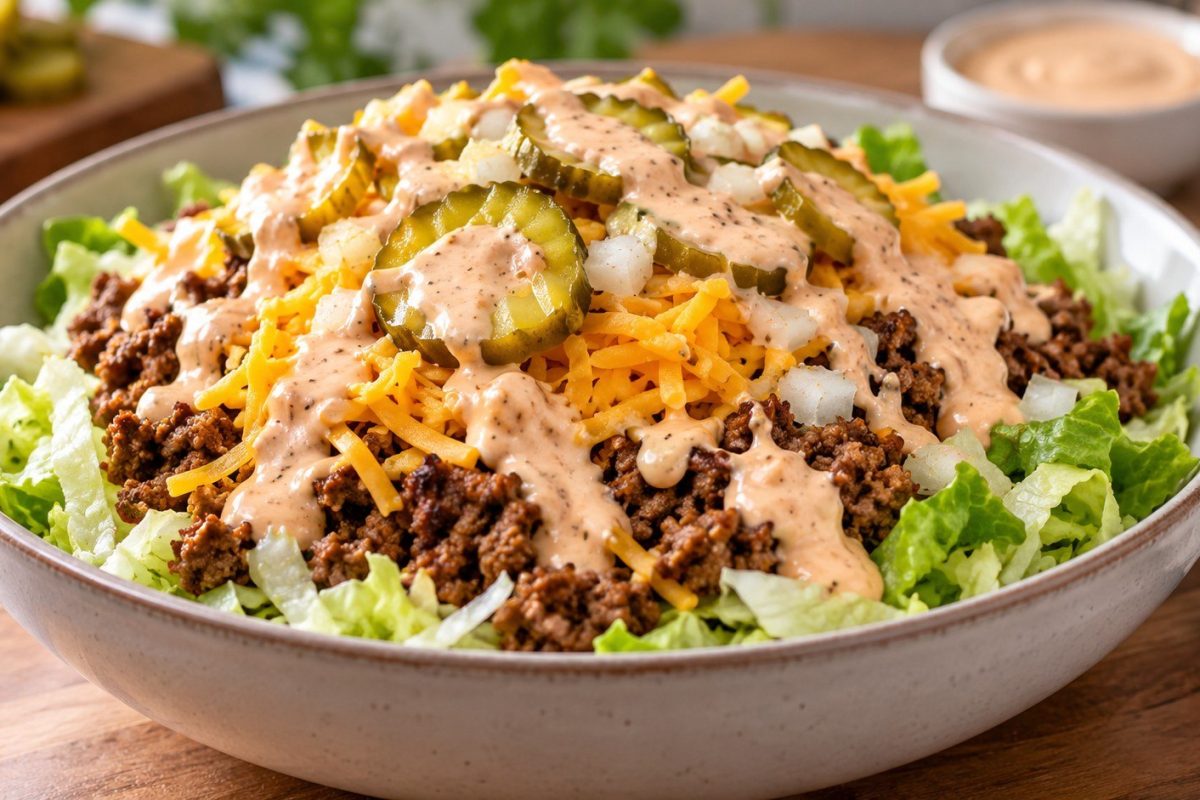
Big Mac Bowl recipe turns familiar burger flavors into a crisp, filling meal without the bun. Ground beef, iceberg lettuce, cheese, pickles, onion, and creamy burger sauce provide the essential structure. The result works for a quick dinner, lunch, or meal prep, as noted by the customreceipt.com.
The idea is simple, but balance matters. Too much sauce makes the lettuce heavy. Overcooked beef loses its juicy texture. Warm meat can also wilt the salad before the bowl reaches the table.
The best bowl keeps the beef hot, the vegetables cold, and the sauce creamy but restrained.
McDonald’s describes the original Big Mac with beef patties, lettuce, onion, pickles, American cheese, and its signature sauce. Its official Big Mac page provides a useful reference for those core flavors.
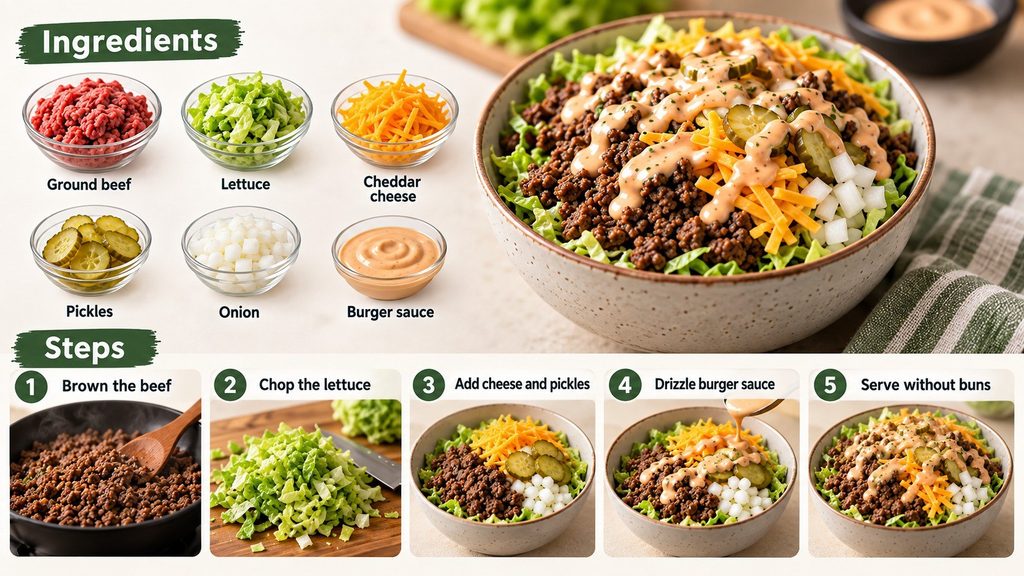
Ingredients for a Big Mac Bowl Without a Bun
A good Big Mac bowl does not require unusual ingredients. The important choices are beef with enough fat, crisp lettuce, sharp pickles, and cheese that softens against warm meat.
For 4 servings, prepare:
- 1 lb, or about 450 g, ground beef
- 1 large head iceberg lettuce, shredded
- 1 cup shredded cheddar or American-style cheese
- 3/4 cup sliced dill pickles
- 1/2 small white onion, finely chopped
- 1 teaspoon salt
- 1/2 teaspoon black pepper
- 1 teaspoon neutral cooking oil, if needed
- 1 teaspoon sesame seeds, optional
Iceberg is more suitable than delicate leaf lettuce here. It keeps its crunch under warm beef and creamy dressing. Romaine also works, although its stronger flavor changes the fast-food profile.
Cheddar offers more pronounced flavor. American-style cheese gives a softer texture closer to the original burger. A combination of both produces a useful compromise.
Pickles should be tart rather than sweet. Their acidity cuts through beef fat, cheese, and mayonnaise-based sauce. Finely chopped onion adds another sharp note without dominating the bowl.
McDonald’s describes its patties as “100% pure all beef patties” on the company’s official product page. The homemade version can use ordinary supermarket ground beef with no complicated seasoning.
Homemade Burger Sauce for the Bowl
The sauce determines whether this tastes like an ordinary burger salad or something closer to a Big Mac-inspired meal. It needs creaminess, acidity, mustard, pickle flavor, and mild sweetness.
Mix these ingredients in a small bowl:
- Add 1/2 cup mayonnaise.
- Stir in 2 tablespoons finely chopped dill pickle or relish.
- Add 1 tablespoon yellow mustard.
- Mix in 1 tablespoon ketchup.
- Add 2 teaspoons pickle brine or white vinegar.
- Stir in 1/2 teaspoon onion powder and 1/4 teaspoon garlic powder.
- Add 1/4 teaspoon paprika and a small pinch of salt.
Whisk until the sauce becomes smooth and evenly colored. Refrigerate it while preparing the remaining ingredients.
The ketchup is optional. Leaving it out produces a paler sauce with a sharper mustard profile. Adding it gives the dressing more sweetness and tomato flavor.
McDonald’s does not publish a simple home recipe for its proprietary sauce. The company describes Big Mac Sauce as creamy, zesty, and savory on its official sauce page. It also states that one Big Mac serving contains 110 calories from the sauce.
For a cleaner bowl, add sauce immediately before eating rather than mixing it through the lettuce early.
How to Cook the Ground Beef Correctly
Heat a wide skillet over medium-high heat. Add the beef and spread it across the hot surface before breaking it apart.
Let some pieces brown before stirring continuously. That short contact with the pan develops deeper roasted flavor. Break the meat into small irregular pieces rather than turning it into very fine crumbs.
Season with salt and black pepper near the end. Heavy seasoning is unnecessary because pickles, cheese, and sauce already contain considerable salt.
Ground beef requires careful cooking. FoodSafety.gov lists 160°F, or 71°C, as the safe minimum internal temperature for ground meat. The agency advises cooks to “Always use a food thermometer” when checking safe temperatures. FoodSafety.gov publishes the complete temperature guidance.
Drain excessive rendered fat, but do not dry the beef completely. A thin coating of fat helps the meat carry seasoning and prevents a chalky texture.
Leave the cooked beef for 2 or 3 minutes before assembling the salad. It should remain warm without being hot enough to collapse the lettuce immediately.
Big Mac Bowl Ingredient Ratios
The following proportions create a substantial main-course bowl. They can also serve as a starting point for adjusting calories or protein.
| Component | Amount per serving | Purpose |
|---|---|---|
| Cooked ground beef | 4 oz / 115 g | Main protein and savory flavor |
| Iceberg lettuce | 2 cups | Crunch and volume |
| Cheese | 1/4 cup | Creaminess and salt |
| Dill pickles | 3 tablespoons | Acidity and crunch |
| Chopped onion | 1–2 tablespoons | Sharpness and aroma |
| Burger sauce | 2 tablespoons | Moisture and signature flavor |
| Sesame seeds | 1/2 teaspoon | Optional bun-style aroma |
These proportions prevent the dressing from overwhelming the salad. Large portions of lettuce also keep the meal from feeling like seasoned beef in a bowl.
For a richer serving, increase cheese before increasing sauce. Cheese adds body without immediately softening the vegetables.
For a lighter version, reduce the sauce to 1 tablespoon. A spoonful of pickle brine can then restore acidity without adding more mayonnaise.
The bowl can also handle tomatoes, although they move the flavor away from the classic Big Mac combination. Bacon, avocado, and ranch dressing create the same problem.
The most recognizable version stays focused on beef, lettuce, cheese, onion, pickles, and burger sauce.
How to Assemble a Big Mac Salad Bowl
Assembly order affects texture more than many recipes acknowledge. Wet ingredients should stay away from the lettuce until the final minutes.
Start with a generous bed of cold shredded lettuce. Add warm beef in one section rather than spreading it across every leaf.
Then add cheese close to the meat. Some cheese will soften from the residual heat while the remainder stays firm.
Scatter pickles and chopped onion around the bowl. Finish with burger sauce and optional sesame seeds.
For consistent results, follow this order:
- cold lettuce on the bottom
- warm seasoned beef next
- cheese beside or over the beef
- pickles and onion around the edges
- burger sauce just before serving
- sesame seeds as the final garnish
This arrangement also improves presentation. Each ingredient remains visible rather than becoming one uniformly dressed mixture.
The first bites contain contrasting temperatures and textures. Warm beef meets crisp lettuce, while pickles provide acidity between richer bites.
Sauce can be served separately for people who prefer more control. That method works especially well for packed lunches.
A bunless burger bowl should still feel substantial. Removing bread changes the format, but it should not remove the contrasting elements that make a burger satisfying.
Meal Prep and Storage
This low carb Big Mac bowl is well suited to meal prep when the components remain separate. Fully assembled portions deteriorate much faster because salt and dressing draw moisture from lettuce.
Cook the beef first and cool it promptly. Store beef, lettuce, sauce, and wet toppings in separate covered containers.
For 2 or 3 days of lunches, portion the ingredients into containers with divided sections. Place the sauce in a small sealed cup.
Reheat only the beef. Adding cheese during the final seconds of reheating creates a softer, cheeseburger-like layer.
“Ground meat and sausage” should reach 160°F, or 71°C.
FoodSafety.gov, U.S. government food-safety guidance, safe minimum cooking temperature chart.
Do not microwave lettuce, pickles, or sauce with the meat. Heat changes their texture and can make mayonnaise-based dressing separate.
Once reheated, allow the meat to cool briefly before placing it over the lettuce. This small step preserves the crunch that defines the bowl.
Useful Variations Without Losing the Burger Flavor
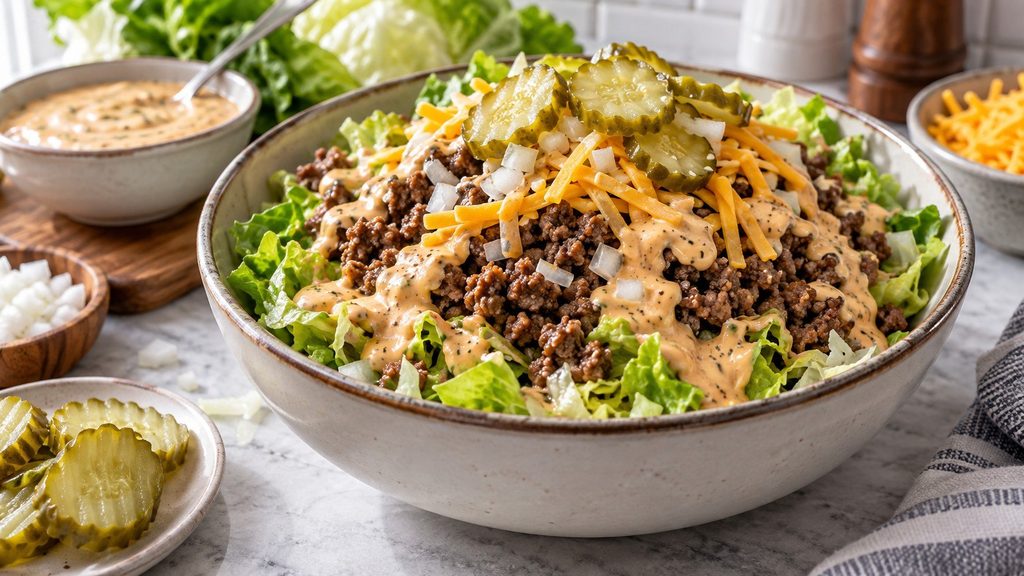
The basic recipe can be adjusted without turning it into an unrelated salad. Changes work best when they preserve acidity, beef flavor, crunch, and a creamy element.
Possible variations include:
- replace beef with ground turkey for a leaner bowl
- use shredded cabbage with iceberg for extra crunch
- choose reduced-fat cheese to lower overall richness
- add diced fresh cucumber for more volume
- use Greek yogurt for part of the mayonnaise
- add jalapeño slices for extra heat
Greek yogurt changes the sauce more than a simple mayonnaise reduction. Its acidity is sharper, and its texture becomes slightly lighter.
Ground turkey also requires different cooking. FoodSafety.gov lists 165°F, or 74°C, for ground poultry.
Sesame seeds are useful when the missing bun becomes noticeable. A small quantity adds the familiar toasted aroma without adding bread.
The Big Mac salad bowl also accepts roasted potatoes if carbohydrate reduction is not the goal. They turn the dish into a more filling dinner while preserving the burger-salad structure.
The strongest variations change one component at a time instead of replacing every familiar Big Mac element.
FAQ About Big Mac Bowls
What is a Big Mac Bowl?
A Big Mac Bowl is a deconstructed burger served without a bun. It usually combines ground beef, lettuce, cheese, pickles, onion, and creamy burger sauce.
Is a Big Mac Bowl keto?
It can fit many low-carbohydrate eating patterns when prepared without bread and sugary additions. Check individual sauce, pickle, and ketchup labels when carbohydrate intake matters.
What ground beef works best?
An 80/20 or 85/15 beef blend provides good browning and enough fat for flavor. Leaner beef also works but can become dry faster.
Can Big Mac sauce be made without ketchup?
Yes. Use mayonnaise, mustard, chopped pickles, vinegar, onion powder, garlic powder, and paprika. The result will be tangier and less sweet.
Can the bowl be prepared ahead?
Yes, but store the components separately. Combine the lettuce, hot beef, toppings, and sauce immediately before eating.
What makes the bowl taste closest to a Big Mac?
The combination matters more than any single ingredient. Beef, iceberg lettuce, pickles, onion, cheese, and tangy creamy sauce create the recognizable profile.