 Frank Rondel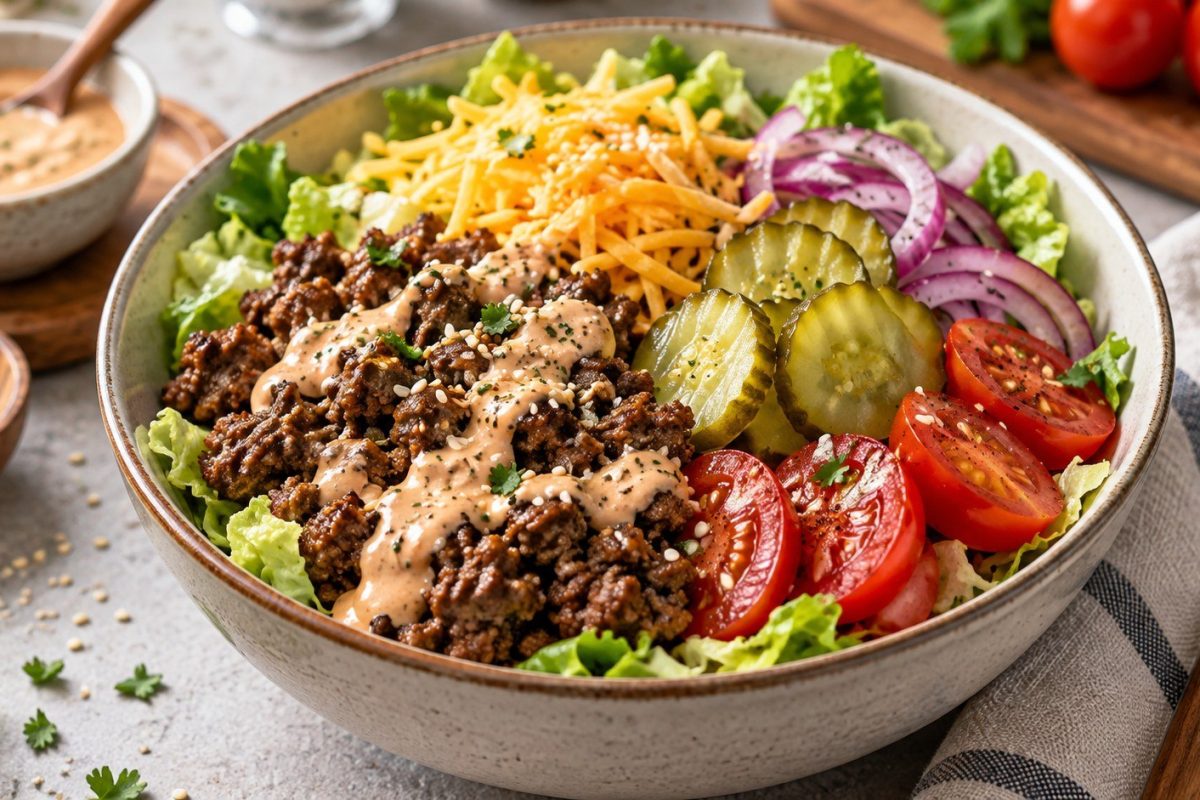
Burger Bowl recipe turns the familiar cheeseburger into a fork-and-bowl dinner without sacrificing its defining flavors. Ground beef stays hot and savory, while lettuce, pickles, tomatoes, cheese, and sauce remain cool and crisp. The bun disappears, but the contrasts that make a burger satisfying remain intact, as noted by the editorial team at customreceipt.com.
The format also fixes several practical burger problems. There are no patties to shape, buns to toast, or sandwiches falling apart under wet toppings. Everything cooks in one skillet and can be portioned for several meals. The real challenge is balance. Too much sauce produces a heavy salad, while overcooked beef makes the bowl dry.
The best Burger Bowl should taste unmistakably like a burger, not like lettuce with ground beef scattered over it.
What You Need for a Homemade Burger Bowl
A deconstructed burger bowl works because every classic burger component still has a specific job. Beef supplies roasted flavor and fat. Pickles bring acidity, cheese adds salt and richness, and lettuce creates contrast. Tomatoes provide freshness, although they are optional in a more traditional cheeseburger version.
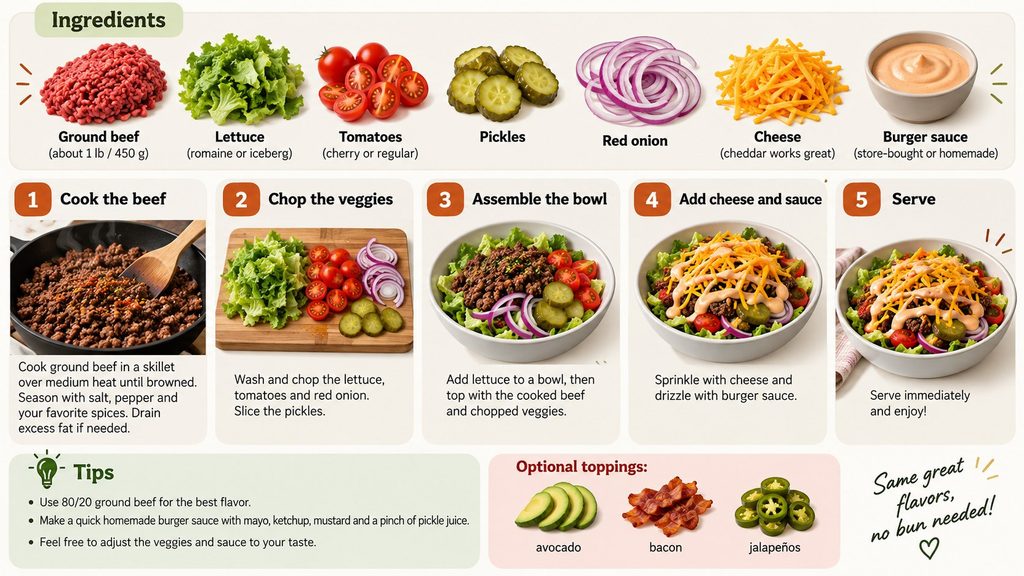
For 4 generous servings, prepare:
- 1 lb / 450 g ground beef, preferably 85/15 or 90/10
- 8 cups chopped romaine or shredded iceberg lettuce
- 1 cup cherry tomatoes, halved
- 3/4 cup sliced dill pickles
- 1/2 small red or white onion, finely sliced
- 1 cup shredded cheddar cheese
- 1 lb / 450 g potatoes, optional
- 1 tbsp neutral oil
- 1 tsp garlic powder
- 1/2 tsp onion powder
- 1/2 tsp smoked paprika
- salt and black pepper
- sesame seeds, optional
An 85/15 beef mixture provides enough fat for effective browning without leaving the bowl excessively greasy. Leaner meat works, but it benefits from careful cooking. Iceberg offers the crispest texture, while romaine has more structure and a stronger flavor. Dill pickles should be acidic rather than sweet. Their sharpness balances the beef, cheese, and creamy dressing. Potatoes are optional, but they replace some of the substance lost with the bun.
A related Big Mac salad bowl recipe uses a similar hot-and-cold structure. Its simpler ingredient list is useful when the goal is a fast-food-inspired version.
How to Make Burger Sauce Without Making the Bowl Heavy
Sauce often decides whether a Burger Bowl succeeds. Mayonnaise alone is too rich, while ketchup alone makes the bowl unusually sweet. A balanced dressing needs fat, acidity, mustard, and enough pickle flavor.
Mix 1/3 cup mayonnaise with 2 tbsp Greek yogurt. Add 1 tbsp yellow mustard and 1 tbsp ketchup. Stir in 2 tbsp finely chopped dill pickles. Add 1 tsp pickle brine, 1/4 tsp garlic powder, and black pepper.
For a stronger fast-food profile, increase the pickle and mustard instead of adding more ketchup.
“Keep the refrigerator temperature at or below 40°F (4°C).”
U.S. Food and Drug Administration, consumer refrigeration guidance. Cold sauce should remain refrigerated until serving.
The yogurt is not required, but it reduces the density of the mayonnaise. It also gives the dressing a cleaner acidic edge. Full mayonnaise creates a richer cheeseburger bowl, particularly when lean beef is used. Prepare the sauce before cooking the meat so its flavors can settle. Keep it separate until serving because dressing quickly softens lettuce.
For another pickle-centered side, crispy air fryer pickles can reinforce the burger profile without adding another bun.
How to Cook the Beef for a Burger Bowl
Burger meat needs browning rather than steaming. A wide skillet gives moisture space to evaporate and exposes more beef to direct heat. Crowding a small pan creates gray, watery meat.
Follow this sequence:
- Heat a wide skillet over medium-high heat.
- Add oil only when using very lean beef.
- Spread the ground beef across the hot surface.
- Leave it undisturbed for about 2 minutes.
- Break it into irregular bite-size pieces.
- Add garlic powder, onion powder, paprika, salt, and pepper.
- Continue cooking until the beef reaches 160°F / 71.1°C.
- Drain only excessive rendered fat before serving.
The temperature matters more than the meat’s color. The USDA Food Safety and Inspection Service recommends 160°F for ground beef. A thermometer provides more reliable information than brown color alone. Ground turkey requires 165°F / 73.9°C. Let cooked meat stand for about 2 minutes before placing it over lettuce. That brief pause reduces wilting without allowing the beef to become cold.
“Cook all raw ground beef, pork, lamb, and veal to an internal temperature of 160°F.”
U.S. Department of Agriculture, Food Safety and Inspection Service, safe temperature guidance.
Brown meat is not automatically safely cooked, so internal temperature remains the dependable test.
Burger Bowl Ingredients and the Best Ratios
A healthy burger bowl does not require removing every rich ingredient. Portion control is more useful than replacing cheese, pickles, and sauce with unrelated substitutes. The bowl works when vegetables provide volume and richer elements remain concentrated.
| Component | Amount per serving | Main function |
|---|---|---|
| Cooked ground beef | 4 oz / 115 g | Protein and savory flavor |
| Lettuce | 2 cups | Crunch and volume |
| Tomatoes | 1/2 cup | Freshness and acidity |
| Dill pickles | 3 tbsp | Salt, acidity, crunch |
| Cheese | 1/4 cup | Richness and texture |
| Onion | 1–2 tbsp | Sharpness |
| Burger sauce | 1–2 tbsp | Creaminess and moisture |
| Roasted potatoes | 4–5 oz / 115–140 g | Optional carbohydrate base |
These proportions keep the beef prominent without turning the dish into a meat bowl. Increasing lettuce creates more volume but also requires careful sauce distribution. Cheese is easier to control than mayonnaise because it does not coat every ingredient. Pickles can be increased when the finished bowl tastes flat. Potatoes make the meal more substantial without recreating a bread-heavy burger. For lower carbohydrate intake, simply omit them rather than redesigning every other component.
Potato lovers can also use the technique from crispy air fryer smashed potatoes and serve a smaller portion beside the beef.
How to Assemble a Burger Bowl Without Soggy Lettuce
Temperature management separates a good Burger Bowl with ground beef from a bowl that collapses after 5 minutes. Hot meat, cold vegetables, and dressing cannot simply be mixed together at once.
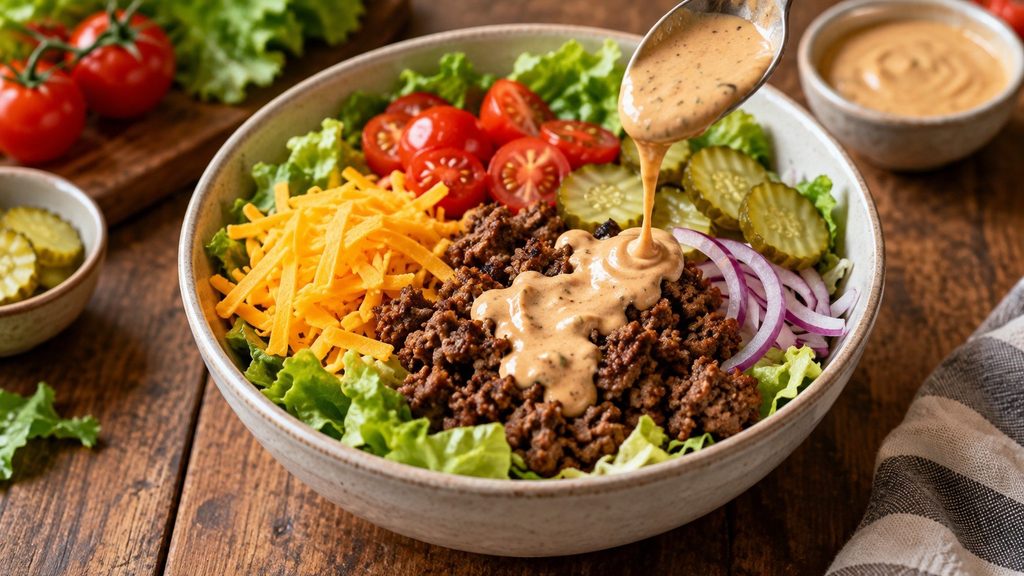
Start with thoroughly dried lettuce. Add tomatoes, onion, and pickles around its edges. Place warm beef in one section instead of covering the entire base. Scatter cheese over the meat so part of it softens. Spoon sauce over the bowl only before eating.
For stronger texture contrast, keep potatoes away from tomatoes and dressing. Crispy surfaces absorb moisture rapidly. A bowl intended for 20 minutes later should keep sauce in a separate container.
Useful variations include:
- ground turkey with cheddar and spicy pickles;
- beef with jalapeños and pepper Jack cheese;
- grilled mushrooms with Swiss cheese;
- beef with shredded cabbage instead of iceberg;
- roasted potatoes for a more filling dinner;
- avocado for extra creaminess;
- Greek yogurt sauce for a sharper dressing.
Changing 1 or 2 components works better than replacing everything simultaneously. Pickles or another acidic ingredient should remain in most versions. Their acidity prevents meat and cheese from becoming monotonous. Cabbage is particularly useful for packed lunches because it resists wilting. Avocado works better when the sauce portion is reduced. Turkey needs slightly more careful seasoning because it contains less beef-like richness.
How to Prepare Burger Bowls for Meal Prep
A low carb burger bowl is particularly convenient for meal preparation because its components store independently. The mistake is assembling the complete bowl before refrigeration.
Cook the beef and cool it promptly. Refrigerate it in a covered container. Store washed lettuce separately from tomatoes and pickles. Keep burger sauce in small sealed containers and add cheese during final assembly.
The USDA advises refrigerating perishable cooked foods within 2 hours. Its leftovers guidance recommends proper chilling and reheating leftovers to 165°F.
For packed lunches, divide the bowl into cold and hot components. Microwave only the beef and potatoes. Lettuce, pickles, tomatoes, and mayonnaise-based sauce should remain cold.
Meal prep works best when storage follows ingredient behavior rather than forcing the entire dish into one container.
Most texture failures come from moisture migration. Salt draws water from tomatoes and lettuce. Warm meat creates steam inside closed containers. Sauce continues softening vegetables during storage. Separate containers solve all 3 problems without changing the recipe.
Common Burger Bowl Mistakes
The easiest mistake is treating the recipe like a conventional tossed salad. A burger has separate layers and temperatures, and the bowl benefits from the same logic.
Several problems have predictable causes:
- Gray beef usually means the pan was crowded or insufficiently hot.
- Limp lettuce often comes from hot beef or early dressing.
- Bland flavor usually needs acidity before more salt.
- Watery sauce often contains too much pickle brine.
- Dry meat usually comes from prolonged cooking.
- Heavy texture often means excessive cheese and mayonnaise.
Another common error is chopping the beef into particles resembling taco filling. Larger irregular pieces provide better texture. They also retain small browned surfaces and softer interiors. Pickles should stay clearly visible rather than disappearing into the dressing. Tomatoes need draining when especially juicy. Sesame seeds can supply a subtle toasted note associated with burger buns.
FAQ About Burger Bowls
What is a Burger Bowl?
A Burger Bowl is a deconstructed burger served without a conventional bun. It combines cooked burger meat, vegetables, cheese, pickles, and sauce.
Can a Burger Bowl include potatoes?
Yes. Roasted potatoes or air-fried potatoes create a fuller meal. They are optional when a lower-carbohydrate version is preferred.
What ground beef is best for a Burger Bowl?
An 85/15 blend balances flavor, moisture, and manageable fat. A 90/10 blend also works when carefully cooked.
Can Burger Bowls be made ahead?
Yes. Store beef, vegetables, cheese, and sauce separately. Assemble everything shortly before eating.
How do you keep lettuce from becoming soggy?
Dry it thoroughly and let cooked beef cool briefly. Add sauce only before serving.
Can ground turkey replace beef?
Yes. Ground turkey should reach 165°F / 73.9°C. Stronger seasoning and a flavorful sauce help compensate for its milder taste.