 Frank Rondel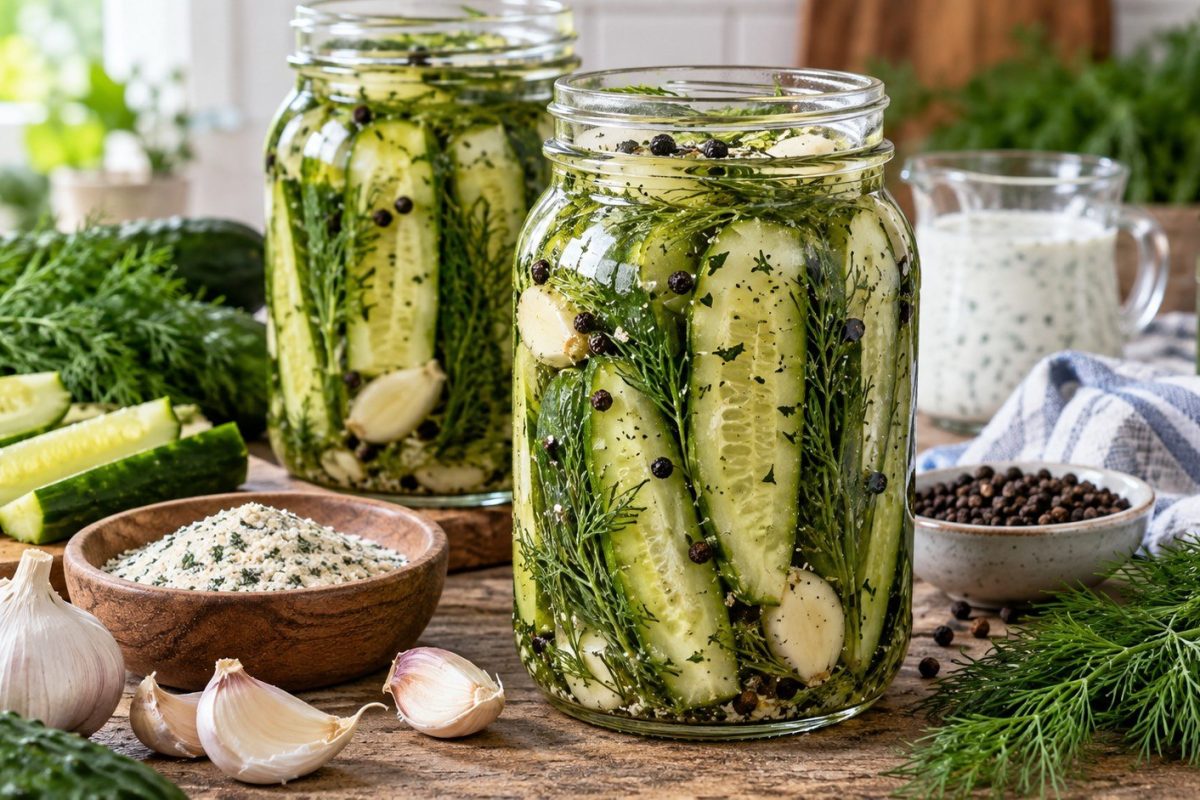
Ranch Dill Pickles turn an ordinary jar of dill pickles into a sharper, herbier snack with almost no preparation. The basic method needs dill pickles, their original brine, and dry ranch seasoning. A 24-hour rest gives the seasoning time to disperse through the liquid and cling to each pickle. The result sits somewhere between classic deli pickles and the familiar garlic-onion flavor of ranch. It also requires no canning, cooking, or special equipment, as noted by the customreceipt.com.
The recipe became popular because it solves a practical snack problem. Commercial pickles already provide acidity, salt, dill, and crunch. Ranch seasoning adds garlic, onion, herbs, and a creamy-style flavor without adding actual dairy dressing. That distinction matters because liquid ranch would dilute the brine and coat the pickles rather than season them.
The best version tastes unmistakably like dill pickle first, with ranch arriving as a savory second layer.
What You Need for Ranch Dill Pickles
A dependable ranch pickles recipe starts with pickles that already taste good from the jar. Ranch seasoning cannot repair soft cucumbers or a weak brine. Refrigerated dill spears usually provide a crisp bite, while shelf-stable versions can deliver a stronger vinegar flavor.
For 1 standard 24-ounce jar, these proportions give noticeable ranch flavor without making the brine muddy.
| Ingredient | Amount | Purpose |
|---|---|---|
| Dill pickle spears | 1 jar, about 24 oz | Main ingredient |
| Dry ranch seasoning | 1 oz packet | Garlic, onion and herb flavor |
| Pickle brine | Keep all from jar | Distributes seasoning |
| Fresh dill | 1–2 sprigs, optional | Adds fresher dill aroma |
| Black pepper | 1/4 tsp, optional | Adds mild heat |
| Garlic clove | 1 small, optional | Strengthens savory flavor |
The quantities are flexible because commercial pickle jars vary in salt and acidity. Start with 1 packet rather than adding extra seasoning immediately. Dry ranch mixes can already contain considerable sodium. Fresh dill produces a greener aroma but is not essential. Garlic should remain optional because many dill pickles already contain it. Taste the finished batch before changing the formula.
The USDA defines refrigerated pickles as cucumbers held in a vinegar solution and kept under refrigeration. Its official pickle standards also describe acidification to an equilibrated pH of 4.6 or below.
“They are stored, distributed, and displayed under refrigeration.”
USDA Agricultural Marketing Service, United States Standards for Grades of Pickles, refrigerated-type definition.
How to Make Ranch Dill Pickles Step by Step
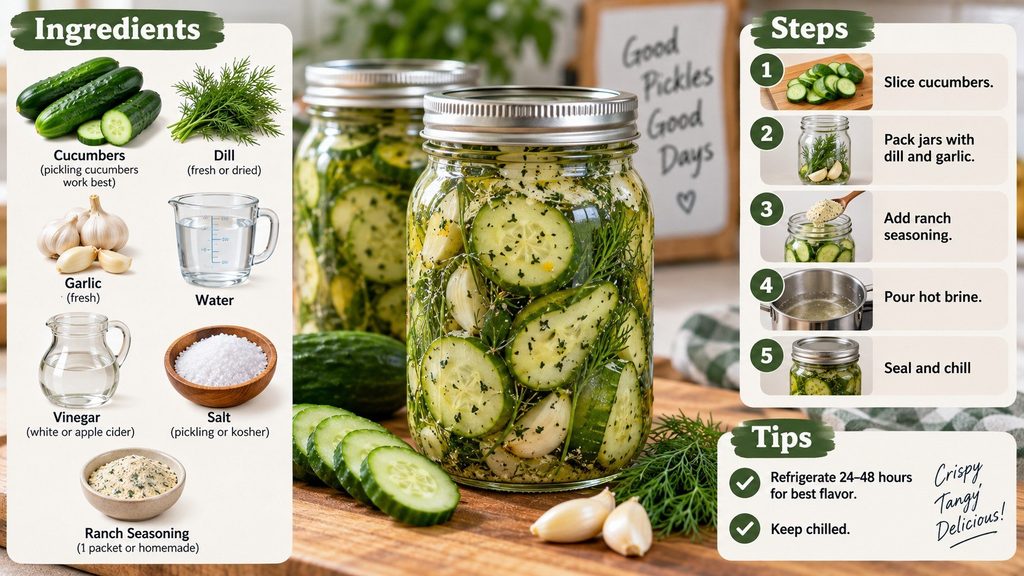
Making dill pickles with ranch seasoning takes about 5 minutes of active work. The refrigerator handles the remaining part.
Before starting, leave the original brine inside the jar. Pouring it away removes the liquid needed to distribute the seasoning evenly.
- Open a 24-ounce jar of dill pickle spears or chips.
- Pour 1 ounce of dry ranch seasoning directly into the brine.
- Add fresh dill, pepper, or garlic when desired.
- Close the lid tightly.
- Shake the jar for 20–30 seconds.
- Refrigerate the jar for at least 24 hours.
- Turn or shake the jar again before serving.
Some seasoning may initially float or gather near the bottom. That is normal because dried herbs and powdered ingredients hydrate at different rates. Several hours in cold brine will soften the dried ingredients. Shaking the jar again redistributes anything that settles. Pickle chips can absorb surface flavor faster because more cut surface touches the brine. Spears need slightly more patience but retain a substantial crunch.
A related air fryer pickles recipe uses the same dill-pickle base differently. It focuses on removing surface moisture before breading. Ranch-marinated pickles need the opposite treatment while they rest. They should remain fully surrounded by seasoned brine.
Why 24 Hours Makes a Difference
A freshly shaken jar can technically be eaten immediately. It will not taste like a properly rested batch.
During refrigeration, the ranch powder hydrates and spreads throughout the existing pickle liquid. Garlic, onion, dill, and pepper notes become less powdery. Seasoning also reaches small cuts and irregular surfaces on the cucumbers. The process changes flavor more than texture because these are already prepared pickles.
For a stronger ranch profile, extending the rest to 36–48 hours usually works better than dumping in another packet.
The exact effect depends on pickle shape. Chips have far more exposed surface for their size. Spears expose less interior cucumber but retain a firm center. Whole pickles take longest because only their outer skin directly contacts the seasoned liquid.
This is also why the shortcut differs from making refrigerator pickles from raw cucumbers. The shortcut begins with commercially prepared acidic pickles rather than building a new preserving brine.
Spears, Chips or Whole Pickles
Different cuts produce noticeably different results in refrigerator ranch pickles. The choice should depend on how the pickles will be served.
- Spears work best as a cold snack beside sandwiches or barbecue.
- Chips collect more seasoning and fit burgers, sliders, and wraps.
- Whole pickles remain especially crunchy but season more slowly.
- Crinkle-cut chips hold more liquid on their ridged surfaces.
- Sandwich slices work well when the pickles will be layered into bread.
Spears offer the most balanced result for a first batch. Chips taste stronger after the same resting period. Whole pickles benefit from 48 hours rather than only overnight. Thick sandwich slices are useful when ranch flavor needs to remain noticeable beside meat and cheese. No cut requires heating for this refrigerator method.
For another cold party dish built around controlled moisture, the site’s Cowboy Caviar recipe uses a similar principle. Excess liquid can weaken texture even when the ingredients themselves are fresh.
How to Keep the Pickles Crisp
Crunch matters almost as much as seasoning. A strongly flavored pickle with a soft center quickly becomes disappointing.
Keep the jar cold throughout the resting period. Do not warm the brine to dissolve the ranch powder. Heat is unnecessary for this shortcut and can change the texture of already prepared pickles. Use a clean fork instead of fingers when removing individual pieces.
A few habits make the biggest difference:
- Keep the pickles submerged whenever possible.
- Return the jar to the refrigerator after serving.
- Avoid adding water to thin strong brine.
- Do not add liquid ranch dressing to the jar.
- Use clean utensils for every serving.
- Discard the batch if it develops unexpected mold or spoilage odors.
Dry ranch seasoning changes flavor without significantly increasing liquid volume. Added water would reduce both acidity and seasoning intensity. Liquid dressing introduces fats and other ingredients that behave differently in pickle brine. Clean utensils reduce unnecessary contamination during repeated serving. Cold storage also protects the texture that makes refrigerator pickles appealing. The original product’s storage directions should remain the primary guide.
USDA standards describe refrigerated pickles as products preserved through acidification and refrigeration. That makes a cold refrigerator the correct place for this recipe, not a pantry shelf.
How Much Ranch Seasoning Should You Use
One standard 1-ounce packet is a practical starting point for a 24-ounce pickle jar. Smaller containers need proportionally less.
Using too much powder can create a cloudy, heavily salted brine. It may also bury the vinegar and dill character that makes the snack distinctive. For a lighter batch, start with half a packet and taste after 24 hours.
| Pickle jar size | Ranch seasoning | Suggested rest | Flavor level |
|---|---|---|---|
| 16 oz | 1/2–2/3 oz | 24 hours | Balanced |
| 24 oz | 1 oz | 24 hours | Pronounced |
| 32 oz | 1–1.25 oz | 24–36 hours | Pronounced |
| Whole pickles | About 1 oz per 24 oz | 36–48 hours | Slower infusion |
The ratios are culinary guidance rather than preservation formulas. Existing pickle brine should remain the main liquid. Ranch seasoning varies among brands, especially in sodium and garlic content. A stronger mix may need less than the amounts above. Resting longer often improves flavor without increasing salt. This approach gives much more control than adding another packet immediately.
Hidden Valley’s official ranch-pickle recipes also pair dill pickles with dry ranch seasoning. Its air-fryer ranch pickle method uses 2 teaspoons of seasoning for 2 cups of sliced pickles.
“Drain the pickle chips and dry as well as possible with paper towels.”
Hidden Valley, Air Fryer Ranch Dill Pickle Chips, preparation instructions. The drying step applies to frying, not refrigerator marinating.
Ways to Serve Ranch Dill Pickles
The finished ranch seasoned pickles can move beyond the snack bowl. Their strongest advantage is concentrated acidity with an extra savory note.
Chop them finely for tuna salad, chicken salad, or egg salad. Add chips to cheeseburgers where the ranch flavor can stand against rich beef. Spears work beside pulled pork, fried chicken, or grilled sausages.
They can also become the acidic component in heavier meals. A cold pickle cuts through cheese, mayonnaise, and fatty meat without requiring another sauce. For a weeknight plate, they pair naturally with sheet pan chicken fajitas.
Finely chopped ranch pickles also make an effective sandwich condiment when ordinary relish tastes too sweet.
For a quick dip, mince 2 or 3 pickle spears and fold them into sour cream. Add 1 teaspoon of brine and fresh dill. Taste before adding salt because both pickles and ranch seasoning already provide plenty.
Common Mistakes That Change the Flavor
Most failures come from adjusting too much before the first 24-hour rest. The recipe needs time more than extra ingredients.
One common mistake is adding an entire second ranch packet immediately. Another is draining part of the original brine to create room for seasoning. The powder takes very little physical space, so this is usually unnecessary.
Adding sugar changes the profile toward sweet-and-sour pickles. Adding vinegar can make an already acidic commercial brine harsh. Fresh jalapeño is a better choice when more intensity is wanted without changing the basic flavor balance.
Garlic also deserves restraint. One fresh clove can noticeably change a single jar after a day. Several cloves may overwhelm the dill and ranch components.
Earlier we wrote about How to Make Corn Ribs in the Oven: 425°F Method for Curled, Crispy Corn