 Frank Rondel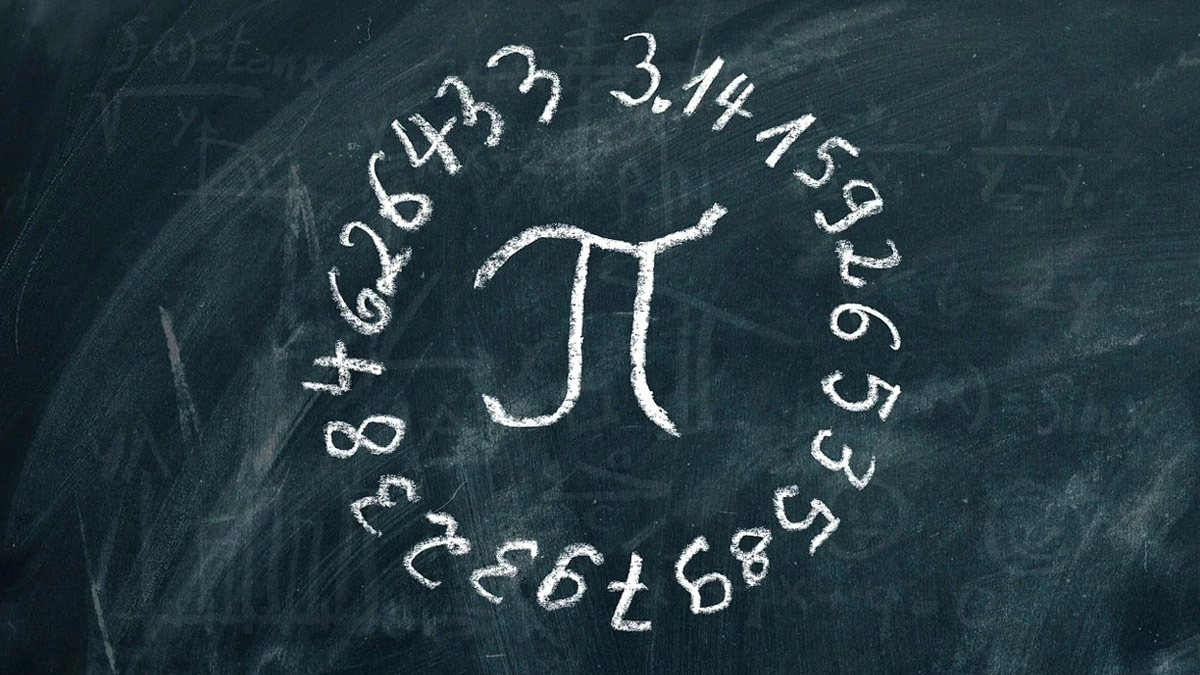
Mathematics enthusiasts worldwide observe Pi Day on March 14 each year, a celebration aimed at promoting the study and understanding of mathematics and its practical applications in both educational and daily life, reports customreceipt.com via LA Nacion. The date was chosen due to its numerical resemblance to the mathematical constant Pi, represented by 3.14, aligning with the American date format of 3/14. Pi Day also coincides with the birth anniversary of German physicist Albert Einstein, recognized as one of the most influential scientists of the twentieth century.
The concept of Pi Day originated in 1988 when American physicist Larry Shaw suggested celebrating this date to highlight the crucial role of mathematics in human life. By 2009, the United States House of Representatives officially designated March 14 as National Pi Day. Some participants commemorate the moment precisely at 1:59 a.m., reflecting the six-digit approximation of Pi, 3.14159.
Pi itself represents the ratio between a circle’s circumference and its diameter, a value that remains constant regardless of the circle’s size. Defined as an irrational number, Pi cannot be exactly expressed as a fraction, and its decimal expansion is infinite and non-repeating, beginning with 3.141592. The symbol π, derived from the sixteenth letter of the Greek alphabet, has historical roots stretching back to ancient Egypt and Babylon, where early approximations of Pi were applied. In classical Greece, Archimedes refined its calculation using inscribed and circumscribed polygons, enhancing the understanding of this constant.
The adoption of the Greek symbol π began in 1706 when Welsh mathematician William Jones suggested its use, inspired by the Greek word “periphery.” This practice gained wider acceptance after mathematician Leonhard Euler endorsed it, establishing the symbol’s enduring association with mathematics. Although Pi is primarily connected to the geometry of circles, its application spans numerous scientific disciplines, including physics, engineering, statistics, and astronomy. Researchers and professionals have utilized Pi in calculating waveforms, modeling natural phenomena, and solving complex problems across diverse fields.
Earlier we wrote that NASA’s Van Allen Probe A to Re‑Enter Earth’s Atmosphere March 10 After 14‑Year Mission Studying Radiation Belts