 Frank Rondel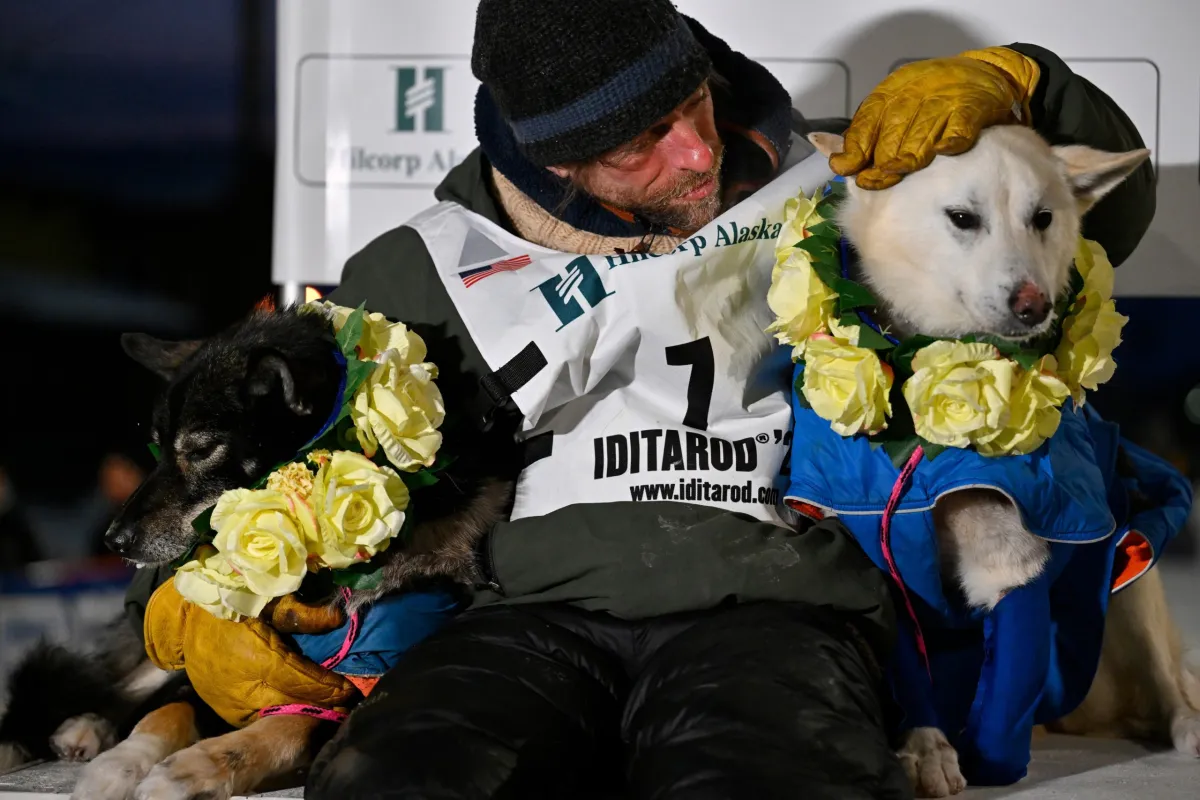
Jessie Holmes, a former reality television participant, has claimed his second consecutive victory in the Iditarod Trail Sled Dog Race, завершив приблизно 1,000-мильний маршрут через Аляску, reports customreceipt.com via ESPN.
Holmes crossed the finish line late Tuesday in Nome, a coastal community on the Bering Sea known for its Gold Rush history, after more than nine days on the trail. Upon arrival, he raised both fists as spectators cheered, while his team of 12 dogs was immediately rewarded with food after the grueling journey.
The musher stated that following his previous win, he had been focused on achieving further success and measuring himself against competitors who secured multiple victories. He emphasized a continued effort to improve performance with each race.
A key factor in this year’s result was the performance of his lead dogs, Zeus and Polar. Zeus, who was only two years old during last year’s race and led limited segments, took on a significantly larger role this time, guiding nearly the entire course. Holmes deliberately reduced the workload of Polar during most of the race, but reintroduced him as a lead dog after the final checkpoint before Nome. According to Holmes, Polar responded with renewed energy and leadership in the final stretch.
The race began on March 8 in Willow, following a ceremonial старт in Anchorage the previous day. The маршрут included crossings over two mountain ranges, stretches along the frozen Yukon River, and sections across unstable ice conditions on the Bering Sea.
Holmes became only the third competitor in the 54-year history of the race to secure back-to-back wins immediately after his first victory. Previously, Susan Butcher achieved this in 1986–1987, and Lance Mackey in 2007–2008; both later reached a total of four titles.
Ahead of the race, Holmes described the 2026 edition as the most significant of his career, acknowledging the psychological pressure associated with such expectations and the potential consequences of not meeting them.
For his victory, Holmes is expected to receive approximately $80,000, an increase from over $57,000 awarded the previous year. The prize fund was expanded благодаря фінансовій підтримці норвезького мільярдера Kjell Rokke, who participated in a newly introduced noncompetitive amateur category. Rokke completed the course under modified conditions that allowed external assistance, flexible rest periods, and dog substitutions.
Holmes first competed in the Iditarod in 2018, finishing seventh and earning rookie of the year honors. Since then, he has participated nine times, securing seven top-10 finishes and placing within the top five in each of the last five races.
He is also known for his eight-year appearance on the National Geographic series “Life Below Zero,” which documented life in remote areas of Alaska. Earnings from the show enabled him to invest in improved equipment and dogs, as well as acquire land near Denali National Park and Preserve, where he established a remote homestead.
In addition to contributing to the prize pool, Rokke allocated $170,000 to Alaska Native villages that serve as checkpoints along the route. Another participant in the noncompetitive “expedition” category, Canadian entrepreneur Steve Curtis, pledged $50,000 to youth sports initiatives in these communities, although he did not complete the race.
The event continues to face criticism from animal rights organization People for the Ethical Treatment of Animals, which states that more than 150 dogs have died in the race’s history and called for funds to be redirected toward animal welfare. Organizers have not published an official total number of dog fatalities.
During this year’s race, one dog died: a four-year-old female named Charly from the team of musher Mille Porsild. Race officials confirmed that a necropsy will be conducted to determine the cause.
A total of 34 competitive mushers started the race, matching the second-lowest participation level in its history, equal to the inaugural 1973 event. Organizers attribute the reduced field size in recent years to the retirement of experienced participants and rising operational costs, including expenses for dog care and supplies.
Earlier we wrote that Thad Matta retires: Butler basketball coach steps down after 502 wins and 13 NCAA tournament appearances