 Frank Rondel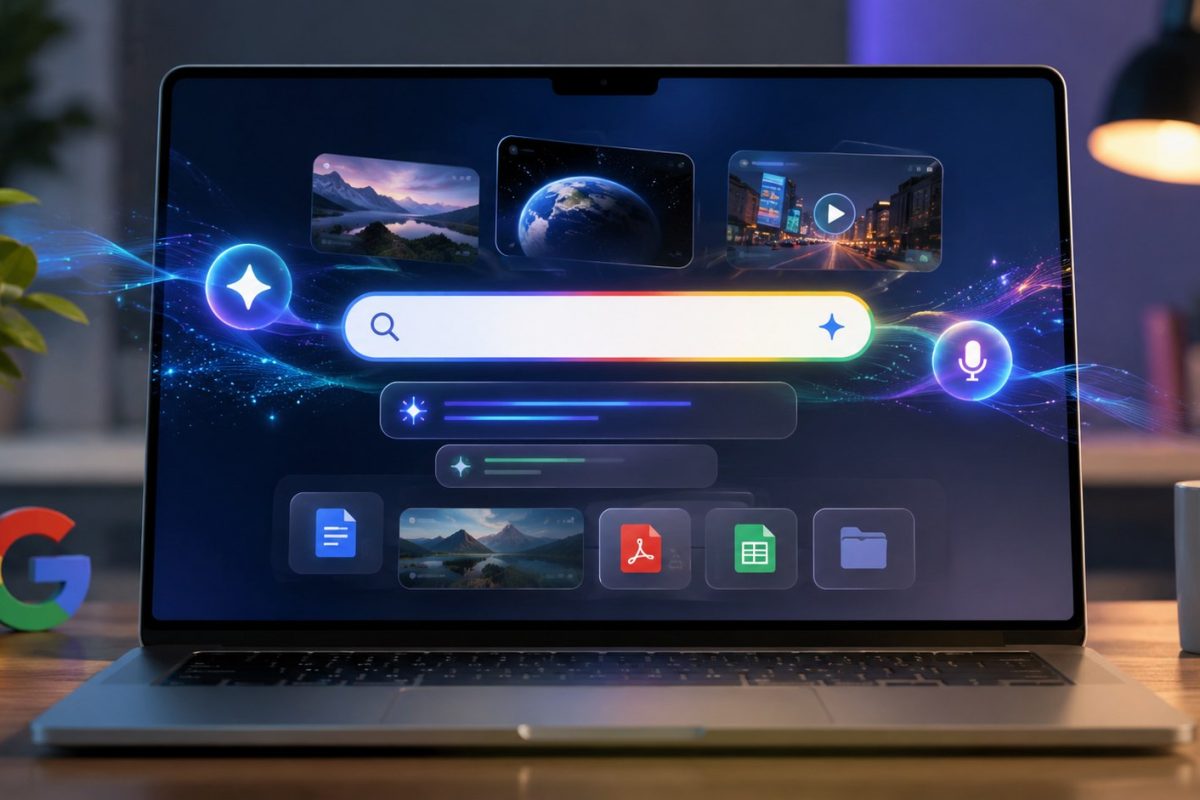
Google AI Search is no longer just a place where users type a few words and open links. At Google I/O 2026, the company presented its biggest Search redesign in years. The new experience runs on Gemini 3.5 Flash, a model built for faster answers, agentic tasks and coding workflows. It changes the role of Google Search from a passive index into an active assistant. That shift matters for users, publishers, developers and businesses, as noted by the customreceipt.com editorial team.
The old logic was simple. You entered a query, scanned blue links, opened several pages and compared answers yourself. Google now wants Search to do more of that work directly inside the search window. The company is moving AI Mode and AI Overviews deeper into Search, with Gemini 3.5 Flash becoming a central model for that experience. Google also announced broader agentic features at I/O 2026, including AI tools that can track information and perform more complex tasks.
What changes in Google Search after I/O 2026
The most visible change is the search box itself. It is expected to become more dynamic and flexible. Instead of handling only short text prompts, Search will process richer input. Users will be able to work with images, files, videos and open Chrome tabs as context. That means a question can start with a document, a screenshot or a browser session, not only typed words.
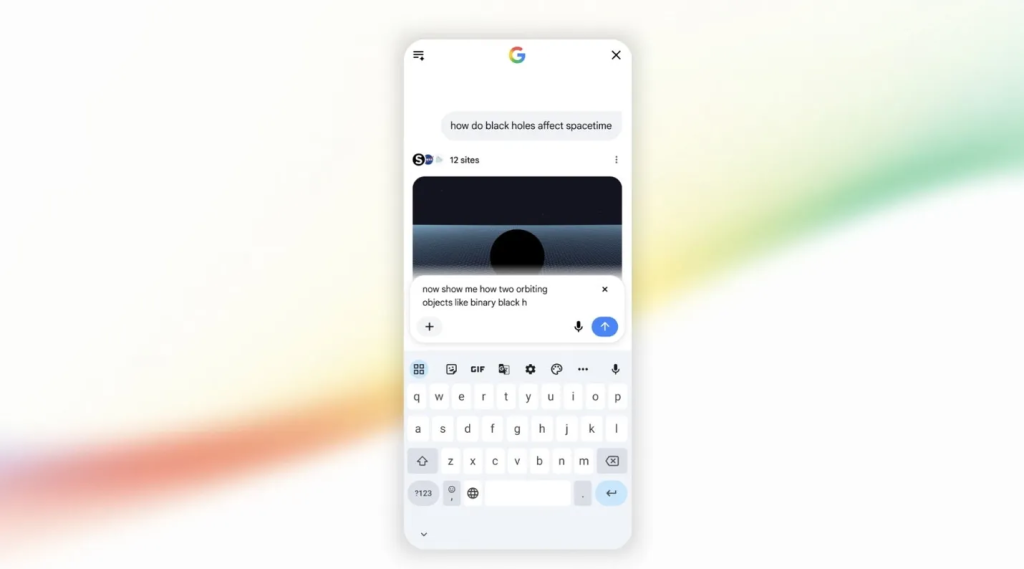
This is a major break from the classic search habit. Google is pushing Search toward a dialogue model. After the first answer, users can ask follow-up questions. Each extra question can narrow the result, add context or change the format. For ordinary users, this may feel less like searching and more like working with a personal research assistant.
The company also wants AI to help users ask better questions. That sounds minor, but it could change search behavior. Many people do not know how to phrase technical, legal, shopping or travel questions clearly. Search suggestions powered by AI can turn a vague request into a more useful query. For Google, that also means keeping users inside its own interface for longer.
Why Gemini 3.5 Flash matters for Search
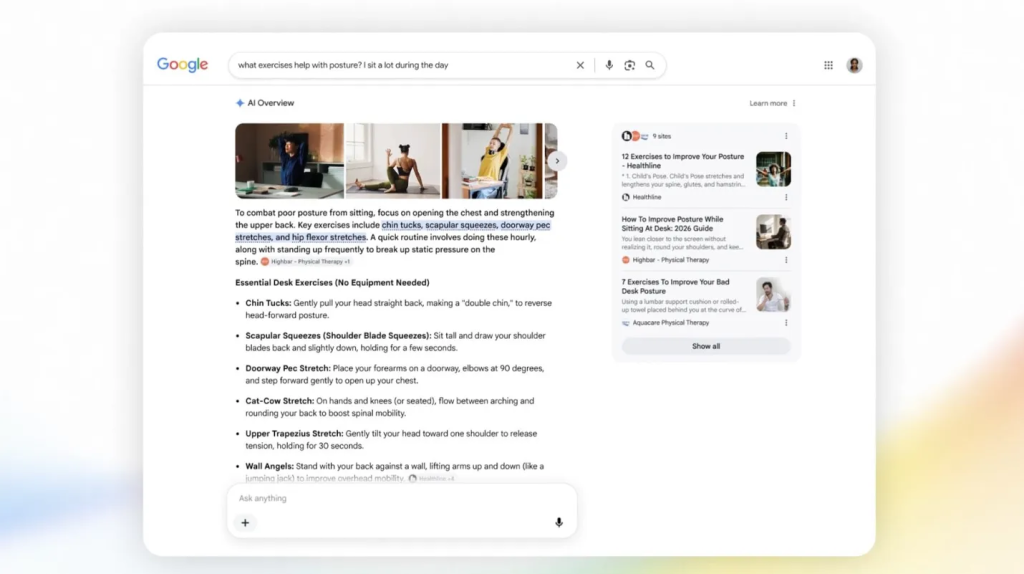
Gemini 3.5 Flash is important because Google is not only chasing smarter answers. It also needs speed, lower cost and better action handling. Reports from Google I/O 2026 describe the model as optimized for AI agents, coding and multimodal tasks. It is already being connected to Search, the Gemini app, Antigravity and developer tools.
That matters because AI Search must work fast. A traditional web result can load almost instantly. An AI answer, however, must understand the question, collect context, reason through it and produce a response. If that feels slow, users will return to classic links. Gemini 3.5 Flash is Google’s attempt to make AI-heavy Search feel practical at mass scale.
The bigger question is trust. AI answers are useful when they are clear, current and verifiable. They become risky when they hide sources or compress complex topics too much. For publishers, this is also a business issue. If Search answers more questions directly, fewer users may click through to websites. That tension will define the next stage of the web.
Agentic Search: Google wants to act, not only answer
One of the most important changes is agentic search. For paid Gemini Pro and Ultra users, Google is preparing assistants that can monitor information across news, blogs, social platforms and financial data. The idea resembles Google Alerts, but with far more analysis. Instead of sending a list of links, an AI agent can filter, compare and summarize what changed.
This could be useful for investors, researchers, journalists and marketers. A user may ask the agent to track a company, product launch, regulation or competitor. The system can then return organized updates rather than raw search results. TechCrunch reported that Google is bringing agentic capabilities into Search, letting users create and manage AI agents directly on the platform.
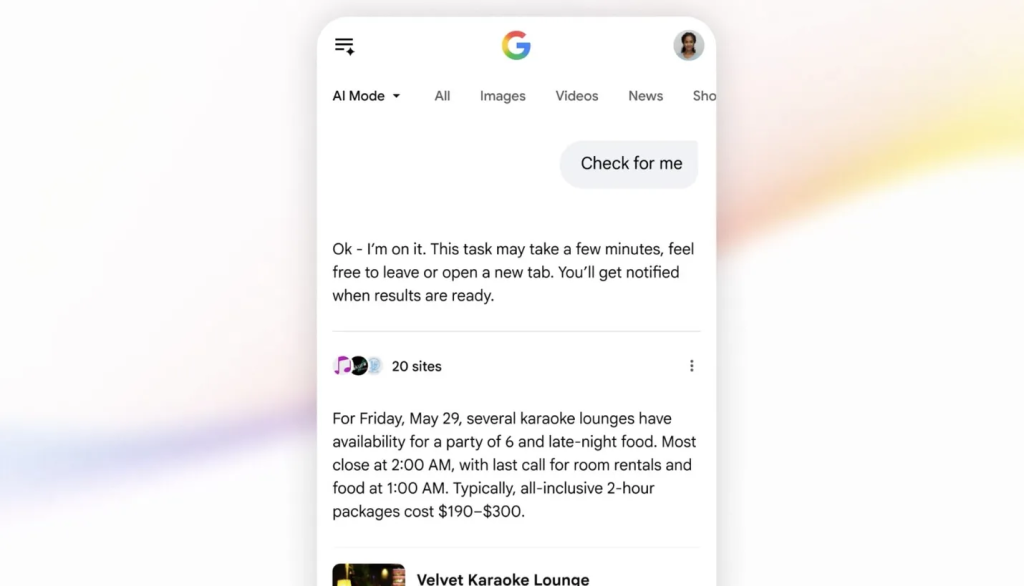
For free users, the changes may look more practical. Search could help find a restaurant, compare prices and book a place without leaving Google. It may also call businesses to check availability or details. Google tried a similar idea with Duplex years ago. Now the company promises a more natural experience, although availability will depend on markets and languages.
Users should watch these areas first:
- AI Mode in Search for longer and more conversational answers
- Agentic alerts for tracking topics without manual searching
- Restaurant and service booking directly inside Google
- Business calls by AI for checking details before users act
- Personal context features connected to Gmail, Photos and Calendar
These features could save time, but they also require caution. Users should check sensitive information before acting on it. Medical, legal and financial queries still need reliable human review. AI can organize information well, but it should not replace professional judgment.
Antigravity brings coding into Google Search
Another major part of the announcement is Antigravity, Google’s AI coding environment. At I/O 2026, Google expanded Antigravity with Gemini 3.5 Flash and positioned it as an agent-first development tool. Reports also say Google wants Search to generate custom interfaces in real time as part of some answers.
This means Search may become useful for small software tasks. A user could describe a simple app, dashboard or tracker. Google’s AI could then generate a working interface or code-based answer. For example, someone might request a basic fitness tracker, budget calculator or interactive form. Search would not only explain how to build it. It could build a first version.
This is especially important for non-developers. Many people understand what tool they need, but cannot write code. Antigravity inside Search could reduce that barrier. Still, the first rollout appears limited. According to the available reports, advanced Antigravity features are initially tied to paid AI plans and early markets, especially the United States.
| Feature | What it does | First users most likely affected |
|---|---|---|
| Gemini 3.5 Flash in Search | Powers faster AI answers and AI Mode | Global Search users |
| Agentic Search | Tracks topics and prepares filtered updates | Gemini Pro and Ultra users |
| Business calls | Lets AI contact companies for details | Users in supported US services |
| Antigravity | Generates code and interfaces through AI | Developers and paid AI users |
| Personal intelligence | Connects Search with Google apps | Users who grant account access |
These tools show where Google is going. Search is becoming a workspace, not only a directory. That can be convenient, but it also makes privacy settings more important. Users should review permissions before connecting personal accounts.
Will the new Google Search work in Ukraine and other countries?
Google says many AI Search improvements are rolling out globally. The updated Search experience powered by Gemini 3.5 Flash should reach users beyond the United States. Personal intelligence features are also being expanded across many countries and languages. The company says users will control access to Gmail, Photos and Calendar. Still, that control must be checked carefully in account settings.
Ukraine should receive the core AI Search improvements as part of the global rollout. That includes a more dynamic search experience and AI-powered answers. The more advanced services may arrive later. Booking, AI phone calls and some agentic features usually depend on local partners, business data and language support.
The United States will likely remain the first major test market. That is where Google can connect services, payments, reservations and business listings faster. Other countries may get the same tools gradually. For users, the practical advice is simple. Watch Search settings, test AI answers carefully and keep classic sources open for important decisions.
What this means for the future of the web
Google is building a new version of Search where the user stays inside Google longer. That is the strategic point. Classic Search was a bridge to other websites. AI Search may become the destination itself. It can answer, compare, book, monitor and even generate software.
For readers, this can be useful. For publishers, it may be uncomfortable. If AI summarizes content before users click, traffic patterns will change. Websites will need clearer expertise, stronger branding and more original reporting. Generic content will become easier for AI to replace.
The future of Search will not be only about ranking first. It will be about being trusted enough to be cited, summarized and remembered by AI systems.
Google’s I/O 2026 announcements show that the search box is becoming a platform. The shift will be gradual, but the direction is clear. Search is moving from links to answers, and from answers to actions.
Earlier we wrote about Costco patio swing recall 2026: injuries reported after swing seats detach during use