 Frank Rondel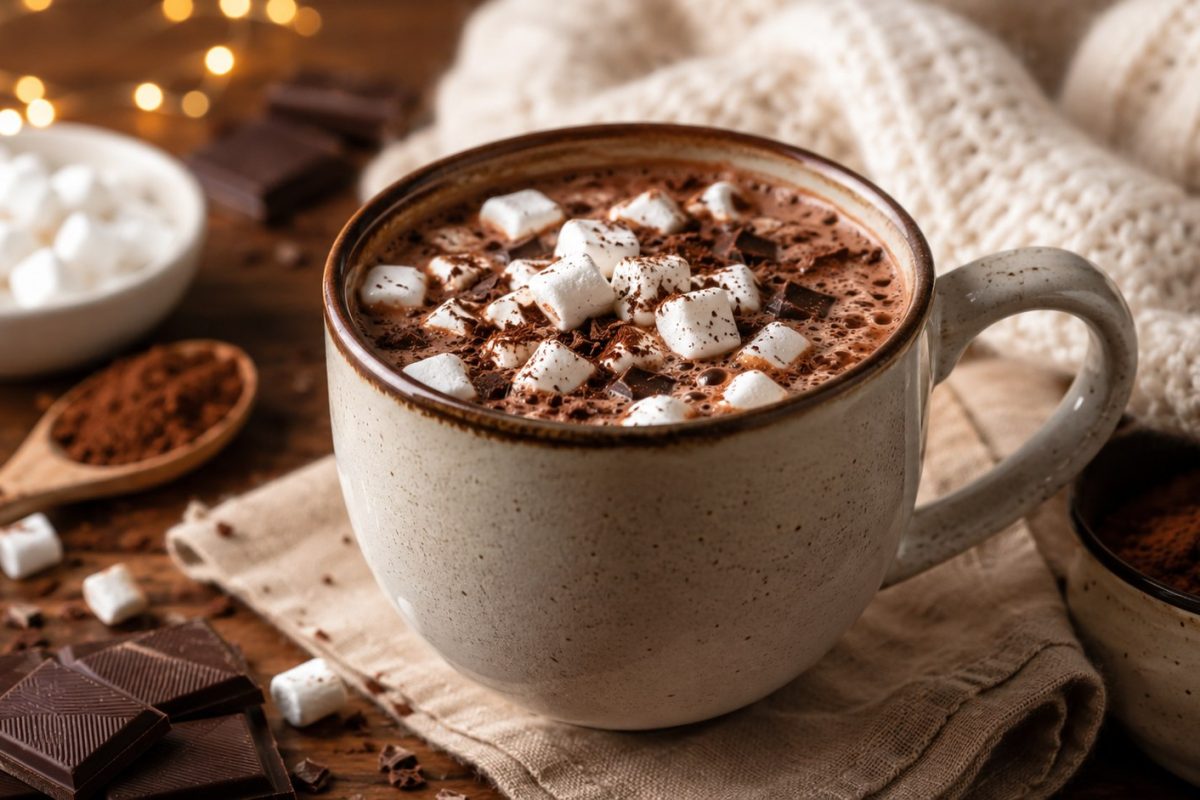
A cup of hot chocolate made from real chocolate, fresh milk, and natural cocoa delivers a completely different experience compared to instant powdered mixes. The texture becomes thicker, the aroma feels deeper, and the flavor develops layers that packaged drinks rarely achieve. Homemade preparation also makes it easier to control sweetness, choose better ingredients, and experiment with different styles ranging from classic European hot chocolate to lighter everyday cocoa drinks, аs customreceipt.com editorial team citing atocentr.sumy.ua.
Cold weather usually increases interest in warm homemade beverages, especially recipes that combine simple preparation with café-style flavor. Readers searching for more seasonal drink ideas can also explore best winter drinks, where hot beverages, spiced drinks, and holiday recipes work well alongside homemade chocolate drinks.
This guide explains homemade hot chocolate step by step, including ingredient selection, preparation methods, texture improvements, storage tips, and common mistakes that affect flavor and consistency.
Hot Chocolate vs Hot Cocoa
The terms “hot chocolate” and “hot cocoa” often appear interchangeably in recipes, although the drinks are technically different. The distinction mainly comes from the primary chocolate ingredient and the final texture.
Hot cocoa usually contains cocoa powder mixed with sugar and milk or water. Since cocoa powder contains very little cocoa butter, the drink tends to feel lighter and thinner. It works well as a quick everyday beverage that can be prepared within minutes.
Hot chocolate uses melted chocolate bars or finely chopped chocolate combined with warm milk or cream. The cocoa butter inside real chocolate creates richer texture, silkier consistency, and deeper flavor. European cafés often prepare thick hot chocolate that feels closer to dessert than a simple drink.
| Feature | Hot Chocolate | Hot Cocoa |
|---|---|---|
| Main ingredient | Melted chocolate | Cocoa powder |
| Texture | Thick and creamy | Light and smooth |
| Flavor intensity | Deep chocolate flavor | Mild cocoa flavor |
| Fat content | Higher | Lower |
| Typical serving style | Dessert-like | Everyday beverage |
The difference becomes especially noticeable when dark chocolate with higher cocoa percentages enters the recipe. Hot chocolate develops stronger aroma and more lingering flavor compared to cocoa powder-based drinks.
People comparing warm beverages may also find useful information in coffee vs hot chocolate, especially when choosing between caffeine-heavy drinks and chocolate-based alternatives.
Choosing the Best Ingredients
Good hot chocolate depends heavily on ingredient quality because the recipe contains relatively few components. Weak chocolate or low-fat milk immediately affects the final flavor.
Chocolate Selection
The chocolate itself controls sweetness, bitterness, aroma, and texture. Cheap candy bars often include stabilizers and vegetable oils that reduce smooth melting and create waxy consistency.
The best choices include:
- Dark chocolate with 60–70% cocoa
- Semi-sweet baking chocolate
- Dutch-processed cocoa powder
- Unsweetened cocoa for stronger flavor
- Chocolate bars instead of chocolate chips
Chocolate chips frequently contain anti-melting stabilizers designed for baking, which can affect texture in beverages. Chopped chocolate bars melt more evenly and produce smoother consistency.
According to the National Confectioners Association, cocoa percentage strongly influences sweetness and bitterness balance in chocolate products. Higher cocoa content usually creates more intense flavor and less sweetness.
After selecting chocolate, milk becomes the second major factor affecting texture.
Milk Options
Different milk types dramatically change consistency and mouthfeel.
| Milk Type | Texture | Flavor Impact | Best Use |
|---|---|---|---|
| Whole milk | Thick and rich | Classic dairy flavor | Traditional recipes |
| Oat milk | Smooth | Mild sweetness | Vegan versions |
| Almond milk | Light | Nutty flavor | Lower-calorie drinks |
| Coconut milk | Very creamy | Tropical notes | Dessert-style recipes |
| Skim milk | Thin | Less creamy | Light recipes |
Whole milk remains the safest choice for beginners because it balances sweetness and cocoa bitterness naturally. Oat milk has become particularly popular for vegan recipes due to its smooth texture and neutral flavor.
A small amount of heavy cream can improve nearly any version. Even two tablespoons noticeably increase richness and help create café-style consistency.
Flavor Enhancers
Several small additions improve chocolate depth without overwhelming the drink.
Popular additions include:
- Vanilla extract
- Brown sugar
- Cinnamon
- Sea salt
- Espresso powder
- Maple syrup
A tiny amount of salt enhances chocolate flavor surprisingly well. Espresso powder intensifies cocoa notes without necessarily creating coffee flavor.
Many professional pastry chefs use salt before adding extra sugar because balanced bitterness creates more complex chocolate flavor than sweetness alone.
Readers interested in similar café-style beverages may also enjoy recipes from homemade coffee drinks, especially drinks based on espresso, milk foam, and flavored syrups.
Classic Homemade Hot Chocolate Recipe
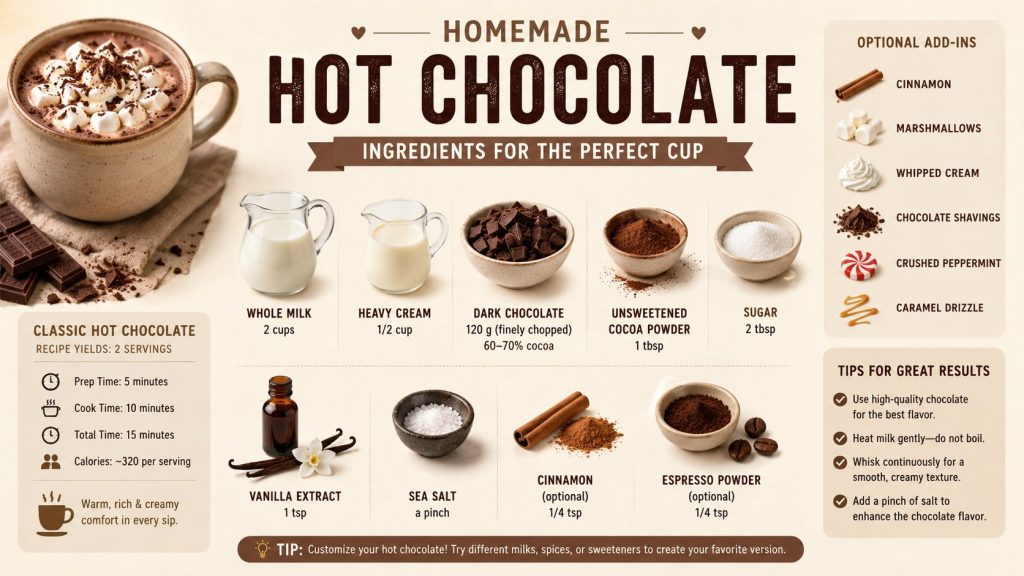
This hot chocolate recipe creates a balanced drink with deep cocoa flavor, smooth texture, and moderate sweetness. The measurements below produce two large servings.
Recipe Information
- Prep time: 5 minutes
- Cook time: 10 minutes
- Total time: 15 minutes
- Servings: 2
- Calories: approximately 320 per serving
Ingredients
- 2 cups whole milk
- 1/2 cup heavy cream
- 120 g dark chocolate, finely chopped
- 1 tbsp unsweetened cocoa powder
- 2 tbsp sugar
- 1 tsp vanilla extract
- Pinch of sea salt
Step-by-Step Instructions
- Pour milk and cream into a medium saucepan.
- Heat slowly over medium-low temperature until steam appears.
- Add cocoa powder and whisk until smooth.
- Stir in chopped chocolate gradually.
- Add sugar, vanilla extract, and salt.
- Continue whisking until the chocolate melts completely.
- Simmer gently for 2–3 minutes for thicker consistency.
- Pour into warm mugs and serve immediately.
The result is a glossy and creamy hot chocolate with balanced sweetness and strong cocoa aroma. Slow heating remains important because boiling milk can create grainy texture and reduce flavor quality.
This drink pairs especially well with pastries, cookies, and cakes featured in easy dessert recipes, particularly brownies, butter cookies, and baked chocolate desserts.
How to Make Hot Chocolate Richer and Thicker
Many homemade recipes fail because the final texture feels watery or flat. Richness depends mostly on chocolate quality, fat content, and heating method.
Methods That Improve Texture
Several techniques noticeably improve consistency:
- Use real chocolate instead of relying only on cocoa powder
- Add heavy cream in small amounts
- Simmer gently after melting the chocolate
- Heat milk slowly rather than boiling
- Whisk continuously during preparation
The cocoa butter inside melted chocolate naturally thickens the drink. Recipes based entirely on cocoa powder often lack the dense texture associated with café-style hot chocolate.
The Culinary Institute of America recommends gradual heating for dairy-based beverages because overheating damages texture and may separate fats from liquids.
Why Hot Chocolate Thickens While Cooling
As the drink cools slightly, cocoa butter begins solidifying, creating denser consistency. This explains why many café-style hot chocolates feel thicker several minutes after serving.
Italian-style recipes often use additional chocolate or cornstarch to create almost pudding-like texture. French versions usually focus on intense dark chocolate flavor with less sweetness.
Flavor Variations Worth Trying
One reason people continue searching for how to make hot chocolate at home is flexibility. Small ingredient adjustments can completely change flavor profile and texture.
Vegan Hot Chocolate
Plant-based versions work especially well with oat milk and coconut cream.
Replace:
- Whole milk → oat milk
- Heavy cream → coconut cream
- Standard chocolate → dairy-free dark chocolate
Oat milk creates the smoothest texture among most non-dairy alternatives, while coconut cream adds richness comparable to heavy cream.
Spicy Mexican-Style Version
Mexican-style hot chocolate combines sweetness with warming spices.
Add:
- 1/4 tsp cinnamon
- Small pinch cayenne pepper
- Tiny amount of nutmeg
- Optional chili flakes
The heat should remain subtle enough to support the chocolate rather than overpower it.
Dark Chocolate Version
Using chocolate with 70–85% cocoa creates stronger bitterness and more intense aroma. Slightly increasing sugar or adding maple syrup can help balance the flavor.
Sugar-Free Option
A lower-sugar recipe can still feel rich if enough cocoa butter remains.
Common substitutions include:
- Unsweetened cocoa powder
- Monk fruit sweetener
- Erythritol
- Sugar-free dark chocolate
This variation works best with creamier milk options because removing sugar can make lighter recipes taste thin.
Common Mistakes That Ruin Hot Chocolate
Even simple recipes can fail because of temperature issues or poor ingredient handling.
Boiling the Milk
Milk should never boil aggressively during preparation. Excessive heat creates burnt flavor and unpleasant texture.
Typical warning signs include:
- Grainy consistency
- Burnt smell
- Skin formation
- Separated fats
Gentle steaming provides enough heat for proper chocolate melting.
Adding Chocolate Too Quickly
Large chunks melt unevenly and may settle at the bottom before fully incorporating into the milk.
Finely chopped chocolate melts faster and distributes more evenly.
Over-Sweetening
Too much sugar masks cocoa complexity and reduces depth of flavor. Chocolate should remain the dominant taste rather than pure sweetness.
Using Low-Quality Cocoa
Cheap cocoa powder often tastes dusty, bitter, or artificial. Better cocoa products usually release strong aroma immediately after opening the package.
The FDA chocolate labeling guide explains ingredient labeling standards for chocolate products sold in the United States and helps identify products with better cocoa content.
Best Toppings and Serving Ideas
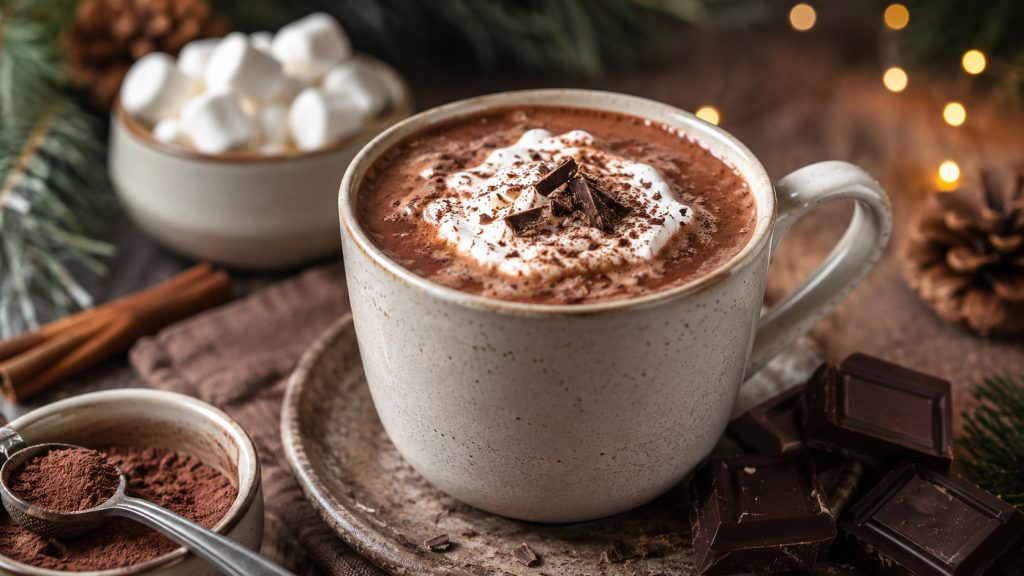
Toppings influence both appearance and texture. A simple cup of hot chocolate becomes more dessert-like when finished with whipped cream, chocolate shavings, or spices.
Popular Toppings
- Whipped cream
- Chocolate curls
- Mini marshmallows
- Cinnamon powder
- Crushed peppermint
- Caramel drizzle
- Cocoa nibs
Whipped cream softens bitterness as it melts into the drink, while chocolate curls intensify aroma because heat releases cocoa fragrance directly from the surface.
Desserts That Pair Well With Hot Chocolate
Several desserts complement chocolate drinks particularly well:
- Butter cookies
- Brownies
- Biscotti
- Croissants
- Chocolate cake
Light pastries usually balance the richness better than extremely sweet desserts. Biscotti works especially well because the crunchy texture contrasts with smooth chocolate.
Holiday-themed serving ideas and seasonal desserts can also be found in holiday dessert ideas, especially recipes designed for winter gatherings and festive menus.
Storage and Reheating Tips
Fresh preparation always tastes best, but leftover hot chocolate stores well for several days if handled properly.
Refrigeration
Store the drink in an airtight container for up to three days. Chocolate solids may settle during storage, so stirring before reheating helps restore smooth consistency.
Best Reheating Methods
The safest reheating methods include:
- Low stovetop heat
- Microwave in short intervals
- Double boiler for thicker recipes
Rapid boiling during reheating can separate fats and damage texture. Slow warming preserves smoothness and flavor.
Can Hot Chocolate Be Frozen?
Yes, although texture may change slightly after thawing. Freezing works best in individual portions because smaller amounts reheat more evenly.
FAQ
What is the best chocolate for homemade hot chocolate?
Dark chocolate with 60–70% cocoa usually creates the best balance between sweetness and strong chocolate flavor.
Can hot chocolate be made without dairy?
Yes. Oat milk and coconut cream create smooth dairy-free versions with rich texture.
Why does homemade hot chocolate become grainy?
Overheating milk or adding chocolate too quickly often causes grainy texture and fat separation.
Is hot chocolate healthier than instant cocoa mix?
Homemade recipes usually contain fewer additives and allow better control over sugar and ingredient quality.
How can hot chocolate be thickened naturally?
Using real chocolate, heavy cream, and gentle simmering naturally thickens the drink without artificial additives.
Earlier we wrote about How to Cook BBQ Ribs at Home: Tender Meat, Rich Sauce, and Real BBQ Flavor