 Frank Rondel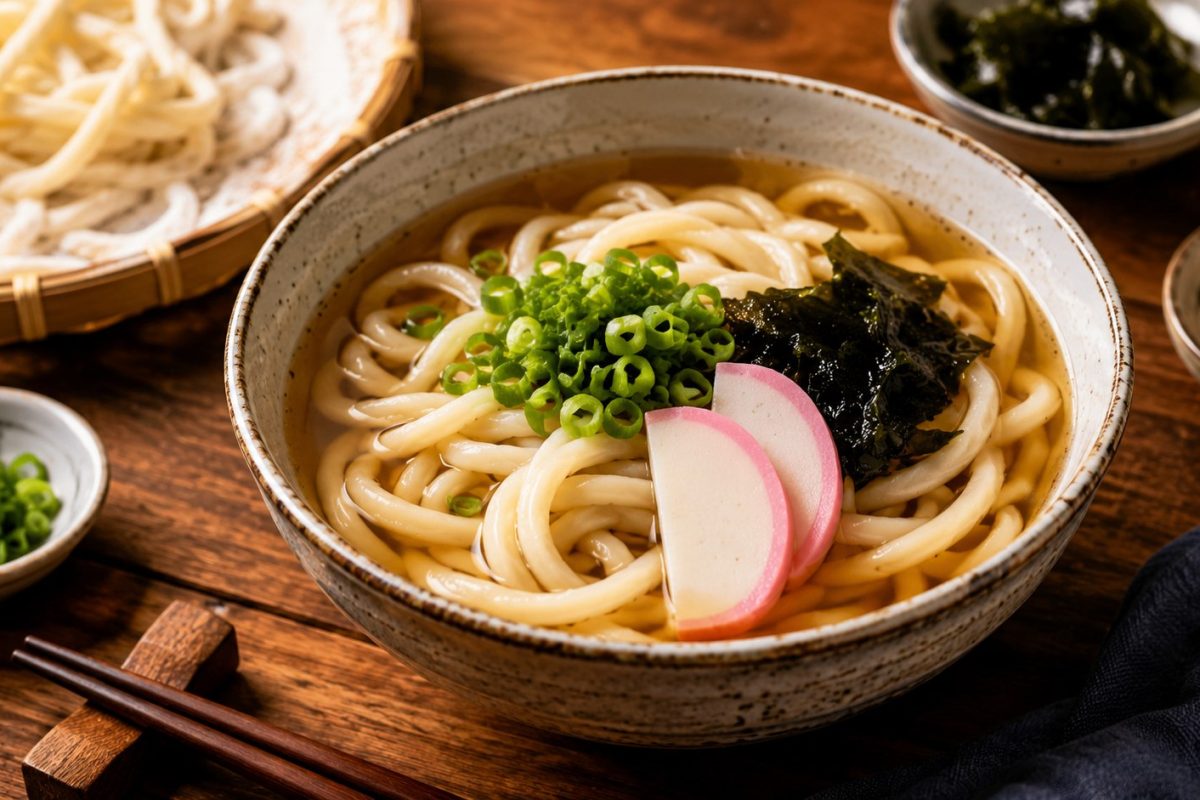
Japanese udon looks simple at first glance: thick wheat noodles, light broth, a few toppings. The difference between average udon and memorable udon comes from texture. Fresh noodles should feel smooth on the surface while keeping a dense, chewy center that absorbs broth without becoming soft, аs noted by customreceipt.com.
A proper homemade udon recipe also changes depending on how it is served. Hot broth creates a rich winter dish, while chilled noodles with dipping sauce become a lighter summer meal. That flexibility helped udon remain one of the most common forms of Japanese comfort food for centuries.
Unlike ramen, udon relies on very few ingredients. Flour, salt, and water create the dough, while dashi forms the backbone of the broth. Small adjustments in kneading, resting time, and noodle thickness completely change the final bowl.
What Is Japanese Udon?
Udon is a traditional Japanese noodle made from wheat flour. It is thicker than ramen and softer than soba, with a texture designed to hold broth without breaking apart.
Food historians trace udon back hundreds of years, with early wheat noodle techniques arriving from China before evolving into distinct regional Japanese styles. Today, areas like Kagawa Prefecture are famous for Sanuki udon, known for its strong chew and square-cut noodles.
Several regional styles remain popular across Japan:
- Sanuki udon — firm and elastic
- Kansai udon — softer noodles with lighter broth
- Inaniwa udon — thin hand-stretched noodles
- Nabeyaki udon — served bubbling in clay pots
Japan’s Ministry of Agriculture documents many traditional noodle dishes and regional cooking methods through the official food culture archive at MAFF Japan.
The appeal of authentic udon comes from balance. The noodles should never overpower the broth, and the broth should support the wheat flavor rather than hide it.
Ingredients for Homemade Udon
Fresh udon requires surprisingly few ingredients. Precision matters more than complexity.
For the Noodles
- 2½ cups bread flour
- ¾ cup water
- 2 teaspoons sea salt
- Potato starch or cornstarch for dusting
Bread flour creates stronger gluten structure, which helps produce the signature chewiness associated with homemade Japanese noodles.
For the Broth
- 4 cups dashi stock
- 2 tablespoons soy sauce
- 2 tablespoons mirin
- 1 tablespoon sake
- 1 teaspoon sugar
- 1 kombu sheet
- Handful of bonito flakes
The Japanese Culinary Academy explains traditional dashi preparation and ingredient ratios on its official website: Japanese Culinary Academy.
Optional Toppings
- Tempura shrimp
- Soft-boiled eggs
- Green onions
- Shiitake mushrooms
- Fried tofu
- Nori seaweed
- Grilled chicken
- Sesame seeds
Readers interested in seafood texture and Japanese cooking techniques may also appreciate How to Cook Octopus Perfectly, which explores how timing and heat affect tenderness in protein-heavy dishes.
Essential Tools for Making Udon
Homemade udon does not require specialized restaurant equipment. A few basic kitchen tools handle most of the process as mentioned https://matsuki.pl/.
| Tool | Purpose |
|---|---|
| Rolling pin | Flattens dough evenly |
| Large mixing bowl | Combines ingredients |
| Sharp knife | Cuts noodle strands |
| Large pot | Boils noodles properly |
| Bench scraper | Handles sticky dough |
| Pasta machine | Optional for consistency |
Traditional Japanese kitchens often knead udon dough by foot pressure inside sealed bags because the dough can become extremely firm.
How to Make Udon Noodles Step by Step
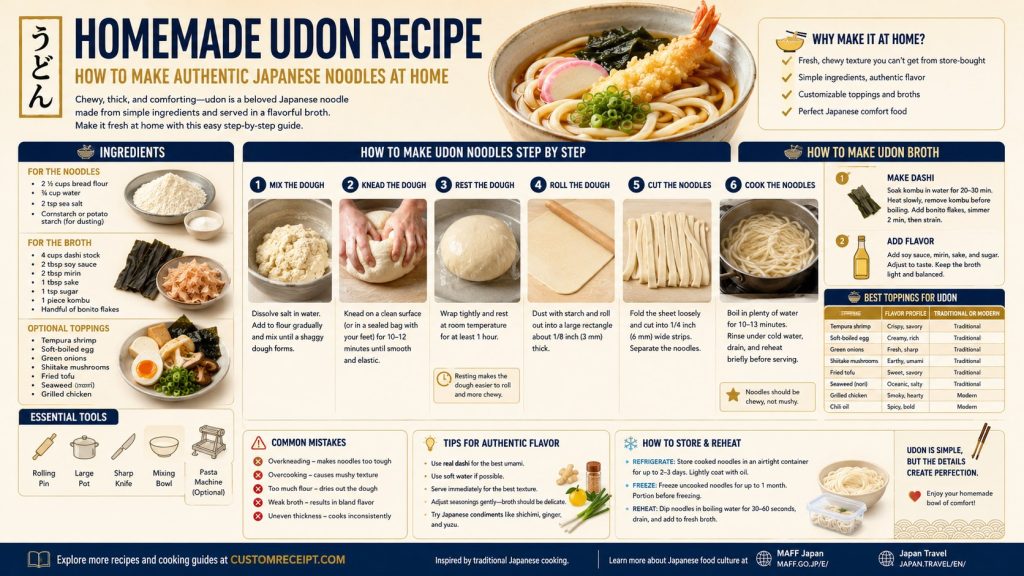
The process behind how to make udon noodles focuses on gluten development and controlled hydration.
1. Mix the Dough
Dissolve the salt completely in water before adding it to the flour.
Combine slowly until the dough becomes shaggy and uneven. At this stage, the mixture should look rough rather than smooth.
Avoid adding extra water too early.
2. Knead the Dough
Transfer the dough to a clean surface and knead firmly.
- Press the dough forward
- Fold it back inward
- Rotate slightly
- Repeat for 10–12 minutes
The texture gradually changes from crumbly to dense and elastic.
3. Rest the Dough
Wrap the dough tightly and leave it at room temperature for one hour.
Resting relaxes gluten strands and prevents shrinkage during rolling.
4. Roll the Dough
Dust the surface lightly with starch.
Roll the dough into a large rectangle approximately ⅛ inch thick. Consistent thickness ensures even cooking later.
5. Cut the Noodles
Fold the sheet loosely and cut noodles about ¼ inch wide using a sharp knife.
Separate the strands immediately to keep them from sticking together.
6. Boil the Noodles
Bring a large pot of water to a strong boil.
Fresh udon noodles generally require:
- 10–13 minutes for thick noodles
- 8–10 minutes for thinner noodles
After boiling:
- Drain immediately
- Rinse under cold water
- Remove excess starch
- Reheat briefly before serving hot
This rinse creates the glossy finish associated with restaurant-quality udon noodle recipe preparation.
“Fresh udon should feel resilient rather than soft. The chew is part of the flavor.”
How to Make Traditional Udon Broth
Dashi gives udon its identity. Without proper broth, even perfectly cooked noodles taste flat.
Preparing Dashi
Traditional dashi uses kombu and bonito flakes.
- Soak kombu in water for 20–30 minutes
- Heat slowly without boiling
- Remove kombu before simmering
- Add bonito flakes
- Steep for 2 minutes
- Strain carefully
The resulting broth should taste light but deeply savory.
Flavor Components
| Ingredient | Function |
|---|---|
| Kombu | Umami base |
| Bonito flakes | Smoky depth |
| Soy sauce | Salt and color |
| Mirin | Sweetness |
| Sake | Aroma balance |
A proper udon broth recipe should remain clear rather than thick or oily.
Readers exploring layered broth flavors may also enjoy How to Make Hot Chocolate at Home with Rich, Creamy Flavor, where ingredient balance and texture create a similar depth despite the completely different flavor profile.
Japan’s official tourism portal also documents regional udon broth traditions and serving styles at Japan Travel Guide.
Best Toppings for Udon
Toppings transform udon from a minimal noodle bowl into a substantial meal.
| Topping | Flavor Profile | Traditional or Modern |
|---|---|---|
| Tempura shrimp | Crispy and savory | Traditional |
| Soft-boiled egg | Creamy richness | Traditional |
| Green onions | Fresh sharpness | Traditional |
| Shiitake mushrooms | Earthy umami | Traditional |
| Fried tofu | Sweet and absorbent | Traditional |
| Seaweed | Salty ocean flavor | Traditional |
| Grilled chicken | Smoky and hearty | Modern |
| Chili oil | Spicy richness | Modern |
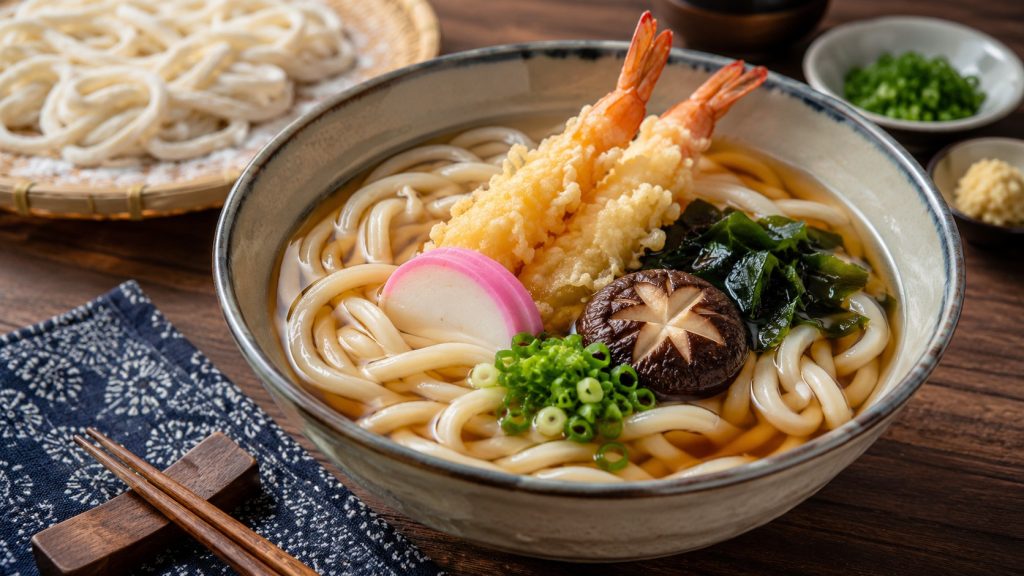
Tempura udon remains one of the most recognized restaurant versions because crunchy batter contrasts with soft noodles and hot broth.
Common Mistakes When Cooking Udon
Several common mistakes affect texture immediately.
- Overkneading creates tough noodles
- Overcooking removes elasticity
- Too much flour dries the dough
- Weak broth produces bland flavor
- Uneven cuts cause inconsistent cooking
- Skipping resting time tightens the dough
Many beginners also underestimate how important broth concentration is. A diluted broth weakens the entire dish, even with properly cooked noodles.
Homemade vs Store-Bought Udon
Fresh handmade noodles behave differently than frozen supermarket versions.
| Feature | Homemade Udon | Store-Bought Udon |
|---|---|---|
| Texture | Dense and chewy | Softer and uniform |
| Flavor | Fresh wheat aroma | Mild flavor |
| Preparation time | Longer | Faster |
| Cost | Lower over time | Higher per serving |
| Authenticity | Traditional texture | Commercial consistency |
Frozen premium udon still performs well for quick meals, but handmade noodles provide more control over thickness and chewiness.
Homemade noodle dishes also share similarities with slow-cooked comfort foods where patience changes the final texture. Recipes like How to Cook BBQ Ribs at Home rely on the same principle: controlled cooking creates depth that shortcuts rarely match.
Tips for Authentic Japanese Flavor
Restaurant-style udon depends on subtle details more than expensive ingredients.
Use Real Dashi
Instant powders save time but often flatten the flavor profile.
Control Water Temperature
Boiling kombu aggressively creates bitterness.
Focus on Texture
Udon should remain slightly firm in the center even after serving.
Serve Immediately
Fresh noodles soften quickly once sitting in broth.
Add Condiments Carefully
Traditional additions include:
- Shichimi togarashi
- Grated ginger
- Yuzu peel
- Sesame seeds
- Wasabi
A successful easy udon recipe balances noodle texture, broth clarity, and moderate seasoning rather than overwhelming richness.
Popular Variations of Udon
Different udon styles developed around seasonal ingredients and regional preferences.
Curry Udon
Japanese curry thickens the broth and creates a richer winter dish.
Cold Udon
Served chilled with dipping sauce during warmer months.
Tempura Udon
Pairs crispy seafood or vegetables with steaming broth.
Nabeyaki Udon
Cooked and served in clay pots with egg, chicken, and mushrooms.
Vegan Udon
Uses kombu and shiitake mushrooms instead of bonito flakes for umami depth.
These variations helped transform udon into one of the most adaptable noodle dishes in Japanese cuisine.
How to Store and Reheat Udon
Fresh udon stores well if protected from drying out.
Refrigeration
Cooked noodles last 2–3 days in airtight containers.
Lightly coat them with oil before storing.
Freezing
Fresh noodles freeze effectively for up to one month.
Portioning before freezing makes reheating easier.
Reheating
Avoid prolonged microwaving.
Instead:
- Bring water to a gentle boil
- Dip noodles for 30–60 seconds
- Drain immediately
- Add fresh broth
This method restores elasticity without making noodles soggy.
FAQ
Can udon be frozen?
Yes. Both cooked and uncooked udon freeze well when stored properly.
Is udon healthier than ramen?
Udon generally contains less fat because the noodles use simpler ingredients and lighter broth.
Can I make udon without dashi?
Yes, though traditional flavor changes noticeably. Vegetable broth can replace dashi.
Why are udon noodles chewy?
Chewiness comes from gluten development, kneading, and resting time.
What flour works best for udon?
Bread flour produces the best elasticity because of its higher protein content.
How long does homemade udon last?
Fresh homemade udon usually lasts 2–3 days refrigerated or about one month frozen.
Earlier we wrote about How to Make Philadelphia Sushi Rolls at Home Like a Restaurant