 Frank Rondel
Restaurant-style sushi does not require expensive equipment or professional kitchen training. A classic Philadelphia roll uses accessible ingredients, simple assembly techniques, and one of the easiest sushi formats for beginners, аs noted by customreceipt.com.
Homemade sushi usually tastes lighter than delivery rolls because the ingredient balance changes immediately after preparation. Restaurants often use more cream cheese, sweeter rice seasoning, and thicker salmon slices to preserve flavor during transport. Freshly assembled rolls focus more on texture and temperature contrast.
A proper Philadelphia roll recipe depends less on complicated techniques and more on consistency. Rice moisture, salmon temperature, and rolling pressure affect the final result more than expensive ingredients.
Ingredients Needed for a Philadelphia Roll
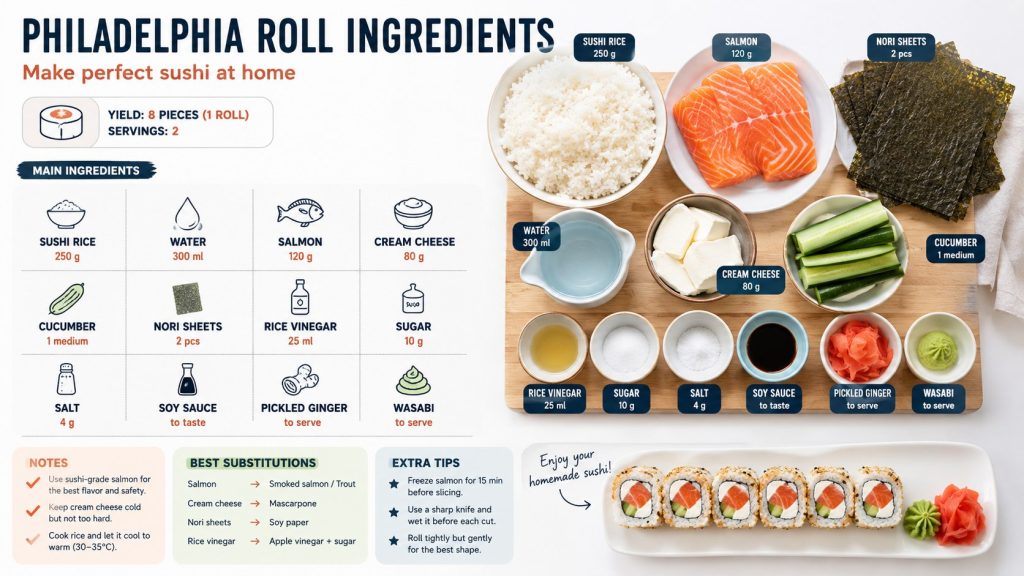
One standard roll makes 8 pieces and serves two people comfortably.
Main Ingredients
- 250 g sushi rice
- 300 ml water
- 120 g fresh salmon
- 80 g cream cheese
- 1 cucumber
- 2 nori sheets
- 25 ml rice vinegar
- 10 g sugar
- 4 g salt
- Soy sauce
- Pickled ginger
- Wasabi
The ratio between filling and rice matters more than quantity alone. Excess cream cheese creates a heavy texture that hides salmon flavor, while too much cucumber releases water and weakens the roll structure.
| Ingredient | Purpose | Possible Substitute |
|---|---|---|
| Sushi rice | Sticky structure | Calrose rice |
| Nori sheets | Roll wrapper | Soy paper |
| Salmon | Main protein | Smoked trout |
| Cream cheese | Creamy texture | Mascarpone |
| Rice vinegar | Rice seasoning | Apple vinegar with sugar |
Each ingredient changes texture differently. Rice controls elasticity, vinegar preserves shine, and salmon fat content determines softness during chewing. Cream cheese should remain cool but not cold because hard cheese tears rice during rolling.
The growing popularity of sushi outside Japan also changed ingredient accessibility. The article from timeout.od.ua explains how sushi became one of the most recognizable international comfort foods.
For seafood preparation techniques with similar temperature control principles, the guide on how to cook octopus perfectly explains why texture changes dramatically when proteins overheat.
How to Cook Sushi Rice Properly
Rice controls nearly every part of homemade sushi quality. Wet rice creates soft rolls that collapse during slicing. Dry rice cracks nori sheets and separates from the filling.
A reliable sushi rice recipe starts with the correct ratio: 250 g rice to 300 ml water.
Step-by-Step Rice Preparation
- Rinse rice 4–5 times until water becomes nearly transparent.
- Soak rice in cold water for 20 minutes.
- Cook on low heat for 12 minutes with the lid closed.
- Leave rice covered for another 10 minutes.
- Mix vinegar, sugar, and salt separately.
- Fold seasoning gently into warm rice.
The ideal rice temperature for sushi stays around 30–35°C. Hot rice melts cream cheese and weakens nori texture. Cold rice becomes dense and difficult to shape evenly.
Professional sushi chefs cool rice gradually to preserve gloss and prevent moisture buildup.
Wooden spatulas work better than metal spoons because they reduce grain compression. Aggressive stirring releases starch and turns rice sticky instead of elastic.
Official seafood handling recommendations from the U.S. Food & Drug Administration appear at FDA Seafood Safety.
Choosing the Best Fish for Homemade Sushi
Fish quality changes flavor immediately. Restaurant salmon usually contains more fat and arrives in carefully controlled refrigerated packaging. Grocery store salmon can still work well if labeled sushi-grade or previously frozen.
Best Fish Options for Beginners
- Sushi-grade Atlantic salmon
- Frozen salmon thawed overnight
- Smoked salmon
- Trout for lower-cost preparation
Frozen salmon often slices more cleanly because stable temperature keeps texture firm. Smoked salmon simplifies rolling because it tears less during cutting.
| Store-Bought Salmon | Restaurant Salmon |
|---|---|
| Leaner texture | Higher fat content |
| Uneven cuts | Uniform slicing |
| Variable storage | Controlled refrigeration |
The National Fisheries Institute recommends keeping raw seafood below 4°C before preparation. Their official storage recommendations appear at National Fisheries Institute.
Premium delivery restaurants often use thicker salmon slices and more precise ingredient layering. Examples of this style appear in the premium sushi overview from timeout.od.ua premium rolls guide.
A balanced how to make sushi at home process depends more on freshness and knife precision than luxury ingredients.
How to Roll Sushi Without a Bamboo Mat
Professional bamboo mats improve consistency, but homemade sushi can still look clean without specialized tools. Plastic wrap and a folded kitchen towel provide enough support for tight rolls.
Rolling Technique Without Special Equipment
- Place plastic wrap over a folded towel.
- Put nori shiny side downward.
- Spread rice evenly with wet fingers.
- Flip the nori sheet upside down.
- Add salmon, cucumber, and cream cheese.
- Roll forward slowly using even pressure.
- Shape the edges before slicing.
Inside-out rolls require slightly firmer pressure because rice remains on the outside. Plastic wrap prevents sticking and helps maintain shape during rolling.
A wet knife creates cleaner cuts and prevents rice from separating. Pressing downward instead of slicing smoothly usually destroys the outer rice layer.
For softer texture techniques in home cooking, the recipe for steamed chicken meatballs for gastritis uses the same principle of gentle heat and moisture control.
Common Mistakes That Ruin Homemade Sushi
Most failed rolls happen because of incorrect proportions rather than expensive ingredient limitations.
Typical Beginner Errors
- Thick rice layers
- Warm salmon
- Excess cream cheese
- Dry nori sheets
- Dull knives
- Uneven pressure
Thick rice absorbs moisture unevenly and creates dense texture. Warm fish softens cream cheese and destabilizes the roll during cutting. Dry nori becomes brittle after only a few minutes of air exposure.
Why Homemade Rolls Fall Apart
Rolls usually collapse because rice lacks enough compression or filling distribution becomes uneven. Overfilled rolls split during slicing because pressure pushes ingredients outward.
Dry sushi often comes from:
- Refrigerated rice
- Lean salmon
- Excessive air exposure
- Insufficient cream cheese
Professional sushi kitchens often cover prepared rice with damp cloths during service to maintain elasticity and surface moisture.
A properly balanced homemade sushi rolls texture should remain compact without feeling heavy.
Sushi Hacks That Improve Flavor Instantly
Small adjustments create the biggest difference between average homemade sushi and restaurant-style presentation.
Useful Sushi Tricks
- Freeze salmon for 15 minutes before slicing
- Chill serving plates before plating
- Wet the knife after every cut
- Add toasted sesame seeds lightly
- Mix lemon juice into soy sauce
Temperature control improves texture more than expensive ingredients. Slightly chilled fish creates cleaner slices and stronger visual contrast against rice.
Sushi restaurants focus heavily on consistency. Stable temperatures and even pressure matter more than complicated recipes.
Professional chefs also slice fish against the grain to create softer texture during chewing. Sharp knives preserve smooth salmon surfaces instead of tearing fibers.
The right cream cheese sushi roll balance allows salmon flavor to remain dominant instead of hidden behind dairy richness.
How to Serve Philadelphia Rolls at Home
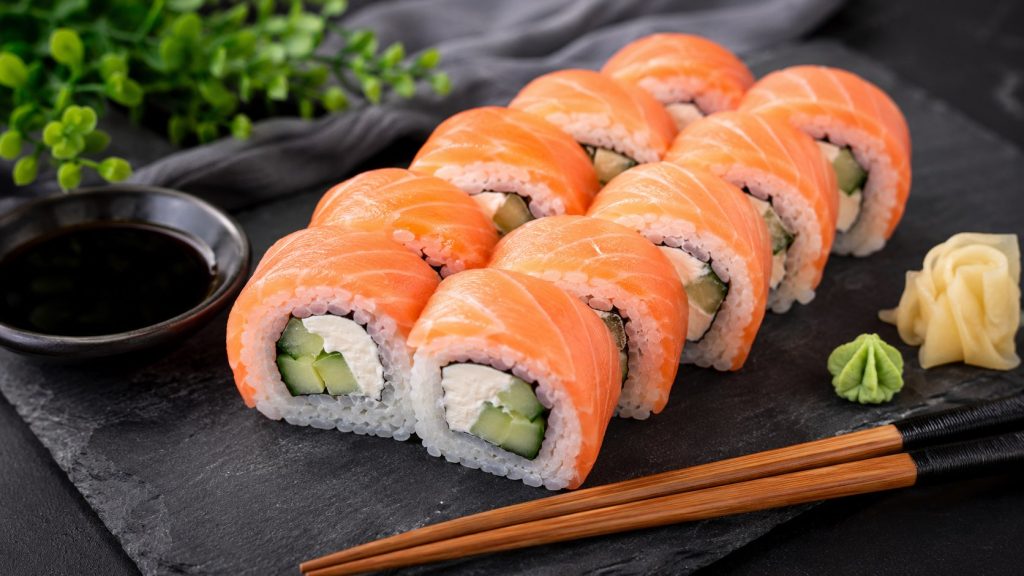
Presentation changes how sushi feels before the first bite. Dark serving plates make salmon appear brighter, while white plates emphasize contrast between rice and nori.
Simple Serving Ideas
- Arrange sushi with cut sides upward
- Serve soy sauce separately
- Use minimal garnish
- Add sesame seeds sparingly
- Keep ginger portions small
Restaurant plating usually leaves visible empty space between pieces because crowded sushi loses shape faster. Small portions also preserve rice temperature longer during serving.
| Element | Purpose |
|---|---|
| Soy sauce | Salt balance |
| Pickled ginger | Palate cleanser |
| Wasabi | Sharp heat |
Large amounts of soy sauce overpower salmon flavor immediately. Pickled ginger works best between bites because acidity resets flavor perception and cleans the palate.
For dessert after sushi, homemade tiramisu follows the same home-dinner approach with texture-focused preparation and simple ingredients.
FAQ
Can Philadelphia rolls be made without raw fish?
Yes. Smoked salmon, cooked shrimp, or imitation crab work well.
Why does sushi rice become too sticky?
Too much water or aggressive mixing releases excess starch.
How long can homemade sushi stay refrigerated?
Fresh sushi tastes best within 12 hours after preparation.
Is regular cream cheese suitable for sushi?
Yes. Full-fat cream cheese creates smoother texture and better stability.
Why do rolls fall apart during slicing?
Loose rolling pressure and dull knives are the most common reasons.
Can sushi rice be prepared ahead of time?
Yes. Rice stays usable for 4–6 hours if covered with a damp towel.
Earlier we wrote about How to Make Hot Chocolate at Home with Rich Creamy Flavor