 Frank Rondel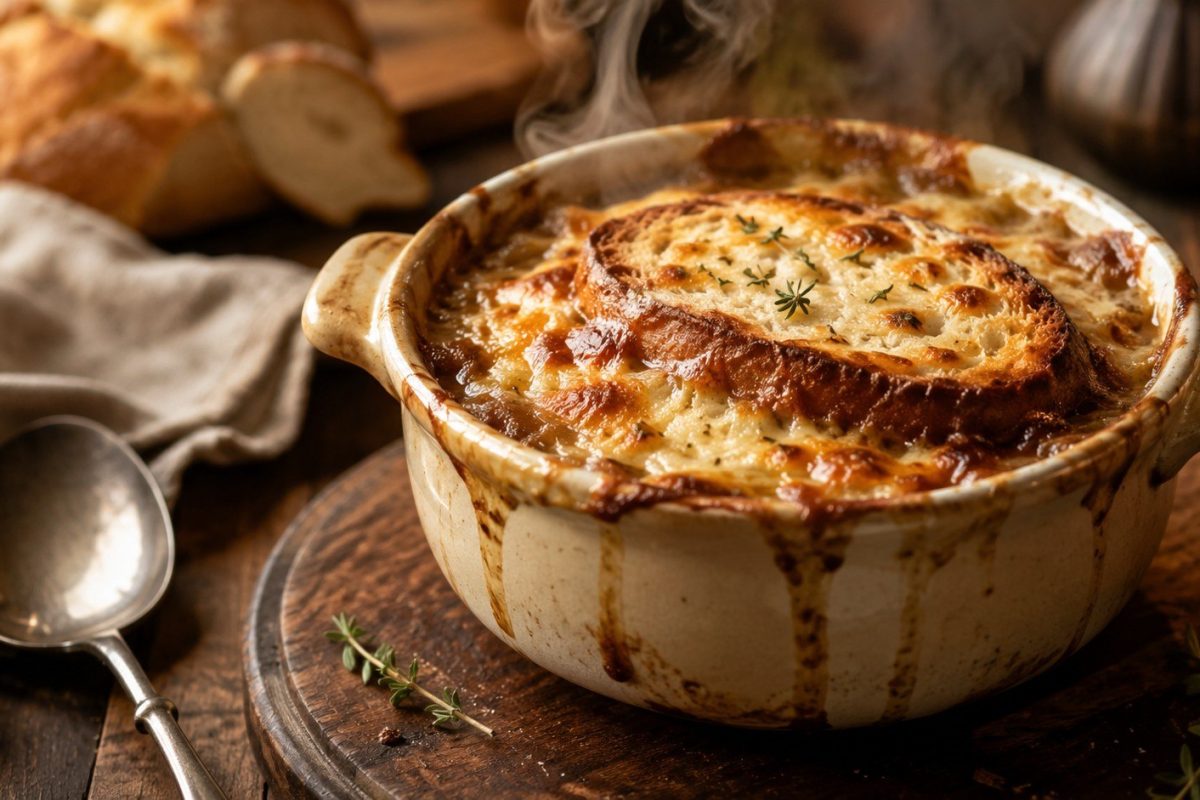
How to make French onion soup begins with patience rather than expensive ingredients. Slowly browned onions, concentrated broth, toasted baguette, and bubbling Gruyère create the deep flavor associated with a Parisian bistro, as the customreceipt.com editorial team notes.
The recipe looks simple, but several small decisions determine the result. The onions must soften before they brown. The broth needs enough body to support their sweetness. The bread should remain crisp beneath the cheese instead of collapsing into wet dough.
This version serves 4 to 6 people and takes about 1 hour 50 minutes. Most of that time is passive cooking, although the onions require regular attention.
Ingredients for Classic French Onion Soup
Traditional French onion soup combines inexpensive produce with carefully developed flavor. Yellow onions are the safest choice because they balance sweetness, pungency, and structure. Sweet onions can be included, but using only sweet varieties may produce a flat result.
Choose a wide, heavy pot with a thick bottom. A narrow saucepan traps moisture and slows browning. Stainless steel, enameled cast iron, or a Dutch oven works better than a lightweight nonstick pan.
For 4 to 6 servings, prepare these ingredients:
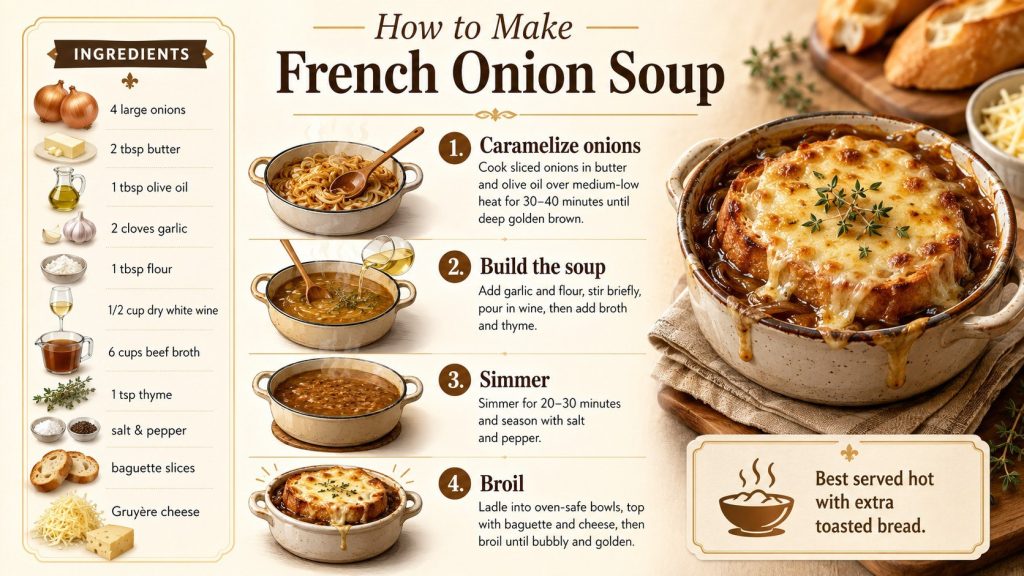
- 1.2 kg yellow onions, about 5 or 6 medium onions;
- 45 g unsalted butter;
- 1 tablespoon olive oil;
- 1 teaspoon fine salt, plus more to taste;
- 2 garlic cloves, finely chopped;
- 1 tablespoon all-purpose flour;
- 150 ml dry white wine or dry sherry;
- 1.5 liters beef stock;
- 1 bay leaf;
- 3 thyme sprigs;
- 1 teaspoon Worcestershire sauce, optional;
- freshly ground black pepper;
- 1 small baguette;
- 200 g Gruyère cheese;
- 30 g Parmesan cheese, optional.
The butter contributes richness, while olive oil reduces the risk of scorching. Flour gives the broth slight body without turning it into gravy. Wine lifts the caramelized residue from the bottom and adds acidity.
Homemade beef stock produces the strongest result, but good chicken stock is often better than weak commercial beef broth. A vegetable version also works when the stock contains roasted mushrooms, onions, carrots, and celery. Taste packaged broth before adding salt because sodium levels vary considerably.
Do not judge the quantity of raw onions too early. They lose most of their volume as moisture evaporates, leaving a concentrated, silky base.
Ingredient Ratios and Cooking Times
The following proportions provide a practical reference when adjusting the recipe. They can also prevent an overly watery soup or an excessively thick onion mixture.
| Component | Recommended amount | Purpose | Approximate time |
|---|---|---|---|
| Yellow onions | 1.2 kg | Sweet and savory foundation | 45–60 minutes |
| Butter and oil | 45 g and 1 tablespoon | Browning and richness | Added at the start |
| Dry wine or sherry | 150 ml | Acidity and deglazing | 3–5 minutes |
| Beef or chicken stock | 1.5 liters | Main liquid and umami | 25–30 minutes |
| Baguette | 8–12 slices | Crisp topping | 8–12 minutes |
| Gruyère | 200 g | Nutty melted crust | 3–5 minutes |
| Total cooking time | — | Complete preparation | 100–120 minutes |
These quantities produce a soup with substantial onion flavor and enough broth for generous servings. Reducing the stock creates a thicker, more intense result. Adding too much liquid immediately can dilute the browned onion base.
The listed cooking times are guides rather than strict deadlines. Pan width, onion moisture, and burner strength affect the process. Color and aroma provide better indicators than a timer. Proper onions should look deep golden brown, not black or dry.
How to Caramelize Onions Without Burning Them
Slice the onions from root to stem into pieces about 3 to 4 mm thick. Uniform slices cook at a similar speed. Extremely thin pieces can disintegrate before developing enough color.
Melt the butter with the olive oil over medium heat. Add the onions and salt, then turn them until every slice is lightly coated. Cover the pot for 8 minutes to begin softening them.
Remove the lid and reduce the heat to medium-low. Cook for another 35 to 50 minutes, stirring every 3 to 5 minutes. Stir more frequently once brown residue begins appearing on the bottom.
“Caramelizing the onions slowly in butter until they’re rich golden brown produces the sweetest, most flavorful results.”
— Daniel Gritzer, culinary director, Serious Eats, in the publication’s French onion soup recipe.
The onions pass through several visible stages:
- They soften and release water.
- Their volume falls sharply.
- Pale slices become golden.
- Brown residue forms on the pot.
- The onions turn jammy and deep amber.
After these stages, the mixture should smell sweet, nutty, and savory. Black spots indicate excessive heat rather than successful caramelization. Add 1 or 2 tablespoons of water when the bottom darkens too quickly.
Avoid adding baking soda. It speeds browning but weakens onion structure and can create a mushy texture. Sugar is also unnecessary when the onions cook slowly. Natural sugars become concentrated as their water evaporates.
Caramelized onions for French onion soup cannot realistically be completed in 10 minutes using a conventional pot. Food & Wine’s kitchen testing found that a partially covered stovetop method produced consistent caramelization in roughly 55 minutes. Faster methods often create browned edges while leaving the interior undercooked.
How to Build the Broth
Once the onions are deep amber, add the chopped garlic. Cook it for about 30 seconds, just until fragrant. Garlic burns quickly and should not spend the full caramelization period in the pot.
Sprinkle flour over the onions and stir for 1 minute. Pour in the wine or sherry, then scrape the browned residue from the bottom with a wooden spoon. This process, known as deglazing, returns concentrated flavor to the soup.
Let the wine reduce by about half. Add the stock, bay leaf, thyme, Worcestershire sauce, and several grinds of black pepper. Bring everything to a gentle simmer.
Cook uncovered for 25 to 30 minutes. Vigorous boiling can make the stock cloudy and reduce it too aggressively. Remove the herbs before serving.
The finished broth should taste slightly stronger than an ordinary soup. Bread and melted cheese soften its saltiness and absorb part of its aroma.
Taste before adding more salt. Commercial stock, cheese, and Worcestershire sauce already contain sodium. A small splash of sherry vinegar can correct excessive sweetness. Add only ½ teaspoon at a time.
How to Prepare the Baguette and Gruyère Topping
The toasted topping transforms onion broth into classic French onion soup. Fresh, soft bread absorbs liquid too quickly, so a day-old baguette is preferable. Each slice should fit inside the serving bowl without completely sealing its surface.
Arrange the bread on a baking sheet. Toast at 190°C for 8 to 12 minutes, turning once. The slices should feel dry and crisp throughout.
Suitable cheeses include:
- Gruyère for a nutty, slightly sweet flavor;
- Comté for a more complex French character;
- Emmental for excellent melting;
- aged Swiss cheese as an accessible substitute;
- a mixture of Gruyère and Parmesan for a stronger crust.
Gruyère remains the most balanced option because it melts evenly without releasing excessive oil. Pre-shredded cheese often contains starch that reduces smooth melting. Grating a block immediately before serving provides a more cohesive topping.
Mozzarella creates stretch but contributes little flavor. Cheddar can separate under intense heat and changes the soup’s traditional profile. Parmesan works best as an accent rather than the only cheese.
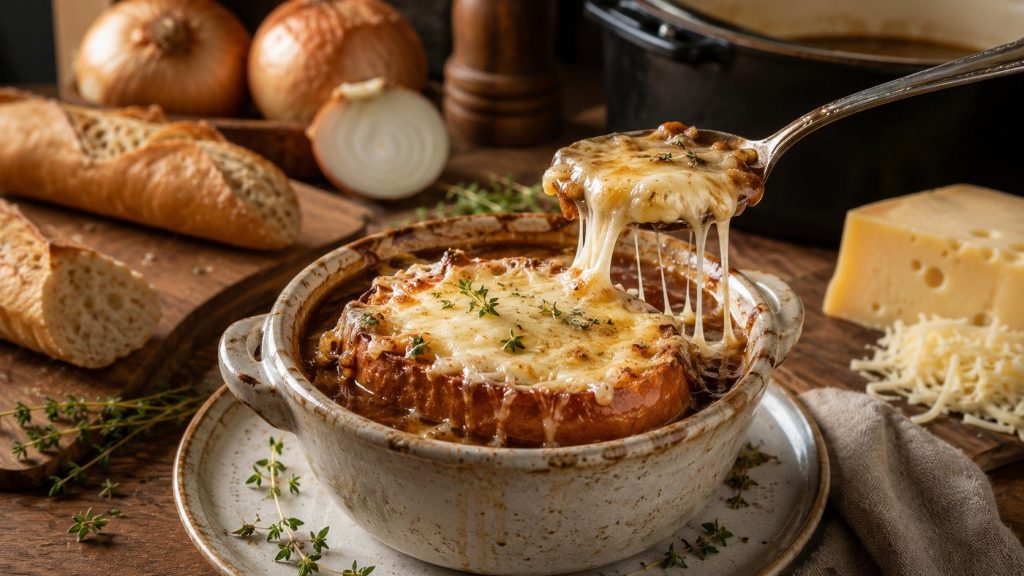
Prepare more cheese than appears necessary. Some falls between the bread and bowl, where it thickens the broth. The remaining cheese forms the browned crust expected from French onion soup with Gruyère.
How to Assemble and Broil the Soup
Use oven-safe ceramic crocks or sturdy soup bowls. Check the manufacturer’s instructions before placing any bowl under a broiler. Ordinary serving dishes can crack from thermal shock.
Follow this order:
- Place the bowls on a rimmed baking tray.
- Fill each bowl with hot onion soup.
- Position 1 or 2 toasted baguette slices on top.
- Cover the bread generously with grated cheese.
- Broil until the cheese bubbles and browns.
- Rest the bowls for 3 minutes before serving.
The tray catches spills and makes the hot bowls easier to move. Leave a small gap below the rim because bubbling soup expands. Watch the cheese continuously during broiling.
Depending on the appliance, browning takes 3 to 5 minutes. Rotate the tray when one side colors faster. The ideal crust has dark golden patches without burned edges.
The bowls remain dangerously hot after leaving the oven. Serve them on plates or heat-resistant boards. Warn diners before placing the soup on the table. A long-handled spoon makes it easier to break through the cheese without touching the crock.
Common French Onion Soup Mistakes
The most frequent failure is rushing the onions. Increasing the heat may darken them, but it cannot replace gradual moisture loss. Burned onions make the entire broth bitter.
Other avoidable problems include:
- overcrowding a small saucepan;
- using watery or flavorless stock;
- slicing onions at inconsistent thicknesses;
- adding garlic too early;
- leaving the bread untoasted;
- using too little cheese;
- walking away while the bowls are broiling.
A broad pot allows steam to escape and exposes more onions to direct heat. Regular stirring prevents hot spots without stopping browning. Deglazing captures the fond instead of leaving it stuck to the cookware.
The bread must be dry before it touches the soup. Otherwise, it becomes soft before the cheese browns. Cheese should cover the bread and extend slightly beyond its edges.
Broilers operate at intense temperatures, and the difference between browned and burned may be less than 1 minute. Keep the oven door slightly open only when the appliance manual permits it. Never use glass bowls unless they are specifically rated for broiling.
Variations for Different Diets and Ingredients
The core method remains useful even when ingredients change. The onions still require slow browning, and the topping still needs dry bread with a well-melting cheese.
For vegetarian soup, use a dark mushroom or roasted vegetable stock. A spoonful of soy sauce can provide additional umami, although it should remain subtle. For an alcohol-free version, deglaze with stock and add 1 teaspoon of apple cider vinegar near the end.
Gluten-free cooks can omit flour or use a small amount of cornstarch slurry. Choose certified gluten-free bread for the topping. The soup remains flavorful without thickening because onions naturally provide body.
A lighter version can use chicken stock and less cheese. However, cutting the onions or caramelization time will remove the dish’s essential character. The recipe depends more on technique than fat.
How to Store and Reheat French Onion Soup
Cool the soup before refrigeration, but do not leave it at room temperature for extended periods. Store the broth separately from the toasted bread and cheese. Combined leftovers become soggy and are harder to reheat evenly.
The onion broth keeps for 3 to 4 days in a sealed refrigerator container. It can be frozen for about 3 months. Leave space in the container because liquid expands during freezing.
Reheat the broth on the stove until it reaches a steady simmer. Prepare fresh toast, add cheese, and broil each portion before serving. This method restores the contrast between liquid soup and crisp topping.
French onion soup often tastes better the next day because the broth absorbs more onion flavor. It is therefore suitable for advance preparation. Complete everything except the bread and cheese topping.
FAQ
What onions are best for French onion soup?
Yellow onions provide the best balance of sweetness, savory flavor, and structure. A mixture of yellow, sweet, and red onions creates more complexity. Avoid using only red onions because their flavor can dominate the broth.
How long does it take to caramelize onions?
A conventional stovetop method usually takes 40 to 60 minutes. The precise time depends on pan width, heat level, and onion moisture. Deep amber color matters more than the clock.
Can French onion soup be made without wine?
Yes. Deglaze the pot with stock, then add 1 teaspoon of sherry vinegar or apple cider vinegar. The acidity balances the onions without alcohol.
Which cheese can replace Gruyère?
Comté, Emmental, Jarlsberg, or aged Swiss cheese are suitable substitutes. Choose a cheese that melts evenly and has a nutty flavor. Mozzarella alone tastes too mild.
Why does my French onion soup taste bitter?
The onions probably burned, the fond became black, or the broth reduced excessively. Dark brown residue is desirable, while black residue introduces bitterness. Lower the heat and deglaze earlier during the next batch.
Can the soup be prepared one day ahead?
Yes. Prepare and refrigerate the onion broth, then reheat it before serving. Toast the baguette and broil the cheese topping shortly before the meal.
How can I make the broth taste richer?
Use concentrated homemade stock, reduce the soup uncovered, or add a small amount of Worcestershire sauce. A mixture of beef and chicken stock can taste more balanced than weak commercial beef broth.
Earlier we wrote about How to Make Banana Pudding: A Creamy Southern Dessert With Vanilla Wafers