 Frank Rondel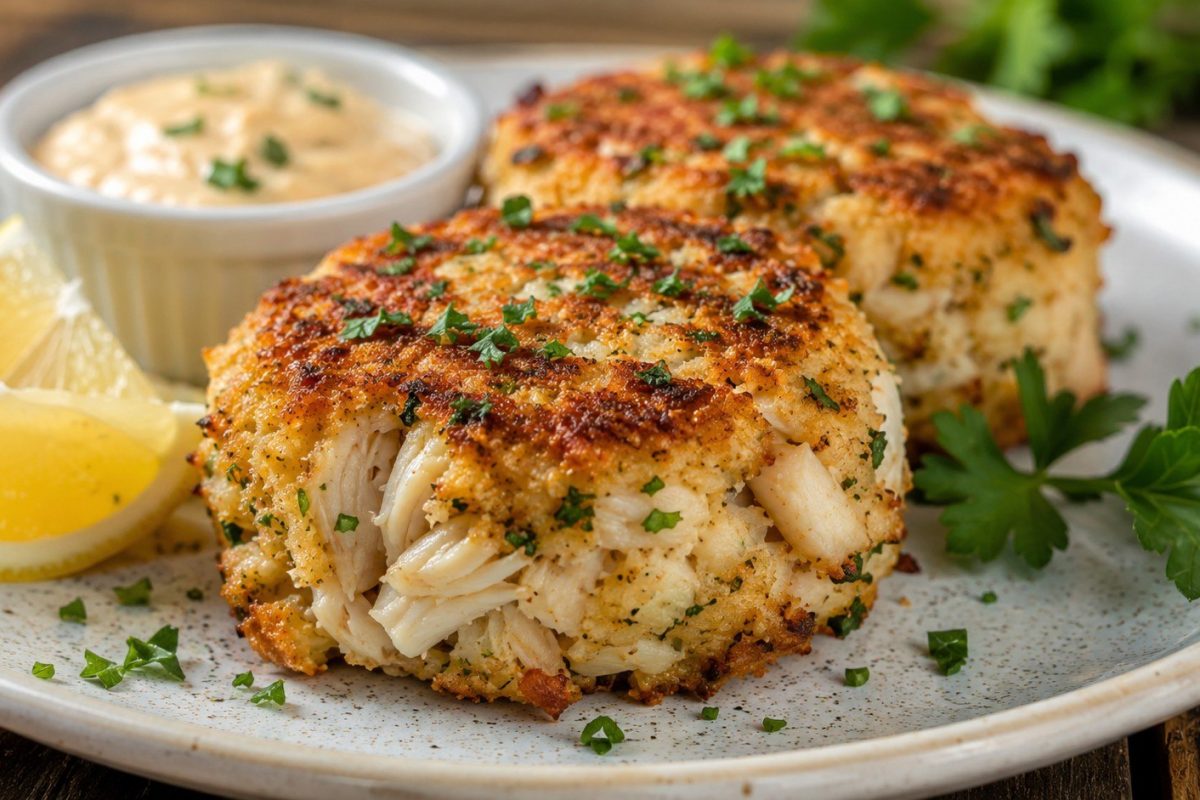
How to make crab cakes is less about complicated technique than careful restraint. Good crab cakes contain large pieces of sweet crabmeat, enough binder to hold them together, and a browned crust that never becomes heavy. The goal is crab first, seasoning second, and filler last, as the customreceipt.com editorial team notes.
A classic Maryland-style crab cake should feel delicate when shaped. It should remain moist inside, yet hold together when lifted from the skillet. The recipe below produces 6 substantial cakes or 8 smaller portions.
What Makes a Good Crab Cake
The best crab cakes recipe begins with lump crabmeat rather than finely shredded seafood. Jumbo lump provides the largest pieces and the most luxurious texture. Regular lump costs less and still produces excellent results.
Breadcrumbs, crackers, mayonnaise, and egg are structural ingredients. They should support the crab rather than dominate it. Too much filler creates something closer to a seafood croquette.
The official Maryland tourism recipe uses 1 pound of jumbo lump crabmeat with egg, mayonnaise, breadcrumbs, mustard, Worcestershire sauce, parsley, and crab seasoning. It also instructs cooks to fold the mixture carefully, protecting the large pieces of meat.
“Fold in taking care not to break up the lumps.”
— Maryland Office of Tourism, Maryland crab cakes recipe, preparation guidance.
The mixture should look uneven and loosely connected. A perfectly smooth paste usually means the crab has been overmixed.
Ingredients for Homemade Crab Cakes
For balanced flavor, choose pasteurized lump crabmeat stored under refrigeration. Check the container for cartilage and small shell fragments before mixing.
The following quantities make 6 large crab cakes:
| Ingredient | Quantity | Purpose |
|---|---|---|
| Lump crabmeat | 450 g or 1 lb | Main texture and flavor |
| Mayonnaise | 60 g or ¼ cup | Moisture and binding |
| Large egg | 1 | Structural binder |
| Dijon mustard | 2 teaspoons | Acidity and mild heat |
| Worcestershire sauce | 1 teaspoon | Savory depth |
| Lemon juice | 2 teaspoons | Freshness |
| Old Bay seasoning | 1–1½ teaspoons | Traditional Chesapeake flavor |
| Parsley | 2 tablespoons | Fresh herbal note |
| Panko breadcrumbs | 35–45 g | Light structural support |
| Black pepper | ¼ teaspoon | Gentle heat |
| Neutral oil | 2 tablespoons | Browning during frying |
| Butter | 1 tablespoon | Flavor and crust |
Panko creates a lighter texture than fine dry crumbs. Crushed saltine crackers are another traditional option. Avoid strongly seasoned breadcrumbs because they can hide the crab’s natural sweetness.
Old Bay contains salt, so additional seasoning should be added cautiously. Taste depends on the crabmeat brand and its sodium content. Lemon zest may replace some lemon juice when a firmer mixture is required.
For a complete Southern-style menu, the site’s country-fried steak cooking guide explains how controlled heat protects a crisp exterior. The same principle applies when crab cakes meet a hot skillet.
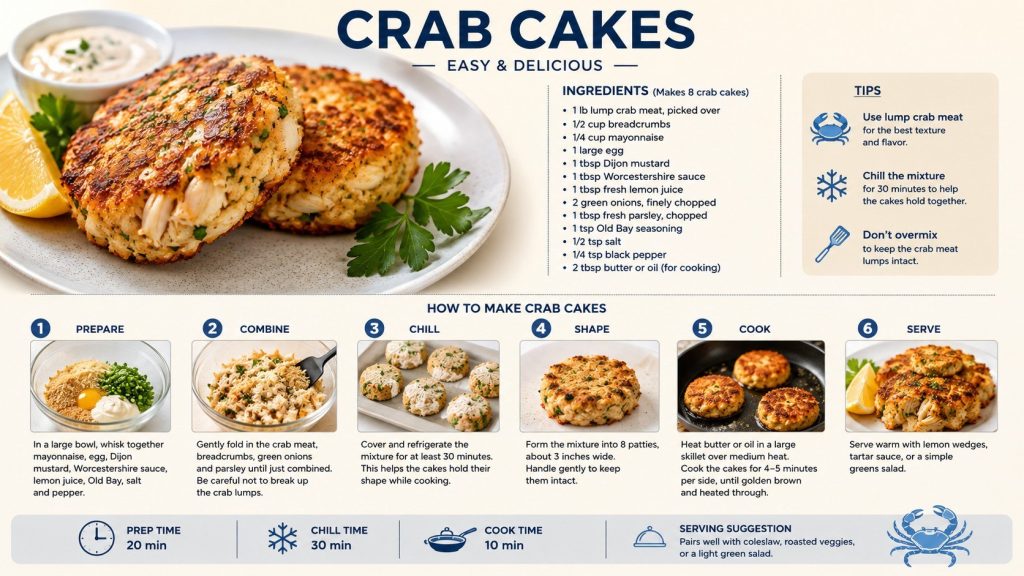
How to Prepare the Crab Cake Mixture
Begin by spreading the crabmeat across a wide plate. Examine it with your fingertips and remove any hard shell pieces. Do not squeeze the meat or break larger lumps unnecessarily.
Prepare the binder separately:
- Whisk the egg until the white and yolk combine.
- Add mayonnaise, mustard, Worcestershire sauce, and lemon juice.
- Stir in Old Bay, parsley, and black pepper.
- Add 35 g of panko and leave the mixture for 2 minutes.
- Pour the binder over the crabmeat.
- Fold gently with a silicone spatula.
- Add more panko only when the mixture cannot hold a loose shape.
The binder needs time to absorb into the crumbs. Adding extra panko immediately can produce dry cakes after cooking. Wait several minutes before deciding whether the mixture is too wet.
Use a folding motion from the bottom upward. Stirring in circles destroys the crab’s texture. Stop once no large pockets of sauce remain.
The finished mixture should feel moist but not liquid. When pressed lightly in the palm, it should form a rough mound. It does not need the firmness of a hamburger patty.
How to Shape Crab Cakes Without Breaking Them
Divide the mixture with a kitchen scale for consistent cooking. Each large cake should weigh approximately 110–120 g. Smaller appetizer portions can weigh 70–80 g.
Shape each portion with minimal pressure. Form a thick cylinder about 7–8 centimeters wide. Flattening the cakes too much increases the risk of dryness.
Place them on a parchment-lined tray and refrigerate for at least 30 minutes. Chilling firms the mayonnaise, hydrates the crumbs, and improves cohesion. Several established Maryland-style recipes also recommend a 30-minute chilling stage before cooking.
Cold crab cakes enter the skillet as stable portions. Warm cakes soften quickly and often split during the first turn.
Cover the tray when chilling longer than 30 minutes. Surface drying can create cracks around the edges. The cakes may be prepared up to 8 hours before cooking.
Pan-Fried, Baked, or Broiled Crab Cakes
Each method produces a different exterior. Pan-frying gives the deepest crust, while baking requires less handling. Broiling closely resembles the preparation served in many Maryland restaurants.
| Method | Temperature | Approximate time | Expected result |
|---|---|---|---|
| Pan-frying | Medium heat | 3–4 minutes per side | Deep golden crust |
| Baking | 220°C or 425°F | 12–16 minutes | Even, lighter browning |
| Broiling | High broiler setting | 6–9 minutes | Brown top, tender center |
| Air frying | 190°C or 375°F | 10–12 minutes | Crisp surface with little oil |
These times assume chilled cakes weighing about 110 g. Smaller portions cook faster. Equipment performance, cake thickness, and starting temperature also affect timing.
Whatever method is chosen, avoid repeated turning. Crab cakes are fragile until their first crust forms. Move them only after the underside becomes firm.
A thin metal spatula gives better control than tongs. Slide it fully beneath the cake, then turn with one deliberate movement. Pressing the surface releases moisture and makes the interior dense.
How to Pan-Fry Crab Cakes
Use a heavy stainless-steel or cast-iron skillet. Heat neutral oil and butter over medium heat until the butter foams without turning dark.
Follow this sequence:
- Place the chilled cakes into the skillet with space between them.
- Fry the first side for 3–4 minutes without moving them.
- Check one edge for a deep golden color.
- Turn each cake carefully with a wide spatula.
- Cook the second side for another 3 minutes.
- Transfer the cakes to a wire rack or warm plate.
- Serve within 10 minutes for the best crust.
Do not crowd the skillet. Too many cold cakes reduce surface temperature and release steam. The exterior then becomes pale and greasy.
The butter improves flavor but can burn when used alone. Neutral oil raises the practical cooking range and slows browning. A combined fat mixture gives better control.
For more detail on managing hot oil and preventing soggy coatings, see the guide to crispy homemade onion rings. Although the batter differs, temperature control follows the same logic.
How to Bake or Broil Crab Cakes
Preheat the oven before removing the cakes from refrigeration. A fully heated oven sets the exterior before the mayonnaise begins leaking from the mixture, reported by https://finalpoint.de/.
For baking, place the portions on an oiled metal tray. Brush their tops lightly with melted butter. Bake at 220°C or 425°F for 12–16 minutes, until browned and hot through.
For broiling, place the tray approximately 15 centimeters below the heating element. Brush the cakes with butter, then broil for 6–9 minutes. Rotate the tray when one side colors faster.
Broiled crab cakes normally remain unturned. This protects their structure but produces a softer bottom. A preheated metal tray can improve browning underneath.
Seafood guidance published by FoodSafety.gov recommends cooking most seafood to an internal temperature of 145°F or 63°C. A clean instant-read thermometer should enter through the side, reaching the center without breaking the cake apart.
“Most seafood should be cooked to an internal temperature of 145°F.”
— FoodSafety.gov, federal guidance on selecting and handling seafood.
Why Crab Cakes Fall Apart
A broken cake usually reflects a preparation problem rather than insufficient cooking. The binder may be too weak, the cakes may be warm, or the first crust may not have formed.
Common causes include:
- using watery crabmeat without draining it;
- adding too little egg or mayonnaise;
- shaping unusually thin cakes;
- skipping the chilling stage;
- turning the cakes too early;
- moving them several times;
- using a narrow spatula;
- cooking in a crowded skillet;
- adding large wet vegetable pieces.
If the mixture remains loose, add panko 1 tablespoon at a time. Rest it for 2 minutes after each addition. This prevents unnecessary filler.
Another option is forming the portions inside round metal rings. Remove the rings after the first side firms. This technique works particularly well for restaurant-style presentation.
Do not solve every structural problem by adding breadcrumbs. Excess crumbs absorb the crab’s moisture and mute its flavor. Strong chilling and gentle handling often provide the missing stability.
Flavor Variations That Still Taste Like Crab
Traditional Maryland crab cakes use restrained seasoning. However, the base recipe allows controlled variations without becoming unrecognizable.
Useful additions include:
- 1 tablespoon finely sliced chives;
- ½ teaspoon smoked paprika;
- 1 teaspoon hot sauce;
- 1 tablespoon finely diced celery;
- 1 teaspoon grated lemon zest;
- 1 tablespoon minced scallion;
- ¼ teaspoon cayenne pepper;
- 1 teaspoon capers, finely chopped.
Choose no more than 2 strong additions for one batch. Combining peppers, onions, garlic, capers, herbs, and hot sauce creates excessive competition.
For a gluten-free version, use certified gluten-free crackers or breadcrumbs. Almond flour can work, but it produces a softer and slightly heavier texture.
Canned crabmeat is usable when fresh or pasteurized crab is unavailable. Drain it thoroughly and inspect it carefully. Its finer texture may require slightly less mixing and slightly more chilling.
Sauces and Side Dishes for Crab Cakes
A well-seasoned cake needs only lemon and a small amount of sauce. Heavy toppings can overwhelm its sweetness.
The most suitable sauces are:
- lemon mayonnaise;
- classic tartar sauce;
- remoulade;
- mustard cream;
- horseradish sauce;
- herb yogurt dressing;
- mild chili mayonnaise.
Serve sauce beside the cake rather than covering its crust. Lemon wedges should also remain separate until eating. Acid softens fried surfaces when applied too early.
Useful side dishes include coleslaw, roasted asparagus, corn salad, cucumber salad, potato wedges, green beans, and lightly dressed leafy greens. A soft brioche roll can turn one crab cake into a sandwich.
For a larger dinner, finish with a restrained slice from the site’s moist carrot cake recipe. Keep the dessert portion small because crab cakes and mayonnaise-based sauces already provide substantial richness.
How to Store and Reheat Crab Cakes
Fresh crabmeat should remain refrigerated. FoodSafety.gov lists 2–4 days as the usual refrigerator period for fresh crabmeat and 2–4 months for best frozen storage quality.
The FDA advises placing seafood on ice or under refrigeration soon after purchase. Seafood intended for later use should be frozen rather than held for several days.
Store cooked crab cakes in a sealed container:
- refrigerate within 2 hours;
- keep for no longer than 3–4 days;
- separate layers with parchment;
- freeze individual cakes before packing together;
- thaw frozen cakes overnight in the refrigerator;
- reheat until thoroughly hot.
USDA guidance states that cooked seafood generally keeps for 3–4 days under refrigeration. Cooked leftovers should also be chilled promptly rather than left on the counter.
Reheat crab cakes in an oven or air fryer. Use 190°C or 375°F for approximately 8–12 minutes. A microwave warms the center quickly but softens the crust.
Uncooked formed cakes may also be frozen. Place them on a tray until firm, then transfer them into an airtight container. Cook after thawing safely in the refrigerator, not at room temperature. USDA guidance warns against thawing perishable foods on a counter or in hot water.
FAQ About Crab Cakes
What crabmeat is best for crab cakes?
Jumbo lump crabmeat provides the largest pieces and the most delicate texture. Regular lump offers a more affordable alternative with strong flavor.
Can crab cakes be prepared one day ahead?
Yes. Shape them, cover the tray, and refrigerate for up to 8 hours. Longer storage can make the surface dry and the seasoning more pronounced.
Why are my crab cakes mushy?
The crabmeat may contain excess liquid, or the binder may contain too much mayonnaise. Drain the meat and add panko gradually.
Can crab cakes be cooked without frying?
Yes. Bake them at 220°C or 425°F for 12–16 minutes. Broiling and air frying also produce good results.
How long should crab cakes chill?
Chill them for at least 30 minutes. A 60-minute rest gives especially fragile cakes more stability.
Should crab cakes contain vegetables?
Small quantities of celery, scallion, or chives are acceptable. Large pieces of onion or pepper can release water and interfere with binding.
How do I know when crab cakes are cooked?
The outside should be browned, while the center should reach 63°C or 145°F. Check from the side with a clean food thermometer.
Can I freeze cooked crab cakes?
Yes. Cool them quickly, wrap each cake separately, and freeze in an airtight container. Reheat them in an oven or air fryer for better texture.
What sauce goes best with crab cakes?
Lemon mayonnaise, tartar sauce, or remoulade works well. Use sauce sparingly so the crab remains the main flavor.
How much crabmeat is needed per person?
Plan 150–225 g of crabmeat per person for a main course. Smaller appetizer portions require approximately 75–100 g.
Earlier we wrote about How to Make American Goulash with Ground Beef, Macaroni, and Tomato Sauce