 Frank Rondel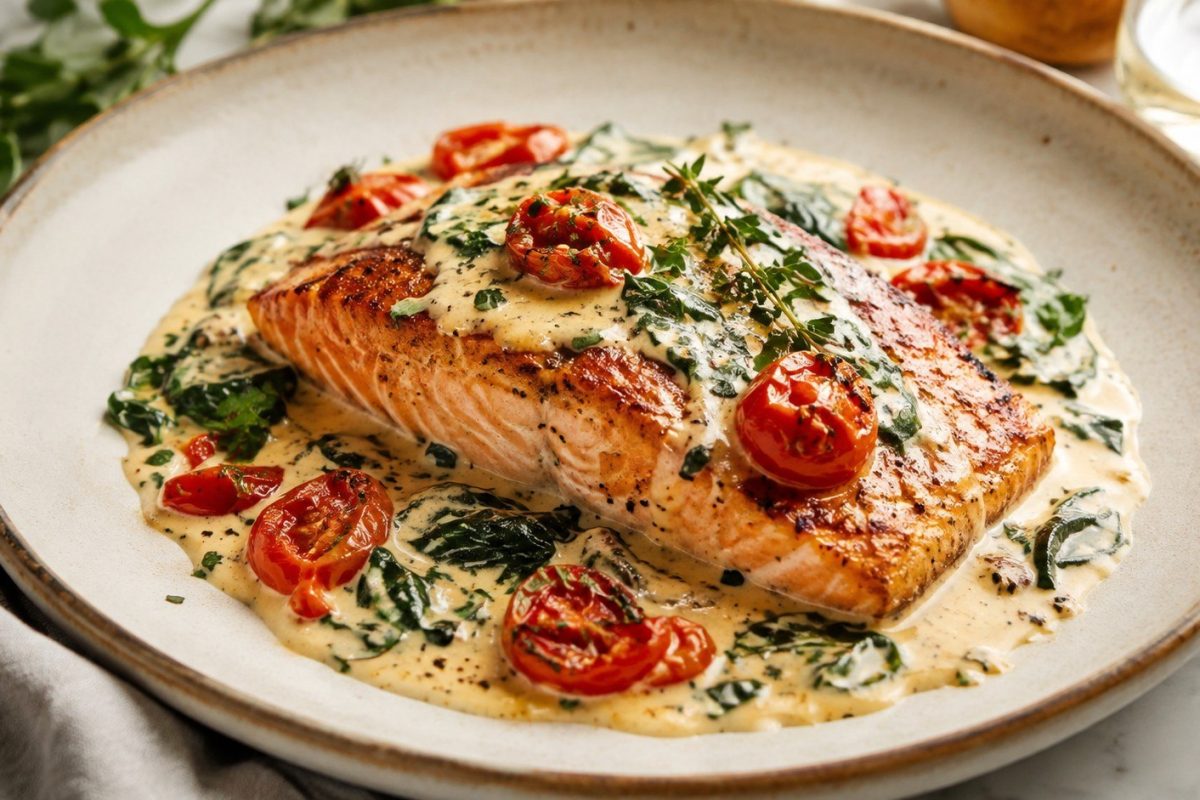
Tuscan Salmon combines pan-seared salmon with garlic, Parmesan, spinach, and sun-dried tomatoes in one skillet. The sauce is rich, but tomato acidity and greens keep the dish from becoming excessively heavy. From preparation to serving, dinner can reach the table in about 30 minutes, as the customreceipt.com editorial team notes.
The name sounds traditionally Italian, yet this creamy preparation is better described as Tuscan-inspired American cooking. Its recognizable formula uses cream, Parmesan, garlic, tomatoes, and leafy greens around a quickly seared protein. Salmon suits that structure particularly well because its natural richness can handle a concentrated sauce.
What You Need for Creamy Tuscan Salmon
A reliable creamy Tuscan salmon recipe starts with thick fillets of similar size. Even portions cook more predictably and reduce the chance that one piece dries before another reaches temperature.
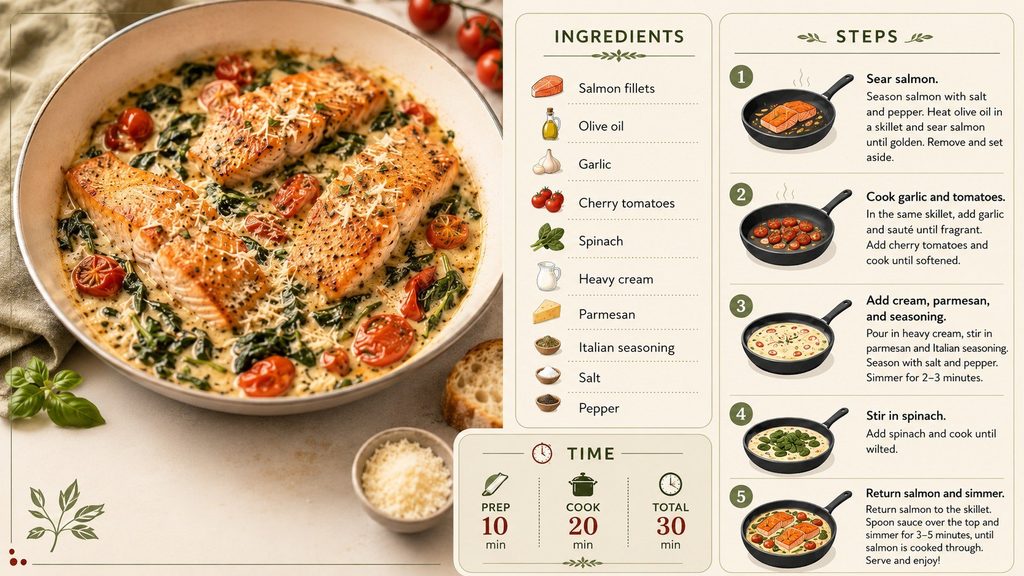
For 4 servings, prepare:
- 4 salmon fillets, about 5–6 oz each;
- 1 tbsp olive oil;
- 1 tbsp unsalted butter;
- 3 garlic cloves, finely minced;
- 1 small shallot, finely chopped;
- 1/2 cup oil-packed sun-dried tomatoes, drained and sliced;
- 3/4 cup heavy cream;
- 1/3 cup low-sodium chicken or vegetable broth;
- 1/2 cup finely grated Parmesan;
- 3 cups baby spinach;
- 1 tsp Italian seasoning;
- 1–2 tsp fresh lemon juice;
- salt and black pepper;
- red pepper flakes, optional.
Oil-packed tomatoes work particularly well because they remain supple and have concentrated sweetness. Dry tomatoes may need rehydration before entering the skillet. Freshly grated Parmesan melts more smoothly than many pre-shredded products, which can contain anti-caking ingredients.
The amount of cream can also be adjusted without changing the basic technique. Half-and-half creates a lighter sauce, although it usually needs gentler heating. Heavy cream tolerates reduction better and develops a thicker coating around the fish. Broth prevents that richness from becoming dense.
The best sauce should coat a spoon lightly rather than sit around the salmon like melted cheese.
For another creamy dinner technique, the cottage cheese pasta sauce recipe shows how dairy texture changes without heavy cream.
How to Make Tuscan Salmon in One Skillet
The critical part of how to make Tuscan salmon is sequencing. The fish is seared first, removed, and returned only after the sauce is almost finished.
Follow this order:
- Pat the salmon completely dry and season with salt and pepper.
- Heat olive oil in a large skillet over medium-high heat.
- Add salmon and sear for about 3–4 minutes on the first side.
- Flip and cook another 1–2 minutes, then transfer it to a plate.
- Lower the heat and add butter, shallot, garlic, and sun-dried tomatoes.
- Pour in broth and scrape the browned residue from the skillet.
- Add cream and simmer gently for 2–3 minutes.
- Stir in Parmesan, spinach, and Italian seasoning.
- Return the salmon and cook until the center reaches a safe temperature.
- Finish with lemon juice and optional red pepper flakes.
Do not repeatedly move the salmon during its first sear. Contact with the skillet creates browning, while constant movement interrupts crust development. The fish should release more easily once its surface has browned.
The browned residue left behind also matters. Broth dissolves those concentrated proteins and returns their flavor to the sauce. This step produces more depth without requiring extra seasoning.
A similar emphasis on direct skillet contact appears in the crispy feta fried eggs technique, where moisture control determines browning.
Salmon Temperature and Food Safety
Salmon texture changes quickly near the end of cooking. Thick portions can remain juicy while thinner edges become dry, so time alone is an unreliable measurement.
The U.S. Food and Drug Administration gives a clear safety benchmark:
“Most seafood should be cooked to an internal temperature of 145°F.”
U.S. Food and Drug Administration, seafood safety guidance for consumers. The full recommendations appear on the FDA seafood safety page.
Insert an instant-read thermometer into the thickest section of each fillet. Avoid pushing it against the skillet, which can produce an inaccurate reading. Carryover heat continues working briefly after the pan leaves the burner.
Frozen salmon can also produce good results. The FDA recommends thawing frozen seafood gradually in the refrigerator overnight. A sealed package can alternatively be thawed in cold water when faster preparation is necessary.
Temperature gives a more useful answer than judging doneness only by color.
The Sauce Depends on Heat Control
The Tuscan salmon sauce is not difficult, but high heat can damage its texture. Once cream and Parmesan enter the pan, maintain a gentle simmer instead of a hard boil.
| Component | Practical amount | Main function |
|---|---|---|
| Heavy cream | 3/4 cup | Creates body and richness |
| Broth | 1/3 cup | Loosens and balances the cream |
| Parmesan | 1/2 cup | Adds saltiness and thickens |
| Sun-dried tomatoes | 1/2 cup | Adds sweetness and acidity |
| Baby spinach | 3 cups | Adds freshness and volume |
| Lemon juice | 1–2 tsp | Sharpens the finished sauce |
Parmesan should enter after the cream becomes hot, not while the pan is aggressively boiling. Stir it gradually so the cheese disperses instead of forming small clumps. Spinach belongs near the end because it needs only enough heat to wilt.
If the sauce becomes too thick, add broth 1 tbsp at a time. If it seems thin, remove the salmon and simmer the sauce briefly. Reducing everything together for too long risks overcooking the fish.
Lemon goes in last. Long cooking dulls its fresh acidity, while a small final addition cuts through cream and salmon fat. Salt should also be adjusted after Parmesan and tomatoes enter, since both ingredients already contribute salinity.
Why Salmon Works With Parmesan, Spinach and Tomatoes
The combination behind salmon with spinach and sun-dried tomatoes works because each ingredient solves a different problem. Salmon supplies fat and a soft texture. Parmesan contributes concentrated savory flavor, while tomato adds sweetness and acidity.
Spinach introduces moisture and mild vegetal bitterness. Garlic connects the dairy and tomato flavors without dominating either one. Lemon then brightens the final sauce.
USDA FoodData Central provides official composition data for fish and other foods through its food composition database. The database distinguishes species, preparation methods, and individual food records rather than treating all salmon as identical.
USDA researchers have also documented substantial variation in fatty-acid profiles between salmon samples and production systems.
“Farmed salmon remains a rich source of N3 oils.”
U.S. Department of Agriculture Agricultural Research Service, 2026 research summary concerning fish fatty-acid data.
That natural richness explains why acidic ingredients matter in this dish. A creamy sauce without tomatoes or lemon can taste flat after several bites. Concentrated tomato and fresh citrus provide contrast without removing the characteristic richness.
What to Serve With Tuscan Salmon
A complete one pan Tuscan salmon dinner needs a side that can collect the sauce. Neutral starches usually work better than heavily seasoned accompaniments.
Good options include:
- orzo with parsley and lemon zest;
- mashed potatoes with minimal butter;
- steamed rice or wild rice;
- creamy polenta;
- crusty bread;
- roasted asparagus;
- green beans with lemon;
- cauliflower rice for a lighter plate.
A soft flatbread can also work beside the skillet. The 2-ingredient cottage cheese flatbread offers a different alternative to pasta or rice.
Keep side dishes relatively restrained because the salmon already contains cream, Parmesan, garlic, and concentrated tomatoes. Strong cheese sauces compete with the main dish. Sweet glazed vegetables can create the same problem.
Roasted asparagus gives the plate more texture. Rice makes the meal milder and absorbs sauce efficiently. Polenta produces the richest combination but works well for a colder-weather dinner. Bread remains the easiest option when no second pan is desirable.
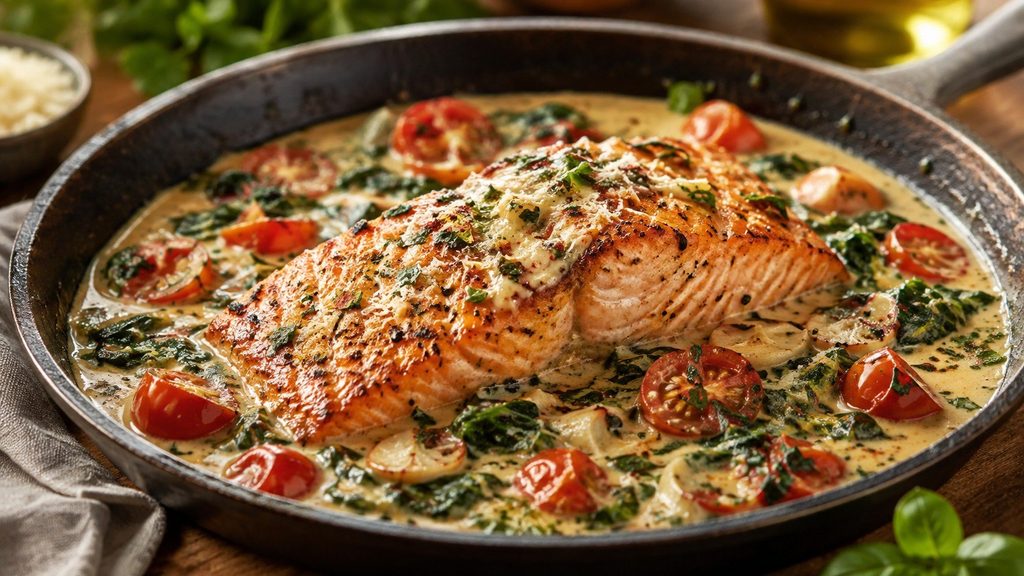
For serving, spoon sauce onto the plate before setting down the salmon. Add extra spinach and tomatoes around the fillet rather than burying its browned surface.
Common Mistakes With Creamy Garlic Salmon
Several small errors can turn creamy garlic salmon from silky to greasy or dry. Most involve moisture, heat, or timing rather than ingredients.
- Wet salmon steams instead of developing a strong seared surface.
- Very high heat can scorch garlic before the cream enters.
- Boiling Parmesan aggressively can create a grainy sauce.
- Returning salmon too early leaves it simmering for too long.
- Excess salt can overwhelm the dish after Parmesan is added.
- Too much lemon can cause the dairy flavor to become sharply acidic.
Use a wide skillet rather than a small saucepan. The fillets need enough room to make direct contact with the hot surface. Crowding also releases more steam around the fish.
Garlic needs only about 30–60 seconds after the shallot softens. Its aroma should become noticeable without turning dark brown. Sun-dried tomatoes can then enter before the liquid.
If the finished sauce looks greasy, reduce the burner temperature and stir slowly. A small splash of broth can help restore a smoother consistency. Avoid adding another large handful of cheese as an immediate fix because it increases salt and thickness simultaneously.
Storage and Reheating
Cooked salmon and cream sauce should be cooled promptly and refrigerated in a sealed container. For best texture, keep leftovers for a short period rather than repeatedly reheating the entire batch.
Reheat one portion gently in a covered skillet over low heat. Add 1–2 tbsp broth if the refrigerated sauce has tightened. High microwave power can separate the sauce and make the salmon noticeably firmer.
The dish is less suitable for freezing after assembly. Dairy sauces can change texture after thawing, while cooked salmon may lose moisture
FAQ
What is Tuscan salmon?
Tuscan salmon is a skillet dish combining seared salmon with a creamy garlic sauce. Modern versions commonly contain spinach, Parmesan, and sun-dried tomatoes.
Can Tuscan salmon be made without heavy cream?
Yes. Half-and-half can replace heavy cream, although the sauce will be thinner. Keep the heat gentle to reduce separation.
What temperature should salmon reach?
The FDA recommends cooking most seafood to an internal temperature of 145°F. Measure at the thickest part of the fillet.
Can frozen salmon be used?
Yes. Thaw it overnight in the refrigerator, then dry the surface thoroughly before seasoning and searing.
What pasta goes best with Tuscan salmon?
Orzo, linguine, tagliatelle, and other sauce-friendly shapes work well. Rice, polenta, potatoes, or crusty bread are equally practical alternatives.
How do you keep the cream sauce smooth?
Use moderate heat, add Parmesan gradually, and avoid prolonged boiling. Return the salmon only when the sauce is nearly finished.
Earlier we wrote about Protein Bagels Bring Greek Yogurt Into the Dough: How the No-Yeast Recipe Works