 Frank Rondel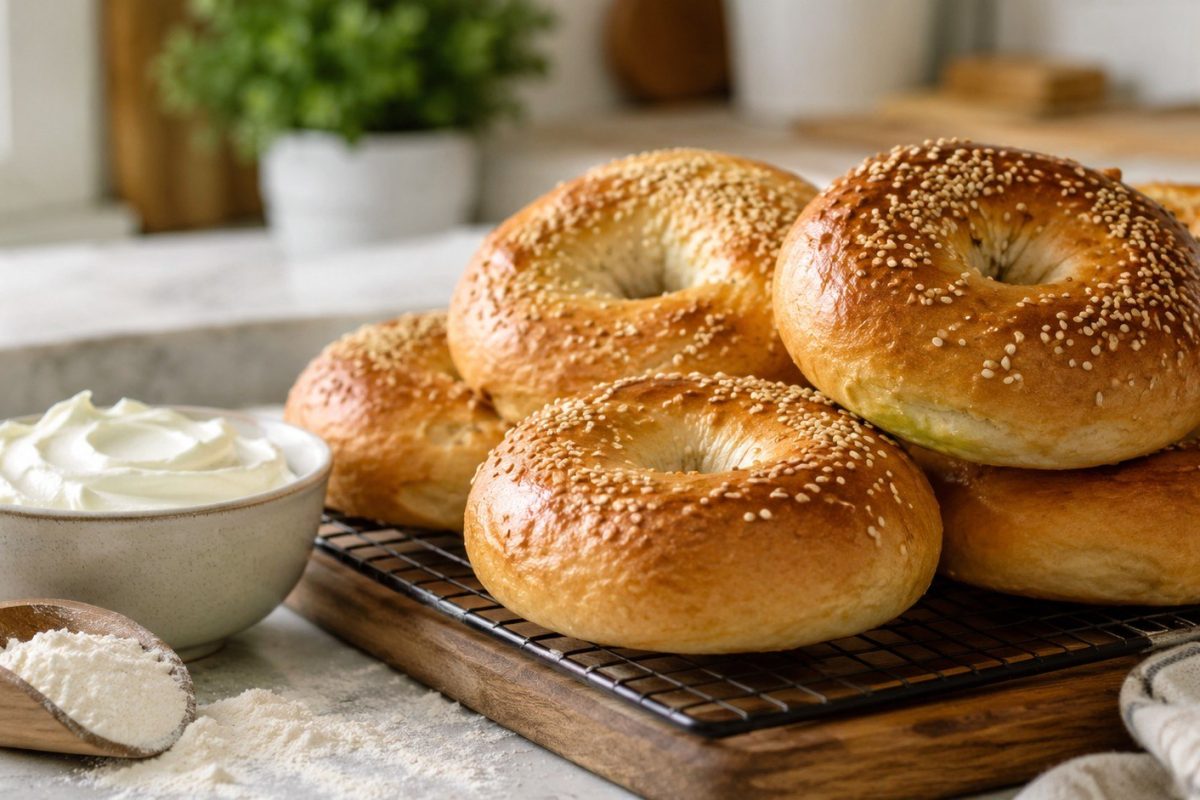
Protein Bagels made with Greek yogurt and flour solve the part of bagel baking that usually consumes the morning. There is no yeast to activate, dough to proof, or pot of water to boil. Thick Greek yogurt supplies moisture and dairy protein, while baking powder gives the dough its lift. The result is softer than a New York boiled bagel but pleasantly chewy, sturdy enough for sandwiches, and practical for breakfast meal prep, as the customreceipt.com editorial team notes.
The formula is unusually short: flour, Greek yogurt, baking powder, salt, and an optional egg wash. A batch can move from mixing bowl to oven in about 10 minutes. Baking takes roughly 25–30 minutes, depending on size and oven behavior. The simplicity explains why searches for Protein Bagels, Greek yogurt bagels, and high-protein bagel recipes increasingly describe the same basic technique.
Why Greek yogurt changes a simple bagel dough
Traditional bagels develop structure through gluten, fermentation, shaping, boiling, and baking. This shortcut removes fermentation and boiling. Greek yogurt supplies the liquid needed to hydrate flour while adding acidity and concentrated milk solids.
The acidity also works well with chemical leavening. Baking powder creates gas during mixing and heating, helping the interior become lighter. Thick yogurt matters because ordinary yogurt can contain enough water to turn the dough into paste.
USDA FoodData Central lists plain Greek yogurt among its dairy foods and provides nutrient data for both nonfat and whole-milk versions. Protein therefore varies with the yogurt brand and fat percentage.
The goal is not to imitate a boiled bakery bagel exactly, but to produce a fast, protein-rich bread with a genuinely useful texture.
The same interest in dairy-based bread substitutes appears in recipes such as 2-ingredient cottage cheese flatbread. Both recipes depend heavily on moisture control. Protein bagels differ because wheat flour still creates a gluten network and a bread-like crumb.
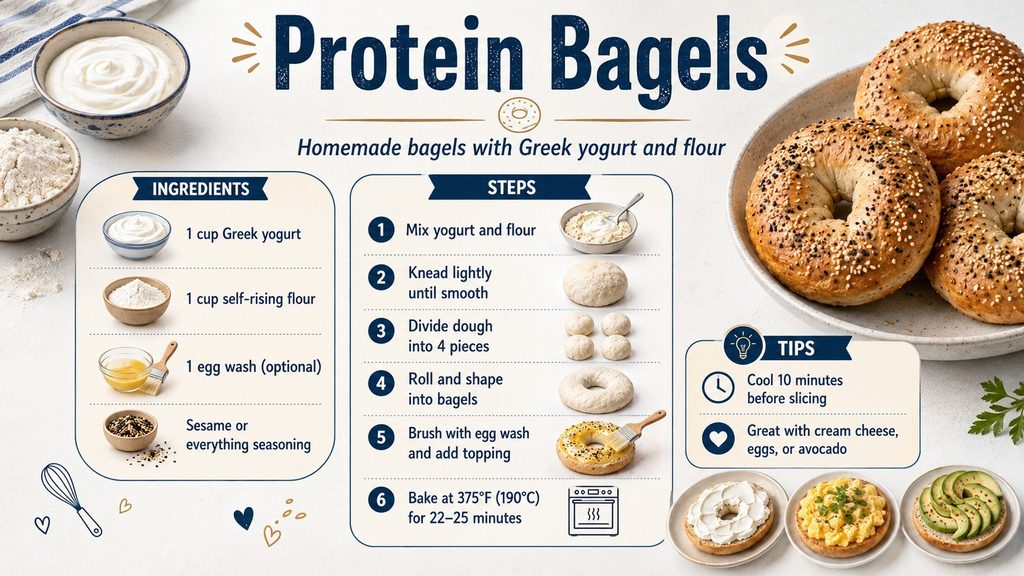
Ingredients for 4 homemade Protein Bagels
A reliable starting ratio uses roughly equal volumes of thick Greek yogurt and flour. Weight measurements are more accurate because yogurt density and flour packing vary.
- 240 g all-purpose flour
- 240 g plain Greek yogurt, preferably thick
- 2 tsp baking powder
- ½ tsp fine salt
- 1 egg, beaten, for brushing
- sesame, poppy seeds, dried onion, or everything seasoning
Self-rising flour can replace the flour, baking powder, and much of the salt. Check its ingredient label before adding more leavening. Whole-wheat flour also works, although it absorbs more moisture and produces a denser crumb. Bread flour develops more gluten and can make the exterior slightly chewier.
Do not automatically add extra flour when the dough first looks sticky. Mix for 30–60 seconds and give the flour time to absorb moisture. If the dough still coats the fingers heavily, add flour 1 tbsp at a time. Too much flour is the fastest route to dry, heavy bagels.
For another high-protein meal using cultured dairy differently, cottage cheese pasta sauce shows why moisture and protein concentration matter beyond baking. The principle is similar even though the cooking method is entirely different.
The following proportions show how several flour choices alter the finished bagel.
| Flour choice | Yogurt for 240 g flour | Expected texture | Best use |
|---|---|---|---|
| All-purpose flour | about 240 g | Soft with moderate chew | Everyday bagels |
| Bread flour | 230–250 g | Firmer and chewier | Sandwiches |
| Whole-wheat flour | 250–270 g | Denser, slightly nutty | Hearty breakfast |
| Self-rising flour | about 240 g | Soft and light | Fastest preparation |
These figures are working ranges rather than fixed chemistry. Flour absorbs water differently between brands and storage conditions. Greek yogurt can also range from spoonable to nearly spreadable. Start near the lower end when using loose yogurt. Add the final portion only if the dough looks dry.
Fat percentage changes the eating quality more than the basic structure. Nonfat yogurt can make a good bagel, while 2% or whole-milk yogurt usually gives a slightly richer crumb. The protein total should always be calculated from the labels actually used.
How to make Greek yogurt bagels step by step
The method for Greek yogurt bagels is short, but shaping and dough consistency determine whether the finished rings look like bagels or swollen rolls.
- Heat the oven to 375°F, or about 190°C.
- Line a baking sheet with parchment.
- Mix flour, baking powder, and salt in a bowl.
- Add Greek yogurt and stir until rough dough forms.
- Knead gently for 1–2 minutes.
- Divide the dough into 4 equal portions.
- Roll each portion into a rope about 8 inches long.
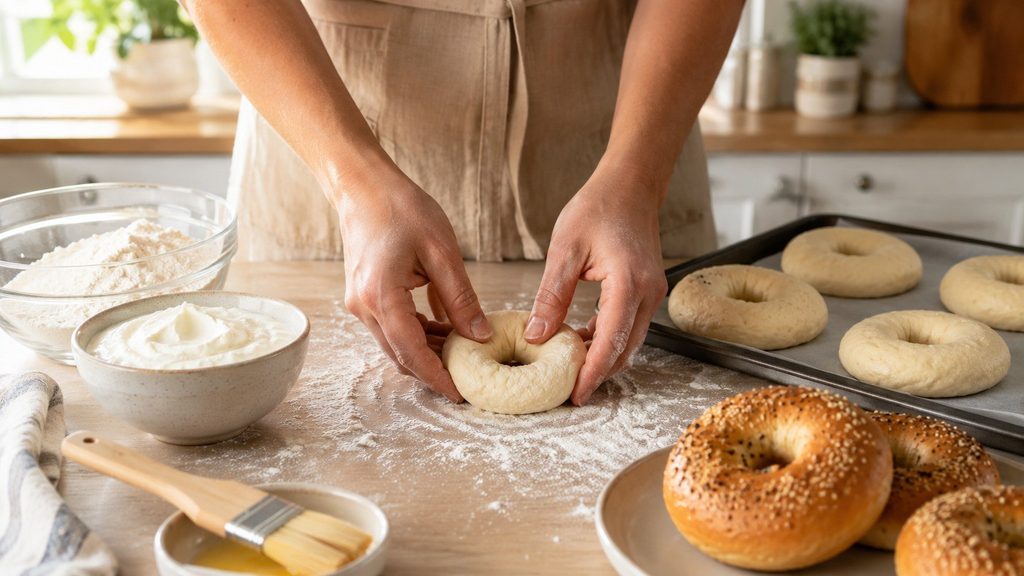
- Join and pinch the ends firmly.
- Brush each ring with beaten egg.
- Add seeds or seasoning and bake for 25–30 minutes.
After the list, resist the temptation to slice immediately. Hot bread still contains steam moving through the crumb. Cutting too early can compress the center and make it appear underbaked.
Cool the bagels for at least 10–15 minutes. Their crust will firm while moisture redistributes inside. A darker top does not necessarily mean the center is ready, especially when the rings are thick. Smaller, evenly shaped bagels bake more predictably than oversized ones.
The egg wash is optional for structure. Its job is mainly color, shine, and helping toppings adhere. Milk can produce a lighter finish, while plain water leaves a more matte surface.
“Never eat or taste raw flour, dough, or batter.”
The U.S. Food and Drug Administration gives that guidance because flour is a raw agricultural product. Processing grain into flour does not reliably eliminate harmful bacteria. The agency recommends baking flour-containing dough thoroughly and cleaning surfaces after handling it. FDA flour safety guidance explains the risk in detail.
How much protein is actually in a protein bagel
Calling something a high-protein bagel recipe does not create a fixed nutritional number. The protein comes from both flour and yogurt. Exact amounts depend on brands, serving size, flour type, toppings, and whether the recipe makes 4 or 6 bagels.
A practical example explains the range. If 240 g yogurt supplies about 24 g protein and the flour contributes about 24–26 g, the batch contains roughly 48–50 g before egg wash. Divided into 4 pieces, that is around 12 g protein per bagel. Different products can move the figure several grams in either direction.
USDA MyPlate identifies yogurt as part of the dairy group and lists protein among the nutrients dairy foods provide. Its guidance also notes calcium, phosphorus, potassium, and several vitamins among dairy nutrients. MyPlate dairy guidance provides broader dietary context rather than numbers for a specific recipe.
Protein is one feature of the recipe, not a reason to ignore fiber, sodium, portion size, or toppings.
A cream-cheese bagel and an egg-and-vegetable sandwich may begin with the same bread but become very different meals. Smoked salmon raises protein further but can add substantial sodium. Nut butter adds protein and fat. Fruit adds sweetness and fiber without changing the bagel itself.
Another practical high-protein combination appears in this sweet potato, beef, cottage cheese, and hot honey bowl, where protein is balanced with a substantial carbohydrate source rather than presented as an isolated target.
Why Protein Bagels turn sticky, dense, or flat
Most failed homemade protein bagels can be traced to moisture, flour measurement, or shaping. The recipe has few ingredients, so small errors become visible quickly.
Common problems include:
- very wet dough from thin yogurt;
- dry dough caused by excess flour;
- flat rings from weak shaping;
- pale tops without egg wash;
- gummy centers caused by oversized bagels;
- bitter flavor from excessive baking powder.
Sticky dough needs correction in small increments. Dust the work surface lightly rather than burying the dough in flour. A bench scraper also makes soft dough easier to handle without changing the recipe.
If a bagel closes in the middle while baking, make the hole larger before it enters the oven. The dough expands in every direction. A hole that looks exaggerated when raw often finishes at the right size.
Dense bagels are usually over-floured or overworked. Kneading should stop once the dough is reasonably smooth. Unlike yeast dough, this recipe gains little from a long kneading session. Excess handling can create a firmer result without providing fermentation benefits.
Seasonings also deserve restraint. Everything blends often contain salt, garlic, onion, sesame, and poppy seeds. Heavy coverage can turn a mild breakfast bread surprisingly salty.
Flavor variations and meal-prep ideas
Once the base recipe works, Greek yogurt protein bagels can move in several directions without changing the dough ratio dramatically. Dry additions are safer than wet ingredients because they do not interfere with hydration.
Good variations include:
- sesame and poppy seed for a classic savory bagel;
- dried onion and garlic for sandwich bagels;
- grated Parmesan with black pepper;
- cinnamon with a small amount of sugar;
- finely chopped jalapeño with shredded cheddar;
- dried rosemary with coarse salt.
After adding cheese, watch the underside near the end of baking. Melted cheese can brown faster than plain dough. Fresh fruit requires more caution because berries release water into the crumb. Dried fruit is easier to control.
For sandwiches, split and toast the bagel after cooling. Egg, tomato, spinach, turkey, smoked salmon, cucumber, or avocado all work without demanding a new recipe. Very wet fillings should be added shortly before eating.
Cooked bagels can be refrigerated in a sealed container for several days, although texture is usually better after toasting. Freezing is more useful for longer storage. Slice each bagel first, freeze the halves, and toast directly from frozen.
A short cooling period before storage is necessary. Packing warm bagels traps condensation and softens their crust. Let them reach room temperature before closing the container.
Search terms people use for this recipe
Search intent around this dish tends to divide into recipe, nutrition, ingredient, and convenience questions. That distinction matters when preparing a page for Google because readers searching “2 ingredient bagels” expect something different from readers asking about protein macros.
Useful query variations include:
- protein bagels recipe;
- Greek yogurt bagels;
- high protein bagels;
- 2 ingredient bagels;
- Greek yogurt and flour bagels;
- no yeast bagel recipe;
- homemade protein bagels;
- easy Greek yogurt bagels;
- high protein breakfast bagels;
- how to make protein bagels.
The article should answer the core recipe query before moving into nutrition or variations. Ingredient quantities and oven temperature belong near the top. Troubleshooting captures readers whose first batch failed. Storage and serving ideas answer the practical questions that follow successful baking.
Search phrasing also suggests why “protein bagels” works better as the primary term than a narrower phrase such as “yogurt flour rings.” It matches both the recipe and the reason many people seek it.
FAQ about Protein Bagels
Are Protein Bagels really made with only 2 ingredients?
The simplest version uses self-rising flour and Greek yogurt. Using ordinary flour requires baking powder and usually salt, so the ingredient count rises.
Can regular yogurt replace Greek yogurt?
It is less reliable because regular yogurt contains more liquid. A very thick strained yogurt works better. Extra flour may otherwise make the finished bagel dry.
Do Greek yogurt bagels need yeast?
No. Baking powder provides the leavening, so there is no proofing stage.
Do these bagels need to be boiled?
No. They bake directly after shaping. That is one reason their crust differs from a traditional boiled bagel.
Can Protein Bagels be made in an air fryer?
Yes, if the appliance accommodates the rings without crowding. Cooking temperature and time vary by model, so check early and ensure the centers are fully baked.
How can the recipe contain more protein?
Use a Greek yogurt with higher protein per serving and divide the batch into fewer bagels. Eggs, smoked salmon, cottage cheese, or lean meat can increase protein at serving time without destabilizing the dough.
Earlier we wrote about Feta Fried Eggs Recipe: How to Make a Crispy Feta Ring With a Perfect Fried Egg