 Frank Rondel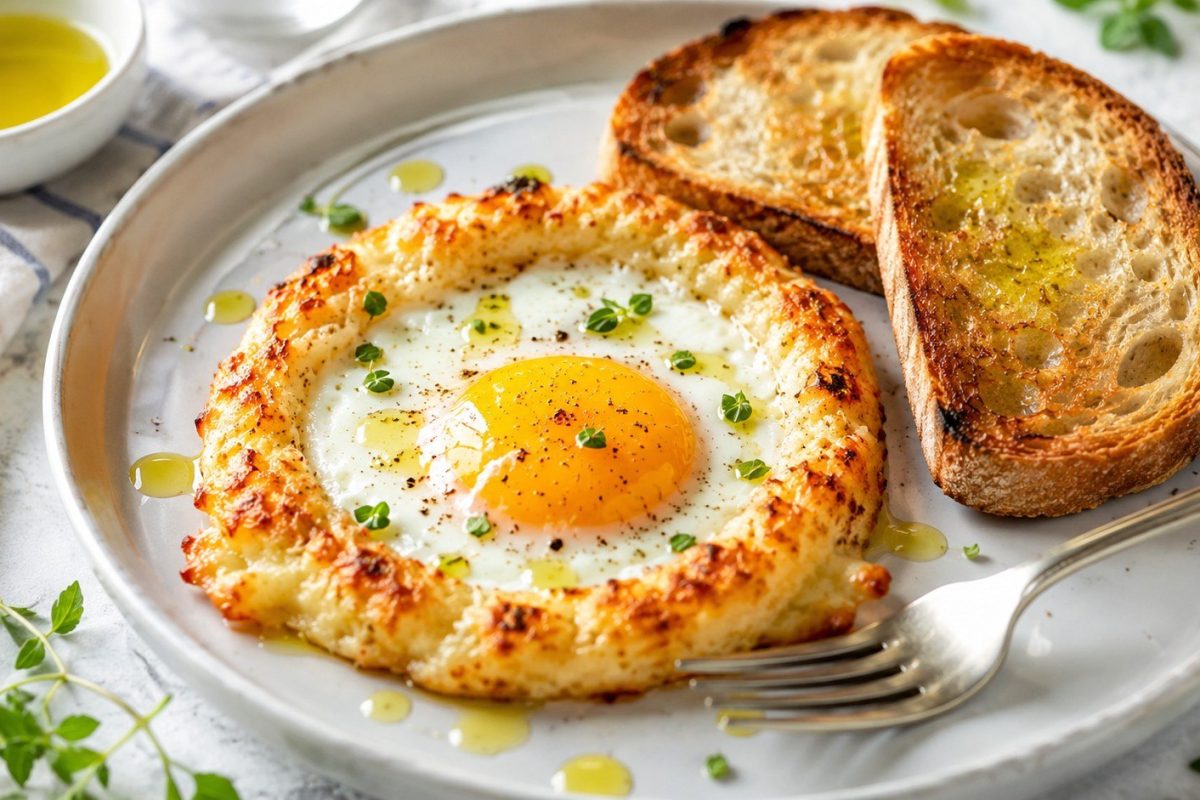
Feta Fried Eggs turn 2 familiar ingredients into a breakfast with unusually sharp contrasts. Feta melts and browns into a salty, crisp ring while the egg cooks inside it. The center stays tender, while the cheese develops caramelized edges that behave almost like a crust. The method needs one skillet and takes roughly 5–7 minutes, as the customreceipt.com editorial team notes.
The recipe became popular because it solves a common problem with fried eggs: texture. Instead of adding cheese after cooking, feta goes directly against the hot pan. Moisture escapes, milk solids brown, and the crumbles gradually join into a thin shell around the egg.
The crucial detail is not using more cheese, but giving a modest amount of feta enough direct contact with the skillet.
What You Need for Feta Fried Eggs
A single portion requires very little preparation. Full-fat feta works particularly well because it softens without immediately drying into hard crumbs.
For 1 serving, prepare:
- 1 large egg;
- 35–45 g crumbled feta;
- 1 tsp olive oil, if the pan needs it;
- freshly ground black pepper;
- dried oregano or chili flakes;
- 1 small tortilla or slice of toasted sourdough, optional;
- avocado, herbs, tomato, or chili crisp for serving.
Salt is usually unnecessary. Feta already brings substantial salinity, and adding more before tasting can overpower the egg.
USDA FoodData Central lists whole-milk crumbled feta among its analyzed cheese products. Individual brands still differ in sodium, moisture, and fat. Those differences can change how quickly the cheese browns.
A drier block of feta often creates stronger crisp edges than very wet pre-crumbled cheese. However, both forms can work. Crumble large pieces into uneven fragments around 5–10 mm wide. Powdery crumbs burn before the egg white has enough time to set.
For another breakfast built around eggs and fresh cheese, the site’s cottage cheese flatbread recipe uses a different protein-setting technique.
The Best Pan, Heat and Feta Ratio
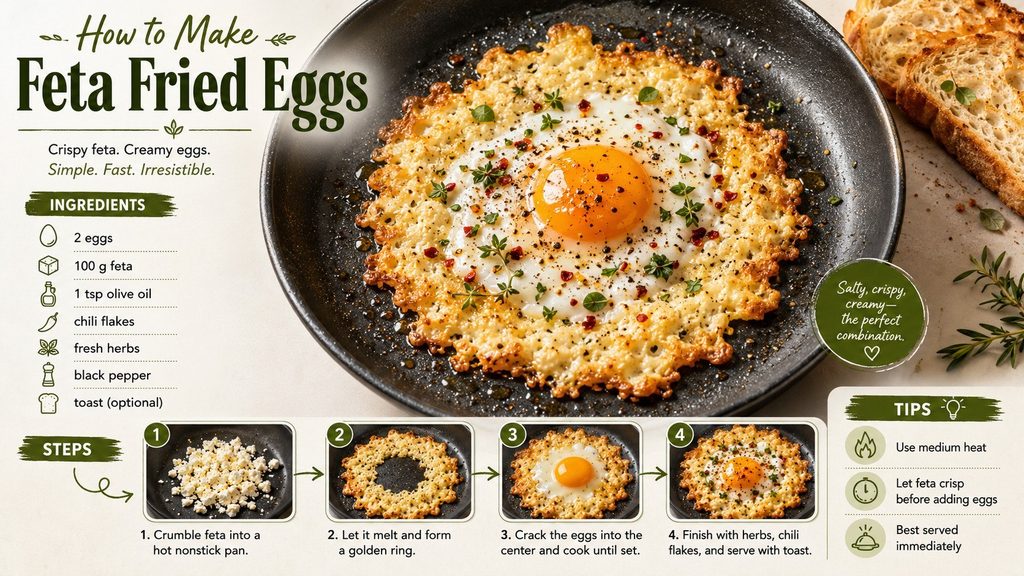
The crispy feta fried egg recipe works most reliably in an 8-inch nonstick skillet. A larger pan spreads the cheese too thinly unless the amount increases.
| Element | Practical choice | Why it works |
|---|---|---|
| Skillet | 8-inch nonstick | Keeps the feta ring compact |
| Heat | Medium | Browns cheese without scorching |
| Feta | 35–45 g | Creates a crust without burying the egg |
| Egg | 1 large | Fits naturally inside the ring |
| Cooking time | About 4–6 minutes | Allows feta and white to cook together |
| Added oil | 0–1 tsp | Depends on feta and cookware |
The pan should be warm before the feta enters. It should not be smoking. A cold skillet encourages the cheese to release water before useful browning begins.
Medium heat is more forgiving than high heat. Feta contains milk proteins that can move from golden to bitter quickly. The egg white also needs time to firm without blistering underneath.
A good ring measures roughly 4–5 inches across. Leave an open space in the center slightly larger than the egg yolk. The white will naturally spread into the feta as it cooks.
This balance resembles other skillet recipes where contact determines texture. The same principle appears in chicken gyro smash tacos, although meat replaces cheese.
How to Make a Crispy Feta Fried Egg
The method is short, but the order matters. Adding the egg too early leaves pale feta. Waiting too long can produce burnt cheese before the white finishes.
Follow these steps:
- Heat a small nonstick skillet over medium heat.
- Add 1 tsp oil only when the surface needs extra lubrication.
- Scatter feta into a thick ring around the center.
- Cook the feta for 30–60 seconds until it begins sizzling.
- Crack 1 egg directly into the empty center.
- Add black pepper, oregano, or chili flakes.
- Cook until the white sets and the feta becomes golden underneath.
- Loosen the crust carefully with a thin spatula.
- Slide the whole egg and feta ring onto toast or a tortilla.
Do not stir the feta once the egg enters. Movement breaks the developing crust into separate pieces.
The cheese may bubble vigorously during the first minutes. That is normal. Water is evaporating while fat and milk solids concentrate against the pan.
For a firmer white without a burnt underside, cover the skillet for the final 30–60 seconds. Trapped steam cooks the upper surface faster.
A wide, flexible spatula is useful when removing the egg. Work beneath the feta from several points instead of forcing the tool through one edge.
The finished ring should bend slightly when lifted, yet remain crisp enough to hold together around the egg.
Why Feta Turns Crisp Instead of Simply Melting
Feta fried eggs with crispy cheese behave differently from eggs topped with cheddar or mozzarella. Feta has a crumbly protein structure and enough moisture to soften before browning.
At first, the crumbles look separate. Heat then drives off water. Their edges soften, fat reaches the pan, and browned patches begin connecting the pieces.
That transition explains why patience matters. Trying to lift the feta during its wet stage produces loose crumbs rather than a continuous crust.
The technique also works because the egg white acts as additional structure. White flowing into small spaces between the feta pieces sets there. The result becomes a single disk with cheese around its perimeter.
“Cook eggs until both the yolk and the white are firm.”
U.S. Food and Drug Administration, consumer egg-safety guidance concerning Salmonella prevention. The complete guidance is available on the FDA egg safety page.
People who prefer a runny yolk should consider pasteurized shell eggs. The FDA specifically recommends pasteurized eggs for preparations that remain raw or undercooked.
How to Serve Feta Fried Eggs
The richest version needs something fresh or acidic beside it. Feta, yolk, avocado, and chili can otherwise become heavy together.
Good combinations include:
- toasted tortilla, avocado, lime, and chili flakes;
- sourdough, tomato, parsley, and black pepper;
- warm pita, cucumber, dill, and lemon;
- arugula, cherry tomatoes, and pickled red onion;
- harissa with cilantro and a thin layer of yogurt;
- pesto with basil and sliced tomatoes.
After this list, the main rule is restraint. A single acidic ingredient usually does more than several creamy toppings. Lemon juice cuts through the feta without hiding it. Pickled onion adds acidity and crunch at once. Tomatoes bring moisture, so add them only after the egg leaves the pan. Chili crisp works best in small amounts because feta already contributes substantial salt.
For a more substantial meal, a tortilla provides the easiest base. Toast it separately, then add smashed avocado before placing the egg on top.
Another useful flavor reference is Turkish pasta with garlic yogurt and spiced butter. Its combination of dairy, acidity, herbs, and spice translates naturally to breakfast toppings.
Common Mistakes That Ruin the Feta Ring
The most frequent problem with how to make feta fried eggs is excessive heat. The cheese becomes dark before the egg white finishes cooking.
Several other mistakes have predictable results:
- Using too much feta creates a thick, greasy layer rather than lace-like edges.
- Starting in a cold pan releases moisture without enough immediate browning.
- Crumbling the cheese too finely makes small pieces burn quickly.
- Moving the cheese breaks the crust before it can stabilize.
- Adding salt before tasting makes the finished dish unnecessarily salty.
- Using a large skillet spreads the ring and makes removal difficult.
Once these problems are avoided, the recipe becomes highly repeatable. Burner strength remains the main variable between kitchens.
If the feta becomes dark within 2 minutes, reduce the heat. If it remains white after several minutes, increase heat slightly for the next egg. A pale crust will still taste good, but it will lack the signature crunch. Very wet feta can also need another 30–60 seconds before browning begins. Let visible liquid evaporate rather than increasing heat sharply.
Feta Fried Eggs Variations Worth Trying
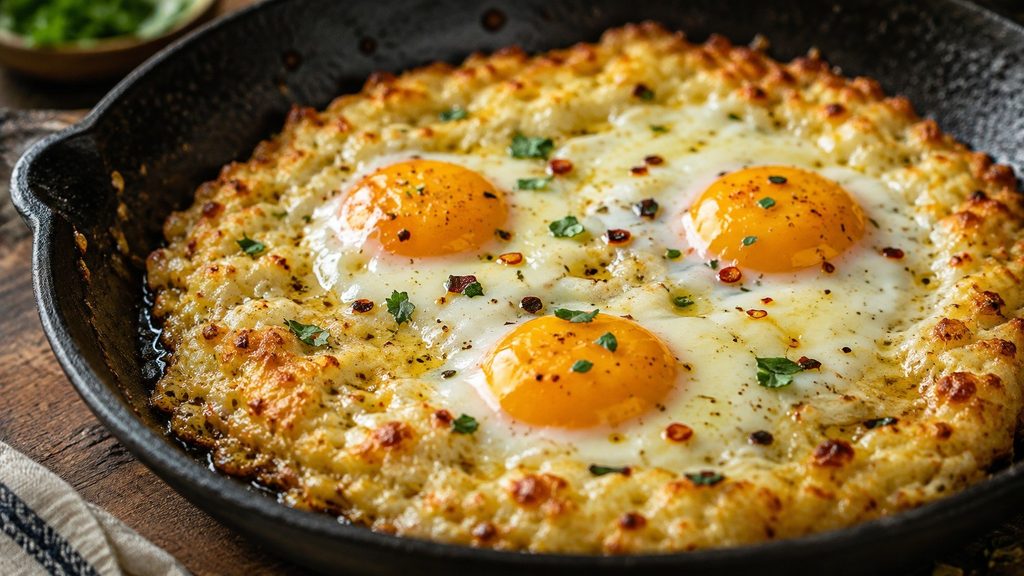
The basic formula can move in several directions without changing the cooking technique.
Harissa gives the egg earthy heat and works especially well with avocado. Put 1 tsp in the center before cracking the egg. Keep it away from the feta edges because some pastes scorch quickly.
Pesto creates a softer herbal version. Use about 1 tsp beneath the egg and finish with basil after cooking.
For a Mediterranean variation, add oregano while frying. Finish with cucumber, tomato, parsley, and a squeeze of lemon.
A hot-honey version needs only a light drizzle after the egg reaches the plate. Too much sweetness fights the feta rather than balancing it.
“Pasteurization destroys Salmonella.”
U.S. Department of Agriculture Food Safety and Inspection Service, guidance on commercial egg products and food safety. More detail is available through USDA FSIS.
FAQ
What are feta fried eggs?
Feta fried eggs are eggs cooked inside a ring of crumbled feta. The cheese melts, browns, and forms a crisp perimeter around the white.
How much feta is needed for 1 egg?
About 35–45 g works well in a small skillet. More cheese creates a thicker crust and can release excessive fat.
Why is my feta not getting crispy?
The pan may be too cool, or the feta may contain extra moisture. Let the cheese sizzle undisturbed before adjusting the heat.
Can feta fried eggs be made without oil?
Yes. A good nonstick pan and full-fat feta may release enough fat for cooking. A small amount of oil improves browning in drier pans.
Can the yolk stay runny?
A runny yolk is common in social-media versions. FDA guidance recommends firm yolks and whites for maximum food safety. Pasteurized eggs reduce risk when preparing less-cooked eggs.
What is the best way to eat a crispy feta egg?
A toasted tortilla or sourdough gives the crust support. Avocado, lemon, herbs, tomato, harissa, or pickled onion add useful contrast without covering the feta flavor.
Earlier we wrote about Cottage Cheese Pasta Sauce Recipe: How to Make a Creamy High-Protein White Sauce