 Frank Rondel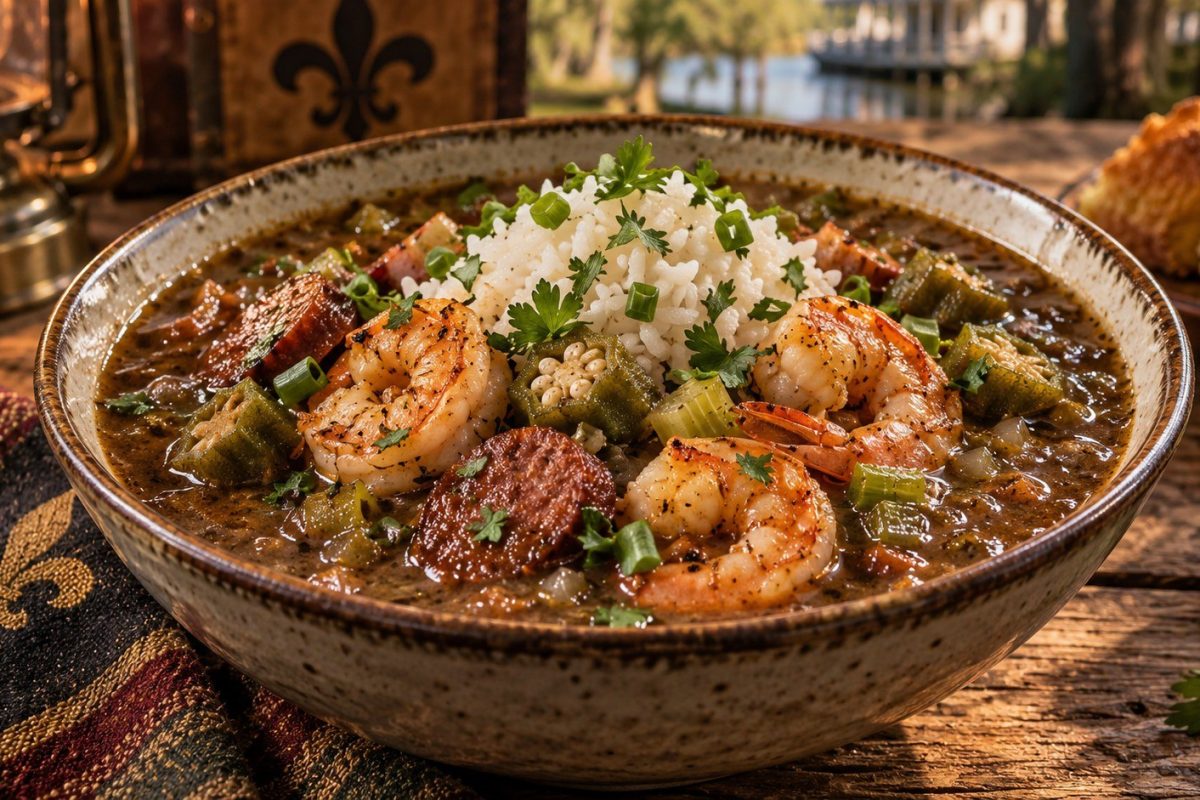
How to make gumbo starts with one decision that shapes the entire pot: how dark the roux should become. Louisiana gumbo is neither an ordinary soup nor a simple meat stew. It develops through browned flour, aromatic vegetables, stock, smoked sausage, chicken, seafood, okra, or filé. The exact combination changes across Louisiana families and regions, as noted by customreceipt.com.
The Louisiana Office of Tourism describes gumbo as a hearty local dish commonly thickened with a skillet-browned mixture of oil and flour. That mixture is the roux, and its color can range from peanut-butter brown to something approaching dark chocolate. A darker roux gives the finished gumbo deeper roasted flavor, although it thickens less effectively than a pale version.
Good gumbo does not depend on an enormous ingredient list. Its character comes from patient browning, layered seasoning, and enough simmering time for separate flavors to become one broth.
What ingredients do you need for gumbo?
A practical gumbo recipe for 6 generous servings can be built around chicken and smoked sausage. This version is easier to control than seafood gumbo because the proteins tolerate a longer simmer.
The ingredient list below produces a full-bodied pot without turning the broth excessively heavy.
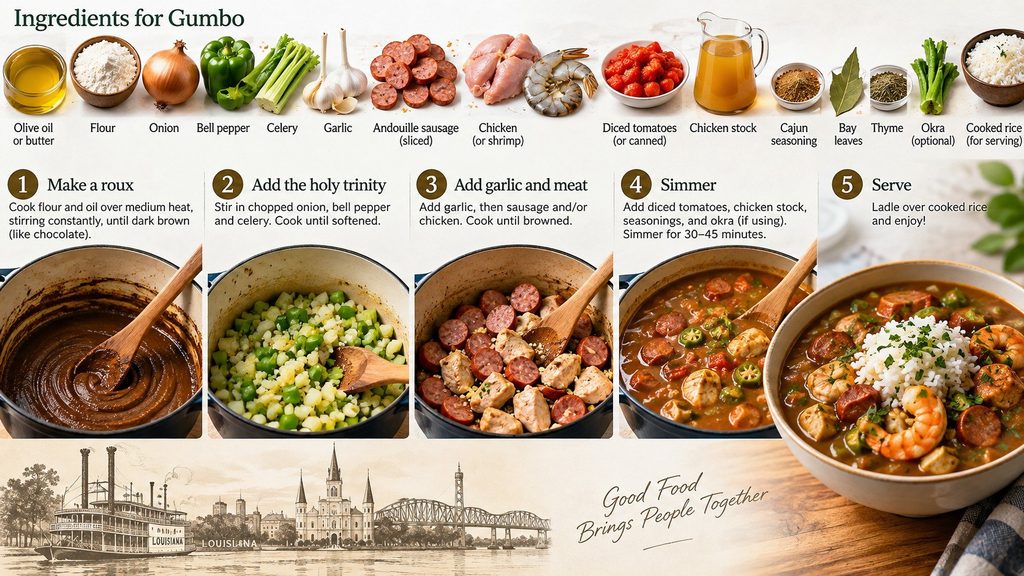
- 1 lb boneless chicken thighs;
- 12 oz andouille or other smoked sausage;
- 1/2 cup neutral vegetable oil;
- 1/2 cup all-purpose flour;
- 1 medium yellow onion, diced;
- 1 green bell pepper, diced;
- 2 celery stalks, diced;
- 3 garlic cloves, minced;
- 6 cups chicken stock;
- 1 cup sliced okra, fresh or frozen;
- 2 bay leaves;
- 1 tsp dried thyme;
- 1/2 tsp cayenne pepper, or less;
- 1 tsp smoked paprika;
- salt and black pepper;
- sliced green onions and parsley;
- cooked white rice for serving;
- filé powder, optional.
The onion, celery, and bell pepper form the familiar aromatic base used in many Louisiana dishes. Garlic usually follows once those vegetables begin softening. Smoked sausage adds fat, salt, and a pronounced cured flavor. Chicken thighs stay moist during simmering and are more forgiving than breast meat.
Okra adds both vegetable flavor and natural thickening. Filé powder offers another traditional thickening route and is made from ground sassafras leaves. Louisiana food traditions developed through African, Native American, European, Caribbean, and other influences, something reflected throughout the state’s cuisine.
For another practical approach to managing moisture and texture, the site’s guide to spinach egg bites and ingredient balance explains why excess liquid changes a finished dish. The same principle matters when gumbo contains frozen okra or seafood.
The roux determines the flavor
The central technique in Louisiana gumbo is making the roux. Equal parts fat and flour are cooked together until the mixture changes from pale cream to brown.
Start with a heavy-bottomed Dutch oven or deep pot. Heat the oil over medium or medium-low heat, then whisk in the flour. Once the mixture becomes smooth, switch to a wooden spoon or heatproof spatula.
The color changes gradually rather than all at once.
| Roux stage | Approximate color | Flavor | Best use |
|---|---|---|---|
| Light | Blond | Mild, floury | Sauces and lighter stews |
| Medium | Peanut butter | Toasted, nutty | Mild chicken gumbo |
| Dark | Milk chocolate | Deep and roasted | Chicken and sausage gumbo |
| Very dark | Dark chocolate | Strong, almost smoky | Robust Louisiana-style gumbo |
A medium-dark or dark roux usually needs 20–40 minutes over controlled heat. Exact timing changes with cookware and burner strength. Increasing the heat saves minutes but sharply increases the chance of scorching. Small black specks or a burnt smell mean the roux should be discarded and restarted.
Stir constantly as the color deepens. The flour at the bottom cooks fastest, particularly near the edge of the pot. A heavy Dutch oven makes heat easier to manage than a thin saucepan. Once the roux approaches the desired shade, the vegetables should already be prepared.
The final minutes of roux-making demand more attention than the first 10. Color can move from deep brown to burnt surprisingly fast.
A similar principle appears in the site’s home pizza guide for controlling browning and heat: temperature matters as much as time when browning determines flavor.
How to make gumbo step by step
Once the roux is ready, the rest of the chicken and sausage gumbo becomes considerably easier. All chopping should be finished before the flour begins browning.
Follow this sequence:
- Slice the sausage and brown it briefly in the pot, then remove it.
- Cook the chicken until lightly browned, then set it aside.
- Prepare the oil-and-flour roux to a medium-dark brown.
- Add onion, celery, and bell pepper directly to the hot roux.
- Cook the vegetables for 5–7 minutes, stirring regularly.
- Add garlic, thyme, paprika, cayenne, and bay leaves.
- Pour in warm stock gradually while stirring.
- Return the chicken and sausage to the pot.
- Add okra and simmer gently for 45–60 minutes.
- Adjust salt, pepper, and heat before serving with rice.
Adding the vegetables directly to the roux slows its browning and begins building the gumbo base. The stock should enter gradually because dumping cold liquid into a thick roux can produce stubborn lumps. Once incorporated, the mixture should resemble a loose brown gravy before additional simmering.
Keep the pot at a gentle simmer rather than a rolling boil. Vigorous boiling can break the chicken apart prematurely and reduce the broth too quickly. Stir occasionally near the bottom, where thickened liquid can catch.
Chicken must reach a safe internal temperature of 165°F, according to USDA Food Safety and Inspection Service guidance. A thermometer is more reliable than judging cooked poultry by color alone.
“We changed the world over a bowl of gumbo.”
Chef Leah Chase used those words when recalling civil-rights strategy meetings held at Dooky Chase’s restaurant in New Orleans. The Smithsonian identifies Chase as the “Queen of Creole Cuisine” and documents gumbo’s place in the restaurant’s social history.
Okra, filé, or roux: what actually thickens gumbo?
There is no single universal authentic gumbo recipe. Different versions rely on roux, okra, filé, or combinations of them.
Roux contributes body but also gives roasted flavor. Okra releases mucilage as it cooks, making the broth more viscous. Filé powder thickens differently and brings an herbal, earthy quality.
These ingredients should not be treated as interchangeable in equal quantities. A dark roux provides less thickening than a blond roux because extended cooking changes the flour. Heavy use of okra can make gumbo noticeably more viscous, while too much filé may create an unpleasant texture.
For a balanced chicken gumbo, 1 cup of sliced okra is a practical starting point. It can be browned separately before entering the pot if a less pronounced okra texture is preferred.
Filé is better added near the end or at the table. Repeated hard boiling after filé is added can produce a stringy texture. In many kitchens, each diner controls the amount in an individual bowl.
Cajun gumbo and Creole gumbo are not identical
The distinction between Cajun gumbo and Creole gumbo is useful, but real Louisiana cooking does not always obey rigid categories. Recipes developed through households, communities, available ingredients, and local traditions.
Creole versions are commonly associated with New Orleans and may include seafood or tomatoes in some preparations. Cajun versions often emphasize darker roux, poultry, sausage, or game. Yet there are numerous exceptions.
Louisiana’s wider culinary identity reflects centuries of cultural exchange. Smithsonian material describes Cajun heritage as connected to French-speaking Acadian communities, while Creole culture incorporates multiple European, African, Caribbean, and Native American influences.
The practical difference for a home cook is simpler. Choose the proteins first, then build the roux and seasonings around them. Chicken and smoked sausage can handle a strong dark roux. Shrimp and crab benefit from a broth whose seasoning does not bury their natural sweetness.
How to keep seafood gumbo from becoming rubbery
Seafood should not simmer for an hour. Shrimp, crabmeat, oysters, and crawfish require much less cooking than chicken.
For a seafood version, prepare the roux, vegetables, stock, and seasonings first. Let that base simmer until its flavor is fully developed. Add seafood near the end.
A sensible finishing order is:
- firm crab pieces first;
- raw shrimp during the final few minutes;
- oysters near the end;
- cooked crabmeat only long enough to heat through;
- filé after reducing the heat.
Shrimp are done when they become opaque and firm, not when they curl into tight rings. Overcooked shellfish becomes dry and rubbery. Seafood also contributes salt naturally, so final seasoning should wait until the pot is almost finished.
The USDA lists 145°F as the safe minimum temperature for fish and shellfish. Leftovers should later be reheated to 165°F.
Keep seafood gumbo refrigerated soon after the meal. Do not leave a large pot at room temperature throughout the evening. Dividing leftovers among shallow containers helps them cool faster.
Gumbo often tastes more integrated the next day, but seafood remains the exception: reheating should be gentle and limited to the portion being served.
Common gumbo mistakes
Most disappointing gumbo can be traced to a few technical errors rather than a bad recipe.
One is burning the roux. Burnt flour cannot be repaired with stock, spices, or additional fat. Another is using too much seasoning early, especially when sausage and prepared stock already contain salt.
A thin gumbo should not automatically receive extra raw flour. Flour added directly to hot liquid tends to clump and leaves an uncooked taste. Instead, simmer the pot uncovered longer or prepare a small separate roux.
A gumbo that becomes too thick can be loosened with warm unsalted stock. Add it gradually so the flavor is not diluted.
Rice belongs in the bowl rather than the cooking pot for the classic serving method. Keeping them separate also improves leftover storage because the rice cannot continue absorbing broth overnight.
How to store and reheat gumbo safely
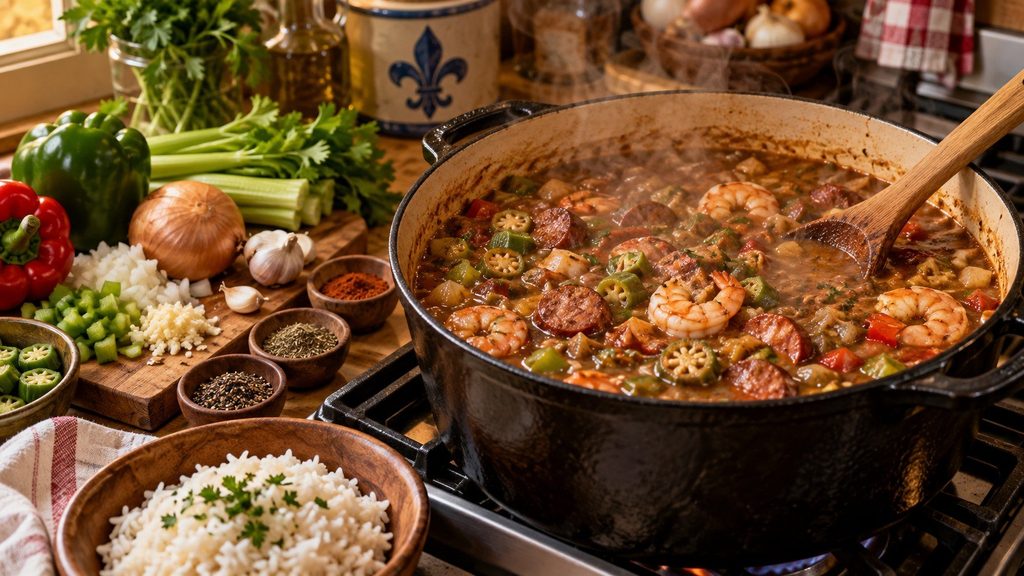
Cooked gumbo should enter refrigeration promptly. USDA guidance says most cooked leftovers should be refrigerated within 2 hours and generally used within 3–4 days.
Store rice separately from gumbo whenever possible. The broth retains its original consistency, while the rice remains easier to reheat without turning soft.
Reheat only the amount required for a meal. Bring chicken-and-sausage gumbo back to 165°F, stirring so colder pockets do not remain near the center. Seafood gumbo should also reach a safe reheating temperature, but prolonged boiling will damage its texture.
Freezing works particularly well for chicken and sausage gumbo. Leave some room in the container for expansion. Gumbo containing delicate seafood is usually better refrigerated and eaten within the recommended storage period.
FAQ about making gumbo
What is the best meat for gumbo?
Chicken thighs and smoked andouille sausage make one of the most forgiving combinations. Turkey, duck, seafood, crab, shrimp, and other regional ingredients also appear in Louisiana recipes.
How dark should gumbo roux be?
For chicken and sausage gumbo, aim for milk-chocolate to dark-chocolate brown. Stop earlier if a stronger thickening effect is more important than deep roasted flavor.
Does gumbo always contain okra?
No. Some recipes use okra, others rely mainly on roux, and some use filé. Regional and family traditions differ.
Can gumbo be made without filé powder?
Yes. Filé is optional in many versions. Roux and okra can provide sufficient body without it.
How long should gumbo simmer?
Chicken and sausage gumbo generally benefits from about 45–60 minutes of gentle simmering after the stock is added. Seafood should enter much later.
What is served with gumbo?
Steamed white rice is the standard accompaniment. Green onions, parsley, hot sauce, and filé powder can be added at serving time.
Earlier we wrote about Japanese Ground Beef Curry With Rice: How to Build a Thick Sauce Without Overcooking the Vegetables