 Frank Rondel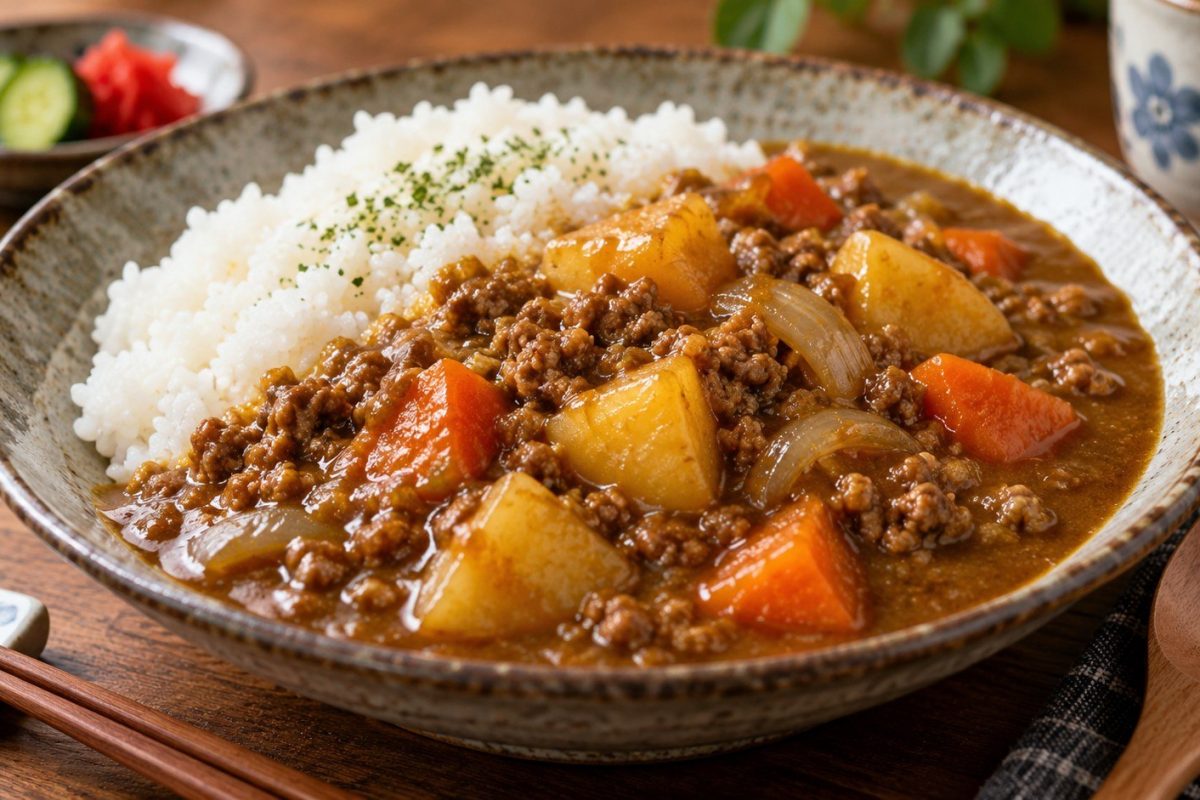
Japanese Ground Beef Curry turns a familiar Japanese comfort dish into a practical weeknight dinner. Ground beef cooks faster than cubed meat and distributes savory flavor through every spoonful. Potatoes, carrots, onion, and Japanese curry roux create the characteristic thick sauce. The method is simple enough for beginners, as noted by customreceipt.com.
Unlike many Indian or Thai curries, Japanese curry is usually mild, dense, and almost gravy-like. Kikkoman describes curry rice as a dish that developed in Japan after arriving through Britain. Today, kare raisu commonly combines a thick curry sauce with steamed rice and hearty vegetables.
Using ground beef changes the cooking rhythm. There is no need to wait for large beef pieces to become tender. The meat browns quickly, while small vegetables can cook during a short simmer.
The useful trick is not extra seasoning. It is letting the beef brown before adding liquid.
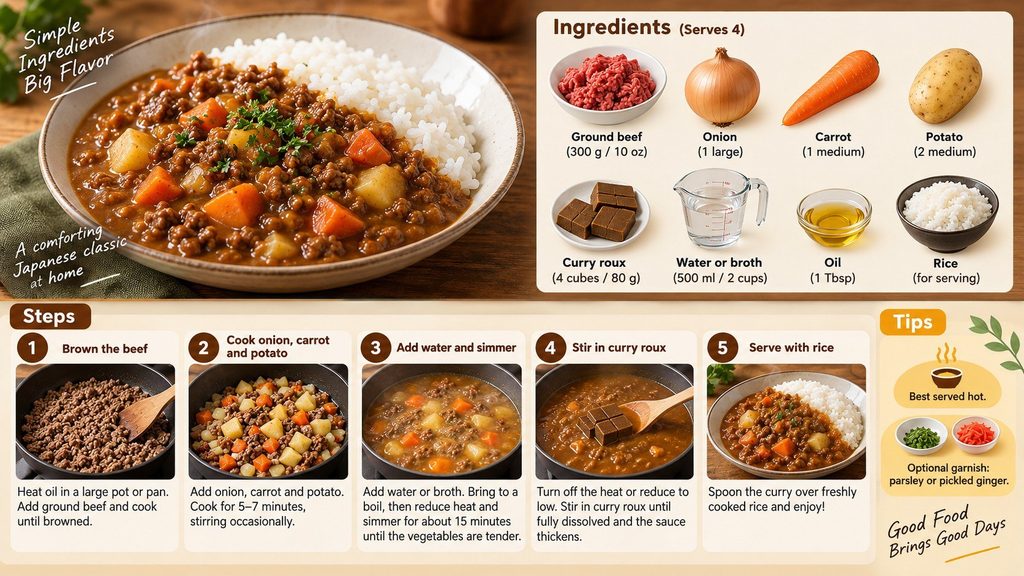
Ingredients for Japanese Ground Beef Curry
The proportions below make about 4 generous servings. A wide skillet or medium Dutch oven works best. Use a Japanese curry roux labeled mild, medium, or hot according to preference.
| Ingredient | Amount | Purpose |
|---|---|---|
| Ground beef | 1 lb / 450 g | Main protein |
| Yellow onion | 1 medium | Sweetness and aroma |
| Carrot | 1 medium | Texture and natural sweetness |
| Yukon Gold potato | 1 large | Body and starch |
| Garlic | 2 cloves | Savory base |
| Fresh ginger | 2 tsp | Fresh aromatic note |
| Japanese curry roux | 3–4 oz / 85–115 g | Flavor and thickening |
| Water or unsalted stock | 2–2½ cups | Cooking liquid |
| Neutral oil | 1 tsp | Browning |
| Soy sauce | 1–2 tsp | Extra umami |
| Cooked short-grain rice | 4 cups | Serving base |
| Frozen peas | ½ cup | Optional finish |
The exact roux quantity depends on the brand and package size. Check its instructions before adding every block. Some mixes are considerably saltier than others. Soy sauce should therefore be added near the end.
Yukon Gold potatoes hold their shape while becoming creamy inside. Russets also work, although their edges break down faster. Carrots should be cut smaller than the potato because their dense texture needs time to soften.
For another ground-beef dinner built around rice, the site’s taco bowl recipe uses a similar browning method. The Big Mac quesadilla with ground beef also explains why constant stirring reduces browning.
Why Japanese Curry Roux Changes the Dish
Japanese curry roux is more than a spice mixture. Commercial blocks usually combine seasonings, fat, flour, salt, and flavorings. Once melted into hot liquid, they thicken the sauce without a separate flour step.
S&B publishes several ground-meat curry recipes using this technique. Its official keema-style version cooks ground beef with vegetables before dissolving curry mix into the liquid.
“Simmer over low heat until the sauce becomes thick.”
S&B Foods, official keema-style curry recipe, cooking directions.
That final simmer matters. Roux added over aggressive heat can stick to the bottom or form concentrated lumps. Turning down the burner produces a smoother Japanese curry with ground beef.
Kikkoman also identifies the thick roux as a defining feature of Japanese curry rice. Its recipe collection includes ground-meat versions similar to Japanese dry curry or keema curry.
How to Make Japanese Ground Beef Curry
Prepare every vegetable before heating the pan. Once the meat starts cooking, the recipe moves quickly. Keep the roux beside the stove, but do not add it during the initial browning.
- Heat a wide skillet over medium-high heat and add the oil.
- Add ground beef and spread it across the hot surface.
- Leave it mostly untouched for about 2 minutes.
- Break the meat into small pieces and continue cooking.
- Add diced onion and cook until it begins softening.
- Stir in garlic and ginger for about 30 seconds.
- Add potato and carrot, then stir for another minute.
- Pour in 2 cups of water or stock.
- Bring the liquid to a gentle boil, then lower the heat.
- Simmer until the vegetables are nearly tender.
- Reduce the heat further and stir in the curry roux.
- Simmer until the sauce becomes glossy and thick.
- Add peas and soy sauce, if using.
- Serve beside or over freshly cooked rice.
Do not constantly stir the beef during its first minutes in the pan. Undisturbed contact produces browned surfaces instead of gray steamed meat. This is particularly useful with crowded pans.
Once liquid enters the skillet, scrape up the browned residue. Those concentrated bits add depth to the sauce. Small potato cubes usually finish faster than large restaurant-style pieces.
If the curry becomes too thick, add water in small increments. If it remains thin, simmer it uncovered for several minutes. The sauce should coat rice rather than disappear through it.
For another practical use of browned ground beef, the burger bowl recipe follows the same basic principle. Browning first and introducing moisture later gives ground meat stronger flavor.
How to Get the Sauce Texture Right
A good Japanese beef curry recipe should produce a sauce thicker than most broth-based curries. It should remain spoonable, not stiff. Rice needs enough sauce to become coated without turning soupy.
Add the roux only after the vegetables have nearly finished cooking. Thick sauce slows further cooking and makes scorching more likely.
Several problems can disturb that balance:
- adding too much water at the beginning;
- cutting the potatoes into oversized pieces;
- boiling strongly after adding the roux;
- using very fatty beef without removing excess grease;
- adding salty seasonings before tasting the finished sauce;
- letting the curry sit over high heat after thickening.
The easiest correction for thin curry is uncovered simmering. Extra roux also thickens it, but increases salt and seasoning. Adding more blocks should therefore be the second option.
For overly thick curry, stir in hot water about 2 tablespoons at a time. Cold liquid can briefly stop the simmer and make mixing slower. Keep the burner low while making adjustments.
A small amount of soy sauce can deepen savory flavor. Worcestershire-style sauce also appears in some home variations. Neither is necessary when the roux already tastes balanced.
Potatoes release additional starch as they cook. That means curry often becomes thicker while standing. Leftovers can require a splash of water during reheating.
Safe Ground Beef Temperature and Storage
Ground beef deserves more attention than whole beef cuts because grinding distributes surface bacteria through the meat. The USDA recommends cooking ground beef to 160°F, or about 71°C. Color alone is not a reliable measure of safety.
“Cook all raw ground beef, pork, lamb, and veal to an internal temperature of 160°F.”
USDA Food Safety and Inspection Service, official ground-meat guidance.
Use a food thermometer when possible. The official USDA ground beef guidance also recommends prompt refrigeration. Cooked perishable food should not remain at room temperature beyond 2 hours.
Refrigerated leftovers are generally best used within 3 to 4 days. Reheated leftovers should reach 165°F according to USDA guidance.
Store curry and rice in separate containers when possible. Rice can absorb considerable sauce overnight. Separation preserves the original texture and makes reheating easier.
What to Serve With Japanese Curry Rice
The classic arrangement is uncomplicated. Put steamed rice on one side of a shallow bowl and curry on the other. This keeps the rice texture distinct until eating.
Useful additions include:
- fukujinzuke, Japanese pickled vegetables;
- sliced scallions;
- a soft-cooked or fried egg;
- steamed broccoli;
- lightly blanched green beans;
- shredded cabbage;
- toasted sesame seeds.
Pickles work particularly well because their acidity cuts through the thick sauce. A fried egg adds richness without changing the curry itself. Green vegetables introduce a fresher texture beside soft potatoes.
Short-grain Japanese rice provides the most familiar presentation. Medium-grain rice is an easy substitute. Jasmine rice creates a more aromatic result, while basmati remains noticeably drier.
Kikkoman’s official Japanese curry material also highlights toppings such as eggs and grilled vegetables. The company describes curry rice as a flexible format rather than one fixed recipe.
Serving garnishes separately is useful for family dinners. Each person can adjust spice, acidity, and texture without changing the pot.
Easy Variations Without Losing the Japanese Curry Character
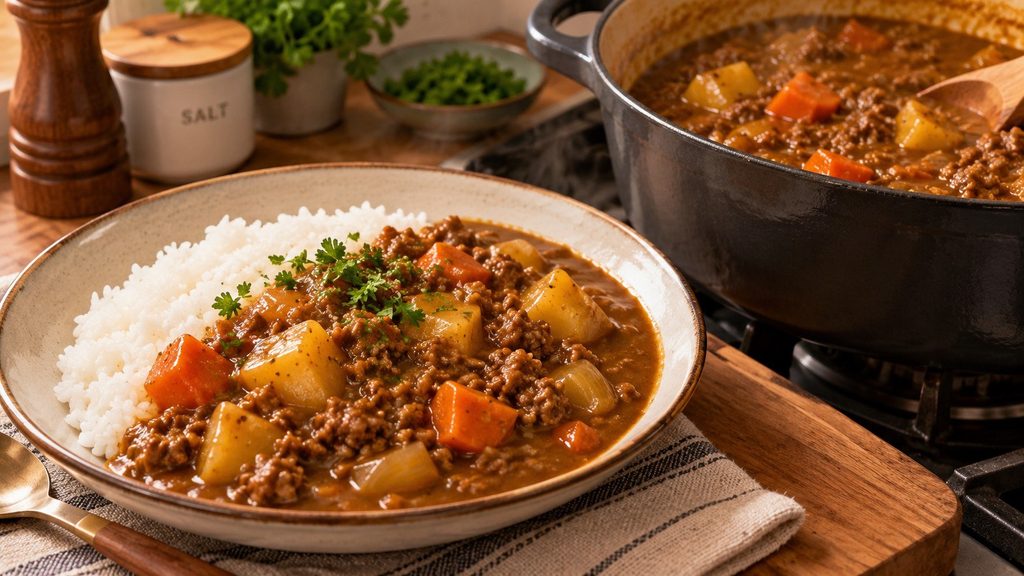
The basic ground beef curry recipe tolerates careful changes. What matters is preserving the thick sauce, savory profile, and rice-centered presentation.
For a sweeter curry, cook the onion several minutes longer before adding the aromatics. Finely grated apple can also add sweetness, although only a small amount is needed.
For deeper heat, choose a hotter Japanese roux rather than adding large amounts of chili powder. That preserves the intended seasoning balance.
A few controlled substitutions work well:
- replace half the potato with kabocha squash;
- add mushrooms after the onion softens;
- replace peas with chopped green beans;
- use beef stock instead of water for a stronger meat flavor;
- add a small spoonful of grated apple for sweetness;
- top individual portions with sliced scallions or sesame.
Ground pork or mixed beef-and-pork mince can also be used. Poultry requires different safety handling. USDA guidance sets 165°F as the minimum internal temperature for ground poultry.
Vegetable size matters more than the specific combination. Large carrots may remain firm after the sauce thickens. Small, even pieces prevent that problem.
Do not add every optional ingredient at once. Japanese curry works because its flavors remain rounded rather than aggressively spiced. A few measured additions usually produce a cleaner result.
FAQ
What is Japanese Ground Beef Curry?
It is Japanese-style curry made with crumbled ground beef instead of larger meat pieces. The sauce is usually thickened with Japanese curry roux and served with rice.
Can Japanese curry be made with ground beef?
Yes. Official S&B recipes include Japanese curry preparations using ground beef. Ground meat shortens cooking time because it does not require extended tenderizing.
Which rice is best for Japanese curry?
Japanese short-grain rice gives the most traditional texture. Medium-grain rice also works well. Jasmine and basmati can be used when those varieties are already available.
When should curry roux be added?
Add it after the vegetables are almost tender. Keep the heat low while dissolving the roux. Simmer gently afterward until the sauce reaches the desired thickness.
How hot should ground beef be cooked?
The USDA recommends a minimum internal temperature of 160°F, or 71.1°C. A food thermometer is more reliable than checking meat color.
How long can Japanese beef curry stay refrigerated?
USDA guidance says most cooked leftovers should be used within 3 to 4 days. Refrigerate the curry promptly and reheat leftovers to 165°F.
Earlier we wrote about How to Make Spinach Egg Bites: Baking Time, Storage, and 3 Easy Variations