 Frank Rondel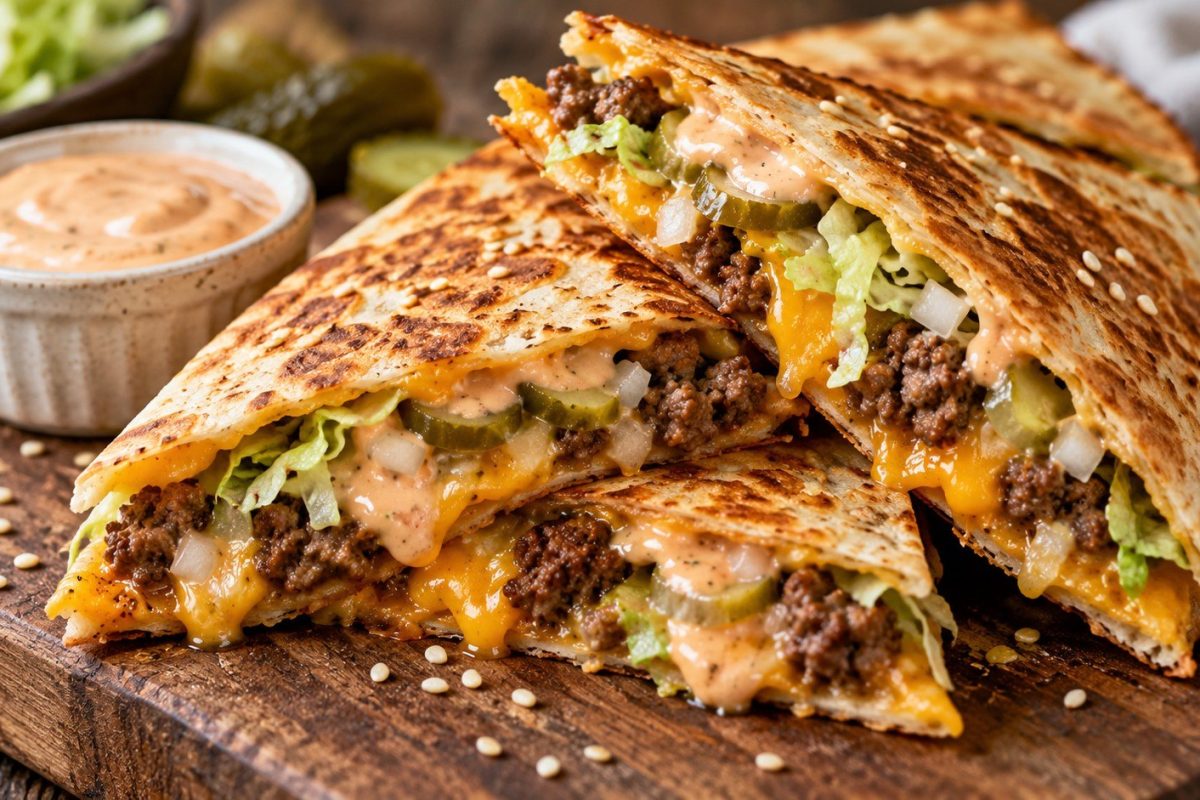
Big Mac Quesadilla takes the familiar burger combination and moves it into a crisp flour tortilla. Ground beef, cheese, pickles, onions, lettuce, and creamy burger sauce provide the recognizable flavor profile. The method is faster than building burgers and requires only one skillet for the hot components, as noted by the customreceipt.com.
The idea works because a quesadilla solves one weakness of a heavily dressed burger. Melted cheese holds the beef inside, while the toasted tortilla creates a firm exterior. Cold lettuce, pickles, and sauce are added carefully, preventing the finished quesadilla from becoming wet.
The best version tastes like a burger first and a cheese quesadilla second.
What Makes a Big Mac Quesadilla Work
McDonald’s describes its Big Mac as beef patties with sauce, lettuce, chopped onion, pickles, and American cheese. Those ingredients provide a useful blueprint for the homemade version.
The tortilla changes the proportions, however. Too much lettuce makes folding difficult. Excess sauce softens the tortilla within minutes. Thick burger patties also make little sense here, so browned crumbled beef works better.
“It’s topped off with pickles, crisp shredded lettuce, finely chopped onion and a slice of American cheese.”
McDonald’s, official Big Mac product description.
A good Big Mac quesadilla recipe therefore concentrates on texture rather than exact imitation. The beef needs browned edges rather than steamed gray pieces. Cheese must reach the tortilla because it acts like edible glue. Pickles provide acid, while onions give the filling enough sharpness.
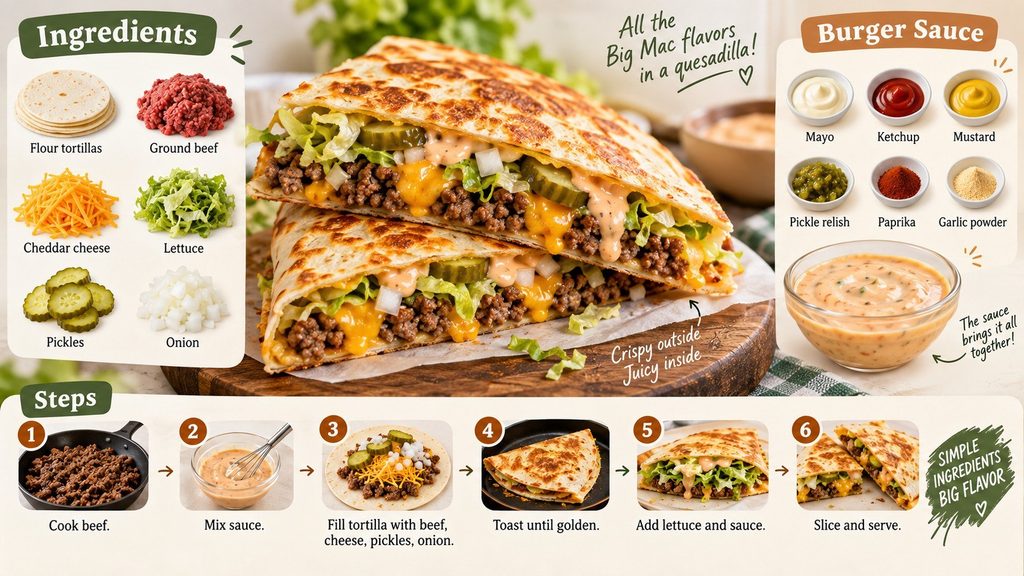
The ingredient guide below makes 2 large folded quesadillas, enough for roughly 2 hearty servings.
| Ingredient | Amount | Purpose |
|---|---|---|
| Ground beef | 8 oz / 225 g | Main filling |
| Large flour tortillas | 2 | Crisp exterior |
| American or cheddar cheese | 4 slices | Melting and structure |
| Dill pickles | 8–10 slices | Acidity and crunch |
| Finely diced onion | 2 tbsp | Sharpness |
| Shredded lettuce | 1/2 cup | Fresh texture |
| Salt | 1/3 tsp | Beef seasoning |
| Black pepper | 1/4 tsp | Beef seasoning |
| Neutral oil | 1 tsp | Browning |
| Burger sauce | 4 tbsp | Creamy finishing layer |
These quantities keep the filling substantial without making the tortillas difficult to turn. American cheese produces the closest fast-food texture. Mild cheddar gives a stronger cheese flavor but melts slightly differently. Large burrito-style tortillas are easier to fold than smaller taco tortillas. The lettuce should stay refrigerated until assembly. Drain the pickles before using them to protect the crisp tortilla.
How to Make Big Mac Burger Sauce at Home
The official Big Mac sauce formula is proprietary, although McDonald’s describes its sauce as creamy, zesty, and savory. A home version can recreate that balance without pretending to duplicate the commercial recipe exactly.
For this Big Mac burger sauce, combine these ingredients before cooking the beef:
- 3 tbsp mayonnaise
- 1 tbsp finely chopped dill pickle or pickle relish
- 1 tsp yellow mustard
- 1 tsp ketchup
- 1/2 tsp white vinegar
- 1/4 tsp onion powder
- 1/4 tsp paprika
Mix everything until the sauce becomes evenly pink and speckled with pickle. Refrigerate it while the remaining ingredients are prepared. Ten minutes of resting gives the vinegar and seasoning time to blend. For more acidity, add another teaspoon of pickle brine. For a thicker sauce, reduce the ketchup instead of adding extra mayonnaise. Avoid spreading sauce across the tortilla before frying because moisture weakens the crust.
Sauce belongs close to the end of assembly, not at the beginning of cooking.
The homemade version is intentionally practical. It uses supermarket ingredients and takes less than 2 minutes to mix. Sweet pickle relish creates a sweeter profile. Dill relish produces a sharper finish that suits fatty beef particularly well.
How to Cook the Beef Without Making the Tortilla Soggy
Place a wide skillet over medium-high heat and add the oil. Add the ground beef once the pan is hot. Break it into small pieces, but avoid stirring continuously.
The goal is to let some beef touch the skillet long enough to brown. Constant movement traps moisture and creates softer meat. Season with salt and pepper near the end of cooking.
For safe preparation, the USDA recommends cooking ground beef to 160°F. A food thermometer provides a more reliable check than meat color.
“Color is not a reliable indicator of doneness.”
USDA Food Safety and Inspection Service, guidance on ground meat safety.
After cooking, move the beef onto a plate lined briefly with paper towel. This small step removes excess rendered fat. Do not leave it there long enough to become cold.
The quesadilla with ground beef should contain juicy meat, but free grease causes problems. It can prevent the tortilla from becoming evenly crisp. It also combines with burger sauce and creates a heavy filling.
How to Assemble and Fry the Big Mac Quesadilla
Assembly matters because the ingredients do not all tolerate high heat equally. Beef and cheese belong inside during frying. Lettuce and most sauce should remain cool.
Use this order for each quesadilla:
- Place a tortilla in a clean skillet over medium-low heat.
- Cover one half with 2 cheese slices.
- Add half the cooked beef in an even layer.
- Scatter a small amount of diced onion over the beef.
- Fold the empty half over the filling.
- Cook until the underside becomes golden and firm.
- Flip carefully and brown the second side.
Keep the heat moderate rather than aggressive. High heat can scorch the tortilla before the cheese softens. Press the folded quesadilla gently with a spatula during the first minute. This helps the cheese connect the tortilla and beef. Most large tortillas need about 2 minutes per side. Exact timing depends on the skillet and burner. Transfer the cooked quesadilla to a board and rest it for 1 minute.
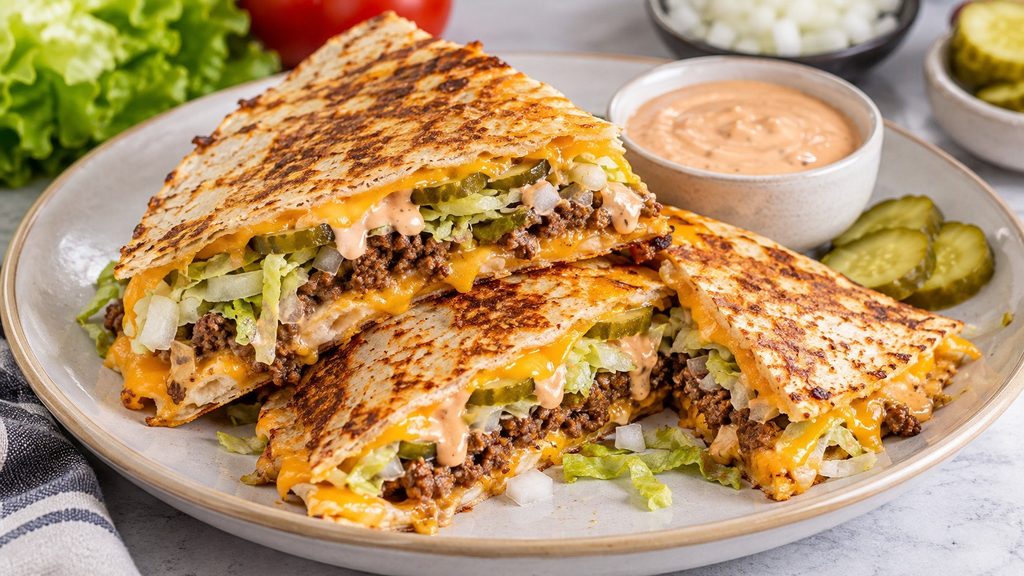
Then open it slightly and add lettuce, pickles, and roughly half the sauce. Close it again and slice into 3 or 4 wedges. Serve the remaining sauce beside the quesadilla for dipping.
This method keeps the Big Mac quesadilla with burger sauce crisp much longer. It also prevents warm lettuce from becoming limp. Pickles retain more snap when added after frying.
Common Mistakes That Change the Result
The recipe is simple, but small choices have a noticeable effect. Most failures involve moisture, temperature, or excessive filling.
- Overloading the tortilla with beef
- Adding lettuce before frying
- Using undrained pickles
- Pouring too much sauce inside
- Cooking over very high heat
- Cutting immediately after removing it from the pan
A loaded tortilla looks appealing before cooking but becomes difficult to flip. Warm lettuce quickly loses its crisp texture. Wet pickles introduce unnecessary liquid beside the melted cheese. Too much sauce can leak into the skillet and soften the tortilla. Extreme heat produces dark spots before the cheese melts properly. A short rest makes the finished quesadilla easier to slice cleanly.
There is also room for controlled variation. Sautéed onions create a sweeter filling than raw onions. Extra pickles make the recipe noticeably sharper. Shredded cheddar develops stronger browned edges when some cheese touches the pan.
For a closer burger-style profile, American cheese remains the simplest choice. For a firmer, cheesier quesadilla, cheddar or Monterey Jack works well.
Easy Variations for Different Tastes
The basic recipe can change without losing its central idea. The important combination is seasoned beef, melting cheese, pickles, onion, and creamy sauce.
A few variations work particularly well:
- Add diced jalapeños for heat.
- Use Monterey Jack for a softer cheese pull.
- Replace some mayonnaise with Greek yogurt for a lighter sauce.
- Add toasted sesame seeds to the finished tortilla.
- Use minced turkey instead of beef for a different filling.
- Serve shredded lettuce separately for maximum crunch.
Ground turkey requires different handling than beef. The USDA lists 165°F as the safe minimum temperature for ground poultry. Beef remains the closest choice for the original burger profile. Jalapeños work best when paired with extra pickles rather than extra sauce. Sesame seeds add aroma but will not stick well to a dry tortilla. A tiny coating of oil helps them adhere. Serving lettuce separately also makes leftovers easier to reheat.
A homemade Big Mac quesadilla is best treated as a flexible format rather than an exact restaurant copy. Its strongest feature is the contrast between hot beef and cold burger toppings.
How to Store and Reheat Leftovers
Finished quesadillas can be refrigerated, but lettuce and sauce complicate reheating. For better results, store cooked beef, tortillas, sauce, and vegetables separately.
The FDA recommends refrigerating perishable foods within 2 hours. It also advises keeping refrigerators at 40°F or below.
Cooked assembled quesadillas are best reheated in a dry skillet. Use medium-low heat for several minutes per side. An air fryer can also restore a crisp exterior.
Microwaving works quickly but usually softens the tortilla. If using a microwave, reheat only the beef-and-cheese portion. Add lettuce, pickles, and sauce afterward.
Do not freeze an assembled quesadilla containing lettuce. The vegetable loses its structure after thawing. Cooked beef freezes much better when packed separately.
FAQ
What is a Big Mac quesadilla?
It is a folded tortilla filled with seasoned beef and cheese, then finished with burger-style toppings. Pickles, lettuce, onion, and creamy sauce create the familiar flavor profile.
What cheese is best for a Big Mac quesadilla?
American cheese gives the closest fast-food texture. Cheddar offers more flavor, while Monterey Jack melts smoothly and remains mild.
Can burger sauce be added before frying?
It can, but using only a small quantity is safer. Too much sauce introduces moisture and can prevent the tortilla from staying crisp.
How hot should ground beef be cooked?
USDA guidance sets 160°F, or about 71°C, as the safe minimum internal temperature for ground beef. A thermometer should confirm the temperature.
Can the quesadilla be prepared ahead?
The individual components can. Cook the beef and mix the sauce ahead, then store them refrigerated. Assemble and fry shortly before serving.
How do you keep a Big Mac quesadilla crispy?
Drain the beef and pickles, limit the sauce inside, and keep lettuce out during frying. Cook over moderate heat and serve soon afterward.
Earlier we wrote about How to Make Dubai Chocolate Brownies with Pistachio Cream and Kataifi