 Frank Rondel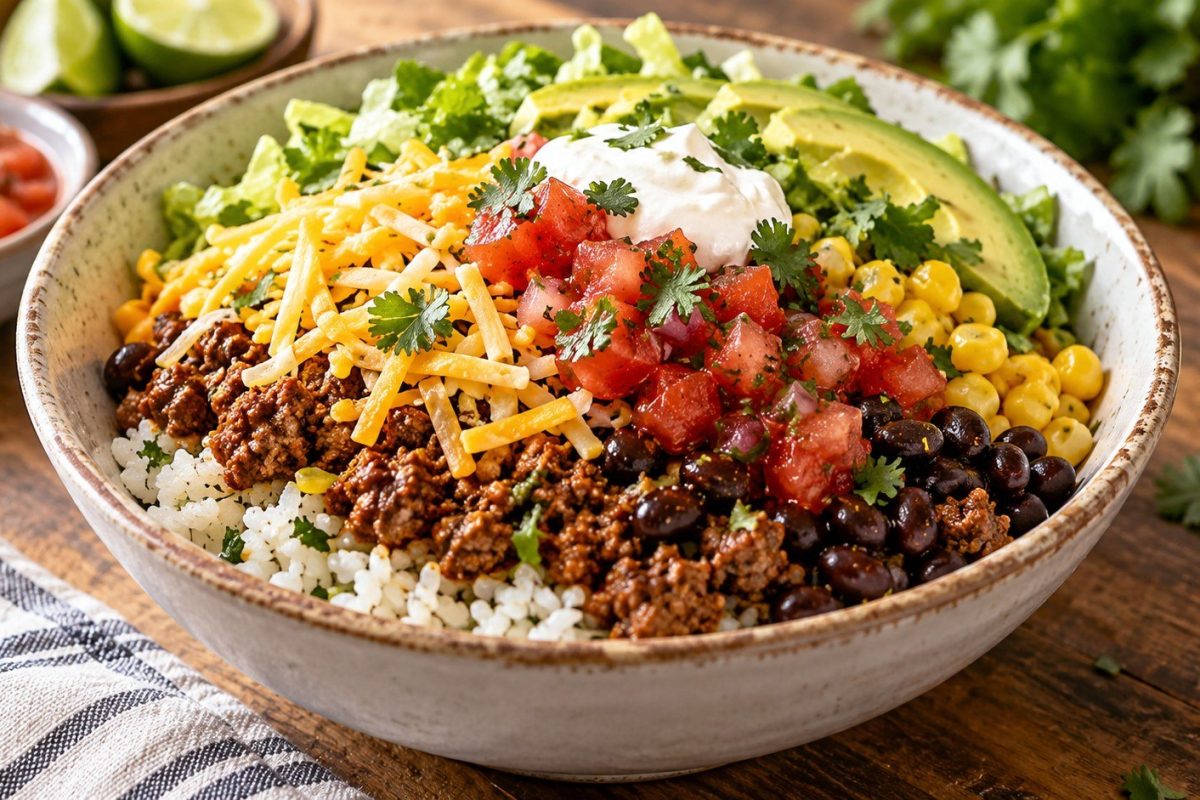
Taco Bowl is a complete meal built from seasoned rice, taco meat, beans, corn, cheese, salsa, and fresh toppings. It delivers the flavor of tacos without shells, while allowing every ingredient to stay distinct. The recipe works for weekday dinners, packed lunches, and meal preparation, as noted by the customreceipt.com editorial team.
A good bowl depends less on expensive ingredients than on timing and texture. The rice should stay loose, the beef needs browned edges, and the beans must not become watery. Salsa provides acidity, while cheese adds salt and richness. Those contrasts prevent the finished dish from tasting heavy.
The most successful taco bowl combines hot, savory ingredients with cool and acidic toppings just before serving.
Taco Bowl Ingredients and Practical Proportions
The following quantities make about 4 generous servings. They can be scaled without changing the basic method.
| Ingredient | Amount | Purpose |
|---|---|---|
| Long-grain rice | 1 cup dry | Neutral base |
| Water or broth | 2 cups | Cooking liquid |
| Ground beef | 1 lb | Main protein |
| Black or pinto beans | 15 oz can | Protein and fiber |
| Corn | 1 cup | Sweetness and texture |
| Shredded cheese | 1 cup | Richness and salt |
| Salsa | 1 cup | Acidity and moisture |
| Onion | 1 small | Aromatic base |
| Taco seasoning | 2 tbsp | Main seasoning |
| Cooking oil | 1 tbsp | Browning |
| Lime | 1 | Fresh acidity |
| Lettuce or cabbage | 2 cups | Crunch |
White long-grain rice gives the bowl a familiar burrito-shop texture. Brown rice also works but needs more cooking time. Jasmine rice tastes slightly more aromatic, while basmati creates a drier, looser base.
For the meat, 85% to 90% lean ground beef offers a useful balance. Very fatty beef can make the rice greasy. Extremely lean meat may need extra oil during browning.
Beans should be drained and rinsed before heating. This removes excess canning liquid and keeps their flavor cleaner. Frozen corn can go directly into a hot skillet. Canned corn needs draining first.
Shredded cheddar, Monterey Jack, or a Mexican-style cheese blend all work. Freshly grated cheese usually melts more evenly than heavily coated pre-shredded cheese.
Anyone organizing recipes, grocery notes, or meal records can also keep printable kitchen documents through a custom receipt and document tool. The link is included only as the verified main page because deeper sitemap pages could not be confirmed.
How to Cook Rice for a Taco Bowl
Rice sounds simple, yet it often decides whether a homemade taco bowl feels fresh or dense. Start by rinsing 1 cup of rice under cold water. Continue until the water becomes noticeably clearer.
Bring 2 cups of water or broth to a boil. Add the rice and about 1/2 teaspoon salt. Reduce the heat immediately after the liquid returns to a simmer. Cover the pot and cook according to the package instructions.
For standard white long-grain rice, the process usually takes about 15 to 18 minutes. Remove the pot from the heat afterward. Keep the lid closed for another 5 minutes.
Then fluff the grains with a fork. Add lime juice for brightness. A spoonful of chopped cilantro can be folded in before serving.
Do not mix salsa into the rice before assembly, because its liquid can quickly turn the grains soft and sticky.
Seasoning the rice lightly matters because the other components already contain salt. Broth, taco seasoning, canned beans, cheese, and salsa all contribute sodium. Taste the final bowl before adding more.
How to Make Taco Meat With Better Browning
For classic taco bowl meat, heat a wide skillet over medium-high heat. Add 1 tablespoon of oil if the beef is very lean. Place the meat into the hot pan without immediately breaking it apart.
Let one side brown for about 2 minutes. Then break the beef into small pieces using a wooden spoon. Add diced onion and continue cooking until the meat loses its raw appearance.
The most useful sequence is simple:
- Heat the skillet before adding the beef.
- Brown the meat without constant stirring.
- Add onion once the first surface has browned.
- Drain excessive rendered fat if necessary.
- Add taco seasoning and 1/3 cup water.
- Simmer until the liquid coats the meat.
This method gives the beef darker edges and concentrated flavor. Adding seasoning too early can leave spices on the pan surface, where they may burn. Water added near the end helps distribute cumin, chili powder, garlic, paprika, and salt.
A homemade seasoning mix can contain 2 teaspoons chili powder, 1 teaspoon cumin, and 1 teaspoon paprika. Add 1/2 teaspoon garlic powder and 1/2 teaspoon oregano. Salt and black pepper should be adjusted to taste.
Food safety matters because color does not reliably show whether ground beef is fully cooked. The USDA Food Safety and Inspection Service recommends 160°F, or 71.1°C, for ground beef.
“Cook all raw ground beef, pork, lamb, and veal to an internal temperature of 160°F.”
USDA Food Safety and Inspection Service, official ground-meat safety guidance.
A food thermometer provides a more dependable check than judging the beef by color. This is especially useful when meat browns quickly in a hot pan.
Beans, Corn and Salsa Need Separate Treatment
Beans and corn are not filler. They create the contrast that makes a beef taco bowl recipe satisfying without requiring a large amount of meat.
Heat rinsed black or pinto beans in a small saucepan with 2 tablespoons of water. Add cumin or chili powder if desired. Keep the heat moderate so the skins remain intact.
Corn tastes better when lightly browned. Heat a dry skillet, add drained or frozen kernels, and leave them undisturbed briefly. Small toasted spots add sweetness and a subtle roasted flavor.
Useful additions include:
- diced avocado for creaminess;
- shredded lettuce or cabbage for crunch;
- pickled jalapeños for acidity and heat;
- chopped tomatoes for freshness;
- sliced scallions for mild onion flavor;
- cilantro for a fresh herbal note;
- sour cream or Greek yogurt for cooling richness.
Salsa should normally be added after the hot ingredients enter the bowl. That keeps its flavor brighter. Thick salsa works better than very watery salsa because it does not flood the rice.
Pico de gallo creates a fresher result. Roasted tomato salsa produces a deeper flavor. Salsa verde works particularly well with chicken, turkey, or black beans.
Cheese should go onto warm meat or beans if some melting is desired. For sharper texture, scatter it over the finished bowl immediately before eating. About 1/4 cup per serving is usually enough.
Fresh lime is not decorative. Its acidity cuts through cheese and beef fat. A small squeeze can make a heavily seasoned bowl taste noticeably lighter.
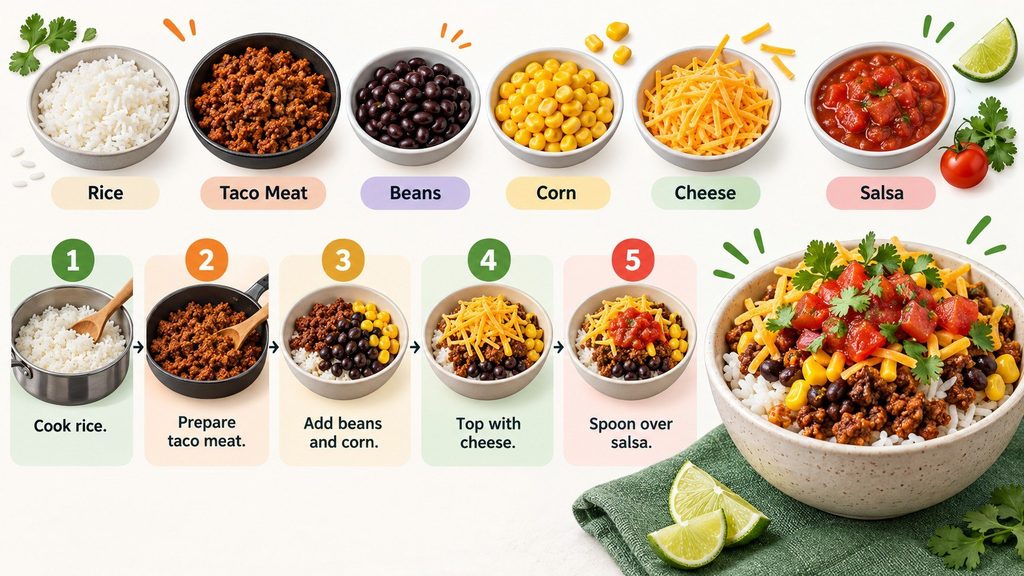
How to Assemble a Taco Bowl in the Right Order
Assembly affects texture more than many recipes admit. Putting salsa beneath the rice creates unnecessary moisture. Placing lettuce under hot beef makes it wilt before the bowl reaches the table.
A reliable order is:
- Spoon hot rice across the bottom.
- Add taco meat to one side.
- Place beans and corn beside the meat.
- Add cheese while the ingredients remain warm.
- Spoon salsa over the top.
- Finish with lettuce, avocado, lime, or cilantro.
This arrangement keeps wet and dry ingredients separated until eating. It also makes portion adjustments easier. Someone wanting more protein can increase beef or beans without changing the entire recipe.
For a lighter version, use 1/2 cup cooked rice and more lettuce. For a larger post-workout meal, increase rice and protein. The same preparation method supports both portions.
A vegetarian Mexican taco bowl can replace beef with extra black beans and sautéed vegetables. Crumbled tofu also takes taco seasoning well. Ground turkey is another direct substitute, but it requires different food-safety handling.
USDA guidance places ground poultry at a minimum internal temperature of 165°F, or about 73.9°C. Ground beef remains at 160°F.
“Use most cooked leftovers within 3 to 4 days.”
USDA Food Safety and Inspection Service, official leftovers guidance.
Taco Bowl Meal Prep Without Soggy Ingredients
A taco bowl meal prep lasts better when hot ingredients and fresh toppings are stored separately. Rice, beef, beans, and corn can share one container. Lettuce, salsa, avocado, and sour cream should remain separate.
Cool cooked food promptly rather than leaving containers on the counter for several hours. USDA guidance says perishable food should not remain at room temperature beyond 2 hours. The limit drops to 1 hour above 90°F.
For practical meal preparation, portion the cooked components into shallow containers. Refrigerate them soon after cooking. Pack salsa in a small sealed cup.
Cooked leftovers generally keep for 3 to 4 days under refrigeration, according to USDA leftovers guidance. Reheated leftovers should reach 165°F.
Avocado is best cut on the day of serving, because exposed flesh oxidizes and loses its fresh appearance.
Reheat only the rice, beef, beans, and corn. Add cheese afterward if a softer texture is preferred. Cold toppings should stay cold until serving.
Common Taco Bowl Mistakes
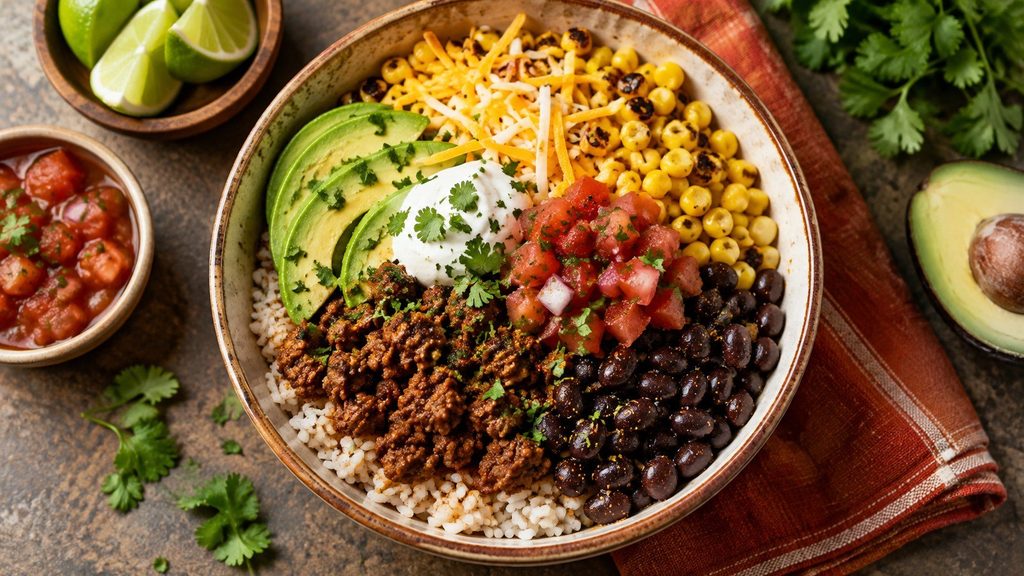
The most common problem is excess moisture. Wet beans, watery salsa, and undrained beef can collect at the bottom. Drain ingredients properly before assembly.
Another mistake is seasoning every component heavily. Taco seasoning, cheese, canned beans, and salsa may already contain substantial salt. A restrained rice base creates better balance.
Several problems are easy to prevent:
- overcrowding the skillet, which reduces browning;
- constantly stirring ground beef;
- adding cold salsa before reheating meal-prep bowls;
- placing lettuce beneath hot ingredients;
- using unseasoned rice with heavily seasoned toppings;
- storing avocado inside reheatable containers.
A large skillet helps the meat brown because moisture evaporates faster. Smaller pans tend to steam crowded beef. Cooking in 2 batches can improve texture when doubling the recipe.
Rice also benefits from resting after cooking. Opening the lid repeatedly releases steam and can produce uneven grains. Letting the pot sit covered gives moisture time to redistribute.
For heat, jalapeños and hot salsa provide more control than doubling taco seasoning. Seasoning blends often contain significant salt. Extra chili can therefore make the entire bowl saltier than intended.
Texture should guide the final adjustments. Add lime when the bowl feels heavy. Add cheese or avocado when it feels too sharp.
FAQ About Taco Bowls
How much rice should one taco bowl contain?
About 1/2 to 1 cup of cooked rice works for most servings. Smaller portions leave more room for vegetables, beans, and protein.
What meat works best for a taco bowl?
Ground beef with 85% to 90% lean meat is a practical choice. Ground turkey, chicken, or plant-based alternatives can also work.
Can taco bowls be made without rice?
Yes. Lettuce, cauliflower rice, quinoa, or extra beans can replace rice. The toppings and seasoning method remain largely unchanged.
Can taco bowls be prepared ahead?
Yes. Store cooked ingredients separately from lettuce, salsa, avocado, and dairy toppings. Refrigerated leftovers are generally best used within 3 to 4 days.
What salsa is best for a taco bowl?
A thick tomato salsa is the easiest all-purpose option. Pico de gallo adds freshness, while salsa verde gives a sharper flavor.
How can a taco bowl taste more like restaurant food?
Brown the meat properly, season the rice lightly, and toast the corn. Finish with fresh lime and add salsa only during assembly.
Earlier we wrote about How to Make a Burger Bowl at Home: Easy Bunless Cheeseburger Recipe With Ground Beef, Fresh Vegetables, Potatoes and Creamy Burger Sauce