 Frank Rondel
Chickpeas al Limone turns ordinary canned chickpeas into a glossy lemon sauce with Parmesan, garlic, olive oil, and burrata. The dish takes about 25 minutes, yet the texture feels closer to slow-cooked beans than a rushed pantry dinner. The useful trick is keeping some chickpea liquid, which helps bind the fat and cheese into sauce, as noted by the customreceipt.com.
The idea borrows from pasta al limone rather than traditional bean stew. Lemon provides acidity, Parmesan adds salt and umami, while burrata softens both with cool creaminess. Most of the work happens in one skillet, and there is no flour or cream sauce to prepare.
The difference between lemony chickpeas and sour chickpeas comes down to timing: zest cooks briefly, while fresh juice enters after the strongest heat has passed.
What You Need for Chickpeas al Limone
The ingredient list is short, so individual choices remain noticeable. Canned chickpeas are particularly practical because their cooking liquid can become part of the sauce. A related guide to cooking beans in a one-pot meal uses bean starch for the same reason: it adds body without flour.
For 4 portions, prepare the following:
- 2 cans chickpeas, about 15 oz each;
- 1 large lemon;
- 2 garlic cloves;
- 3 tbsp extra-virgin olive oil;
- 1/3 cup finely grated Parmesan;
- 8 oz burrata;
- 1/3 cup chickpea liquid or water;
- 1 small handful fresh basil;
- black pepper;
- salt, if required;
- toasted sourdough or baguette for serving.
Do not drain all the chickpea liquid immediately. Reserve at least 1/3 cup before rinsing or transferring the beans. Finely grated Parmesan melts more evenly than coarse shavings. The lemon should feel heavy for its size because the recipe needs both juice and zest. Burrata is best opened shortly before serving. Basil is optional, although its fresh aroma works well against the warm sauce.
Ingredient Ratios That Keep the Sauce Balanced
The sauce needs enough liquid to coat the beans without turning them into soup. It also needs enough acidity to cut through burrata and Parmesan.
| Ingredient | Amount for 4 servings | Main purpose |
|---|---|---|
| Chickpeas | 2 × 15 oz cans | Main body and protein |
| Chickpea liquid | 1/3 cup | Thickening and emulsification |
| Lemon juice | 3 tbsp | Acidity |
| Lemon zest | 2 tsp | Citrus aroma |
| Olive oil | 3 tbsp | Richness and sauce texture |
| Parmesan | 1/3 cup | Saltiness and body |
| Burrata | 8 oz | Creamy finish |
| Garlic | 2 cloves | Savory base |
These quantities produce a loose sauce rather than a dense paste. More Parmesan makes the dish thicker and noticeably saltier. Extra lemon juice can be added at serving time without destabilizing the sauce. If the skillet becomes dry, add chickpea liquid 1 tbsp at a time. Water also works, although it gives slightly less body. The finished beans should move slowly when the pan is tilted.
The same moisture principle matters in other quick meals. CustomReceipt’s guide to spinach egg bites also treats excess liquid as a texture problem rather than an afterthought.
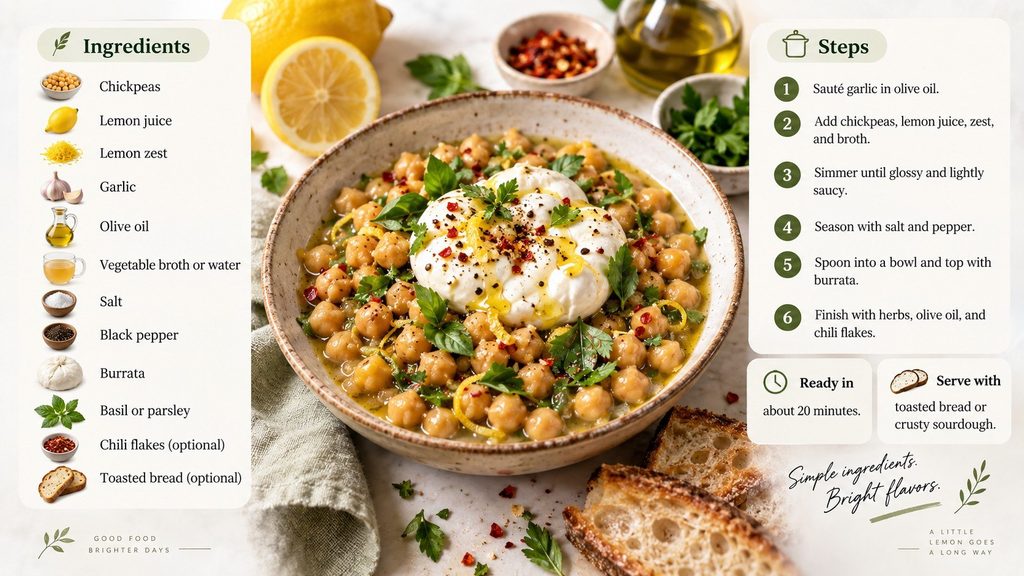
How to Make Chickpeas al Limone Step by Step
This lemon chickpea recipe works best when the ingredients are ready before the skillet gets hot. Garlic can burn quickly, while Parmesan becomes grainy if boiled aggressively.
Follow this order:
- Zest the lemon, then squeeze about 3 tbsp juice.
- Drain the chickpeas while reserving 1/3 cup liquid.
- Heat 1 tbsp olive oil over medium heat.
- Add minced garlic and cook for about 30 seconds.
- Add chickpeas and reserved liquid.
- Simmer uncovered for 6–8 minutes.
- Crush several chickpeas against the skillet with a spoon.
- Reduce the heat to low and stir in lemon zest.
- Remove the skillet from direct heat.
- Add lemon juice, Parmesan, and remaining olive oil.
- Stir until the sauce looks creamy and glossy.
- Divide between bowls and add torn burrata and basil.
The short simmer reduces the chickpea liquid and releases more starch from damaged beans. Crushing only a few keeps most chickpeas intact. Taking the skillet off strong heat before adding Parmesan reduces the risk of clumping. Add black pepper before deciding whether more salt is needed. Parmesan and canned chickpeas can already contain significant salt. Serve the dish while the beans remain warm and the burrata stays cool.
Warm chickpeas against cold burrata create the dish’s strongest contrast, so heating the cheese defeats much of its purpose.
Why Chickpea Liquid Makes the Sauce Creamy
A successful creamy chickpea recipe does not necessarily need dairy in the cooking liquid. Chickpea brine contains dissolved starches and proteins that increase viscosity during reduction. Once olive oil and Parmesan enter, that liquid helps everything cling to the beans.
The method resembles using pasta water in a cheese sauce. It is not identical, but the practical effect is similar. Water alone thins the skillet. Starchy liquid can loosen it while retaining more body.
“Bring sauces, soups and gravy to a boil when reheating.”
That recommendation comes from the U.S. Food and Drug Administration’s consumer food-safety guidance. The agency also advises prompt refrigeration of prepared foods.
For this dish, however, burrata should not be boiled with the chickpeas. Reheat only the bean mixture, then add fresh burrata after plating. This preserves the soft center and avoids separating the cheese.
How to Avoid the 5 Most Common Mistakes
The simplicity of chickpeas with burrata makes technical errors more visible. Most disappointing versions are either watery, aggressively acidic, or overloaded with cheese.
Several problems are easy to prevent:
- burning garlic before the chickpeas enter the skillet;
- discarding all the canned chickpea liquid;
- adding Parmesan over a hard boil;
- cooking fresh lemon juice for too long;
- putting burrata into the hot skillet instead of onto the finished dish.
Garlic needs only enough heat to release its aroma. Chickpea liquid should reduce, but it should not disappear completely. Parmesan melts more smoothly after the burner is lowered or switched off. Lemon zest tolerates heat better than fresh juice. Burrata belongs on the plate because its cool center balances the hot beans. If the sauce tightens while standing, a spoonful of warm water can restore its consistency.
The same attention to heat appears in recipes where browning matters. A guide to controlling heat while cooking gumbo shows why temperature often matters more than a rigid cooking time.
What to Serve With Lemon Chickpeas and Burrata
The dish is rich enough to work as an easy chickpea dinner, although texture matters when choosing sides. Soft beans, sauce, and burrata benefit from something crisp or bitter.
Good options include toasted sourdough, grilled baguette, arugula salad, roasted broccoli, sautéed kale, or charred asparagus. Chili flakes can add heat without changing the sauce structure. Capers provide another acidic-salty note, but use them carefully because Parmesan already supplies salt.
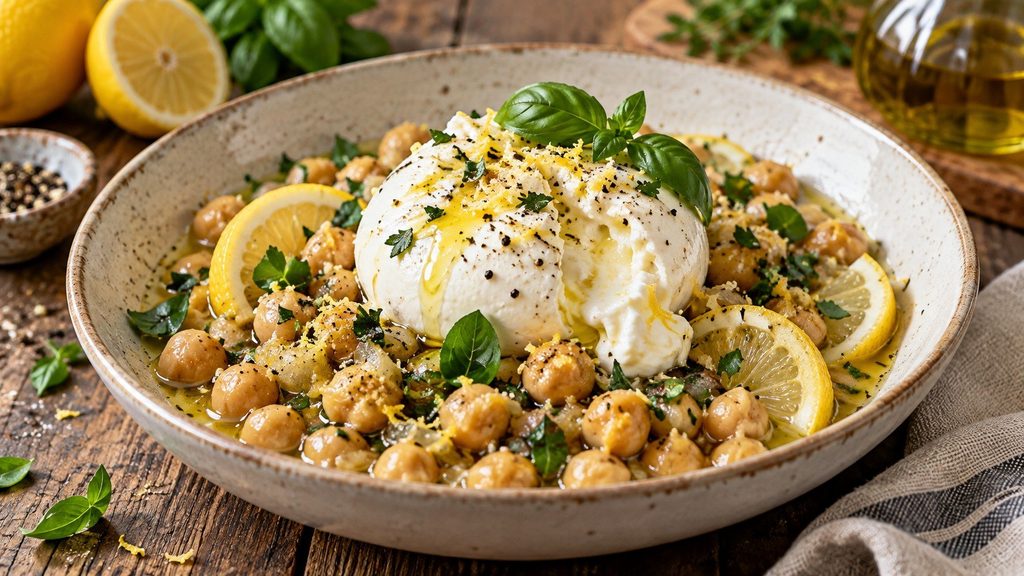
A fried or jammy egg can replace burrata when a stronger breakfast-style meal is preferred. Ricotta gives a lighter texture. Fresh mozzarella works, although it lacks burrata’s creamy center. For a vegan version, omit both cheeses and finish with tahini or a mild plant-based alternative.
Storage and Food Safety
Chickpeas can be cooked ahead, but burrata should be added only to the portion being served. Store the bean mixture separately in a covered container.
The FDA recommends keeping refrigerated foods at 40°F, or 4°C, or below. It also advises refrigerating prepared food and leftovers within 2 hours.
“Refrigerate or freeze perishables, prepared food, and leftovers within two hours of eating or preparation.”
The wording comes from FDA guidance on chilling prepared foods safely.
Reheat the chickpeas gently and stir in a splash of water if necessary. Add fresh lemon juice only after reheating. Open burrata should remain chilled and should follow the storage instructions printed by its producer. Do not leave the finished dish sitting at room temperature throughout an evening.
FAQ About Chickpeas al Limone
Can dried chickpeas be used instead of canned chickpeas?
Yes. Cook them until completely tender and reserve some cooking liquid. About 3 cups cooked chickpeas can replace 2 standard cans.
Why does my lemon sauce taste bitter?
The white pith beneath lemon zest is bitter. Remove only the thin yellow layer, and avoid burning the garlic.
Can I make Chickpeas al Limone without Parmesan?
Yes, but the sauce will become lighter and less savory. Tahini can add body, although it creates a different flavor.
Can burrata be replaced with mozzarella?
Yes. Fresh mozzarella provides a clean dairy flavor, but it lacks the creamy center that makes burrata distinctive.
How long does the recipe take?
Allow about 10 minutes for preparation and 15 minutes for cooking. Total active time is roughly 25 minutes.
What bread works best?
Sourdough and rustic baguette are reliable choices. Toast the bread until the edges are crisp enough to hold the sauce.