 Frank Rondel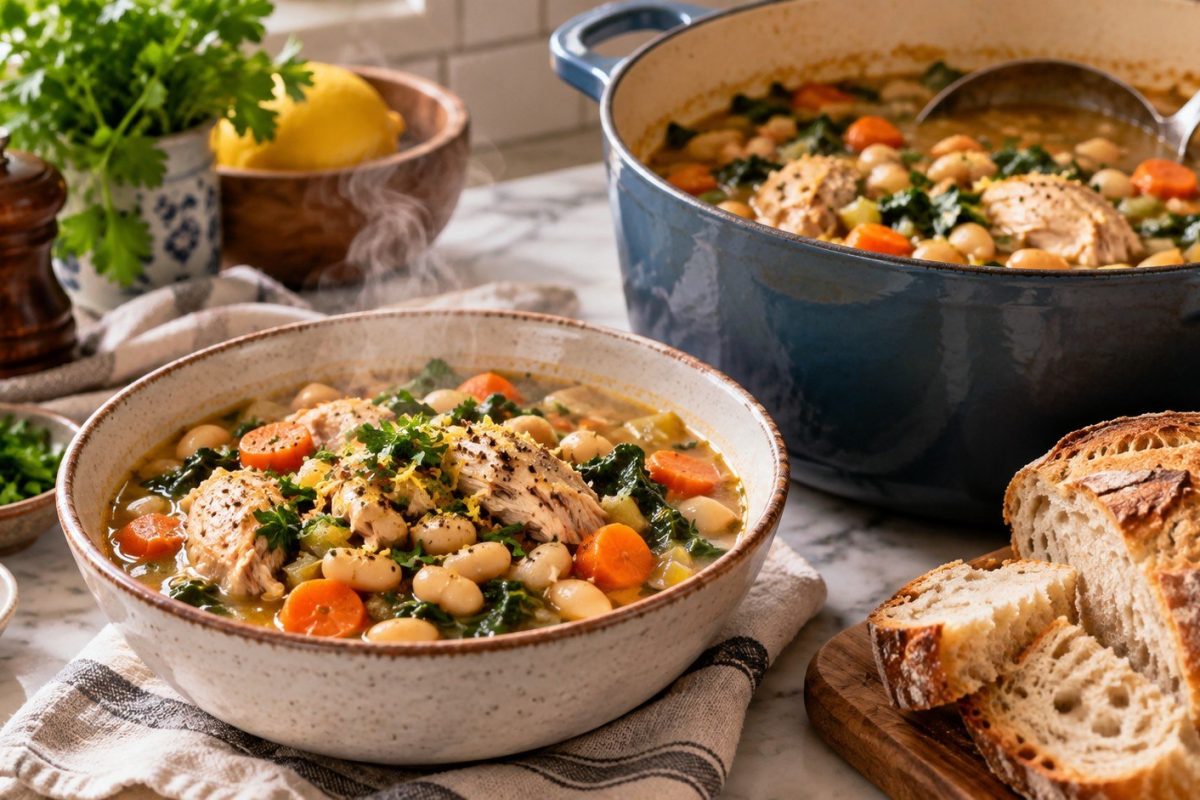
Chicken and White Bean Stew turns a short list of pantry ingredients into a dense, savory dinner with tender chicken, creamy beans, vegetables, and a broth that thickens naturally. It is less fussy than many traditional stews, yet more substantial than an ordinary chicken soup, as noted by the customreceipt.com.
The useful part of this recipe is its flexibility. Chicken thighs stay juicy during simmering, canned beans shorten preparation, and a small amount of mashed beans gives the broth body. No flour slurry or heavy cream is required. The entire meal can be cooked in one Dutch oven or deep saucepan.
The best chicken and bean stew should be thick enough to cling to a spoon, but still contain enough broth to soak into bread.
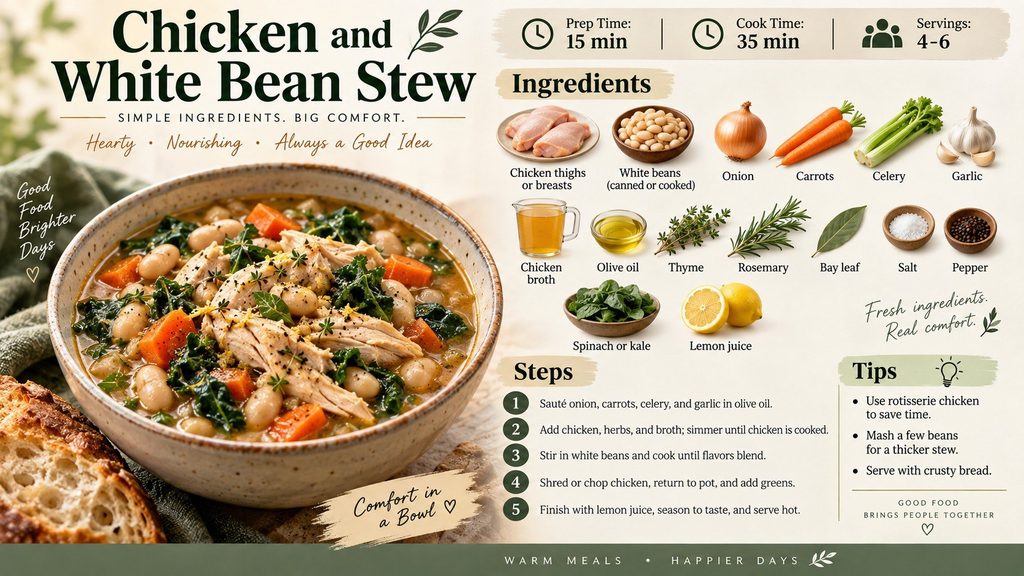
Ingredients for Chicken and White Bean Stew
This recipe makes about 5 generous servings. Cannellini beans are particularly suitable because their creamy texture breaks down slightly during cooking. Great Northern or navy beans also work.
| Ingredient | Amount | Purpose |
|---|---|---|
| Boneless chicken thighs | 1½ lb / 680 g | Main protein |
| Cannellini beans | 2 cans, 15 oz each | Body and creamy texture |
| Yellow onion | 1 medium | Savory base |
| Carrots | 2 medium | Sweetness and texture |
| Celery | 2 stalks | Aromatic base |
| Garlic | 3 cloves | Savory flavor |
| Chicken stock | 3 cups | Cooking liquid |
| Olive oil | 1 tbsp | Browning |
| Tomato paste | 1 tbsp | Depth and color |
| Dried thyme | 1 tsp | Herbal note |
| Rosemary | ½ tsp | Earthy aroma |
| Baby spinach | 2 cups | Fresh finish |
| Lemon juice | 1 tbsp | Balances richness |
| Salt and pepper | To taste | Final seasoning |
Drain and rinse the canned beans before adding them. Reserve about ½ cup for mashing later. This small step changes the texture considerably without introducing another thickener.
Chicken breast can replace thighs, although timing becomes less forgiving. Breast meat dries more quickly when simmered too long. Thighs handle the two-stage cooking method better and contribute more flavor to the broth.
The same principle of building flavor before adding liquid appears in this Japanese ground beef curry recipe. Browning creates concentrated savory notes that simmering alone cannot produce as effectively.
How to Make Chicken and White Bean Stew
Use a wide Dutch oven if possible. A broad cooking surface allows the chicken to brown rather than steam. Prepare the vegetables before heating the pot because the first stages move quickly.
Follow this order:
- Cut the chicken into large bite-size pieces and season lightly.
- Heat olive oil over medium-high heat.
- Brown the chicken for 2–3 minutes per side.
- Transfer it to a clean plate before it cooks completely.
- Add onion, carrot, and celery to the same pot.
- Cook for about 5 minutes, until the onion softens.
- Add garlic, tomato paste, thyme, and rosemary.
- Pour in the stock and scrape the browned residue from the pot.
- Add the beans and return the chicken.
- Simmer gently for 12–15 minutes.
- Mash the reserved beans and stir them into the broth.
- Add spinach and lemon juice shortly before serving.
Do not aggressively boil the stew after returning the chicken. A steady simmer is enough to finish the meat while allowing the beans to soften. Strong boiling can break the beans apart before the broth develops properly.
Scraping the browned material from the bottom is equally important. Those dark fragments contain concentrated flavor from the chicken and tomato paste. Once dissolved into the stock, they become part of the sauce rather than remaining stuck to the pan.
The stew will also thicken as it rests for 5–10 minutes. Adding unnecessary flour during cooking can make leftovers excessively dense.
For another practical meal-prep idea, spinach egg bites use a similar strategy: control moisture first, then adjust texture.
Why White Beans Make the Broth Creamy
White beans contain starch that enters the surrounding liquid as they cook and break down. Mashing only a portion produces a creamy consistency while leaving most beans intact.
That technique gives white bean chicken stew a different texture from ordinary chicken soup. Instead of floating separately in a thin broth, the vegetables, beans, and chicken become connected by a light sauce.
Three methods can make the stew thicker:
- mash ½ cup of cooked beans before returning them to the pot;
- simmer uncovered for several additional minutes;
- crush several beans against the side of the pot while stirring.
Each method changes the consistency differently. Mashing gives the most even result. Uncovered simmering concentrates both flavor and salt, so seasoning should wait until afterward. Crushing beans directly in the pot creates a slightly more rustic texture. Combining all three methods can make the stew too dense.
Cream is therefore optional rather than necessary. Adding ¼ cup can produce a richer version, but it also softens the sharper flavors from lemon and herbs.
Beans do more than add bulk here: they function as both an ingredient and a natural thickener.
How to Keep the Chicken Tender
The most common problem with chicken stew with white beans is not the beans. It is overcooked chicken.
Browning chicken before simmering develops flavor, but the pieces do not need to cook through during that stage. Their centers should finish gently in the broth.
The USDA Food Safety and Inspection Service recommends cooking poultry to a minimum internal temperature of 165°F, or about 74°C. A food thermometer provides a more reliable check than color alone.
“Poultry” should reach a safe minimum internal temperature of 165°F.
USDA Food Safety and Inspection Service, guidance on poultry doneness and safe cooking temperatures.
Check one of the largest pieces rather than the smallest. Remove the pot from high heat once the chicken reaches the safe temperature. Residual heat will continue warming the stew for several minutes.
Boneless thighs remain the easiest option for beginners. Bone-in thighs can be used, but they require additional simmering and produce a less convenient serving format.
Variations That Actually Work
A good easy chicken and white bean stew can absorb several substitutions without losing its basic character. Changes work best when they replace an ingredient instead of continuously enlarging the recipe.
Useful variations include:
- replace spinach with chopped kale and simmer it slightly longer;
- add diced Yukon Gold potatoes for a heavier meal;
- use navy or Great Northern beans instead of cannellini;
- add crushed red pepper for mild heat;
- stir in fresh parsley instead of rosemary;
- finish each bowl with grated Parmesan;
- add chopped cooked bacon for a smoky version.
After substitutions, liquid quantity may need adjustment. Potatoes absorb broth and release additional starch. Kale requires more cooking than baby spinach. Parmesan and bacon both add salt, so final seasoning should happen after they enter the pot.
For an acidic side dish, ranch dill pickles provide a cold contrast to the warm, creamy beans. Crusty sourdough, toasted country bread, or a simple green salad also work well.
Tomatoes can be added, but they noticeably change the stew. About ½ cup of crushed tomatoes produces a brighter, more acidic broth. A full can pushes the dish closer to tomato-based bean soup.
Storage, Freezing and Reheating
Chicken and bean stew recipe leftovers often become thicker overnight because the beans continue absorbing liquid. Refrigerate the stew in shallow, covered containers once it has cooled enough for safe storage.
When reheating, add a small splash of stock or water. Heat only the portion needed rather than repeatedly warming the entire batch.
Freezing also works well, particularly when potatoes are omitted. Cooked potatoes may develop a grainier texture after freezing and thawing. Beans and chicken generally tolerate freezing more successfully.
For meal preparation, portion the stew before freezing. Leave some room in each container because liquids expand as they freeze. Thaw refrigerated overnight when possible, then reheat thoroughly.
A squeeze of fresh lemon after reheating restores some of the brightness that can fade during storage.
What to Serve With Chicken and White Bean Stew
The stew already contains protein, vegetables, and beans, so elaborate side dishes are unnecessary. Texture is more useful than another heavy component.
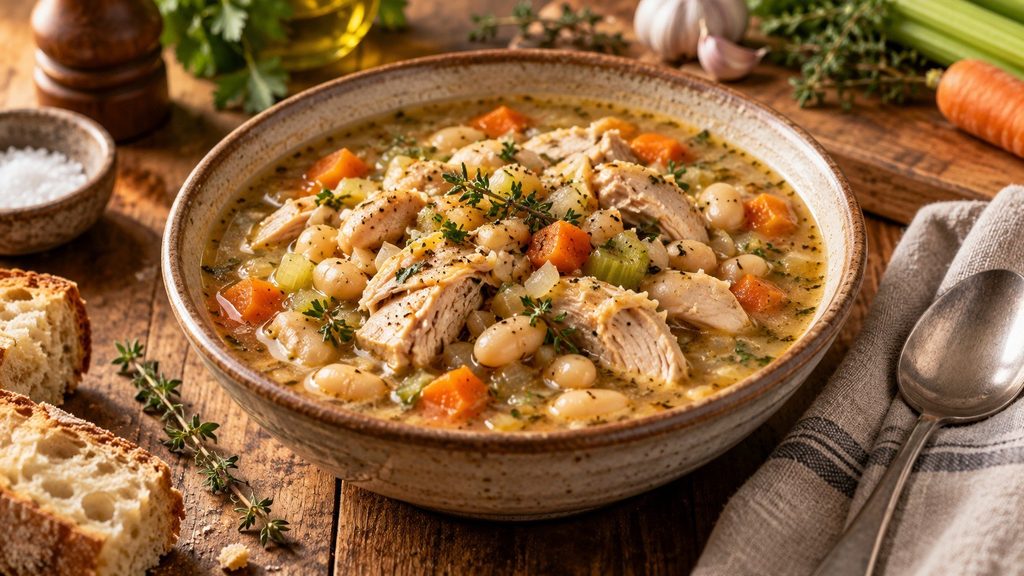
Bread is the obvious companion because the broth is thick enough for dipping. Toasting it creates a crisp surface that remains intact longer. Garlic bread works, but strong garlic can compete with the delicate rosemary and bean flavor.
A few reliable pairings include crusty bread, roasted broccoli, green salad, sautéed greens, or roasted corn. Acidic vegetables and pickles are particularly effective against the creamy broth.
A spoonful of Parmesan can finish individual bowls. Extra-virgin olive oil adds richness without making the entire pot heavier.
FAQ About Chicken and White Bean Stew
What are the best white beans for chicken stew?
Cannellini beans are ideal because they are large, creamy, and easy to mash. Great Northern and navy beans are suitable substitutes.
Can canned beans be used?
Yes. Canned beans make the recipe considerably faster. Drain and rinse them before adding them to control excess liquid and salt.
How do you thicken chicken and white bean stew?
Mash approximately ½ cup of beans and stir them back into the pot. Uncovered simmering for several minutes can thicken it further.
Can chicken breast replace chicken thighs?
Yes, but chicken breast requires closer temperature control. Add it later or reduce simmering time to prevent dryness.
How long does Chicken and White Bean Stew take?
Allow about 15 minutes for preparation and roughly 30 minutes for cooking. Most of that time involves browning vegetables and gentle simmering.
Can Chicken and White Bean Stew be frozen?
Yes. Freeze cooled portions in suitable containers. Versions without potatoes generally keep a better texture after thawing.
Earlier we wrote about How to Cook Gumbo Properly: Roux Timing, Safe Chicken Temperature and 6 Common Mistakes