 Frank Rondel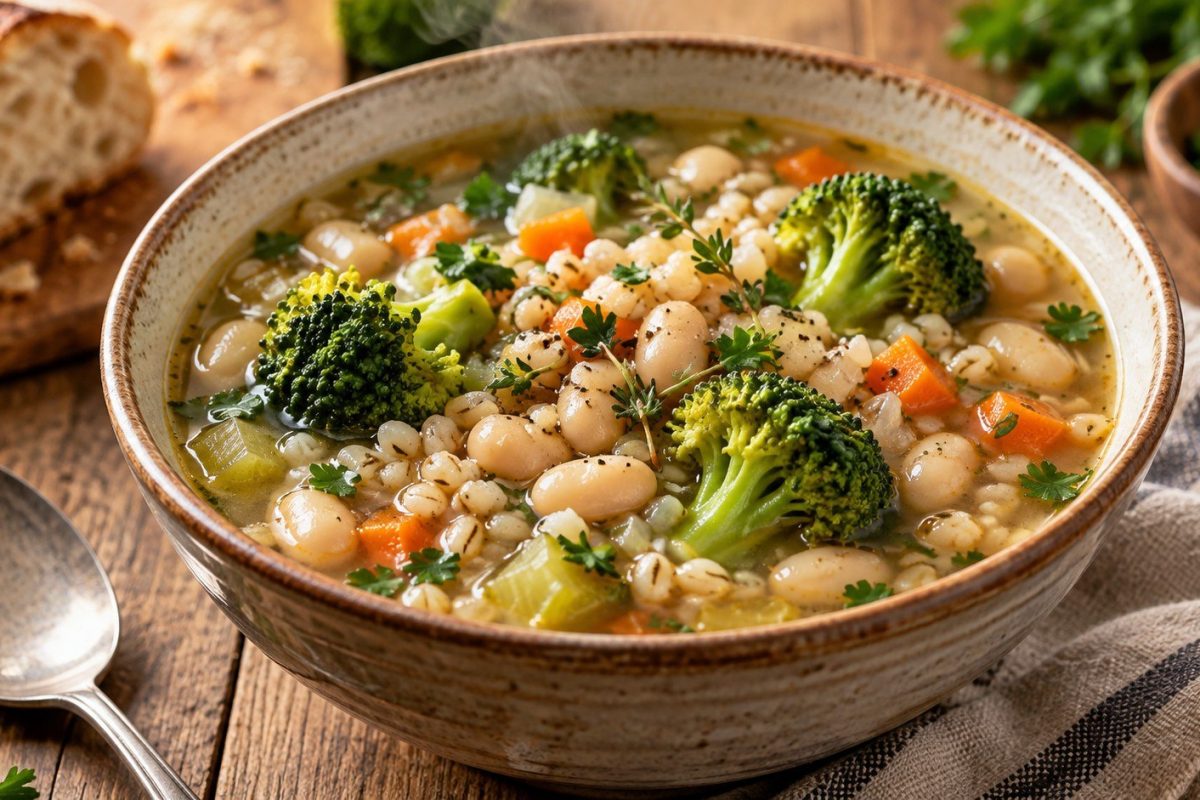
Broccoli Barley Bean Soup combines tender broccoli, chewy pearl barley, white beans, and an aromatic vegetable base. The result sits somewhere between a light vegetable soup and a substantial one-pot dinner. Barley thickens the broth naturally, while beans provide body without cream or flour. Broccoli goes in near the end, which protects its color and prevents a mushy texture. That balance defines this recipe, as noted by the editors at customreceipt.com.
This soup needs ordinary supermarket ingredients and one large pot. Most of the cooking time belongs to the barley. Once that grain softens, the remaining stages move quickly. A squeeze of lemon at serving time sharpens the flavor without adding more salt.
The best version keeps three distinct textures: tender beans, chewy barley, and broccoli that still has some structure.
Why broccoli, barley, and beans work together
A good broccoli barley soup recipe needs more than vegetables floating in broth. Pearl barley releases starch during cooking. That starch gives the liquid a slightly silky consistency without making it heavy.
White beans perform a different job. Cannellini, Great Northern, or navy beans bring mild flavor and additional substance. USDA MyPlate includes beans among protein foods and also classifies them within the vegetable group. USDA MyPlate lists beans, peas, and lentils as useful vegetarian protein choices.
Broccoli provides freshness against the earthy barley. Its stems are also useful. Peeled stems can be diced and cooked with carrots or celery instead of being discarded.
“Vary your veggies.”
USDA MyPlate uses that phrase in its Vegetable Group guidance. The agency identifies vegetables as sources of fiber, potassium, folate, vitamin A, and vitamin C.
People who track grocery spending or organize household receipts can keep those records separately through CustomReceipt. Recipe quantities remain easier to adjust when shopping records and cooking measurements are not mixed together.
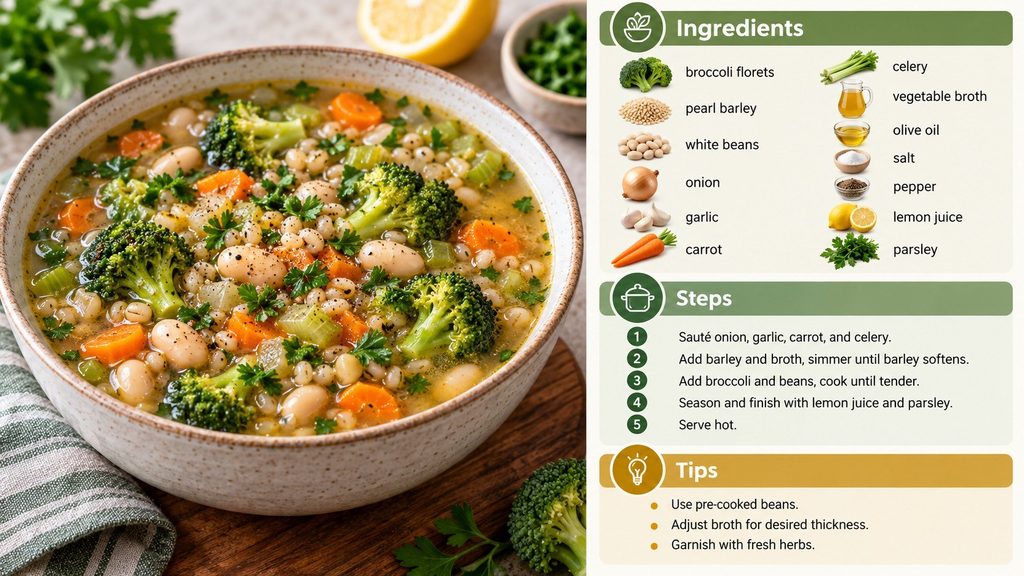
Ingredients for 6 servings
The ingredient list is deliberately flexible. Canned beans shorten preparation, while fresh broccoli gives the soup its clearest flavor. Low-sodium broth leaves more control over seasoning.
- 1 cup pearl barley, rinsed
- 1 large broccoli head, about 500-600 g
- 1 can white beans, about 15 oz or 425 g
- 1 medium onion, diced
- 2 carrots, diced
- 2 celery stalks, diced
- 3 garlic cloves, finely chopped
- 1 tablespoon olive oil
- 7 cups low-sodium vegetable broth
- 1 teaspoon dried thyme
- 1 bay leaf
- ½ teaspoon black pepper
- ½ teaspoon smoked paprika
- Salt, added gradually
- 1 tablespoon lemon juice
- Chopped parsley for serving
Cannellini beans produce a particularly creamy broth around the barley. Great Northern beans stay slightly firmer after simmering. Chickpeas also work, although they change the character of the soup. Frozen broccoli can replace fresh broccoli when necessary. Add it several minutes later because frozen florets soften faster.
Rinsing canned beans is useful when sodium matters. The University of Nebraska notes that draining and rinsing canned beans can reduce sodium by up to 40%. This small step also removes the thick packing liquid surrounding many canned beans.
A second CustomReceipt link for household receipt organization can be useful when ingredient purchases are recorded for budgeting or meal planning.
How to cook Broccoli Barley Bean Soup
The order matters more than complicated technique. Barley requires the longest cooking period, while broccoli needs relatively little time. Adding everything simultaneously usually produces overcooked broccoli.
- Heat olive oil in a large pot over medium heat.
- Add onion, carrots, celery, and diced broccoli stems.
- Cook the vegetables for 6-8 minutes, stirring occasionally.
- Add garlic, thyme, paprika, and black pepper.
- Stir for 30 seconds, then add barley and broth.
- Add the bay leaf and bring the liquid to a gentle boil.
- Reduce the heat and simmer for 30-35 minutes.
- Add drained beans when the barley is nearly tender.
- Add broccoli florets and simmer for another 6-8 minutes.
- Remove the bay leaf and finish with lemon juice.
Do not keep the pot at a hard boil. Strong boiling can split the beans and make the broth cloudy. A steady simmer cooks barley more evenly. Stir the bottom occasionally because barley can settle as it absorbs liquid. Add another cup of hot broth when the soup becomes thicker than expected. Taste for salt only after the beans and broth have simmered together.
The U.S. Department of Veterans Affairs uses a similar cooking sequence in its official bean and barley soup recipe. Its version simmers vegetables, beans, broth, and barley before adding leafy vegetables later. The VA recipe lists 25-30 minutes for pearled barley in one version. Hulled barley may require 40-45 minutes.
Cooking times and useful substitutions
Timing changes with the barley type and the size of the vegetables. The following guide keeps those differences visible.
| Ingredient or stage | Typical time | Practical sign |
|---|---|---|
| Onion, carrot, celery | 6-8 minutes | Onion becomes translucent |
| Pearl barley | 30-40 minutes | Tender with light chew |
| Hulled barley | 40-50 minutes | Tender but noticeably firm |
| Canned white beans | 8-10 minutes | Heated without breaking |
| Fresh broccoli florets | 6-8 minutes | Tender with bright color |
| Frozen broccoli | 4-6 minutes | Heated through without collapsing |
Pearl barley is the easiest option for weeknight cooking. Hulled barley keeps more texture and needs extra liquid. Quick-cooking barley can work, but its package directions should control the timing. Broccoli florets should always enter late. Beans only need enough heat to absorb the seasoned broth.
This timing also explains why vegetarian barley soup can work as meal preparation. Barley continues absorbing broth after cooking. Refrigerated soup will therefore become thicker by the next day. Extra broth restores the original consistency during reheating.
How to make the broth taste fuller
Vegetable soups often fail because the liquid remains flat. More salt is not always the answer. Browning the aromatic vegetables slightly creates a stronger base before broth enters the pot.
Garlic should be cooked briefly. Burned garlic gives the entire pot a bitter edge. Smoked paprika adds depth, although regular paprika also works.
A few additions can change the finished soup without changing its structure:
- Add ½ teaspoon red pepper flakes for heat.
- Stir in chopped kale during the final 5 minutes.
- Replace parsley with dill for a fresher finish.
- Add grated Parmesan when a vegetarian, non-vegan version is preferred.
- Blend 1 cup of soup and return it for a creamier consistency.
Blending a small portion works especially well with white beans. Their starch thickens the broth without dairy. Keep most of the soup unblended so the barley remains visible. Lemon juice should enter after cooking because prolonged heat softens its acidity. Parmesan adds salt, so final seasoning should come afterward.
For a thicker soup, change the texture before adding extra fat: mash some beans or blend one ladle of the finished mixture.
The Academy of Nutrition and Dietetics uses white beans in its broccoli soup recipe for both texture and nutritional value. Its version blends part of the soup rather than relying on cream.
“This soup is ready to enjoy in less than 30 minutes.”
That description comes from the Academy’s creamy broccoli soup recipe. Barley makes this version slower because the grain needs additional simmering.
Storage, reheating, and meal preparation
Cooked healthy broccoli soup keeps better when it is cooled promptly and stored in sealed containers. The barley will continue drawing liquid from the broth during storage. That is normal and does not indicate a failed recipe.
For practical meal preparation, divide the soup after it cools. Keep one portion for the next day and freeze additional servings if needed. Leave some space inside freezer containers because liquids expand.
When reheating, add ¼-½ cup broth or water per serving. Heat gently until the soup is steaming throughout. Avoid repeatedly reheating the whole pot when only one serving is needed. Broccoli loses texture faster after several heating cycles.
The soup also travels well for lunch. Store lemon, herbs, or grated cheese separately. Those ingredients taste fresher when added after reheating.
Common mistakes that change the result
The recipe is forgiving, but several errors have predictable consequences. They usually involve timing rather than ingredients.
- Adding broccoli with uncooked barley makes the florets excessively soft.
- Using too little broth turns the dish into barley stew.
- Adding canned beans too early can split delicate beans.
- Salting heavily before tasting the broth can produce excessive sodium.
- Skipping acidity leaves the final flavor noticeably flatter.
Broth brands differ considerably in sodium. Canned beans also vary by manufacturer. This makes late seasoning more reliable than fixed salt measurements. Lemon is not present only for brightness. Acidity also separates the earthy grain flavor from the sweeter broccoli.
Freshly ground black pepper is useful at the end rather than only during cooking. A small amount remains aromatic at serving temperature. Olive oil can also be drizzled over individual bowls instead of increasing the amount inside the pot.
FAQ
Can canned beans be used in Broccoli Barley Bean Soup?
Yes. Cannellini, Great Northern, and navy beans all work well. Drain and rinse them before adding them near the end.
Does barley need to be cooked separately?
No. Pearl barley can cook directly in the broth. Separate cooking is useful only when exact broth thickness matters.
Can frozen broccoli replace fresh broccoli?
Yes. Add frozen florets during the final 4-6 minutes. They soften faster than fresh broccoli.
Why does the soup become thicker overnight?
Barley continues absorbing liquid during refrigeration. Add broth or water while reheating until the preferred consistency returns.
Can this soup be made vegan?
Yes. Use vegetable broth and avoid dairy toppings. Lemon, herbs, olive oil, or nutritional yeast can finish each bowl.
What type of barley works best?
Pearl barley is the most convenient choice. It usually cooks faster than hulled barley and produces a slightly thicker broth.
Earlier we wrote about Spicy Marmalade Chicken Turns Orange Preserves into a Savory Sheet-Pan Glaze