 Frank Rondel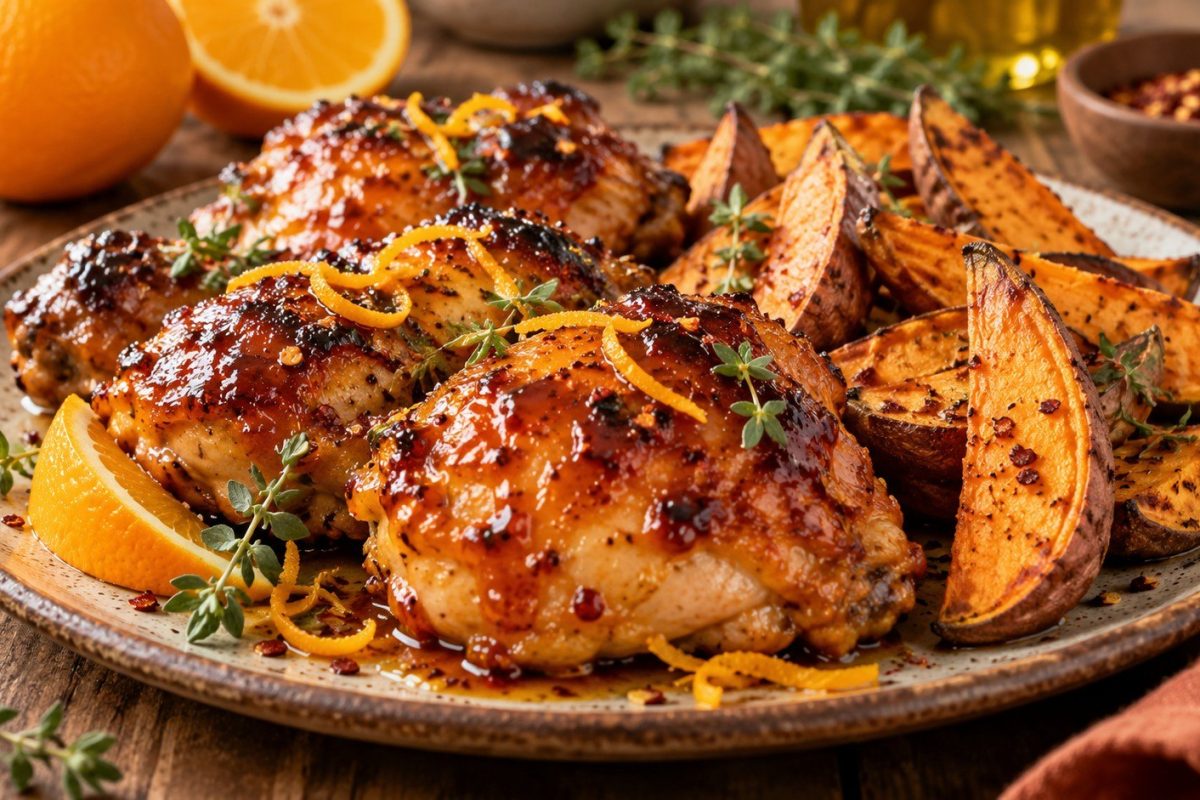
Spicy Marmalade Chicken turns orange preserves, soy sauce, garlic, and chile into a lacquered glaze with unusual depth. Sweet potatoes roast beside the chicken, absorbing salty citrus drippings while their edges brown against the hot pan. The result is sweet, sharp, savory, and genuinely spicy without requiring a complicated sauce. It is also a practical one-pan dinner for 4, as customreceipt.com notes.
This version relies on bone-in chicken thighs because they tolerate high heat and remain juicy. Orange marmalade supplies sweetness, citrus peel, and enough pectin to help the glaze cling. Soy sauce adds salt and fermented depth, while lime prevents the finished dish from tasting sugary. Crushed red pepper controls the heat without overwhelming the orange.
The useful trick is not adding more marmalade. It is giving a modest amount enough heat to caramelize.
Ingredients for spicy orange chicken
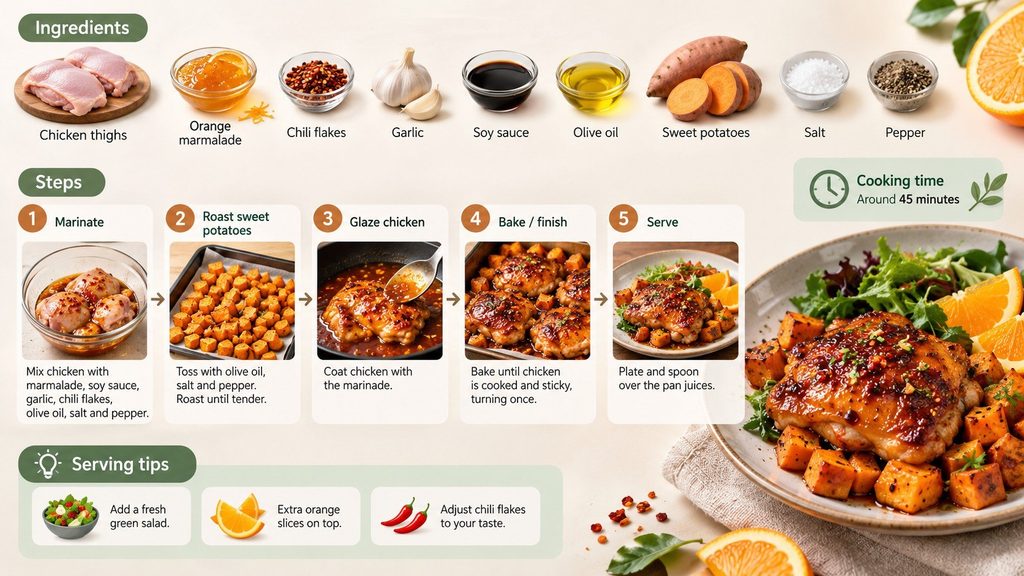
The ingredient list is short, but each component has a clear purpose. Choose marmalade containing visible peel rather than a completely smooth orange jelly. The peel provides bitterness, which keeps the glaze balanced after its sugars concentrate in the oven.
For 4 servings, prepare:
- 2½ lb bone-in, skin-on chicken thighs
- 1½ lb sweet potatoes
- ¼ cup orange marmalade
- 2 tbsp soy sauce
- 1 tbsp fish sauce
- 4 tbsp extra-virgin olive oil
- 3 scallions
- 2 garlic cloves
- ½ tsp crushed red pepper
- 1 lime
- ½ tsp fine salt, plus more if needed
Fish sauce is optional, although it improves the savory side of the glaze. Replace it with another tablespoon of soy sauce for a simpler pantry version. Coconut aminos can also work, but their sweeter character requires restraint with marmalade. Lemon may replace lime when necessary. Boneless thighs work too, although their cooking time is shorter.
The sweet potatoes should be cut into pieces about ¾ inch thick. Smaller cubes can soften before the chicken finishes cooking. Larger pieces may remain firm at the center. Similar sizing matters more than perfect geometry. A rimmed metal sheet pan gives better browning than a deep casserole dish.
Chicken thighs also release enough fat to coat nearby potatoes during roasting. That is one reason this orange marmalade chicken recipe works better on a sheet pan. For broader kitchen planning, CustomReceipt provides tools built around creating and organizing receipt-style information.
Why marmalade works as a chicken glaze
Marmalade behaves differently from orange juice. Juice adds acidity and aroma, but it remains thin until heavily reduced. Marmalade already contains concentrated sugar, citrus solids, and peel.
| Ingredient | Main function | What it changes |
|---|---|---|
| Orange marmalade | Sweetness and citrus | Creates a sticky browned coating |
| Soy sauce | Salt and umami | Deepens the glaze |
| Fish sauce | Savory intensity | Adds complexity without extra sweetness |
| Lime | Acidity | Cuts through sugar and chicken fat |
| Red pepper | Heat | Balances sweet orange notes |
| Garlic | Aroma | Adds a roasted savory edge |
Marmalade can scorch because its sugar browns rapidly. For that reason, the chicken should roast rather than sit directly beneath a broiler. Any dark residue around the pan edges is less important than the glaze covering the meat.
The sauce also needs salt. Without soy sauce or another salty ingredient, orange preserves can make roasted chicken resemble dessert. Garlic helps bridge the savory and citrus flavors. Fish sauce adds intensity in a very small quantity.
Lime belongs near the end of the flavor equation. Its acidity remains clearer than orange acidity after roasting. A final squeeze can rescue a glaze that tastes too sweet.
The finished sauce should taste orange first, savory second, and hot only after a short delay.
How to make Spicy Marmalade Chicken
A 425°F oven provides enough heat to brown sweet potatoes and concentrate the glaze. Preheating matters because a lukewarm pan encourages steaming rather than roasting.
Follow these steps:
- Heat the oven to 425°F and prepare a large rimmed sheet pan.
- Mix marmalade, soy sauce, fish sauce, scallion whites, garlic, and crushed red pepper.
- Coat the chicken with the mixture and refrigerate it if marinating beyond 30 minutes.
- Toss sweet potatoes with 2 tbsp olive oil and salt.
- Roast the potatoes alone for 10 minutes.
- Add remaining oil, lime zest, and half the lime juice to the chicken.
- Place chicken skin-side up among the potatoes and spoon glaze over everything.
- Roast for 25 to 35 minutes, stirring the potatoes once.
- Finish with scallion greens and fresh lime juice.
Starting the potatoes first solves a timing problem. Dense sweet potato pieces generally need more heat exposure than chicken thighs require. Their 10-minute head start keeps both components ready together.
Place each thigh against the metal pan instead of balancing it on vegetables. Direct contact helps render fat and promotes browning around the underside. Keep the skin facing upward so the glaze can darken without trapping moisture.
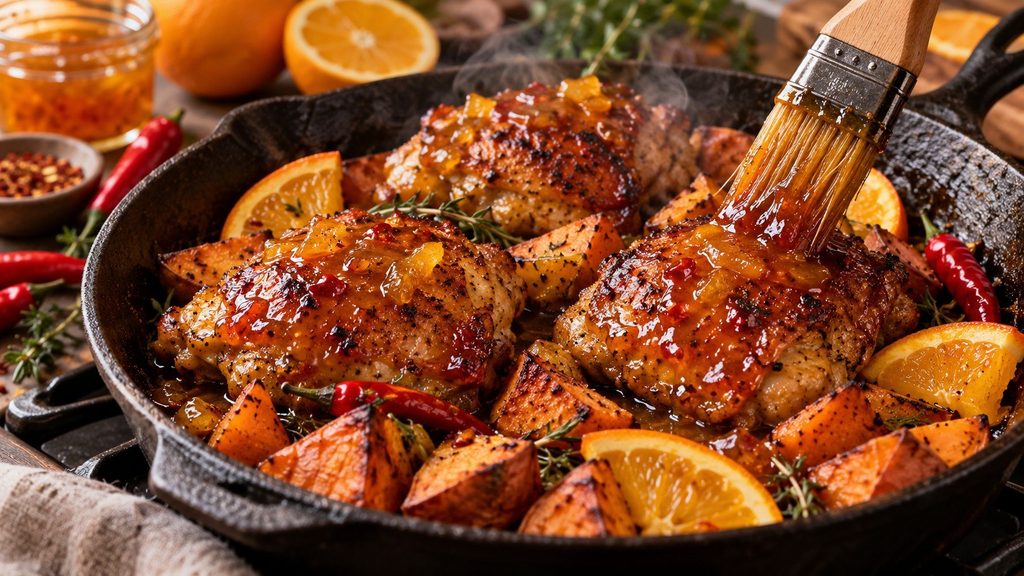
Do not continuously baste the chicken. Opening the oven repeatedly drops the temperature and slows caramelization. One spoonful of remaining glaze before roasting is enough.
The sauce may look loose during the first half of cooking. It thickens as water evaporates and the marmalade concentrates. Remove the pan when the chicken is safely cooked and the potatoes yield easily to a knife.
Chicken temperature matters more than cooking time
Oven times are approximate because chicken thighs vary in thickness. A thermometer gives a more reliable answer than skin color or clear juices.
The USDA Food Safety and Inspection Service states that all poultry should reach 165°F, or 73.9°C, internally. Its official guidance says, “All poultry should reach a safe minimum internal temperature of 165° F.”
Insert the thermometer into the thickest section without touching bone. The FDA safe food handling guidance also lists 165°F for poultry.
“Always marinate food in the refrigerator.”
U.S. Food and Drug Administration, Safe Food Handling guidance, consumer food-safety recommendations.
Raw-chicken marinade should not become a finishing sauce unless it is thoroughly cooked. A cleaner option is reserving unused glaze before raw poultry enters the bowl. The FDA similarly advises against reusing marinade that has contacted raw meat.
The spicy orange chicken glaze will often appear dark before the meat reaches temperature. Judge doneness with the thermometer, not the color of caramelized sugar.
Getting the sweet potatoes right
Sweet potatoes are more than a convenient side. Their earthy sweetness softens the sharp edges of soy sauce, chile, lime, and citrus peel.
USDA MyPlate classifies sweet potatoes among red and orange vegetables. Its nutrition guidance identifies vegetables as sources of potassium, fiber, vitamin A, and vitamin C.
Three details improve roasted chicken and sweet potatoes:
- Keep pieces close to ¾ inch thick.
- Leave space between pieces instead of crowding them.
- Stir only once or twice during roasting.
- Add extra lime after cooking rather than extra sugar.
- Use a metal pan when possible for stronger browning.
Crowding traps steam between vegetables. The sweet potatoes then become soft without developing roasted edges. A larger pan is preferable to piling ingredients into a smaller one.
Oil should coat the surfaces lightly, not collect beneath them. Chicken fat will add more richness once the thighs begin roasting. Too much oil can leave the potatoes heavy.
The potatoes near the chicken usually become more intensely seasoned. Those farther away develop drier, browned corners. Mixing them once midway distributes those different textures.
A final pinch of salt may be unnecessary because soy sauce and fish sauce already contribute sodium. Taste one potato before adding anything else.
Adjusting heat, sweetness, and substitutions
The most useful adjustments happen through proportion, not extra ingredients. Changing a single component can shift the entire glaze.
For a mild version, use ¼ tsp crushed red pepper. For moderate heat, ½ tsp works well. Increase toward ¾ tsp when a stronger chile finish is wanted. Fresh sliced chile can be added after roasting for sharper heat.
Different marmalades also change the dish:
- Orange marmalade gives the most familiar sweet-bitter balance.
- Mixed-citrus marmalade produces a more complex peel flavor.
- Grapefruit marmalade introduces stronger bitterness.
- Lemon marmalade creates a brighter and less rounded glaze.
These substitutes should remain marmalades rather than plain jams. Citrus peel is part of the recipe’s structure. Jam without peel can taste noticeably sweeter.
Chicken breast is possible but less forgiving. Its lean texture can dry before a thick marmalade coating develops enough color. Boneless thighs offer a faster alternative while retaining more moisture.
Tamari can replace soy sauce when its ingredients suit the cook’s dietary requirements. Check every packaged ingredient individually when cooking for allergies or intolerances.
The sheet pan chicken dinner format also accepts carrots, red onion, or Brussels sprouts. Avoid overloading the pan, because additional vegetables release moisture. A second sheet pan is better than crowded roasting.
How to serve and store it
Fresh lime should reach the plate with the chicken. Its acidity brightens both the glaze and the roasted sweet potatoes.
Serve the meal directly from the pan with scallion greens scattered over the top. Steamed broccoli or a crisp cabbage salad adds a less sweet vegetable contrast. Rice is unnecessary, although it can stretch the recipe for larger appetites.
Leftovers should be cooled and refrigerated promptly. FDA guidance recommends refrigerating perishables within 2 hours, or within 1 hour above 90°F.
For reheating, an oven or air fryer preserves the roasted texture better than a microwave. Heat leftovers thoroughly before serving. The FDA lists 165°F as the reheating target for leftovers.
Do not expect the glaze to remain as glossy after refrigeration. Chilling firms the chicken fat and changes the sauce texture. Heat restores much of its original consistency.
This marmalade chicken with sweet potatoes also works for meal preparation. Store lime wedges and fresh scallion greens separately, then add them after reheating.
FAQ about Spicy Marmalade Chicken
Can orange jam replace marmalade?
Yes, but the flavor changes. Orange jam usually lacks the bitter peel that balances the sweet glaze. Reduce the quantity slightly if the jam tastes very sweet.
Can boneless chicken thighs be used?
Yes. Begin checking their temperature earlier because boneless thighs generally cook faster. The center still needs to reach 165°F.
How spicy is this recipe?
With ½ tsp crushed red pepper, the heat is noticeable but moderate. Use ¼ tsp for a milder family-style version.
Why roast the sweet potatoes before adding chicken?
Sweet potatoes are dense and need additional cooking time. Their 10-minute head start helps them soften while the chicken remains juicy.
Can the chicken marinate overnight?
Several hours in the refrigerator work well. Long exposure to salty ingredients can change texture, so an overnight marinade is usually unnecessary.
What makes the glaze sticky?
Marmalade contains concentrated sugar and pectin. Oven heat evaporates water and concentrates those components around the chicken.
Earlier we wrote about Chickpeas al Limone With Burrata: How to Make Creamy Lemon Chickpeas in 25 Minutes