 Frank Rondel
How to make pumpkin butter starts with a simple principle: remove water slowly while concentrating pumpkin, sugar, cider, and warm spices. The result should be smooth, glossy, and thick enough to hold on toast. It contains no dairy butter, despite its name. The term describes the soft, spreadable texture, as the editorial team at customreceipt.com notes.
Pumpkin butter is closer to apple butter than pumpkin pie filling. Canned pumpkin makes the process faster and keeps the texture predictable. A saucepan and about 30 minutes of cooking are usually enough. The important part is controlling heat once the mixture becomes thick.
Good pumpkin butter should taste strongly of pumpkin first, while cinnamon, ginger, and maple remain supporting flavors.
What You Need to Make Pumpkin Butter
A useful pumpkin butter recipe does not require unusual ingredients. Pure pumpkin puree provides the base. Apple cider adds acidity and fruit flavor without making the spread watery.
Do not substitute pumpkin pie filling for pure pumpkin puree. Pie filling already contains sweeteners and spices. That makes sweetness and seasoning harder to control.
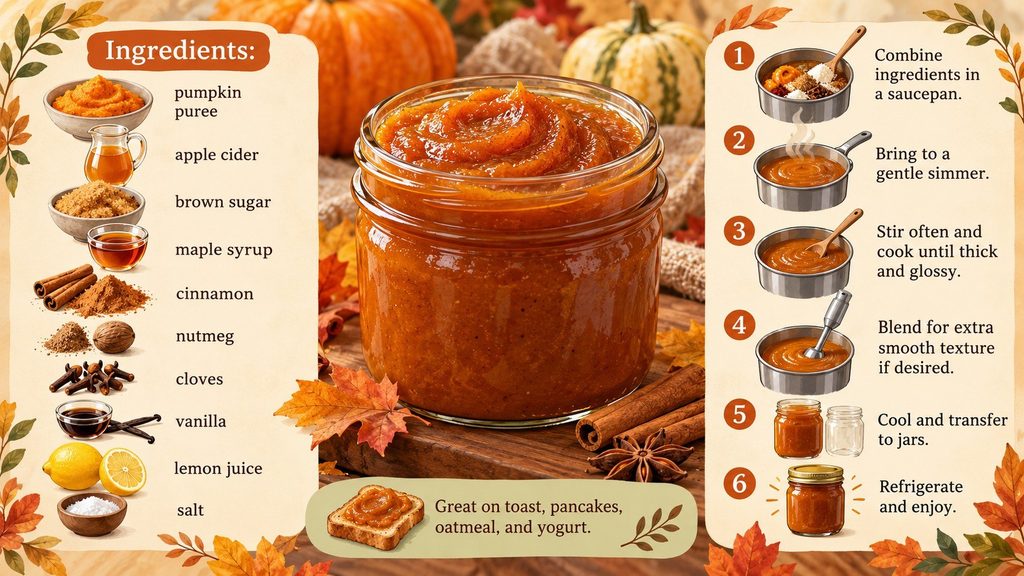
For 1 medium batch, use:
- 15 oz, or about 425 g, pure pumpkin puree
- 1/2 cup apple cider or unsweetened apple juice
- 1/3 cup packed brown sugar
- 3 tablespoons pure maple syrup
- 1 teaspoon ground cinnamon
- 1/2 teaspoon ground ginger
- 1/4 teaspoon ground nutmeg
- 1 small pinch ground cloves
- 1/4 teaspoon fine salt
- 1 teaspoon vanilla extract
- 1 teaspoon lemon juice, optional
Brown sugar gives the spread a mild molasses character. Maple syrup brings sweetness without creating a flat sugar taste. Apple cider also loosens the puree before evaporation begins. Ginger and cloves become stronger during cooking, so restraint works better. Vanilla should remain in the background rather than dominate the pumpkin. Lemon juice can sharpen an especially sweet batch.
The same moisture-control principle appears in this zucchini bread guide. Both recipes depend on managing water rather than blindly following cooking time.
How to Make Pumpkin Butter Step by Step
A wide, heavy saucepan is preferable to a narrow pot. Its larger surface allows water to evaporate faster. A heavy bottom also reduces scorching as the spread thickens.
Before starting this homemade pumpkin butter, measure everything. The final minutes require regular stirring, so preparation matters.
- Add pumpkin puree, cider, brown sugar, maple syrup, and salt to the saucepan.
- Stir until the mixture becomes evenly combined.
- Add cinnamon, ginger, nutmeg, and cloves.
- Heat over medium until small bubbles begin appearing.
- Reduce the heat to low or medium-low.
- Simmer uncovered for 20 to 30 minutes.
- Stir frequently and scrape the bottom and corners.
- Cook until the mixture becomes darker, glossy, and noticeably thicker.
- Remove the saucepan from the heat.
- Stir in vanilla and lemon juice, if using.
- Cool briefly before transferring the spread into a clean container.
- Refrigerate after the pumpkin butter reaches a safe cooling temperature.
The mixture may sputter as moisture evaporates. Lower the heat rather than covering the saucepan completely. A lid traps steam and extends the reduction time. Frequent stirring becomes more important during the final 10 minutes. Sugar can scorch against the bottom before the surface looks burned. A flexible silicone spatula works particularly well for scraping corners.
The same patient approach works with refrigerated recipes such as high-protein chia pudding. Texture often depends more on ratios and time than complicated equipment.
“Simmer rather than boil fruit butter.”
Penn State Extension gives this guidance in its fruit butter preparation recommendations. The advice concerns scorching and controlled moisture evaporation during preparation.
How to Tell When Pumpkin Butter Is Done
Cooking time alone cannot reliably indicate doneness. Different pumpkin purees contain different amounts of water. Pan width and burner strength also change evaporation speed.
The finished easy pumpkin butter should resemble a thick fruit spread rather than pumpkin soup. Drag a spatula across the saucepan. The path should remain visible briefly before the mixture closes.
| Check | Needs more cooking | Ready |
|---|---|---|
| Spoon test | Runs quickly from spoon | Falls slowly in thick folds |
| Spatula trail | Closes immediately | Remains visible briefly |
| Surface | Thin and bubbling | Thick with slow bubbles |
| Color | Bright orange | Slightly darker orange-brown |
| Toast test | Soaks into bread | Sits on the surface |
Cold pumpkin butter will become thicker than the hot mixture. Stop slightly before it reaches a paste-like consistency. Over-reduction can make the spread heavy after refrigeration. If that happens, stir in a small amount of cider while reheating. Add only 1 teaspoon at a time. The target remains soft enough to spread without tearing bread.
The most reliable test is texture, not the clock: a 20-minute batch can outperform one cooked for 40 minutes.
Adjusting Sweetness, Spice, and Texture
Pumpkin has an earthy flavor that can disappear beneath excessive spice. Many recipes become dominated by cloves or cinnamon. A balanced batch should still taste identifiable as pumpkin.
Brown sugar can be reduced for breakfast use. Maple syrup can be increased when the spread will accompany plain yogurt or oatmeal. Changing both dramatically can alter the final consistency.
Useful adjustments include:
- Add 1 tablespoon maple syrup for a sweeter breakfast spread.
- Reduce brown sugar by 2 tablespoons for a less sweet version.
- Add 1/4 teaspoon cardamom for a brighter spice profile.
- Replace cider with apple juice for a sweeter fruit note.
- Add orange zest for a sharper aroma.
- Use extra ginger rather than extra cloves for stronger spice.
Make major changes before the final reduction finishes. Sugar affects both flavor and body. Liquid sweeteners can lengthen cooking slightly. Cloves should be adjusted in very small quantities. Citrus zest adds aroma without substantially thinning the mixture. Taste again after several minutes because spices intensify while cooking.
More practical recipe techniques are collected in the CustomReceipt food section, including guides built around measurable ratios and cooking times.
Why Pumpkin Butter Should Not Be Home-Canned
This point separates pumpkin butter storage from ordinary jam preparation. Pumpkin is a low-acid food. Its thick puree also creates unpredictable heat penetration during home canning.
The National Center for Home Food Preservation states that home canning is not recommended for pumpkin butter. It also advises against canning mashed or pureed pumpkin.
“Home canning is NOT recommended for pumpkin butter.”
The warning comes from the National Center for Home Food Preservation, a University of Georgia food-preservation program. Its guidance addresses pumpkin acidity, thickness, and botulism risk.
Adding lemon juice does not turn an untested recipe into a safe canning formula. Sugar does not automatically make thick pumpkin puree shelf-stable either. The safer approach is refrigeration or freezing.
Penn State Extension also identifies pumpkin butter as unsuitable for home canning. Its guidance says low-acid pumpkin butter should remain refrigerated.
“Some products that are low in acid, such as pumpkin butter, cannot be processed safely.”
That statement appears in Penn State Extension guidance on fruit butters. The recommendation applies specifically to safe home preservation methods.
For this recipe, use clean containers and keep the finished product refrigerated. Freeze portions when longer storage is needed. Leave expansion space inside freezer containers.
What to Eat With Pumpkin Butter
Pumpkin butter works because it delivers pumpkin flavor without the weight of pie filling. A thin layer can change plain toast without making breakfast excessively rich.
Its sweetness also works against salty or tangy foods. Cream cheese, aged cheddar, and plain Greek yogurt provide useful contrasts.
Common serving options include:
- spread over toast, biscuits, English muffins, or bagels;
- swirl into oatmeal or overnight oats;
- spoon over pancakes, waffles, or French toast;
- mix into plain Greek yogurt;
- add a spoonful to warm milk or coffee;
- serve beside sharp cheddar on a snack board;
- use between cake layers or inside thumbprint cookies;
- stir into softened cream cheese for a quick spread.
Start with small quantities when adding pumpkin butter to drinks. Its concentrated texture can become heavy in coffee. Warm milk helps it dissolve more evenly. For yogurt, 1 or 2 tablespoons usually provide enough flavor. Toasted nuts add contrast when serving it with oatmeal. A pinch of salt can also balance very sweet commercial bread.
Pumpkin butter is most useful as a concentrated ingredient, not only as something kept beside the jam jar.
Common Pumpkin Butter Mistakes
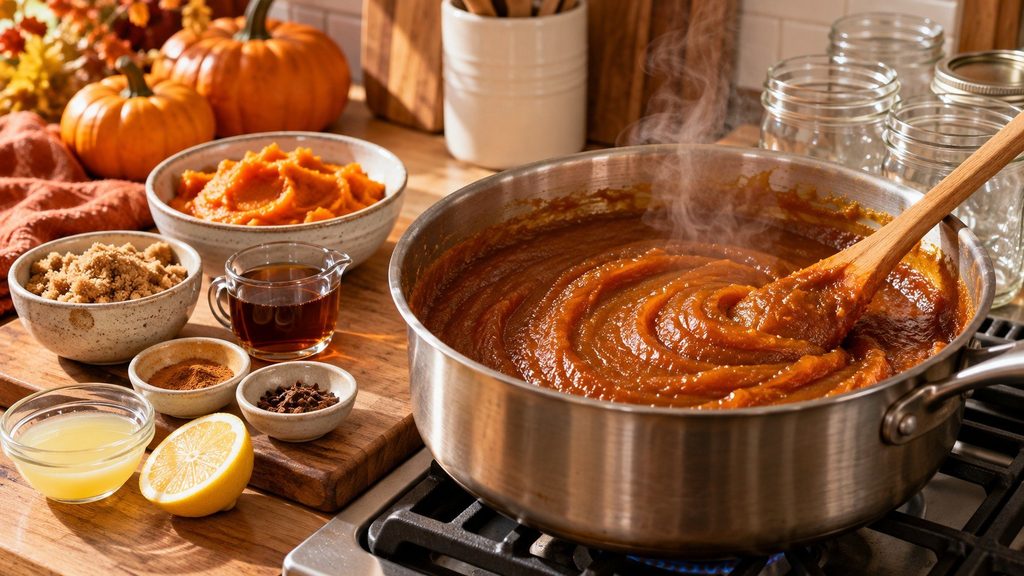
The most frequent problem is excessive heat. Pumpkin puree contains little free liquid compared with many fruit spreads. Once sugar is added, the bottom can burn quickly.
Another mistake is judging the spread while it remains hot. Cooling changes the consistency noticeably. A batch that looks slightly loose in the saucepan may become perfectly spreadable later.
Watch for these signs:
- burned smell near the end of cooking;
- hard, paste-like texture after cooling;
- watery liquid separating around the edges;
- excessive clove flavor;
- unusually sweet taste that hides the pumpkin;
- using pumpkin pie filling instead of pure puree.
Scorched pumpkin butter is difficult to repair because burned flavors spread throughout the saucepan. Do not scrape burned material from the bottom into the remaining mixture. A loose batch is easier to fix by reheating gently. An overly thick batch can accept several teaspoons of cider. Spice problems are harder to correct after cooking.
FAQ About Pumpkin Butter
What is pumpkin butter made from?
Pumpkin butter usually contains pumpkin puree, sugar, apple cider, and warming spices. Maple syrup and vanilla are common additions. Despite the name, dairy butter is unnecessary.
How long does homemade pumpkin butter take?
Most stovetop batches need about 20 to 30 minutes of active cooking. Cooling takes additional time. Pan width and puree moisture can change the exact timing.
Can pumpkin butter be made from fresh pumpkin?
Yes. Roast the pumpkin and puree the flesh until completely smooth. A watery homemade puree may require longer reduction. Sugar pumpkins usually produce better texture than large carving pumpkins.
Does pumpkin butter contain dairy?
Traditional fruit-style pumpkin butter does not require dairy. The word “butter” refers to its smooth, spreadable consistency.
Can homemade pumpkin butter be canned?
No tested home-canning process is recommended for pumpkin butter by the National Center for Home Food Preservation. Refrigeration or freezing is the appropriate approach.
Why is my pumpkin butter watery?
It probably needs more evaporation. Return it to a wide saucepan and cook over low heat. Stir frequently until a spatula leaves a brief trail.
Earlier we wrote about How to Make Mummy Hot Dogs: Easy 25-Minute Halloween Recipe