 Frank Rondel
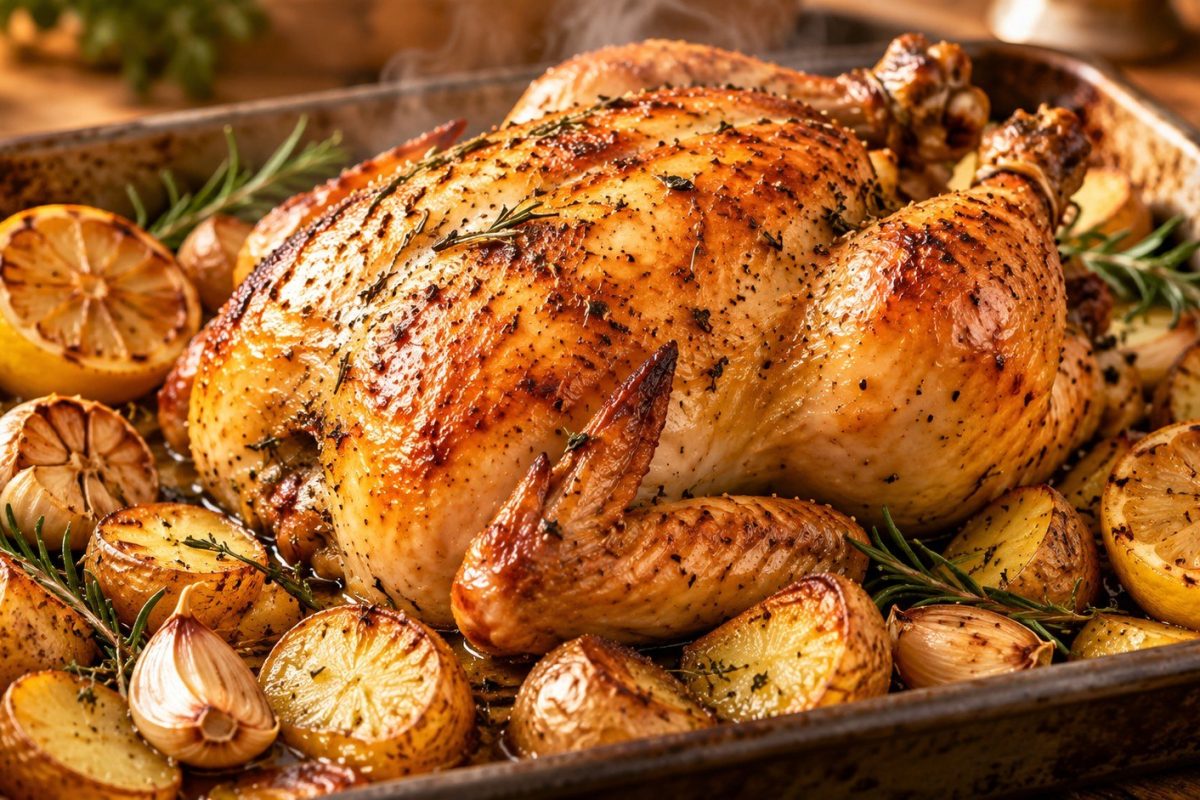
Roasted Whole Chicken starts with 1 basic goal: crisp, deeply browned skin without drying out the breast. A 4–5 lb chicken needs little more than salt, fat, aromatics, controlled heat, and an accurate thermometer. The technique is simple, but moisture, temperature, and resting time decide whether the result is succulent or merely acceptable, as noted by the customreceipt.com.
A whole bird is also practical. It produces dinner, leftovers, bones for stock, and pan juices from a single roast. Unlike many elaborate recipes, roasted whole chicken does not improve when buried beneath complicated marinades. Dry skin, even seasoning, and correct roasting matter more.
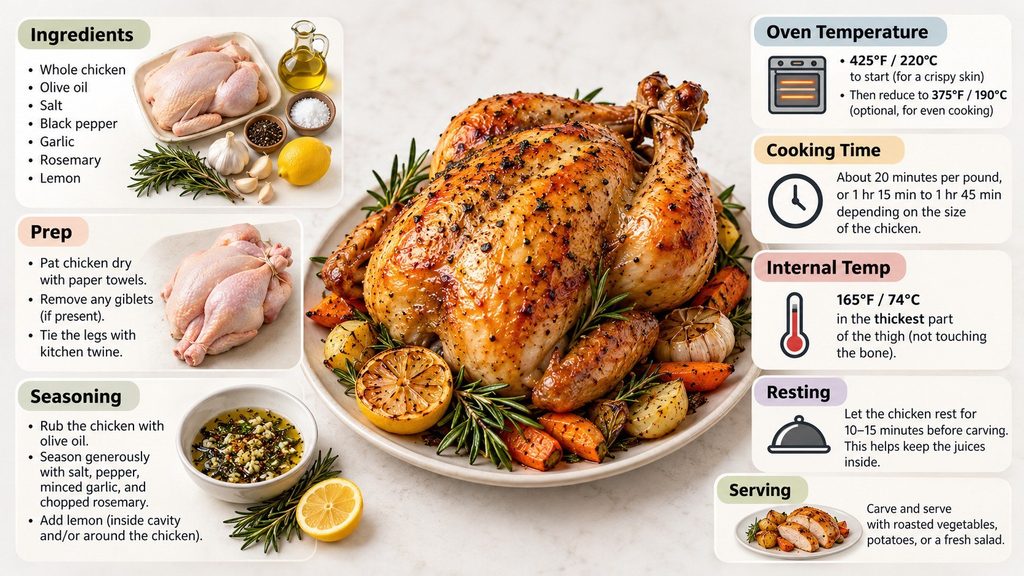
Ingredients for a Juicy Roast Chicken
A 4–5 lb, or roughly 1.8–2.3 kg, chicken is a useful size for a family meal. Smaller birds usually cook more evenly than very large roasting chickens.
For 1 chicken, prepare:
- 1 whole chicken, about 4–5 lb
- 2 teaspoons kosher salt
- 1 teaspoon freshly ground black pepper
- 2 tablespoons olive oil or softened unsalted butter
- 1 lemon, halved
- 1 small onion, quartered
- 4 garlic cloves, lightly crushed
- 4–6 sprigs thyme, rosemary, or parsley
- 1 teaspoon paprika, optional
- 1 cup carrots, onions, or potatoes for the roasting pan
Salt can be adjusted according to the bird’s size and whether it was already brined. Butter gives richer flavor, while oil handles higher heat cleanly. Garlic and herbs perfume the cavity without turning the meat into an herb-heavy dish. Vegetables beneath the chicken absorb rendered fat and cooking juices. They also prevent smaller drippings from scorching against a bare pan.
For another practical cooking guide built around precise ratios, the 30-minute pumpkin butter method shows why controlling moisture often matters more than adding ingredients.
The decisive ingredient is not butter or rosemary. It is a dry chicken surface before the bird enters the oven.
How to Prepare a Whole Chicken Before Roasting
Remove the chicken from its packaging and take out any giblets stored inside the cavity. Pat the exterior thoroughly dry with paper towels. Moist skin generates steam before it can brown, delaying the crisping process.
Do not rinse raw poultry in the sink. Water can spread contaminated droplets onto nearby surfaces and utensils. Keep raw chicken separate from vegetables and ready-to-eat foods during preparation.
Season the bird from several directions rather than scattering salt only across the breast.
- Heat the oven to 425°F, or about 218°C.
- Pat the entire chicken completely dry.
- Season the cavity with some salt and pepper.
- Add lemon, onion, garlic, and herbs loosely inside.
- Rub the exterior with oil or softened butter.
- Season the breast, legs, wings, and underside evenly.
- Tuck the wing tips underneath the bird.
- Tie the legs loosely together if a compact shape is preferred.
- Place the chicken breast-side up in a roasting pan or oven-safe skillet.
The cavity should never be packed tightly. Dense stuffing slows heating through the center and complicates temperature control. Aromatics should remain loose enough for hot air to circulate. Trussing is optional, and extremely tight trussing can slow the cooking of the thighs. A rack is useful but not essential. Thick-cut vegetables can support the chicken while creating an easy side dish.
Moisture control is also central to baking. The site’s zucchini bread guide explains the same principle in a different context.
Roasting Time and Temperature
There is no reliable cooking time that works for every bird. Weight, starting temperature, oven accuracy, pan material, and chicken shape all affect the result.
The USDA Food Safety and Inspection Service states that poultry is safely cooked at a minimum internal temperature of 165°F, or 73.9°C. Temperature should be checked in the innermost thigh, innermost wing, and thickest section of the breast.
The following ranges work as planning estimates rather than substitutes for a thermometer.
| Chicken weight | Oven temperature | Approximate roasting time | Safety target |
|---|---|---|---|
| 3–4 lb | 425°F | 55–75 minutes | 165°F minimum |
| 4–5 lb | 425°F | 70–90 minutes | 165°F minimum |
| 5–6 lb | 400°F | 90–110 minutes | 165°F minimum |
| 6–7 lb | 375–400°F | 105–130 minutes | 165°F minimum |
Official guidance provides a useful comparison at a lower roasting temperature. FoodSafety.gov lists about 1¼–1½ hours for an unstuffed 3–4 lb whole chicken at 350°F. A 5–7 lb bird takes approximately 2–2¼ hours at that temperature.
Higher heat shortens cooking and encourages browning, but the thermometer remains the final authority. Ovens can run hotter or cooler than their displays suggest. Dark roasting pans may also brown the underside faster. Large vegetables beneath the bird can slightly change airflow. Start checking before the expected finish rather than after it. Continue roasting if any required measurement remains below 165°F.
“Whole poultry” should reach 165°F.
This minimum comes from the USDA Food Safety and Inspection Service guidance for safe poultry preparation.
How to Get Crispy Chicken Skin Without Dry Breast Meat
The best whole roasted chicken recipe balances 2 processes that do not naturally move at the same speed. Skin needs enough dry heat for browning, while lean breast meat loses tenderness when excessively heated.
Drying the chicken is the first safeguard. Salting it several hours before roasting can help season deeper while the uncovered refrigerator environment dries the surface. Even 30–60 minutes uncovered in the refrigerator can improve surface dryness.
Several techniques consistently help:
- dry the skin thoroughly before seasoning;
- avoid adding water to the roasting pan unless drippings begin burning;
- coat the skin lightly rather than drowning it in butter;
- keep the chicken uncovered throughout roasting;
- use an accurate instant-read thermometer;
- let the chicken rest before carving.
Basting is optional. Repeatedly opening the oven drops its temperature and wets the skin with pan juices. A well-seasoned chicken can roast successfully without constant attention.
Butter can brown attractively, but its milk solids can darken quickly at high temperatures. Olive oil offers a cleaner option for hotter roasting. A combination also works.
For noticeably crisper skin, leaving the salted chicken uncovered in the refrigerator overnight is more useful than repeatedly basting it during cooking.
Where to Measure Chicken Temperature
Color is not a dependable safety test. Properly cooked poultry can retain pink areas, while an overcooked breast may appear completely white.
The USDA specifically advises using a food thermometer rather than judging doneness by appearance. Safely cooked poultry may range from white to pink or tan once the required internal temperature has been reached.
For an accurate roast chicken internal temperature, check several locations:
- Insert the thermometer into the thickest part of one breast.
- Keep the probe away from bone.
- Check the innermost part of the thigh.
- Measure the opposite thigh when the bird is large.
- Check the innermost wing area before removing the chicken.
The thermometer probe should reach the meat rather than the cavity. Bone can distort a reading. One hot location also does not prove that the entire chicken has reached a safe temperature. A second reading requires only seconds and can prevent both undercooking and unnecessary roasting. Digital instant-read thermometers are particularly convenient for these checks.
USDA guidance also recommends an oven temperature no lower than 325°F when roasting meat and poultry.
Resting and Carving the Chicken
Removing the chicken from the oven is not the final cooking step. Leave it undisturbed for about 15 minutes before carving.
During roasting, juices move through heated muscle tissue. Cutting the chicken immediately allows more liquid to collect on the board. Resting makes carving cleaner and gives the cook time to finish vegetables or prepare gravy.
A simple carving order keeps portions recognizable:
- remove each leg at the joint;
- separate thighs from drumsticks if desired;
- remove each breast half alongside the breastbone;
- slice breast meat across its width;
- remove wings last;
- reserve the carcass and remaining meat for stock.
After carving, spoon a small amount of pan juice over the meat instead of soaking the crispy skin. A fatty roasting pan can be separated into fat and concentrated juices. Those juices need little more than salt adjustment, stock, or a small amount of lemon.
The same meal-planning approach works with recipes that can be prepared ahead. The high-protein chia pudding recipe offers a cold preparation suitable for breakfast or dessert.
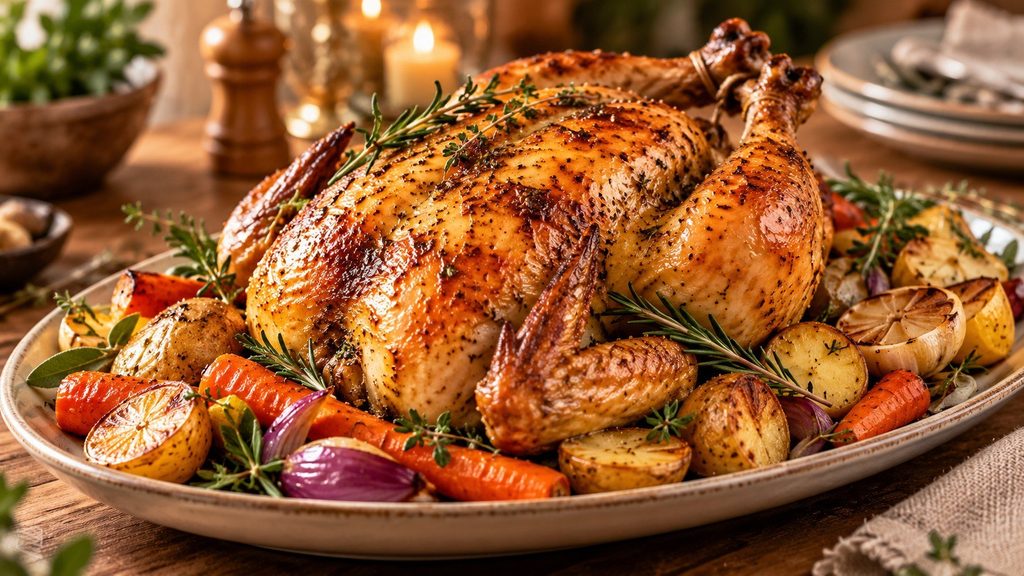
Common Roasted Chicken Mistakes
Most disappointing roast chickens fail for predictable reasons. The bird is either too wet, poorly seasoned, carved too early, or cooked entirely by the clock.
Poultry safety depends on temperature rather than the color of the meat.
That principle is reflected throughout USDA poultry guidance, which identifies 165°F as the safe minimum for whole birds, breasts, thighs, wings, and ground poultry.
Common problems include:
- putting a wet chicken directly into the oven;
- using too little salt for the bird’s weight;
- crowding the cavity with dense stuffing;
- allowing wing tips to burn;
- relying only on roasting time;
- touching bone with the thermometer probe;
- carving immediately after roasting;
- storing leftovers too slowly.
Leftovers should not remain indefinitely on the dining table. USDA guidance says perishable cooked food should generally be refrigerated within 2 hours, or within 1 hour above 90°F.
Once chilled, leftover chicken works in sandwiches, salads, soups, tacos, rice dishes, and pasta. Keep the bones for stock if they will be used promptly or frozen.
FAQ About Roasted Whole Chicken
What temperature should a whole chicken reach?
A whole chicken should reach at least 165°F, or 73.9°C, according to USDA guidance. Check the breast, innermost thigh, and wing areas with a food thermometer.
How long does it take to roast a whole chicken?
A 4–5 lb bird often needs about 70–90 minutes at 425°F. Exact timing varies, so how long to roast a whole chicken should ultimately be answered with thermometer readings.
Should chicken be covered while roasting?
Usually not. Leaving the bird uncovered supports evaporation and browning. Foil can be added loosely near the end if one area darkens too quickly.
Should a whole chicken be washed before cooking?
No. Rinsing raw poultry can spread contaminated droplets around the sink and nearby surfaces. Pat the chicken dry with disposable paper towels instead.
How do you make roasted chicken skin crispy?
Start with very dry skin and use dry oven heat. Refrigerating the salted bird uncovered before roasting can improve browning. Avoid frequent basting with watery pan juices.
Can roasted chicken still be pink?
Yes. USDA guidance explains that safely cooked poultry can sometimes remain pink. Temperature, not color alone, determines whether oven roasted whole chicken has reached the required safety point.
Earlier we wrote about How to Make Ghost Cookies for Halloween Without Cutters or Special Equipment