 Frank Rondel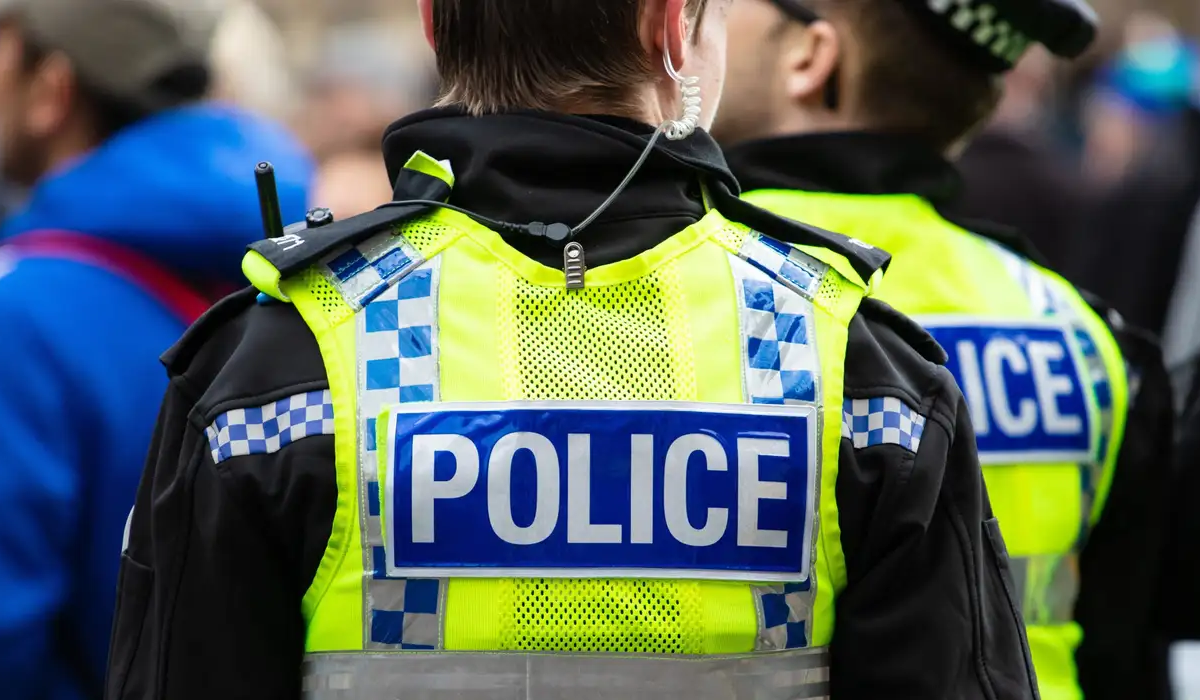
The Home Office has announced that police forces across England and Wales will introduce AI chatbots to manage non-emergency calls, assess risk levels, and determine the necessity of police intervention, reports customreceipt.com via GB news. The reforms, unveiled by Home Secretary Shabana Mahmood in the House of Commons, also include a significant increase in the deployment of live facial recognition technology, with the number of police vans equipped with such systems rising from 10 to 50. This expansion will allow all 43 police forces in England and Wales to use facial recognition, compared with just 15 currently.
At the center of the initiative is a new Police.AI hub, designed to oversee artificial intelligence applications across law enforcement. The centre will monitor AI system accuracy, support implementation, maintain a public register of AI usage, and introduce AI-driven robots to replace administrative staff handling data entry. Algorithms will also accelerate the review of CCTV and doorbell camera footage, enabling tasks such as case analysis, redaction of court documents, crime report filing, and translation of materials to be processed far more efficiently.
The Home Office estimates that these AI-driven improvements could save police officers across the country up to six million hours of frontline time annually, equivalent to approximately 3,000 additional officers, supported by £140 million allocated for technological upgrades. AI tools will additionally be used to identify deepfakes and streamline detective casework, cutting review times from days to hours.
The reforms also outline the creation of a British equivalent of the FBI, named the National Police Service, which will consolidate the National Crime Agency, Counter Terrorism Policing, and regional organised crime units under a single commissioner, who would become the nation’s most senior police officer. However, full operational deployment of the new body and the merged force model is not expected until 2034, leaving the plans subject to potential revision by future governments.
Home Secretary Mahmood stated, “Criminals are operating in increasingly sophisticated ways. But some police forces are still fighting crime with analogue methods.” Sir Andy Marsh, head of the College of Policing, defended the continuation of community policing under the new model, and Metropolitan Police Deputy Commissioner Matt Jukes said officers will be better equipped with AI and facial recognition to prioritise workloads, noting that facial recognition proved three times more effective than traditional methods in locating suspects, scanning 4.2 million faces last year and leading to over 1,700 arrests. Shadow Home Secretary Chris Philp criticised the merger proposals, arguing that “mega-forces covering whole regions will be very remote from the communities they serve.”
Earlier we wrote about Apple iPhone 18 Pro Price, Specs, and Advanced Camera Features Revealed Ahead of September 2026 Release