 Frank Rondel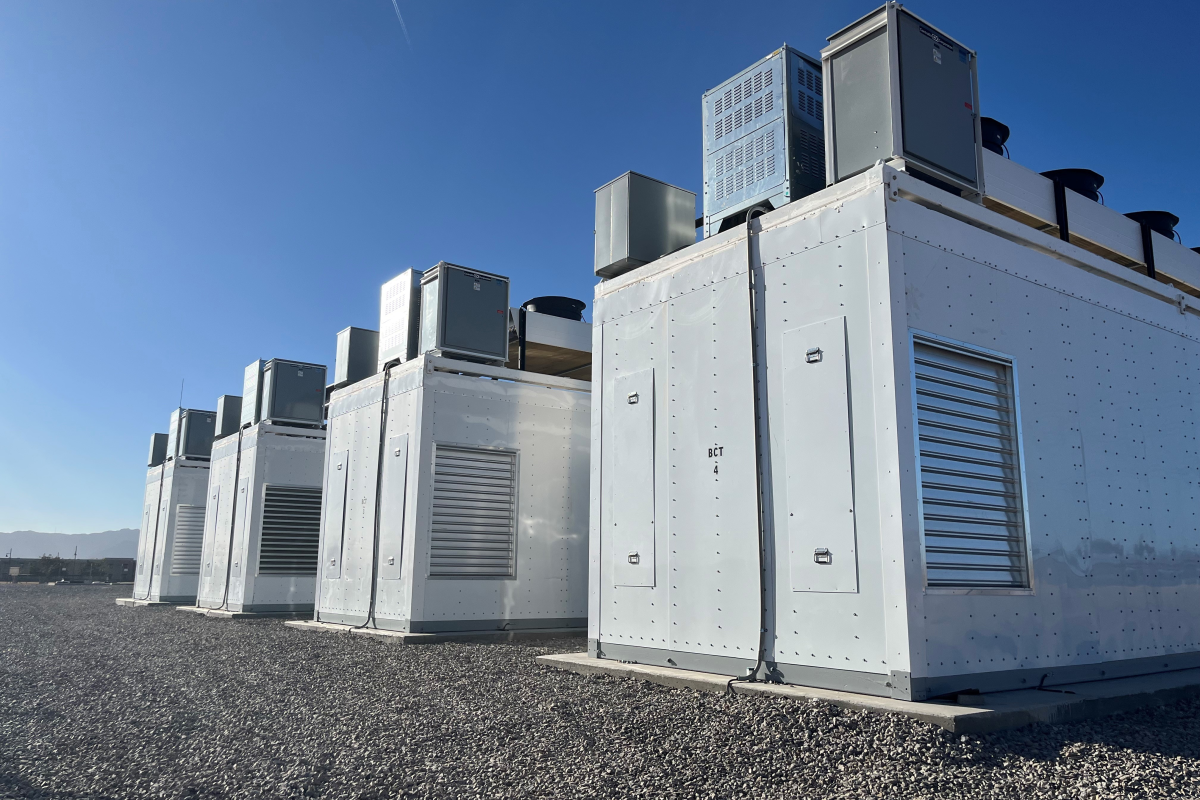
Fort Bliss has finalized a $58 million Utility Energy Services Contract (UESC) initiative led by the U.S. Army Engineering and Support Center, Huntsville, with projected savings exceeding $136 million over the 24-year agreement, reports customreceipt.com via US army. The large-scale, third-party financed project was delivered at one of the Army’s largest installations and focused on energy efficiency, water security and infrastructure resilience.
The Huntsville Center structured the agreement to implement three primary Energy Conservation Measures (ECMs): comprehensive LED lighting upgrades, water system security enhancements, and the deployment of a microgrid integrated with energy storage. The modernization package is designed to lower long-term operational costs while strengthening mission assurance capabilities across the installation.
New Mexico Gas Company (NMGC) was selected as the Utility Contractor for the Fort Bliss effort. Working in partnership with Energy Systems Group (ESG), an Energy Services Company (ESCO), NMGC conducted energy assessments, financed the upfront capital expenditures, and managed the engineering, design and installation of the ECM portfolio. Under the UESC framework, the contractor’s investment is repaid over time through the verified savings generated by the improvements.
In addition to project delivery, the contract requires NMGC to provide operations and maintenance services for the microgrid component. This arrangement enables Fort Bliss’ Department of Public Works (DPW) to allocate its maintenance workforce to other operational priorities while directing appropriated funds toward mission-critical requirements.
A central objective of the project is to enhance installation resilience by enabling the microgrid and energy storage systems to supply power to approximately 40 percent of Fort Bliss’ critical facilities. The contract also addresses vulnerabilities in water infrastructure while reducing overall energy and water consumption across the base.
According to Aubrey Glynn, project manager for the UESC initiative, the scope and complexity of the undertaking presented significant execution challenges. Close coordination between the UESC Project Delivery Team and Fort Bliss DPW personnel, including garrison energy manager Marivi Travieso, was required to manage scheduling pressures, fluctuating material availability, pricing considerations, permitting processes and design constraints around existing utility networks.
Travieso identified the water infrastructure component as particularly complex. The transmission waterline originates at the Tobin well field, situated north of the main cantonment area, and terminates in a densely developed industrial zone characterized by substantial utility congestion.
To navigate these constraints, Fort Bliss Water Service Company (FBWSC) developed and engineered a 20-inch-diameter waterline alignment crossing major roadways as well as existing sanitary sewer mains, storm drainage systems, high-pressure gas lines and other underground utilities. Because the revised waterline configuration altered the functional dynamics of the installation’s water system, FBWSC was required to submit detailed plans to the Texas Commission on Environmental Quality for review and approval before construction could proceed. Planning and regulatory coordination had to be incorporated into an already compressed delivery schedule.
Following physical construction, FBWSC implemented additional upgrades to its Supervisory Control and Data Acquisition (SCADA) systems and chlorination facilities. These enhancements were necessary to enable seamless switching between water purchased from El Paso Water (EPW) and locally sourced well water operated by FBWSC. The improvements allow operators to transition between supply sources with minimal delay while maintaining system reliability.
Since the project reached completion in 2024, Fort Bliss has reduced its monthly water purchases from El Paso Water by an average of 49 percent, a reduction directly associated with measurable cost savings.
Glynn stated that the Fort Bliss UESC’s performance outcomes are rooted in sustained collaboration among multiple stakeholders, including Huntsville Center, Fort Bliss’ Department of Public Works, Fort Bliss Garrison leadership, the Army Installation Management Command, Army leadership, and private-sector partners NMGC and ESG.
Fort Bliss spans approximately 1,700 square miles across west Texas and southern New Mexico, making it the Army’s second-largest installation by area. The base is home to the 1st Armored Division and supports a workforce of more than 40,000 personnel operating in excess of 2,000 non-housing buildings.
Huntsville Center serves as the Army’s principal authority on Utility Energy Services Contracts and has executed or is managing similar projects at Fort Irwin, California; Fort Detrick, Maryland; Forts Gordon and Stewart in Georgia; Fort Polk, Louisiana; Fort Campbell, Kentucky; Fort Bragg, North Carolina; Joint Base Lewis-McChord, Washington; and Anniston Army Depot, Alabama. The UESC program also includes initiatives at Warner Robins Air Force Base in Georgia and at the Pentagon.
Earlier we wrote that Mariah Carey Shines at Milano Cortina 2026 Olympics Opening Ceremony With Iconic Italian Hit