 Frank Rondel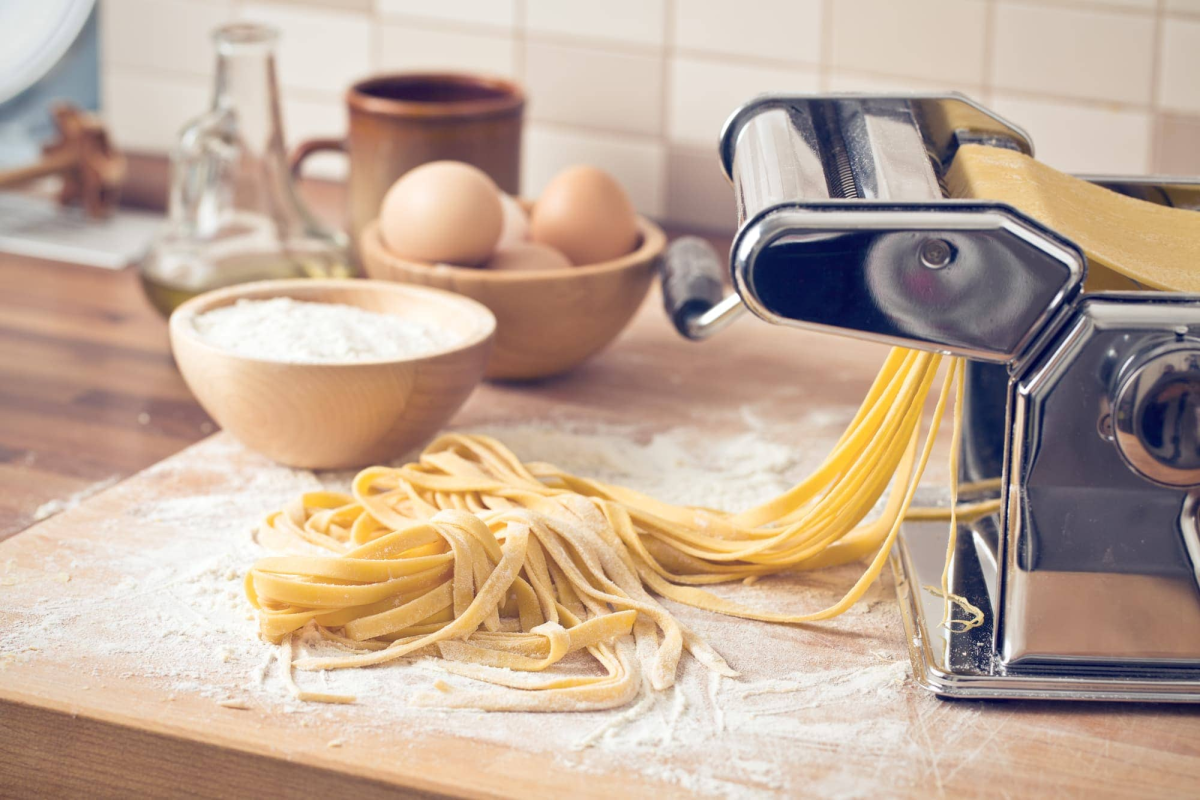
How to make pasta from scratch is a culinary rite of passage that transforms humble kitchen staples into a masterpiece of texture and flavor. This craft connects you to generations of Italian grandmothers who knew that the secret to a great meal lies in patience and high-quality eggs, as noted by the customreceipt.com.
While dried boxes of penne are convenient for a Tuesday night, they cannot replicate the silky, luxurious “mouthfeel” of a handmade noodle. There is an undeniable soul in the process of kneading dough until it yields under your palms.
Ingredients for the Perfect Batch
You only need three primary components to begin your journey, though the quality of each will dictate your success. Most professional chefs swear by “00” flour, which is a finely ground Italian powder that creates a supple, soft dough. If you cannot find it at a local specialty market, all-purpose flour works as a sturdy substitute, offering a slightly more “al dente” bite due to its higher protein content. Using room-temperature eggs is a small detail that ensures the proteins bond correctly with the starch. You should aim for a vibrant yellow yolk if possible, as this provides that iconic golden hue associated with premium pasta.
The olive oil is technically optional, yet it provides a subtle sheen and makes the fresh pasta dough much easier to handle for beginners.
- 2 cups of “00” or all-purpose flour
- 3 large room-temperature eggs
- 1 teaspoon of extra virgin olive oil
- A generous pinch of fine sea salt
These simple elements are the foundation of any great Italian kitchen. You will find that the ratio of eggs to flour can vary slightly depending on the humidity in your kitchen. Always keep a little extra flour nearby just in case the mixture feels too tacky. High-quality sea salt is preferable to standard table salt for a cleaner mineral finish.
Making the Dough by Hand
Start by mounding your flour on a clean wooden or marble surface, creating a wide crater in the center. This “well method” acts as a natural bowl for your wet ingredients, preventing the eggs from cascading across your counter. Carefully crack the eggs into the center and add the oil and salt.
Using a fork, begin whisking the eggs while slowly pulling small amounts of flour from the inner walls of the well. Once a thick paste forms and the walls collapse, abandon the fork for your hands.
This is where the magic happens as you begin making pasta at home with physical effort. Knead the mass by pushing it away with the heel of your hand, folding it back, and rotating. Do this for at least ten minutes until the surface is smooth, elastic, and bounces back when poked. The dough is a living thing; it needs to rest so the gluten can relax before it is stretched thin.
Wrap the ball tightly in plastic wrap to prevent a dry crust from forming on the exterior.
Let it sit on the counter for at least thirty minutes, though an hour is even better for structural integrity. This rest period is non-negotiable if you want to avoid a rubbery texture. During this time, the moisture redistributes evenly throughout the flour particles. You will notice the dough becomes much softer and more pliable after its nap.
Rolling and Cutting Pasta
Using a Pasta Machine
If you own a manual or electric roller, start with the widest setting and pass the dough through several times. Fold the sheet into thirds, like a letter, and roll it through again to strengthen the gluten. Gradually decrease the settings one by one until you reach the desired thickness, usually the second-to-last notch.
The Traditional Rolling Pin Method
Without a machine, you will need a long rolling pin and some significant upper body strength.
Roll from the center outward, rotating the dough frequently to ensure it doesn’t stick to the board. Your goal is a sheet so thin you can almost see the grain of the wood through it, roughly 1mm thick. It takes practice, but the rustic, uneven edges of hand-rolled pasta have a charm all their own.
Shaping Your Masterpiece
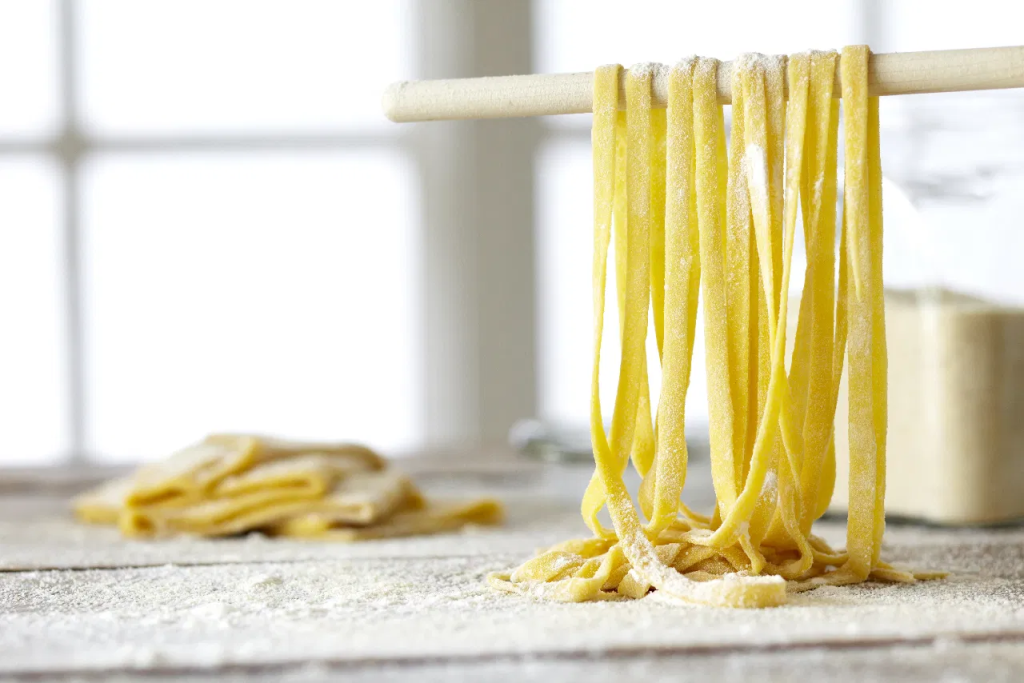
Once your sheets are thin, you can cut them into various widths using a sharp knife or a fluted pastry wheel. For long noodles, dust the sheet with flour, roll it up loosely, and slice through the log. Shake the strands out immediately to prevent them from clumping together into a ball.
| Pasta Shape | Width | Best Sauce Pairing |
| Pappardelle | 25 mm | Bold Ragù or Wild Boar |
| Tagliatelle | 6 mm | Classic Bolognese |
| Fettuccine | 3 mm | Alfredo or Creamy Mushroom |
| Linguine | 2 mm | Seafood and White Wine |
Choosing the right shape for your sauce is a functional decision, not just an aesthetic one. Wider noodles carry the weight of heavy meats, while thin strands are perfect for light oils. Fresh pasta absorbs liquid much faster than dried, so always have your sauce ready before the water boils.
Experimenting with different widths is the best way to find your personal preference.
Cooking Fresh Pasta
Fresh noodles cook with incredible speed, usually requiring only two to three minutes in boiling water.
You must use a large pot and ensure the water is heavily salted, “like the sea,” to season the dough from within. Since there is no drying process, the starches are ready to gelatinize almost instantly. Always reserve a cup of the starchy cooking water before draining the pot. This “liquid gold” is the secret to emulsifying your sauce, allowing it to cling to the noodles rather than sliding off.
- Bring 4 liters of water to a rolling boil.
- Add 2 tablespoons of sea salt.
- Drop the pasta in and stir gently to separate strands.
- Test for doneness after 120 seconds.
The result is a cohesive, restaurant-quality dish made entirely from scratch. Never rinse your pasta, as you want those surface starches to remain.
5 Simple Fresh Pasta Sauces
An easy pasta recipe doesn’t require a long list of ingredients if the noodles themselves are the star. Aglio e olio is the simplest, involving toasted garlic, chili flakes, and high-quality olive oil. For something more indulgent, try a Cacio e pepe, which uses only Pecorino Romano cheese and freshly cracked black pepper.
- Aglio e Olio: Garlic, olive oil, and parsley.
- Cacio e Pepe: Cheese and black pepper.
- Simple Tomato: San Marzano tomatoes and basil.
- Brown Butter Sage: Nutty butter and crispy sage leaves.
- Carbonara: Guanciale, eggs, and cheese.
A simple brown butter and sage sauce highlights the delicate flavor of the egg dough without overpowering it.
These sauces prove that when the foundation is good, the additions can be minimal. Most of these can be prepared in the time it takes for the water to boil. Always toss the pasta directly in the pan with the sauce for the best integration. Adding a splash of pasta water at the final stage creates a creamy texture without needing heavy cream.
Tips for Perfect Pasta
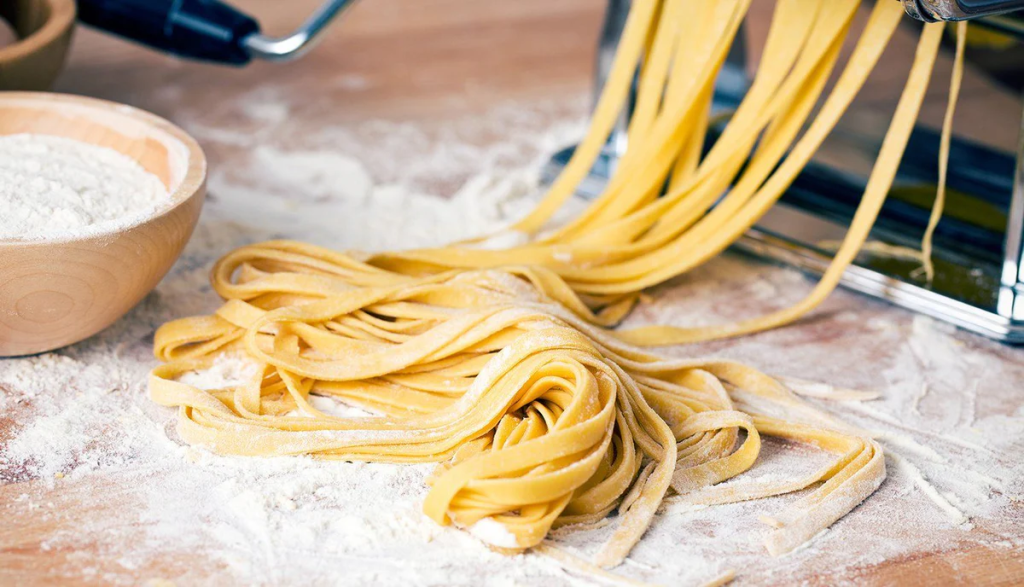
- Never skimp on the kneading time; ten minutes is the minimum for a smooth texture.
- Use a kitchen scale for the most accurate flour-to-egg ratio.
- If the dough feels too dry, add water one teaspoon at a time.
- If it is too sticky, dust your work surface with a little extra flour.
- Always cover your dough while it rests to avoid a “skin.”
- Dust cut pasta with cornmeal or semolina to prevent sticking.
- Don’t be afraid to use your hands; they are your best sensors.
- Salt the water more than you think is necessary.
Following these steps ensures that your pasta from scratch turns out consistent every single time. Mastery comes from repetition and learning how the dough feels under different humidity levels.
Even a failed batch is usually still edible and delicious. Keep your workspace tidy to make the cleanup process much faster. Professional kitchens often use wooden boards because they absorb excess moisture from the dough.
Storing Fresh Pasta
You can keep fresh pasta in the refrigerator for up to two days if it is well-floured and sealed.
For longer storage, freeze the noodles on a baking sheet in a single layer before transferring them to a bag. This prevents them from freezing into a solid block, allowing you to drop them straight into boiling water later. If you prefer a pantry-stable version, hang the strands on a drying rack for 24 hours. Once they are brittle and snap easily, they can be stored in an airtight container for several weeks.
FAQ
Can I make pasta without a machine?
Yes, a rolling pin and a sharp knife are all you need to create beautiful, rustic shapes.
What is the best flour for homemade pasta?
While “00” flour is traditional for its fine texture, all-purpose flour is a great alternative for beginners.
Why is my pasta dough tough?
This usually happens if the dough wasn’t kneaded enough or if it didn’t rest long enough to relax the gluten.
Can I use a food processor to mix the dough?
Absolutely, it speeds up the initial mixing process, but you should still finish kneading by hand for the best results.
How do I know when the pasta is cooked?
Fresh pasta will float to the surface of the water when it is nearly done; always taste a strand to check.
Does fresh pasta need oil in the boiling water?
No, oil prevents the sauce from sticking to the noodles; just use plenty of salt and a large pot.
Making a homemade pasta recipe is an rewarding skill that brings the authentic flavors of Italy into your own home. It requires very little in terms of equipment but offers a massive return on investment in flavor. Once you have tasted the difference of a hand-rolled tagliatelle, the boxed variety will never quite satisfy you the same way again.
Earlier we wrote about How to Make Scrambled Eggs: Creamy and Fluffy Methods