 Frank Rondel
How to cook funchoza starts with one rule: glass noodles need control, not force. They cook fast, absorb sauce quickly, and lose texture if treated like regular pasta. A good bowl of funchoza should feel elastic, glossy, and seasoned through, not sticky or watery, as noted by customreceipt.com.
Funchoza works in cold salads, hot stir-fries, soups, lunch bowls, and quick dinners with chicken, shrimp, beef, mushrooms, or tofu. The noodles themselves are neutral, so the real flavor comes from garlic, soy sauce, vinegar, sesame oil, chili, herbs, vegetables, and the timing of mixing.
What Funchoza Is and Why It Needs Gentle Cooking
Funchoza is a type of glass noodle made from starch. Depending on the brand, the base can be mung bean starch, potato starch, sweet potato starch, tapioca starch, or a blend of several starches. Dry noodles look pale and firm, but after soaking they become transparent and flexible.
The texture matters more than the color. Properly cooked funchoza should stretch slightly when lifted with tongs. It should not break into short pieces or gather into a heavy lump. This is why the first cooking step decides the whole dish.
Thin funchoza usually needs 4–6 minutes in boiling water. Thicker sweet potato glass noodles may need 6–8 minutes. For stir-fry, it is better to under-soak the noodles by 1 minute, because they finish cooking in the pan with sauce.
Funchoza is ready when it bends easily but still has bite. The sauce should finish the texture, not rescue overcooked noodles.
Home cooks often make one mistake: they boil glass noodles too long. These noodles do not need the same treatment as spaghetti. Hot soaking is enough for most thin and medium types.
Basic Method for Cooking Funchoza Without Sticking
The safest method is simple and repeatable. It works for salads, cold bowls, and most everyday recipes.
Before cooking, place the dry noodles in a large heatproof bowl. Do not crush them. Long strands look better on the plate and mix more evenly with vegetables.
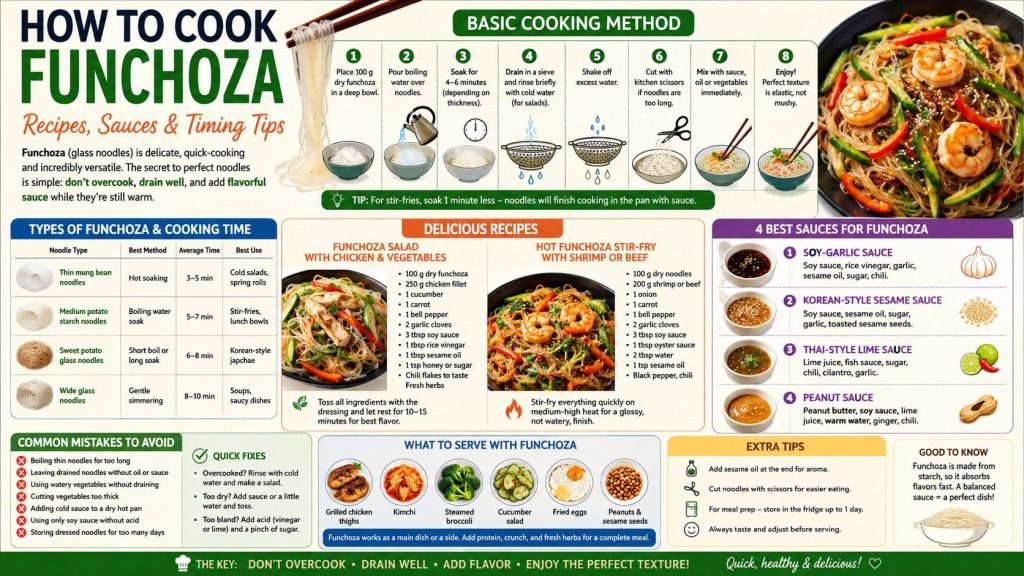
- Put 100 g dry funchoza in a deep bowl.
- Cover fully with boiling water.
- Leave for 4–6 minutes.
- Drain in a sieve.
- Rinse briefly with cold water for salads.
- Shake off excess water.
- Cut with kitchen scissors if the strands are too long.
- Mix with sauce or 1 teaspoon sesame oil.
The rinse is useful for cold dishes because it stops the cooking and removes surface starch. For hot stir-fry, rinse lightly or skip rinsing if the noodles will go straight into the pan.
The noodles should not sit dry after draining. Add dressing, oil, vegetables, or warm sauce within 2–3 minutes. This prevents clumping and helps the noodles absorb seasoning.
For an easy side dish menu, funchoza pairs well with crisp potatoes, especially when served next to homemade fries prepared without a deep fryer. A practical guide to crispy homemade French fries gives useful timing ideas for oven and skillet cooking.
Cooking Time and Best Use for Each Type
Different glass noodles react differently to heat. The label helps, but it does not always explain texture. The comparison below gives a faster way to choose the right method.
| Noodle type | Best method | Average time | Best use |
|---|---|---|---|
| Thin mung bean noodles | Hot soaking | 3–5 minutes | Cold salads, spring rolls |
| Medium potato starch noodles | Boiling water soak | 5–7 minutes | Stir-fries, lunch bowls |
| Sweet potato glass noodles | Short boil or long soak | 6–8 minutes | Korean-style japchae |
| Wide glass noodles | Gentle simmering | 8–10 minutes | Soups, saucy dishes |
After draining, check the texture before adding sauce. If the noodles are stiff in the center, return them to hot water for 1 minute. If they are too soft, rinse with cold water and turn them into a salad with crunchy vegetables.
A cold salad forgives small mistakes better than a stir-fry. Cucumber, carrot, bell pepper, herbs, vinegar, and chili can restore freshness when the noodles become too soft.
For hot dishes, keep the pan wide and the heat medium-high. A crowded pan creates steam, and steam makes funchoza wet. Stir gently with tongs instead of a spoon.
Funchoza Salad with Chicken and Vegetables
This recipe is the most reliable version for beginners. It needs common ingredients and works for dinner, packed lunch, or a cold appetizer. The balance comes from salt, acid, fat, sweetness, and garlic.
Ingredients for 2–3 servings:
- 100 g dry funchoza
- 250 g chicken fillet
- 1 cucumber
- 1 carrot
- 1 bell pepper
- 2 garlic cloves
- 3 tablespoons soy sauce
- 1 tablespoon rice vinegar or lemon juice
- 1 tablespoon sesame oil
- 1 teaspoon honey or sugar
- Chili flakes to taste
- Green onion, cilantro, or parsley
Cook the chicken in salted water or sear it in a pan. Let it rest for 5 minutes, then slice into thin strips. Soak the funchoza for 5 minutes, drain, rinse, and shake off water.
Cut the vegetables into thin sticks. Cubes do not mix well with long noodles. Thin vegetables give each bite the same texture and keep the salad light.
Mix soy sauce, vinegar, sesame oil, grated garlic, honey, and chili. Add chicken, vegetables, and noodles to a large bowl. Pour over the dressing and toss with tongs.
Let the salad rest for 10–15 minutes before serving. During that time, the noodles absorb the dressing. The garlic becomes softer, and the vegetables stay crisp.
For a sharper dressing idea, compare the balance with Caesar-style sauce: salt, acid, fat, and aroma work together there too. A detailed guide to the original Caesar salad recipe is useful for understanding how strong dressings support simple ingredients.
Hot Funchoza Stir-Fry with Shrimp, Beef, or Tofu
Hot funchoza stir fry needs preparation before heat. Once the pan is hot, there is no time to cut vegetables or search for sauce. The noodles can overcook while other ingredients wait.
Use shrimp for a lighter dinner, beef for a deeper flavor, or tofu for a meat-free version. Mushrooms also work well because they add umami and absorb soy sauce.
For 2 servings, prepare:
- 100 g dry glass noodles
- 200 g shrimp, thin beef strips, or firm tofu
- 1 small onion
- 1 carrot
- 1 bell pepper
- 2 garlic cloves
- 3 tablespoons soy sauce
- 1 tablespoon oyster sauce or teriyaki sauce
- 2 tablespoons water
- 1 teaspoon sesame oil
- Black pepper and chili to taste
Soak the noodles for 4 minutes, then drain. Fry shrimp for 1–2 minutes, beef for 3–4 minutes, or tofu until lightly browned. Remove the protein if the pan becomes crowded.
Add onion, carrot, and bell pepper. Cook for 2–3 minutes, keeping the vegetables slightly firm. Add garlic for the final 30 seconds so it does not burn.
Return the protein to the pan. Add soy sauce, oyster sauce, water, sesame oil, and noodles. Toss for 2–3 minutes until the noodles become glossy.
The pan should not contain much liquid. A good stir-fry looks shiny, not soupy. Add water by tablespoons only when the noodles stick before the sauce coats them.
Best Sauces for Funchoza
A strong funchoza sauce should taste slightly too intense before mixing. The noodles absorb salt, acidity, sweetness, and aroma, so the final dish becomes milder after resting.
The most useful sauces follow 4 structures:
- Soy-garlic sauce: soy sauce, rice vinegar, garlic, sesame oil, sugar, chili.
- Korean-style sesame sauce: soy sauce, sesame oil, sugar, garlic, toasted sesame seeds.
- Thai-style lime sauce: lime juice, fish sauce, sugar, chili, cilantro, garlic.
- Peanut sauce: peanut butter, soy sauce, lime juice, warm water, ginger, chili.
Cold funchoza needs more acid. Use rice vinegar, apple vinegar, lemon juice, or lime juice. Hot funchoza needs more umami. Soy sauce, mushrooms, oyster sauce, beef, shrimp, and toasted sesame help build depth.
Do not add salt before tasting. Soy sauce, fish sauce, oyster sauce, and teriyaki sauce already contain enough salt for most dishes. Extra salt can make the noodles harsh.
For drinks beside spicy glass noodles, iced matcha works better than heavy sweet soda. The guide to an iced matcha latte at home explains how milk texture and bitterness can balance strong flavors.
Common Mistakes That Ruin Funchoza
Most funchoza problems come from timing and moisture. The noodles cook fast, but vegetables release water slowly. That mismatch can make the dish bland.
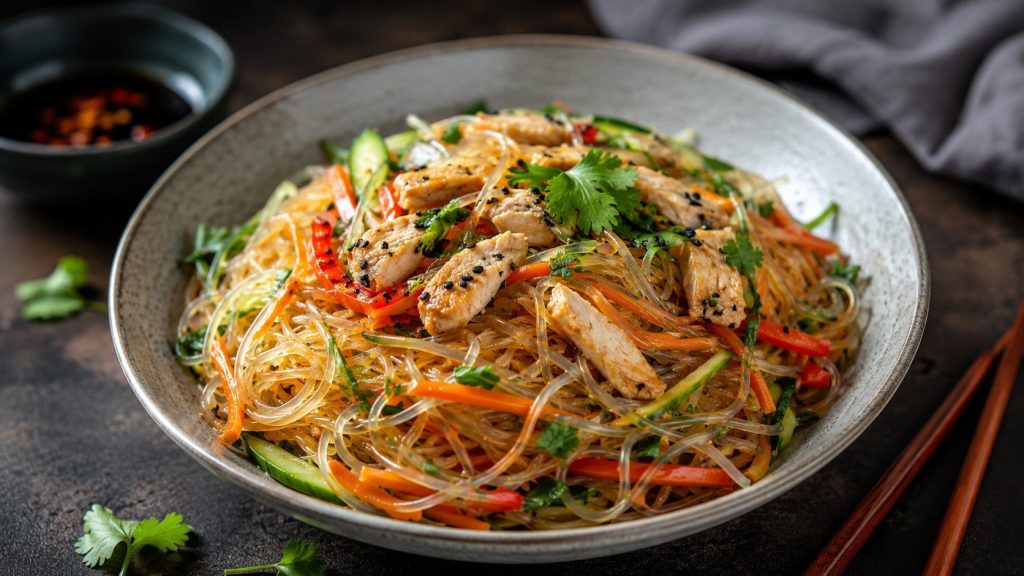
Common mistakes include:
- boiling thin glass noodles for too long;
- leaving drained noodles without oil or sauce;
- using watery cucumbers without removing seeds;
- cutting vegetables too thick;
- adding cold sauce to a dry hot pan;
- using only soy sauce without acid;
- storing dressed noodles for too many days.
After any list of mistakes, the rule is practical: protect texture first. Funchoza needs crunch, aroma, and contrast. Soft noodles with soft vegetables taste flat, even when the sauce is correct.
If cucumbers release too much water, remove the seed center before slicing. If carrots feel too hard, cut them thinner or warm them in the pan for 30 seconds. If garlic tastes sharp, mix it with vinegar and oil before adding it to the bowl.
Dressed funchoza keeps well in the refrigerator for 1 day. After 2 days, vegetables lose crunch and the noodles become dull. Hot stir-fry tastes best immediately, though leftovers can be reheated with 1–2 tablespoons of water.
For budget cooking, glass noodles are useful because a small dry portion expands into a full meal. A broader guide on saving money on groceries gives practical ideas for planning meals around pantry staples.
What to Serve with Funchoza
Funchoza can be a main dish or a side. With chicken, beef, shrimp, tofu, or mushrooms, it becomes a full meal. Without protein, it works as a cold starter beside grilled meat, dumplings, soup, or eggs.
Good pairings include grilled chicken thighs, teriyaki salmon, miso soup, kimchi, cucumber salad, steamed broccoli, peanuts, sesame seeds, and fried eggs. Fresh herbs make the plate cleaner and brighter.
For a dinner spread, serve funchoza in a wide shallow bowl. Long noodles look better when lifted with tongs, not packed into a deep pot. Add sesame seeds, herbs, and chili oil at the end.
Cold salad needs 10–15 minutes of resting time. Hot stir-fry should go straight to the plate. Soup with glass noodles should be served quickly, because the noodles keep absorbing broth.
FAQ
How long should funchoza be soaked?
Most thin glass noodles need 4–6 minutes in boiling water. Thicker sweet potato noodles may need 6–8 minutes.
Should funchoza be rinsed after cooking?
Yes, for salads and cold dishes. Rinsing stops the cooking and removes extra surface starch. For stir-fries, rinse lightly or drain well.
Can funchoza be cooked without boiling?
Yes. Many types only need hot soaking. Cover the noodles with boiling water, wait until flexible, then drain.
Why does funchoza stick together?
It sticks when overcooked, poorly drained, or left without sauce. Mix it with dressing, sesame oil, or vegetables soon after draining.
What sauce goes best with funchoza?
Soy-garlic sauce is the most versatile. It works with chicken, shrimp, beef, tofu, cucumbers, carrots, and peppers.
Can funchoza be prepared in advance?
Yes, but only for about 1 day. Keep herbs, sesame, and crunchy toppings separate until serving.
Earlier we wrote about How to Make Iced Matcha Latte at Home: The Ultimate Guide