 Frank Rondel
How to cook shashlik without a grill at home is not a compromise for rainy days. It is a controlled kitchen technique: the meat needs acid, fat, salt, high heat, air circulation and a short rest. You will not get the full smoke of charcoal, but you can get juicy meat, browned edges and the familiar aroma of onions, spices and roasted fat, as customreceipt.com notes.
The home version works because shashlik is not only about fire. It is about small pieces of meat cooking fast. A hot oven, a cast-iron pan, an air fryer or a grill pan can imitate the main job of a mangal: strong heat from below and dry heat around the meat.
The biggest mistake is trying to “steam” skewers in a deep tray. That gives grey meat and watery onions. The better route is simple: lift the skewers above the tray, heat the oven hard, remove extra marinade, and finish the meat close to the top heat source.
Why homemade shashlik works without a mangal
Traditional shashlik depends on 3 things: heat, spacing and patience. The pieces must be similar in size, usually 3–4 cm. If they are too small, they dry before browning. If they are too large, the outside burns before the center is safe.
At home, the best result comes from the oven with a wire rack. The tray catches juices, while the rack lets hot air move around the meat. A grill pan gives darker marks, but it needs more attention. An air fryer is fast, though it handles smaller batches.
The flavor has to be built before cooking. Onion juice, paprika, black pepper, oil and a modest acid create the “shashlik” profile. Vinegar is useful, but too much makes pork rubbery and chicken dry. Lemon juice, kefir or yogurt are softer choices for beginners.
The rule is direct: marinate for flavor, not for rescue. Bad meat will not become good meat after 12 hours in vinegar. Fresh meat, good salt balance and high heat matter more.
Best meat for shashlik at home
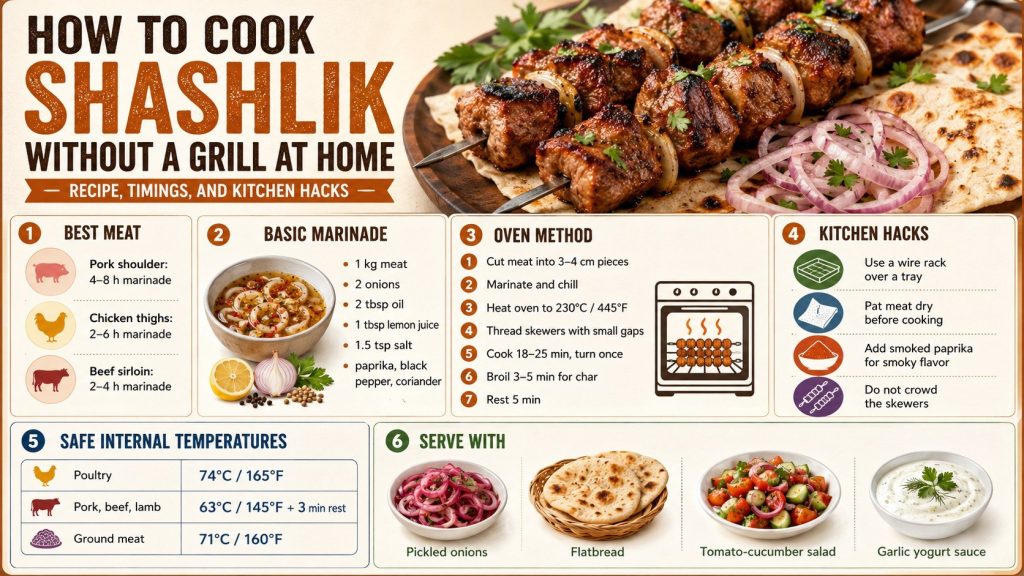
Pork shoulder is the most forgiving cut. It has enough fat to stay tender and enough structure to hold on skewers. Chicken thighs cook faster and absorb marinade well. Beef needs more care; sirloin or ribeye works better than lean round.
Before choosing meat, think about the cooking method you will use. Oven shashlik can handle fattier pork. Air fryer shashlik prefers smaller, leaner pieces. A pan method works best when the meat is not dripping with marinade.
| Meat | Best cut | Marinade time | Kitchen method | Safe internal temperature |
|---|---|---|---|---|
| Pork | Shoulder, neck | 4–8 hours | Oven or grill pan | 145°F / 63°C plus 3-minute rest |
| Chicken | Thighs | 2–6 hours | Air fryer or oven | 165°F / 74°C |
| Beef | Sirloin, ribeye | 2–4 hours | Cast-iron pan | 145°F / 63°C plus 3-minute rest |
| Turkey | Thigh fillet | 3–6 hours | Oven rack | 165°F / 74°C |
| Lamb | Leg, shoulder | 4–8 hours | Oven or pan | 145°F / 63°C plus 3-minute rest |
These numbers are a safety base, not a style limit. Pork shoulder often tastes better when cooked a little higher because the fat softens. Chicken thighs can tolerate extra minutes better than breast. Beef should not sit in an acidic marinade too long, or the surface becomes mushy. Use a thermometer if possible, especially with poultry. Color alone is not a reliable test.
Ingredients for 4 servings
This recipe is designed for an oven, but it also works in an air fryer or on a grill pan. The balance is built around pork shoulder. For chicken thighs, reduce the marinating time and cook a little faster.
You need:
- 1 kg pork shoulder or chicken thighs, cut into 3–4 cm pieces
- 2 large onions, thinly sliced
- 2 tbsp neutral oil
- 1 tbsp lemon juice or 1.5 tbsp mild vinegar
- 1.5 tsp salt
- 1 tsp smoked paprika
- 1 tsp sweet paprika
- 0.5 tsp ground black pepper
- 0.5 tsp coriander
- 0.5 tsp cumin, optional
- 1 tsp sugar or honey, optional
- 2 tbsp kefir or plain yogurt, optional
- Wooden or metal skewers
Do not overload the marinade with liquid. Meat should be coated, not swimming. Onion is not only a garnish here; it gives sweetness and aroma. Smoked paprika helps imitate fire without fake smoke. Sugar is optional, but it improves browning in the oven. Kefir makes pork gentler and works well with chicken thighs.
Step-by-step oven shashlik recipe
Put sliced onions into a bowl and press them with salt for 1 minute. They should release juice. Add oil, lemon juice, paprika, black pepper, coriander and cumin. Mix in the meat and massage it for 2 minutes.
Cover the bowl and refrigerate it. Pork needs 4–8 hours. Chicken thighs need 2–6 hours. Beef should not sit longer than 4 hours in an acidic marinade. Take the meat out 30 minutes before cooking, so it loses the refrigerator chill.
Soak wooden skewers in water for 30 minutes. Heat the oven to 230°C / 445°F. Place a wire rack over a foil-lined tray. Thread the meat with small gaps between pieces. Remove thick onion slices from the skewers because they burn quickly.
Cook the skewers for 18–25 minutes, turning once or twice. In the last 3–5 minutes, move the rack higher or switch on the broiler. Watch carefully. The goal is browned edges, not black crust.
After cooking, rest the shashlik for 5 minutes. This short pause keeps juices inside the meat. Serve with fresh onion, flatbread, herbs, pickles or a tomato-cucumber salad.
How to get smoky flavor without charcoal
The hardest part is aroma. A home kitchen cannot fully repeat a mangal, but it can get close. The trick is to layer roasted notes instead of chasing heavy smoke.
Use these hacks carefully:
- Add smoked paprika to the marinade.
- Finish skewers under the broiler for darker edges.
- Use a cast-iron pan for the final 2 minutes.
- Add roasted onions beside the meat, not on the skewer.
- Brush meat lightly with oil before the final heat.
- Use a tiny pinch of ground chipotle for heat and smoke.
The best hack is the broiler. It creates direct top heat and gives the meat a grilled look. Do not pour liquid smoke into the marinade unless you know the product well. It can overpower the meat fast. Smoked paprika is safer and more predictable. A cast-iron finish also adds a deeper roasted taste. Keep the kitchen ventilated because fat can smoke under high heat.
Air fryer and pan versions
The air fryer is the fastest option for homemade shashlik. Heat it to 200°C / 400°F. Place meat pieces in one layer, with space between them. Cook for 12–18 minutes, shaking or turning once. Wooden skewers often do not fit, so cook the pieces loose.
A grill pan gives the most dramatic surface. Heat it until very hot, then oil it lightly. Cook the meat in batches for 8–12 minutes, turning every 2–3 minutes. Do not crowd the pan. Crowding drops the temperature and creates steam.
A regular frying pan can work too. Use medium-high heat and keep the meat moving less than you think. If you stir constantly, it will not brown. Let one side form color, then turn.
For pork and chicken, finish thicker pieces in the oven for several minutes. This avoids burning the outside. It also keeps the pan method safer and more even.
Marinade mistakes that ruin shashlik
A good marinade should season the meat and help browning. It should not destroy the texture. Too much vinegar is the classic home error. It can tighten the surface and make lean meat feel dry.
Another mistake is adding salt only at the end. Salt needs time to move into the meat. For 1 kg of meat, 1.5 tsp is a practical start. If your salt is very coarse, measure by weight when possible.
Avoid watery marinades with too much wine, kefir or tomato juice. They delay browning. Pat the pieces lightly before skewering if the marinade looks wet.
“Shashlik is not boiled meat on sticks,” as many chefs say in professional kitchens. The phrase is blunt, but useful. Dry surface, strong heat and enough spacing are the real difference between roasted meat and steamed meat.
What to serve with indoor shashlik
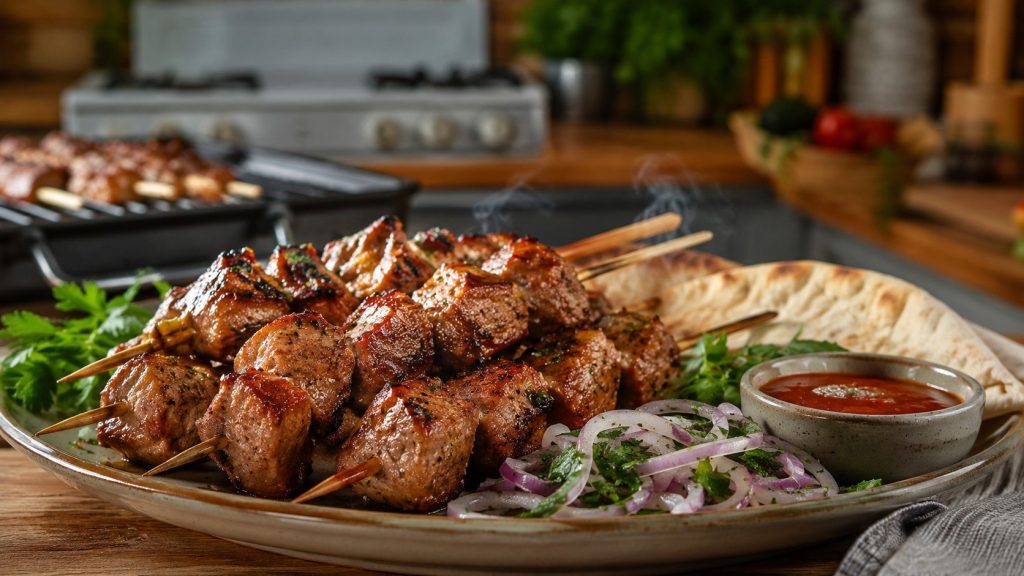
The best sides cut through fat and salt. Fresh herbs, raw onion, lemon, pickled vegetables and flatbread work better than heavy sauces. A tomato salad with vinegar and black pepper is enough for pork. Chicken likes yogurt sauce, garlic and cucumber.
A practical serving set looks like this:
- Thinly sliced onion with vinegar, salt and dill
- Lavash, pita or warm flatbread
- Pickled cucumbers or pickled cabbage
- Tomato and cucumber salad
- Garlic yogurt sauce
- Fresh parsley, cilantro or green onion
This set keeps the plate balanced. Fatty pork needs acidity. Chicken needs moisture. Beef benefits from herbs and a sharp onion bite. Do not cover hot shashlik with thick sauce immediately. Let the meat stay crisp for a few minutes. Put sauces on the side, so the crust does not soften.
Storage, reheating and food safety
Cooked meat should not sit at room temperature for hours. Cool leftovers quickly and refrigerate them in a closed container. For best taste, eat them within 3 days. Reheat gently, because already cooked shashlik dries fast.
For reheating, use a covered pan with 1–2 tbsp water. Warm over low heat for 4–6 minutes. Then uncover for 1 minute to bring back the surface. An air fryer also works, but use a lower temperature.
Never reuse marinade that touched raw meat unless you boil it. If you want sauce, keep part of the marinade separate before adding raw meat. This small habit prevents a common kitchen risk.
A food thermometer is worth using. Poultry must reach 165°F / 74°C. Whole cuts of pork, beef and lamb need 145°F / 63°C with a 3-minute rest. Ground meat needs 160°F / 71°C.
Quick troubleshooting guide
If your shashlik is pale, the oven was not hot enough or the meat was too wet. Raise the heat and finish under the broiler. If it is dry, the pieces were too small, too lean or cooked too long. Use shoulder, neck or thighs next time.
If the meat tastes flat, the marinade needed more salt and onion. If it tastes sour, reduce vinegar and shorten the marinating time. If it burns before cooking through, lower the rack and make the pieces smaller.
The most reliable home formula is simple: 3–4 cm pieces, moderate marinade, hot oven, lifted rack and short broiler finish. This gives indoor shashlik that feels intentional, not improvised.
FAQ
Can I cook shashlik at home without skewers?
Yes. Cook the pieces on a wire rack or in an air fryer basket. Skewers help shape the dish, but they are not essential. Space between pieces matters more than the stick itself.
What is the best oven temperature for shashlik?
Use 230°C / 445°F for most pork or chicken shashlik. Finish under the broiler for 3–5 minutes. Watch closely because sugar and fat brown fast.
Can I use chicken breast?
You can, but thighs are better. Chicken breast dries quickly in high heat. If you use breast, cut larger pieces and marinate for only 1–3 hours.
How long should pork shashlik marinate?
Pork shoulder usually needs 4–8 hours. Overnight is possible with a mild marinade. Avoid long marination with strong vinegar because the texture can suffer.
How do I make shashlik taste smoky indoors?
Use smoked paprika, high heat and a broiler finish. A cast-iron pan can add deeper roasted notes. Do not rely on too much liquid smoke.
Earlier we wrote about How to Make Apple Pie: Classic Recipe with Flaky Crust, Firm Apples and Baking Tips