 Frank Rondel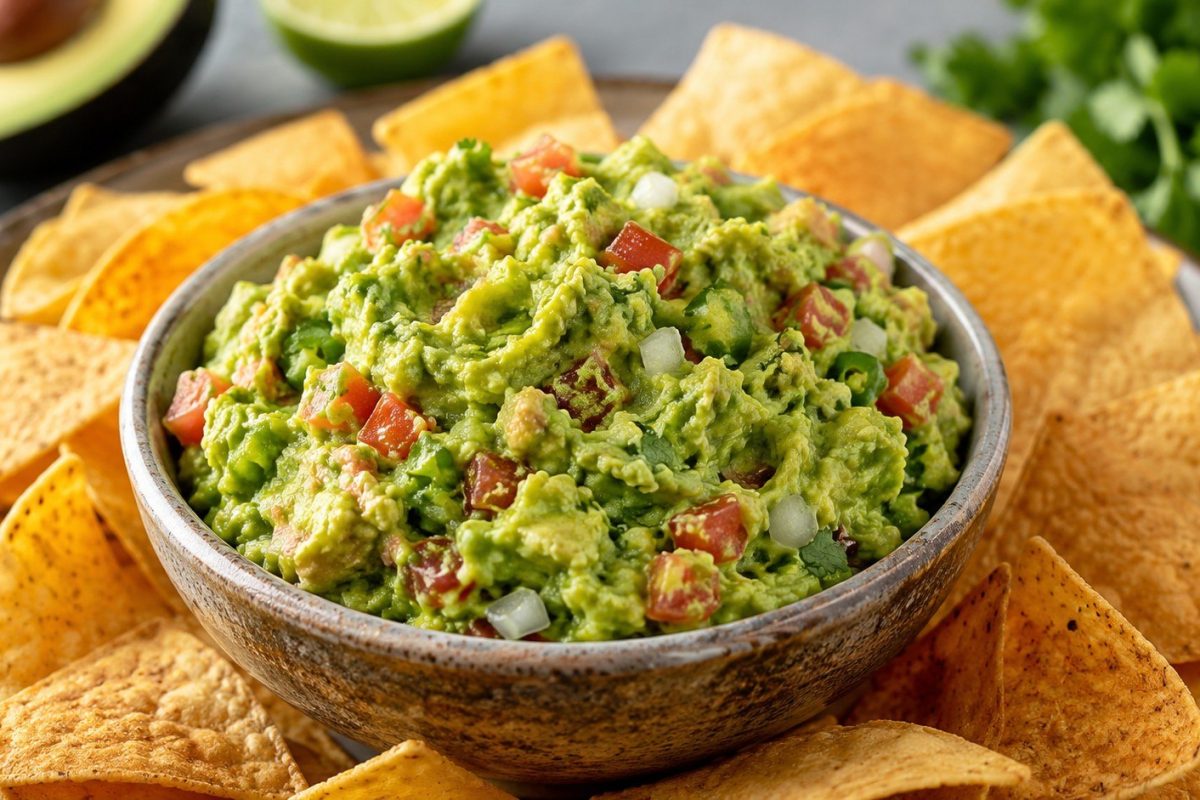
How to make guacamole for nachos without turning ripe avocados into a watery, flavorless paste? The secret is a careful balance of acidity, salt, heat, and texture. This original recipe combines creamy avocado with lime, onion, jalapeño, cilantro, and tomato, as noted by the customreceipt.com.
Good guacamole should taste bright and fresh. Avocado remains the main ingredient, while every addition has a clear purpose. Lime cuts through its richness, salt strengthens the flavor, and chili adds controlled heat.
The recipe takes about 15 minutes. It requires no blender, food processor, or specialist kitchen equipment.
What Makes Guacamole Perfect for Nachos
Guacamole served with nachos needs a thicker consistency than avocado sauce. It must cling to a tortilla chip without dripping onto the plate.
A completely smooth dip often feels heavy beside cheese, beans, or seasoned meat. Large avocado pieces create the opposite problem because they fall from the chip. The best texture lies between those extremes.
Mash about 75% of the avocado with a fork. Leave the remaining pieces intact, then fold them gently into the mixture.
This creates a creamy base with small, visible avocado chunks. Each bite feels substantial without becoming difficult to scoop.
The flavor should also remain restrained. Nachos already contain salt, toasted corn, cheese, and rich toppings. Guacamole should provide freshness rather than compete with the rest of the dish.
“Treat lime juice like seasoning rather than the main ingredient. Add it gradually and taste after each addition.”
Ingredients for Original Guacamole
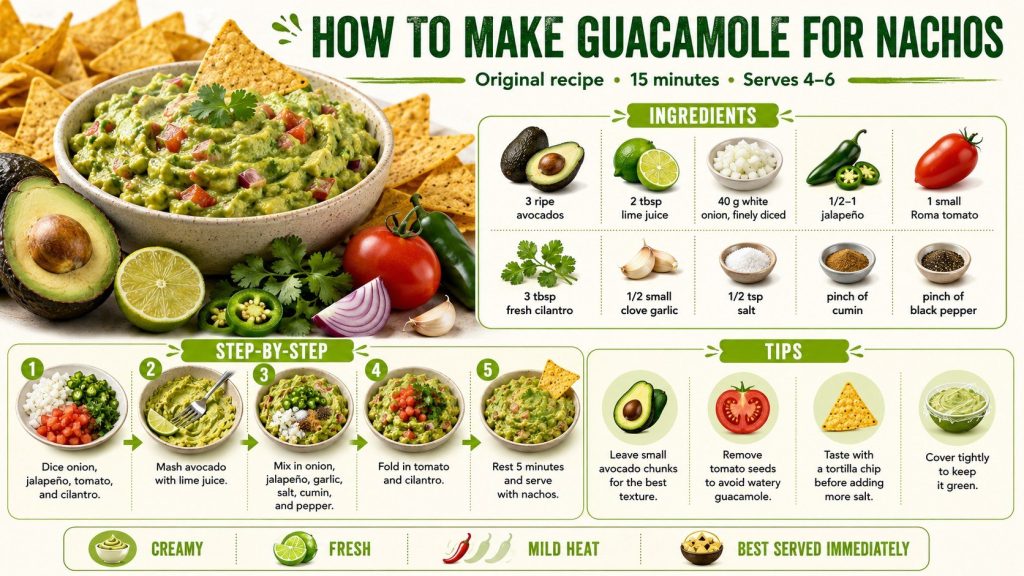
The quantities below produce about 500–550 grams of guacamole. This amount is suitable for 4–6 people when served with a large nacho platter.
| Ingredient | Quantity | Purpose |
|---|---|---|
| Ripe Hass avocados | 3 medium | Creamy base and rich flavor |
| Fresh lime juice | 2 tbsp | Acidity and freshness |
| White onion | 40 g | Crisp texture and sharpness |
| Jalapeño pepper | ½–1 | Fresh heat |
| Roma tomato | 1 small | Juiciness and color |
| Fresh cilantro | 3 tbsp | Herbal aroma |
| Garlic | ½ small clove | Savory depth |
| Fine salt | ½ tsp | Flavor balance |
| Ground cumin | 1 pinch | Warm background note |
| Black pepper | 1 pinch | Mild spice |
| Extra lime juice | As needed | Final adjustment |
Choose a firm tomato with dense flesh. Very ripe tomatoes release too much liquid and can weaken the guacamole within minutes.
White onion produces a sharper flavor than sweet onion. Red onion can also be used, although its taste and color are stronger.
Cumin remains optional. A small pinch adds warmth, but too much hides the avocado’s delicate flavor.
Garlic requires similar restraint. Half a small clove is enough for the full recipe.
For mild guacamole, remove the jalapeño seeds and white membranes. Keep some seeds when a hotter dip is preferred.
How to Choose Ripe Avocados
A ripe avocado should yield slightly under gentle pressure. It must not feel hollow, collapsed, or excessively soft.
Test it with your palm rather than pressing one spot with your fingertips. Concentrated pressure can bruise the flesh beneath the skin.
Look for these signs before buying:
- The fruit feels heavy for its size.
- The skin has no deep dents or leaking spots.
- The flesh gives slightly under gentle pressure.
- The stem area shows no visible mold.
- The avocado has no sour or fermented smell.
An underripe avocado produces dry, rubbery guacamole. It also resists mashing and does not absorb seasoning evenly.
An overripe fruit may contain brown fibers or watery pockets. Small isolated brown areas can be removed, provided the remaining flesh smells fresh.
Hard avocados can ripen at room temperature inside a paper bag. Adding a banana or apple can accelerate the process.
Check the bag every day. Warm conditions may turn firm fruit into overripe avocado faster than expected.
How to Make Guacamole for Nachos Step by Step
Wash the avocados, lime, tomato, cilantro, and jalapeño. Dry every ingredient before cutting to avoid adding unnecessary water.
Finely dice the onion and jalapeño. Chop the cilantro and remove thick stems. Cut the tomato into quarters, discard the wet seed pockets, then dice the firm flesh.
Follow this preparation order:
- Place the onion, jalapeño, garlic, and salt in a wide bowl.
- Press the ingredients gently with a fork for 30–40 seconds.
- Cut the avocados lengthwise and remove the pits.
- Scoop the avocado flesh into the bowl.
- Add 1½ tablespoons of fresh lime juice.
- Mash about 75% of the avocado.
- Leave several small avocado pieces intact.
- Fold in the tomato, cilantro, cumin, and black pepper.
- Taste and add more lime or salt when required.
- Rest the guacamole for 5 minutes before serving.
Pressing the onion, chili, and salt first releases their juices. Their flavors spread through the avocado instead of remaining in separate pieces.
Do not beat the mixture aggressively. Use a slow folding motion after adding the tomato and cilantro.
Taste the finished guacamole with an actual tortilla chip. The chip contributes salt, so tasting only with a spoon can lead to overseasoning.
Check the texture after the 5-minute rest. Add 1 teaspoon of lime juice if the mixture feels too dense.
If it becomes loose, fold in more mashed avocado. Water, oil, or additional tomato will make the problem worse.
How to Create the Right Guacamole Texture
A fork provides better control than a blender. It allows the cook to stop before the avocado becomes uniform and sticky.
The finished guacamole should form a soft mound on a spoon. It should not spread across the plate or release visible liquid.
Several techniques help preserve the correct texture:
- Remove the tomato seeds before chopping.
- Dice the onion more finely than the avocado.
- Add lime juice in small portions.
- Avoid yogurt, sour cream, and olive oil.
- Fold the ingredients instead of stirring rapidly.
- Serve the dip soon after preparation.
A mortar and pestle can intensify the onion and chili flavors. Grind them with salt before adding the avocado.
A potato masher is useful for a larger batch. However, it can quickly remove too much texture.
An immersion blender is unsuitable for classic guacamole. Its blades produce a smooth paste closer to avocado sauce.
If the dip is too thick, add lime juice by the teaspoon. Adding water weakens the flavor and encourages separation.
If the guacamole becomes watery, another ripe avocado offers the most reliable correction.
Should Guacamole Contain Tomato
Tomato is not essential in every guacamole recipe. However, a small amount works especially well with hot, richly topped nachos.
It brings acidity, color, and a fresh contrast to melted cheese. The tomato should remain a supporting ingredient rather than dominate the dip.
Only use the firm outer flesh. The seeds and surrounding gel contain enough water to soften the mixture.
For a more avocado-focused version, omit the tomato. Increase the onion by about 10 grams and add another tablespoon of cilantro.
Roasted tomato creates a deeper, sweeter flavor. It pairs well with smoky chicken or grilled steak nachos.
Cherry tomatoes can also be used. Remove their seeds and chop the remaining flesh finely.
Avoid soft tomatoes that release liquid immediately after cutting. They will shorten the guacamole’s useful serving time.
How to Adjust the Heat
Jalapeño provides moderate heat and a fresh, vegetal flavor. However, the intensity can vary greatly between individual peppers.
Start with half a pepper. Taste the mixture after it rests because the heat becomes more noticeable after several minutes.
Use these quantities as a practical guide:
- Mild: ¼ jalapeño without seeds or membranes
- Medium: ½ jalapeño without seeds
- Hot: 1 jalapeño with some seeds
- Very hot: ½ serrano pepper
- Smoky: ½ tsp chopped chipotle in adobo
Wear kitchen gloves when handling very hot peppers. Avoid touching your eyes, face, or contact lenses.
Fresh chili should support the avocado and lime. It should not overwhelm every other ingredient.
Hot sauce is better served separately when guests have different preferences. Each person can then control the heat.
Ground cayenne adds heat without fresh pepper flavor. Use it only when fresh chilies are unavailable.
Chipotle changes the guacamole significantly. Its smoked flavor works best with grilled meat or roasted corn.
How to Serve Guacamole with Nachos
Serve the guacamole beside the nachos instead of spreading it over the chips. This prevents the tortilla chips from becoming soft.
For a large platter, place several smaller bowls around the tray. Guests can reach the dip without pulling toppings across the plate.
Guacamole works particularly well with:
- Lightly salted corn tortilla chips
- Cheddar or Monterey Jack cheese
- Black beans or pinto beans
- Grilled chicken or seasoned beef
- Pickled jalapeños
- Fresh tomato salsa
- Sour cream
- Charred corn
- Lime wedges
Bring the guacamole to the table immediately after the nachos leave the oven. The contrast between hot cheese and cool avocado improves the dish.
Avoid placing the bowl beside a hot baking sheet. Heat reduces the fresh aroma and softens the guacamole.
A wide, shallow serving bowl is easier to use than a narrow container. Guests can scoop the dip without breaking their chips.
A larger casual menu can also include crispy homemade French fries without a deep fryer. Their crisp exterior provides another practical option for sharing.
For a fresher side dish, add an original Caesar salad with homemade dressing. Crisp romaine and Parmesan balance the richness of avocado, cheese, and meat.
Serve the salad only after dressing it. This keeps the leaves and croutons firm throughout the meal.
Common Guacamole Mistakes
Most disappointing guacamole begins with unsuitable avocados. Hard or overripe fruit cannot be corrected through extra seasoning.
Another common mistake involves adding all the lime and salt at once. Both ingredients should be adjusted gradually.
Avoid these preparation errors:
- Using underripe avocados
- Leaving watery tomato seeds in the mixture
- Adding too much lime juice immediately
- Blending the avocado until completely smooth
- Using excessive raw garlic
- Salting without tasting a tortilla chip
- Preparing the dip too far in advance
- Leaving the bowl uncovered at room temperature
Start with less seasoning than expected. More lime, salt, or chili can be added after tasting.
Keep every chopped ingredient small and consistent. Large pieces of onion can dominate a single bite.
Fresh lime juice provides cleaner acidity than bottled concentrate. Bottled juice can taste flat or unusually bitter.
Prepare guacamole as close to serving time as possible. Its aroma and texture are strongest during the first hour.
Do not repeatedly stir the dip while it stands. Excessive mixing breaks down the avocado and tomato.
Cover leftovers promptly. Warm, exposed guacamole loses quality much faster.
How to Keep Guacamole Green
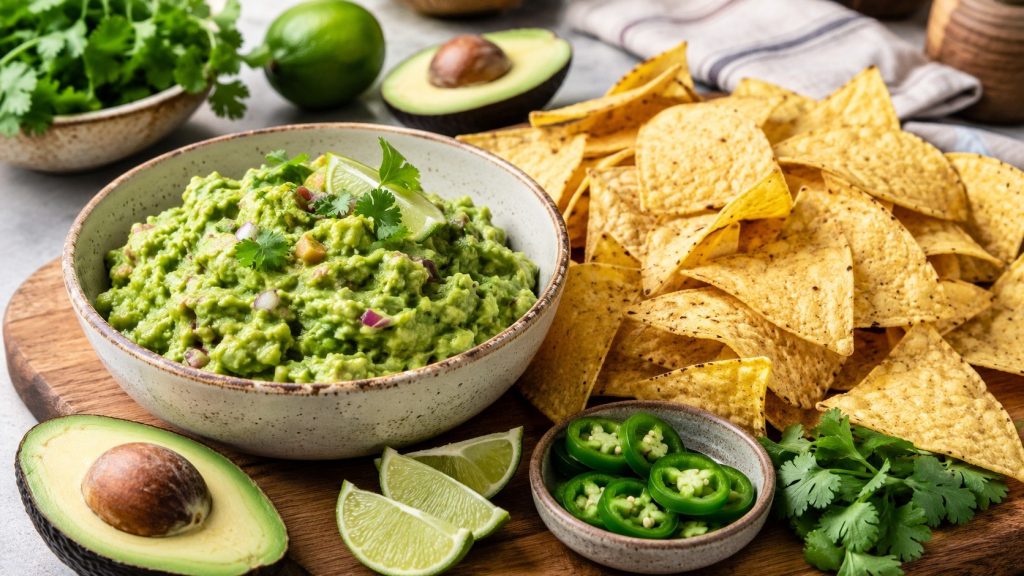
Avocado darkens after its flesh comes into contact with oxygen. The most effective solution is limiting air exposure.
Transfer leftover guacamole into a small container. Smooth the top with a spoon, then press food-safe wrap directly against the surface.
Remove visible air pockets before closing the lid. Store the container in the refrigerator and use it by the next day.
A thin brown layer does not always mean the entire batch is spoiled. Remove the surface and inspect the guacamole underneath.
Do not rely on the avocado pit as a preservation method. It protects only the small area it physically covers.
Extra lime can slow discoloration slightly. However, excessive juice damages the flavor and texture.
Discard guacamole that has mold, unusual bubbles, a fermented smell, or a slimy consistency.
Original Guacamole Variations
The basic recipe can be adjusted for different nacho toppings. Keep every addition restrained so the avocado remains recognizable.
For smoky beef nachos, add ½ teaspoon of chipotle in adobo. Smoked paprika offers a milder alternative.
For chicken nachos, fold in 2 tablespoons of finely diced mango. The fruit’s sweetness works well with lime and grilled meat.
A party menu can also include homemade KFC-style chicken with a crispy peppery crust. Serve it separately with guacamole, lime wedges, and fresh jalapeños.
Guests can place small chicken pieces on individual nachos. This prevents the full platter from becoming heavy or soggy.
For vegetarian nachos, add charred corn and extra cilantro. Roasted pumpkin seeds can provide crunch when sprinkled on top.
A tomato-free version delivers the strongest avocado flavor. Combine avocado, onion, lime, chili, cilantro, and salt.
For a cilantro-free version, simply omit the herb. Parsley is not a direct replacement because its flavor changes the recipe noticeably.
Frequently Asked Questions
How many avocados are needed for 4 people?
Use 2–3 medium avocados. Choose 3 when guacamole is the main dip or the nachos contain few other toppings.
Can guacamole be prepared in advance?
Yes, but prepare it only several hours ahead. Cover the surface directly and keep the container refrigerated.
Why does homemade guacamole become watery?
Watery tomato, excessive lime juice, or aggressive mixing can loosen the dip. Remove tomato seeds and add liquids gradually.
Can lemon replace lime in guacamole?
Lemon works when lime is unavailable. Its flavor is softer, so begin with a smaller quantity and adjust after tasting.
Is a blender suitable for guacamole?
A blender usually makes guacamole too smooth. A fork, potato masher, or mortar provides greater control.
What onion is best for guacamole?
White onion gives a sharp, clean flavor. Red onion is stronger, while sweet onion creates a milder result.
How much guacamole should be served per person?
Allow about 80–100 grams per person. Increase the amount when guacamole is the main topping or dip.
What can be served with guacamole besides nachos?
Serve it with vegetable sticks, fries, grilled chicken, tacos, quesadillas, salads, or toasted flatbread.
Earlier we wrote about How to Make Natural Potato Chips at Home: A Crispy Recipe and the Best Seasonings