 Frank Rondel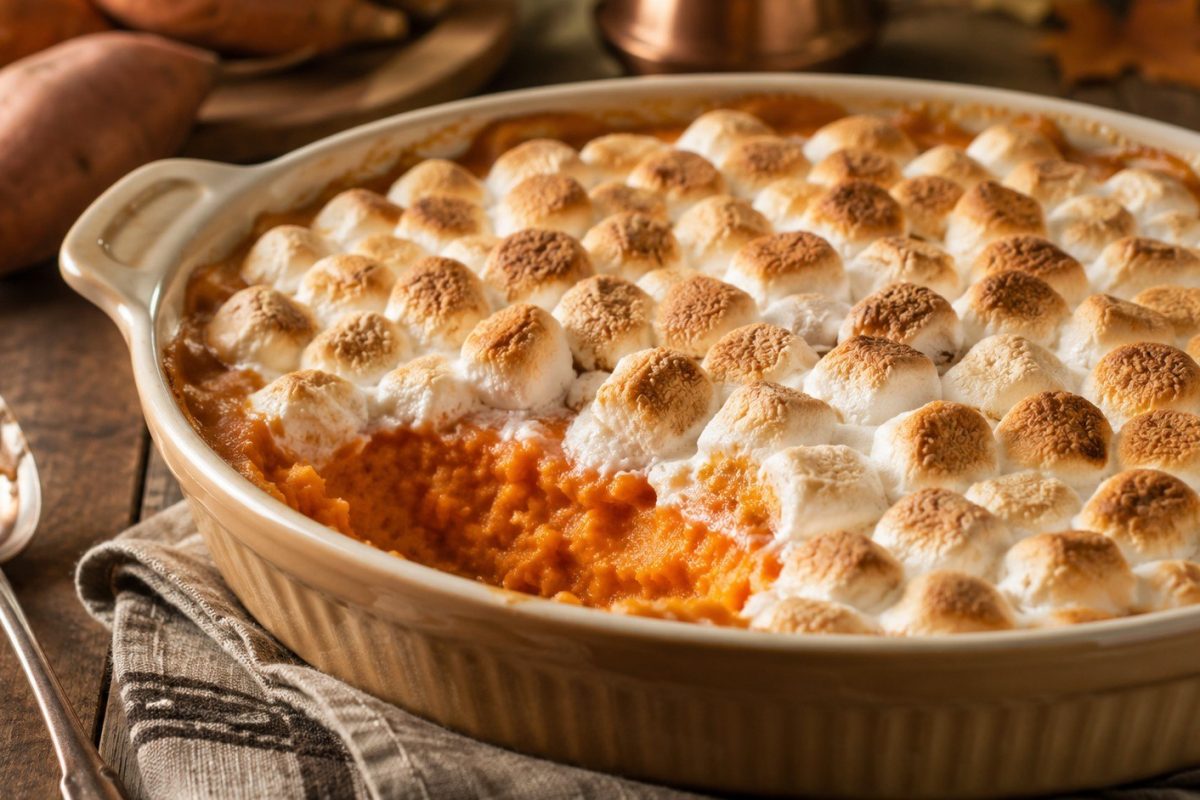
Sweet potatoes with marshmallows are one of the most familiar American holiday sides: soft baked sweet potatoes, warm spices, butter, brown sugar, and a toasted marshmallow crown that turns crisp at the edges. The dish works because it balances earthy sweetness with fat, salt, heat, and texture, not because it is simply sweet, as the customreceipt.com editorial team notes.
The classic version is often served for Thanksgiving, Christmas, church suppers, and Sunday family dinners. It can be made as a mashed casserole, a sliced bake, or a quicker skillet-style dish. The best result is not watery, grainy, or candy-like. It should taste like roasted sweet potato first, with marshmallow acting as a glossy finish rather than the whole point.
What Makes Sweet Potatoes With Marshmallows Work
The base matters more than the topping. Sweet potatoes contain natural sugars, moisture, starch, and fiber, so they turn creamy when baked slowly. The USDA’s SNAP-Ed produce guide lists 1 medium sweet potato, about 130 g, at roughly 112 calories, with vitamin A, potassium, and fiber among its notable nutrients. You can check the official produce profile at USDA SNAP-Ed sweet potatoes and yams.
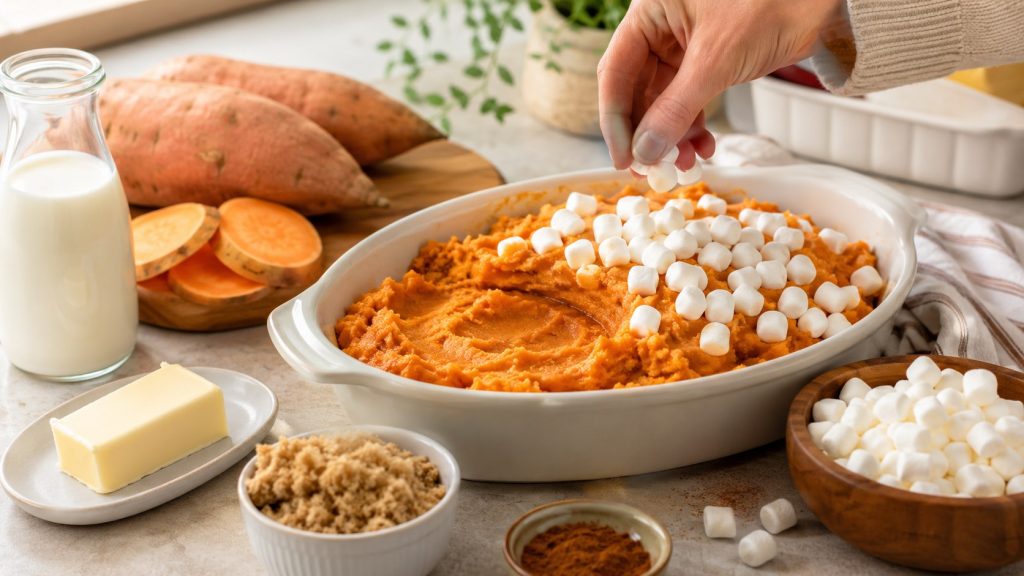
The marshmallow layer needs restraint. Too many marshmallows melt into syrup, then harden into a sticky shell. A moderate layer gives contrast: soft orange filling below, browned sugar foam above.
For a lighter breakfast-style recipe built around texture and portions, see this healthy avocado toast recipe. The same idea applies here: the dish improves when fat, salt, acidity, and texture are controlled.
The goal is not to make dessert in a casserole dish. The goal is to make a savory-sweet side that can stand beside turkey, ham, roasted chicken, or greens.
Ingredients for a Classic Sweet Potato Casserole
This recipe serves 6 to 8 people as a side dish. Use orange-fleshed sweet potatoes for the familiar creamy texture and bright color. Jewel, Garnet, or Beauregard varieties usually work well in U.S. supermarkets.
- 3 lb sweet potatoes, peeled and cut into 2-inch chunks
- 4 tablespoons unsalted butter, melted
- ⅓ cup brown sugar
- ¼ cup whole milk, evaporated milk, or cream
- 1 teaspoon vanilla extract
- ¾ teaspoon ground cinnamon
- ¼ teaspoon ground nutmeg
- ½ teaspoon fine salt
- 2 large eggs, lightly beaten
- 2 cups mini marshmallows
- ½ cup chopped pecans, optional
- 1 teaspoon orange zest, optional
Use butter for flavor, not only richness. Milk loosens the mash, while eggs help the filling set. Salt is essential because it prevents the dish from tasting flat.
For readers building a full comfort-food menu, this homemade Sloppy Joe recipe explains how browning and sauce reduction change flavor. Those same kitchen principles matter when sweet potatoes are roasted before mixing.
Best Method: Bake the Sweet Potatoes Before Mashing
Boiling is faster, but baking gives deeper flavor. Water can dilute the flesh, especially when the potatoes are cut small. Baking keeps the flavor concentrated and produces a denser mash.
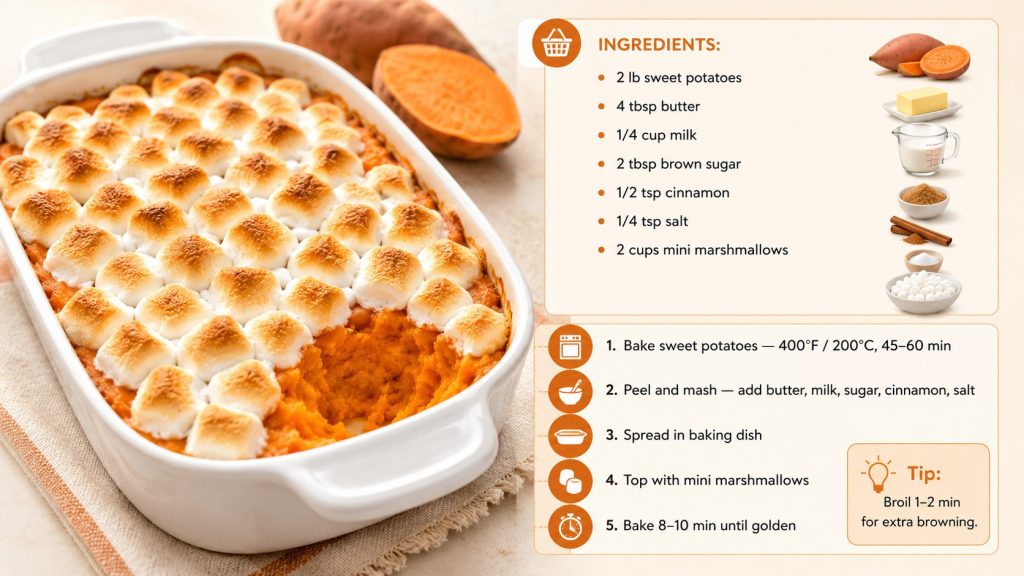
Heat the oven to 400°F. Pierce the sweet potatoes with a fork, place them on a lined baking sheet, and bake for 45 to 60 minutes. They are ready when a knife slides through the center without resistance.
Let them cool for 10 minutes, then remove the skins. Mash the flesh in a large bowl with butter, brown sugar, milk, vanilla, cinnamon, nutmeg, and salt. Taste before adding the eggs. Once the flavor is balanced, stir in the beaten eggs quickly.
Spread the mixture into a buttered 9-by-13-inch baking dish. Bake at 350°F for 25 minutes. Add marshmallows and optional pecans, then bake for 8 to 12 minutes more. Watch closely during the final minutes because marshmallows can move from golden to burned quickly.
Sweet potato casserole with marshmallows should rest for 10 minutes before serving. This pause lets the filling firm up and prevents molten sugar from burning the mouth.
Timing, Temperature, and Texture Guide
The dish is simple, but timing decides whether it tastes polished or heavy. Use the guide below for a controlled result.
| Stage | Temperature | Time | What to look for |
|---|---|---|---|
| Bake whole sweet potatoes | 400°F | 45–60 min | Very soft centers |
| Bake mashed filling | 350°F | 25 min | Set edges, hot center |
| Add marshmallows | 350°F | 8–12 min | Puffy, golden tops |
| Optional broiler finish | High | 30–90 sec | Darker toasted spots |
| Rest before serving | Room temperature | 10 min | Cleaner spoonfuls |
Do not broil and walk away. Marshmallows contain sugar and gelatin, so they brown fast under direct heat. Keep the oven door slightly open and watch the surface.
A glass baking dish may brown more slowly than metal. Ceramic dishes hold heat well but can extend cooking time. If the center looks loose, give it another 5 minutes before adding the topping.
The texture should be spoonable, not runny. If the mash seems wet before baking, add 2 tablespoons of crushed graham crackers, fine breadcrumbs, or ground oats. Use this only when necessary.
How to Avoid a Watery Sweet Potato Casserole
A watery casserole usually comes from boiled potatoes, excess milk, or underbaking. Sweet potatoes vary in moisture, so the liquid should be added gradually. Start with 2 tablespoons of milk, then add more only after mashing.
Another mistake is covering the dish during baking. Steam becomes trapped and softens the topping. Bake uncovered unless the surface is browning before the center heats through.
These checks help prevent common failures:
- Use baked sweet potatoes when possible
- Drain boiled potatoes thoroughly if boiling is unavoidable
- Add milk slowly, not all at once
- Mash while warm, but not boiling hot
- Bake the filling before adding marshmallows
- Rest the dish before serving
- Avoid overloading the top with marshmallows
After applying these rules, the dish becomes easier to control. The marshmallows stay on top instead of dissolving into the filling. The sweet potato layer keeps its shape on the spoon. The flavor also becomes cleaner because excess water no longer dulls the spice and butter.
For another potato-based technique, this homemade hash browns guide shows why moisture control is critical. Crisp potatoes and creamy casseroles have the same enemy: uncontrolled water.
Flavor Variations: Southern, Less Sweet, and Nut-Free
A Southern-style version usually leans richer. Add 2 extra tablespoons of butter, use evaporated milk, and include pecans. Some cooks also add a splash of bourbon, but it should be subtle. Too much alcohol makes the casserole taste harsh.
For a less sweet version, reduce brown sugar to 2 tablespoons and use only 1½ cups of mini marshmallows. Add black pepper and a small pinch of cayenne. The heat will not make the dish spicy, but it will sharpen the sweetness.
A nut-free version is easy. Skip pecans and add crushed cornflakes, toasted oats, or nothing at all. The marshmallows already provide texture.
Orange zest is a quiet upgrade. It cuts through butter and sugar, especially when the casserole is served beside salty meat or gravy.
Make-Ahead Instructions and Storage
You can prepare the sweet potato base 1 day ahead. Spread the mash in the baking dish, cover it tightly, and refrigerate. Do not add marshmallows until the final bake. They can absorb moisture and lose their shape.
When baking from cold, add 10 to 15 minutes before topping. The center must be hot before the marshmallows go on. If the topping is added too early, it may brown while the filling remains lukewarm.
The USDA Food Safety and Inspection Service says leftovers should be refrigerated within 2 hours after cooking or removal from a warming appliance. Its guidance also warns that bacteria grow quickly between 40°F and 140°F. See the official USDA leftovers and food safety guidance.
Store leftovers in shallow containers. Eat refrigerated portions within 3 to 4 days. Reheat in a 325°F oven until hot, or microwave individual servings in short intervals. The FDA also advises refrigerating perishable foods within 2 hours, or within 1 hour when temperatures are above 90°F, in its safe food handling guidance.
What to Serve With Sweet Potatoes and Marshmallows
How to cook sweet potatoes with marshmallows becomes easier when the rest of the meal is planned around contrast. Pair the casserole with salty, acidic, crisp, or bitter foods. Otherwise, the plate can feel too soft and too sweet.
Good pairings include:
- Roast turkey with pan gravy
- Baked ham with mustard glaze
- Green beans with lemon and almonds
- Collard greens or kale with vinegar
- Cranberry sauce with orange zest
- Roast chicken with herbs
- Brussels sprouts with balsamic reduction
- Cornbread, but not an overly sweet version
After serving, taste the whole plate, not the casserole alone. A side dish can seem sweet on its own yet work well beside salty meat and acidic cranberry sauce. That is why Thanksgiving menus often combine sugar, fat, salt, and vinegar. The balance happens across the plate.
Common Mistakes That Ruin the Dish
The first mistake is treating marshmallows as the main ingredient. They are a topping, not the structure. When the layer is too thick, it melts unevenly and hides the sweet potato flavor.
The second mistake is skipping salt. Sweet ingredients need salt to taste complete. Even ½ teaspoon can make the butter, spice, and potato taste more defined.
The third mistake is using canned yams without adjusting sugar. Many canned products are packed in syrup. If using them, drain well, reduce brown sugar, and taste carefully before baking.
The fourth mistake is adding eggs to very hot mash. The eggs can scramble and create small firm bits. Let the mixture cool slightly first, then stir quickly.
FAQ
Can I use canned sweet potatoes?
Yes, but drain them very well. Reduce brown sugar because canned sweet potatoes are often packed in syrup. Bake the filling long enough to remove excess moisture.
Should marshmallows go on before or after baking?
Add marshmallows near the end. Bake the filling first, then add the topping for the final 8 to 12 minutes. This keeps the top golden, not melted away.
Can I make sweet potatoes with marshmallows without eggs?
Yes. The dish will be softer but still usable. Reduce milk slightly and bake until the center is hot and stable.
Are yams and sweet potatoes the same?
In many U.S. grocery stores, “yams” often means orange-fleshed sweet potatoes. True yams are different starchy tubers and are less common in ordinary supermarkets.
How do I make the casserole less sweet?
Use 2 tablespoons of brown sugar, reduce marshmallows to 1½ cups, and add orange zest. A small pinch of cayenne also balances sweetness.
Can I freeze sweet potato casserole?
Freeze the baked filling without marshmallows. Add fresh marshmallows after thawing and reheating. The topping does not freeze well.
How long can leftovers stay out?
Follow the 2-hour rule for cooked leftovers. Refrigerate promptly in shallow containers, especially after holiday meals where food sits on the counter.
Earlier we wrote about Cranberry Sauce Recipe Gains New Life Beyond Thanksgiving With Cheese, Pork and Breakfast Pairings