 Frank Rondel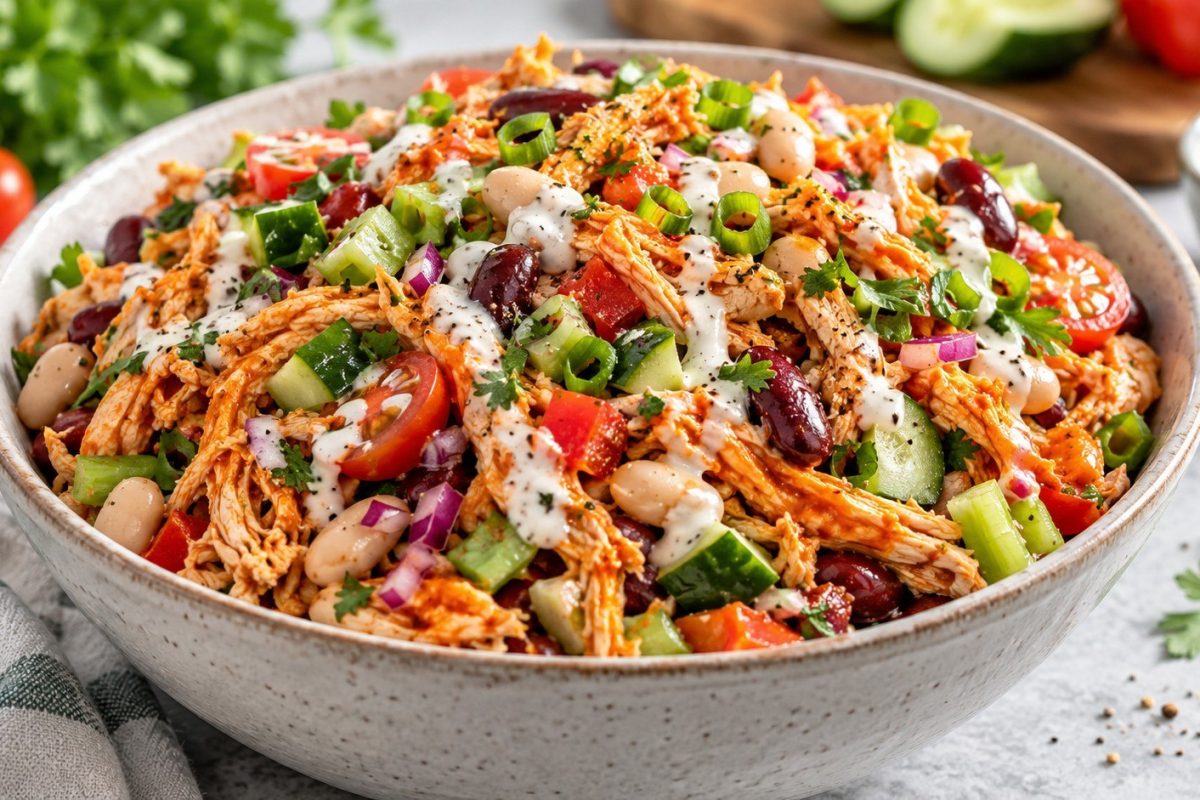
Buffalo Chicken Dense Bean Salad combines tender spicy chicken, 2 kinds of beans, crisp vegetables, cheese, and creamy Buffalo dressing. It works as lunch, dinner, or meal prep because the ingredients remain substantial after chilling. Unlike leafy salads, the beans carry sauce without collapsing after several hours in the refrigerator, as the customreceipt.com editorial team notes.
The basic formula is flexible, but balance matters. Buffalo sauce supplies vinegar, chile heat, and salt. Beans soften that intensity, while radishes, peppers, onion, and corn provide crunch and sweetness. A small amount of mayonnaise turns the dressing creamy without burying the vegetables.
The best version tastes spicy and creamy, but every spoonful should still contain recognizable beans, vegetables, and chicken.
What You Need for Buffalo Chicken Dense Bean Salad
This dense bean salad recipe makes about 5 generous servings. Boneless chicken thighs are particularly useful because they tolerate grilling better than very lean breast meat. Chicken breast also works when carefully cooked.
For the salad and Buffalo chicken, prepare:
- 1.5 lb boneless, skinless chicken thighs;
- 1 cup Buffalo sauce, divided;
- 2 cans beans, about 15 oz each;
- 1 can chickpeas and 1 can cannellini beans work well;
- 2 bell peppers, finely diced;
- 4–5 radishes, diced;
- 1 small red onion, finely chopped;
- 2 celery stalks, diced;
- 1 cup corn kernels;
- 4 oz pepper jack cheese, cubed;
- 1/3 cup chopped cilantro or parsley;
- 1 lemon;
- 2 garlic cloves;
- 1 tsp smoked paprika;
- 1 tbsp honey;
- 1 tbsp avocado or olive oil;
- salt and black pepper.
Rinse canned beans thoroughly and let them drain before mixing. Extra liquid weakens the dressing and makes the finished salad watery. Cannellini beans bring a soft, creamy texture, while chickpeas remain firmer after refrigeration. Navy or Great Northern beans can replace cannellini beans without changing the method.
For another meal built around quickly cooked protein, the Chicken Gyro Smash Tacos recipe offers a different chicken preparation. The Tuscan Salmon recipe also shows how acidity balances a rich sauce.
Pepper jack adds fat, salt, and mild heat. Blue cheese provides a more traditional Buffalo-wing flavor but can dominate beans quickly. Feta is sharper and drier, while cheddar produces a familiar American flavor.
Creamy Buffalo Dressing That Stays Balanced
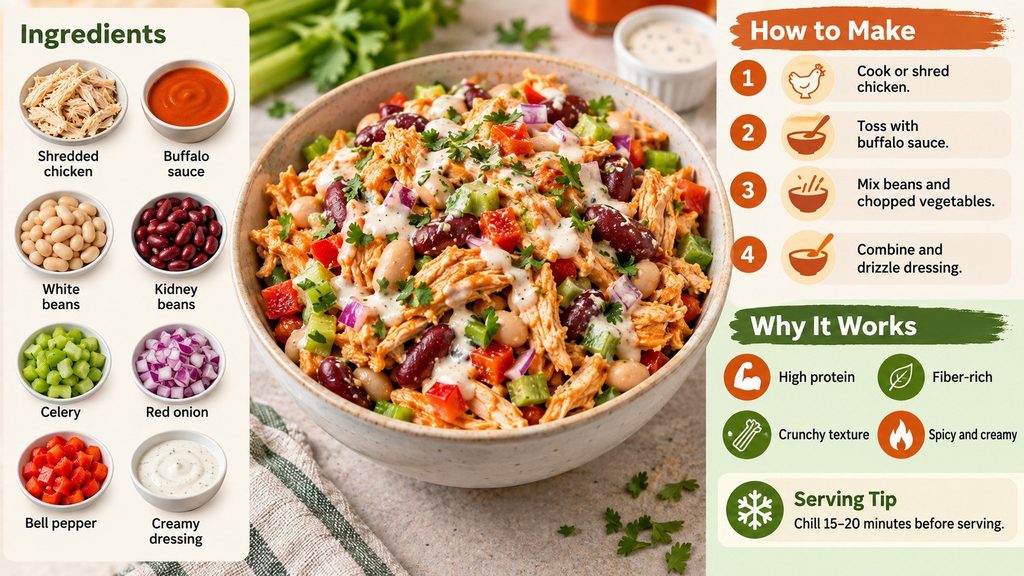
The dressing determines whether this becomes a coherent salad or simply chicken mixed with canned beans. Buffalo sauce alone is too sharp for a large chilled batch. Mayonnaise softens its acidity, while lemon keeps the finished mixture fresh notes renewz.de.
Use these proportions for a moderately creamy dressing:
| Ingredient | Amount | Purpose |
|---|---|---|
| Buffalo sauce | 1/3 cup | Heat and vinegar |
| Mayonnaise | 3 tbsp | Creaminess |
| Greek yogurt | 2 tbsp | Body and tang |
| Lemon juice | 1 tbsp | Fresh acidity |
| Honey | 1–2 tsp | Balances heat |
| Olive or avocado oil | 1 tbsp | Smooth texture |
| Smoked paprika | 1/2 tsp | Mild smoky flavor |
| Garlic | 1 small clove | Savory depth |
Whisk everything until completely smooth. Taste the dressing before adding extra salt because Buffalo sauce already contains considerable seasoning. If it feels aggressively acidic, add another teaspoon of yogurt rather than more oil. For stronger heat, add Buffalo sauce 1 tablespoon at a time.
Greek yogurt makes the sauce lighter on the palate but also increases tanginess. Mayonnaise produces a rounder texture and coats beans more evenly. Using both creates a practical middle ground.
A similar use of Greek yogurt for structure appears in these Greek Yogurt Protein Bagels. Here, however, yogurt remains uncooked and works primarily as part of the emulsion.
The dressing should cling to a chickpea in a thin layer rather than collect as liquid underneath the salad.
How to Cook the Buffalo Chicken
For Buffalo chicken salad, thighs can be grilled, pan-seared, or roasted. Grilling adds char, but a heavy skillet produces excellent results without outdoor equipment.
Mix 2/3 cup Buffalo sauce with lemon juice, garlic, paprika, honey, and oil. Coat the chicken and refrigerate it for 30 minutes to 4 hours. Longer marinating is unnecessary for thin boneless pieces.
Then cook the chicken in this order:
- Remove excess marinade from the chicken before cooking.
- Heat a grill or skillet over medium-high heat.
- Cook the chicken until browned on the first side.
- Turn it and continue cooking through the thickest section.
- Confirm the internal temperature with a food thermometer.
- Rest the chicken for 5 minutes before chopping.
- Toss the warm pieces with 2 tablespoons of fresh Buffalo sauce.
The USDA Food Safety and Inspection Service sets 165°F, or 73.9°C, as the safe minimum internal temperature for poultry. A thermometer is more reliable than color because properly cooked chicken can sometimes remain slightly pink.
“All poultry should reach a safe minimum internal temperature of 165°F.”
U.S. Department of Agriculture, Food Safety and Inspection Service, poultry cooking guidance.
Resting the chicken matters for texture. Immediate chopping releases more moisture onto the cutting board. Smaller pieces work better than long strips because they distribute evenly among the beans. About 1/2-inch pieces produce chicken in almost every serving.
Do not pour used raw-chicken marinade over the finished salad. Any sauce added after cooking should come from a clean portion kept separate from raw poultry.
How to Assemble the Salad Without Making It Soggy
A successful Buffalo chicken bean salad depends on moisture control. Wet beans, freshly washed vegetables, and hot chicken can collectively thin even a well-balanced dressing.
Drain the beans first. Dry washed peppers, celery, herbs, and radishes before chopping them. Let the cooked chicken rest until warm rather than steaming hot.
Add ingredients in this order:
- chickpeas and white beans;
- bell peppers, celery, radishes, and onion;
- corn and chopped herbs;
- cubed pepper jack;
- chopped Buffalo chicken;
- about 3/4 of the creamy dressing.
Toss gently with a large spoon. Beans can split when aggressively stirred, especially soft cannellini varieties. Add the remaining dressing only when the mixture looks dry.
Let the assembled salad rest for 20–30 minutes before serving. That interval allows the beans to absorb some acidity and seasoning. Chilling it longer creates an even more integrated flavor.
Fresh celery is particularly useful here. Buffalo chicken is rich and spicy, while celery brings water, crunch, and a mildly bitter edge. Radish performs a similar job with more peppery character. Corn adds sweetness, so it works best when the dressing is noticeably tangy.
The salad does not need lettuce. In fact, lettuce shortens its useful refrigerator life because dressed leaves soften quickly.
Why Beans Work Better Than Lettuce for Meal Prep
The idea behind a high protein bean salad is density rather than sheer volume. Beans provide physical structure and make a small bowl more substantial than conventional greens.
Chickpeas are firm and slightly nutty. Cannellini beans are softer and absorb dressing readily. Combining them prevents the texture from becoming monotonous.
Beans also contribute plant protein and dietary fiber. Chicken adds another concentrated protein source. Exact nutrition depends on brands, serving sizes, chicken cut, cheese, and dressing quantities.
A practical serving guide looks like this:
| Portion component | Approximate amount | Texture contribution |
|---|---|---|
| Mixed beans | 3/4–1 cup | Creamy and firm |
| Buffalo chicken | 4–5 oz | Tender and savory |
| Vegetables | 3/4 cup | Crisp and fresh |
| Cheese | 0.5–1 oz | Rich and salty |
| Dressing | 2–3 tbsp | Creamy and spicy |
These amounts are guidelines rather than nutritional claims. Someone wanting a stronger bean flavor can reduce chicken. A chicken-forward version can use fewer beans while keeping the same vegetables.
Texture improves when ingredients are cut to similar dimensions. Huge chicken chunks make serving awkward, while finely minced vegetables disappear into the dressing. Pieces around bean size create the most consistent bite.
The recipe can also become a wrap filling. Use slightly less dressing when placing it inside tortillas. A wetter mixture is better served directly from a bowl.
Variations That Keep the Buffalo Flavor Intact
The easiest way to adapt Buffalo Chicken Dense Bean Salad meal prep is to change supporting ingredients rather than the entire flavor profile. Buffalo sauce, chicken, beans, and a creamy acidic dressing should remain recognizable.
Useful variations include:
- replace pepper jack with crumbled blue cheese;
- use grilled corn for sweeter, smoky notes;
- add shredded carrots for classic wing-side flavors;
- replace cilantro with parsley or chives;
- use rotisserie chicken for faster preparation;
- substitute Greek yogurt for part of the mayonnaise;
- add diced cucumber immediately before serving.
Each substitution changes moisture or salt levels. Rotisserie chicken, for example, may already contain substantial seasoning. Blue cheese is saltier and more assertive than pepper jack.
Cucumber tastes fresh but releases water during storage. Keep it separate when preparing several days of lunches. The same approach works with avocado, which is best added shortly before eating.
For extra heat, chopped pickled jalapeños work better than simply flooding the salad with additional Buffalo sauce. They increase chile flavor without dramatically thinning the dressing. A small amount of their brine can also sharpen a bland batch.
Fresh herbs should remain supporting ingredients. Too much cilantro or parsley can obscure the Buffalo profile that distinguishes this recipe.
Storage and Meal-Prep Safety
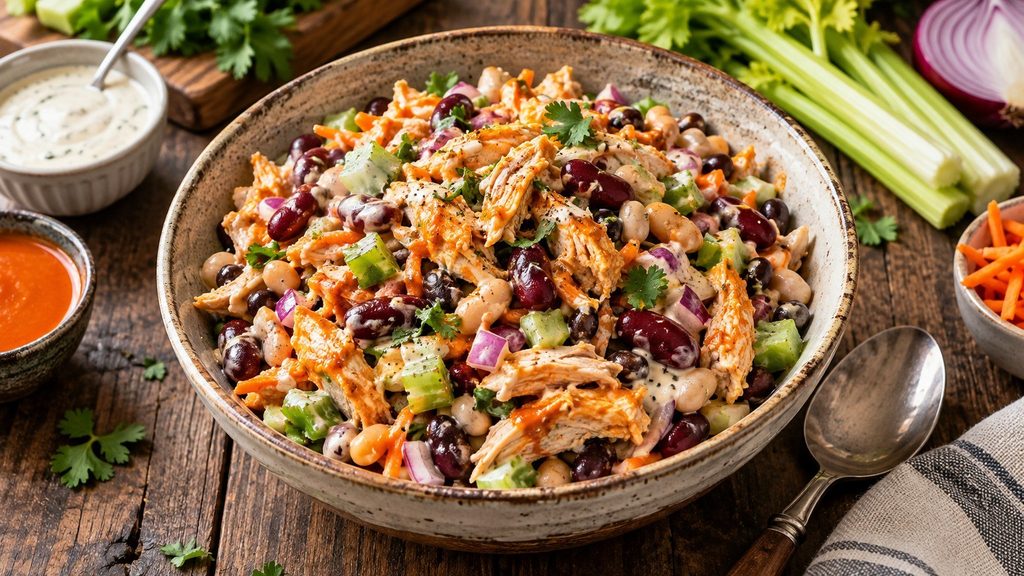
This Buffalo chicken meal prep works because most components tolerate refrigeration well. The main limitations come from cooked poultry and dairy-based dressing.
Store the salad in sealed, shallow containers at 40°F or below. The USDA recommends refrigerating cooked foods promptly and using most cooked leftovers within 3–4 days. Its food-safety guidance also advises limiting room-temperature exposure.
“Use most cooked leftovers within 3 to 4 days.”
U.S. Department of Agriculture, Food Safety and Inspection Service, leftover storage guidance.
Portioning the recipe immediately is convenient for work lunches. It also prevents the entire container from repeatedly warming during serving. Keep extra dressing separately when a wetter salad is preferred.
The flavor usually becomes more cohesive after several refrigerated hours. Onion becomes less harsh, beans absorb seasoning, and Buffalo sauce spreads through the mixture.
Do not rely only on smell to judge questionable leftovers. Temperature control and storage time remain more dependable safety measures.
FAQ
Is Buffalo Chicken Dense Bean Salad served hot or cold?
It is usually served chilled or at cool room temperature. The chicken can be slightly warm when the salad is first assembled.
What beans are best for Buffalo chicken salad?
Chickpeas and cannellini beans offer the best contrast. Chickpeas stay firm, while cannellini beans absorb the creamy dressing.
Can chicken breast replace chicken thighs?
Yes. Chicken breast is leaner and works well when cooked to 165°F without prolonged heating.
Can this recipe be prepared without mayonnaise?
Yes. Thick Greek yogurt can replace mayonnaise, although the dressing becomes tangier and slightly less rich.
How long does Buffalo Chicken Dense Bean Salad last?
USDA guidance supports using cooked leftovers within 3–4 refrigerated days. Store the salad promptly in sealed containers.
Can canned chicken be used?
Yes, when convenience is the priority. Drain it thoroughly and adjust added salt because canned products vary considerably.
Earlier we wrote about Dense Bean Salad Becomes a Meal-Prep Staple: How to Make It With 2 Beans, Feta and Chicken