 Frank Rondel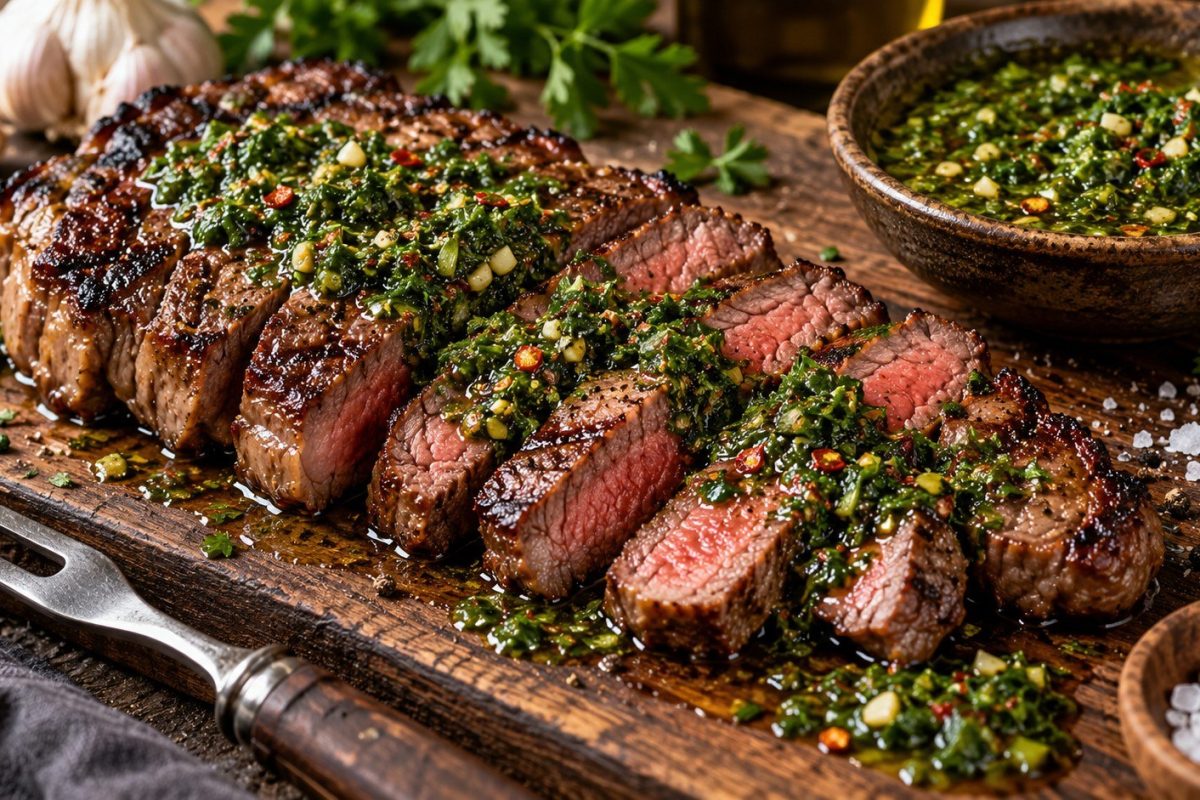
Chimichurri Steak combines deeply browned beef with a sharp herb sauce built from parsley, garlic, vinegar, olive oil, and chile. The dish needs no complicated marinade or restaurant equipment, but the balance matters. Too much oil makes the sauce heavy, while overprocessing the herbs removes its fresh texture. The steak also needs enough heat to develop a crust without drying inside. That contrast between hot beef and cool, acidic chimichurri explains why the pairing remains so effective, as customreceipt.com notes.
A useful home version takes about 35–45 minutes, including preparation and resting. Ribeye gives the richest result, while sirloin offers a leaner and usually cheaper alternative. Skirt and flank steak also work well when sliced thinly across the grain.
The central idea is simple: cook the beef with restraint, then let fresh herbs, vinegar, and garlic supply the sharper flavors.
What makes a good chimichurri steak
Traditional-style chimichurri does not need sugar, cream, mayonnaise, or a thickener. Its character comes from chopped herbs suspended in oil and vinegar. Fresh parsley forms the base, while oregano adds a dry, aromatic edge. Garlic provides heat, and red wine vinegar cuts through the fat in the meat.
The sauce should remain loose enough to spoon over sliced steak. It should not resemble pesto. A food processor can work, but short pulses are better than continuous blending.
For cooks who enjoy documenting recipes, ingredient costs, or meal expenses, tools such as the custom receipt generator can also help organize kitchen records. This becomes useful when comparing steak cuts or calculating portions for larger dinners.
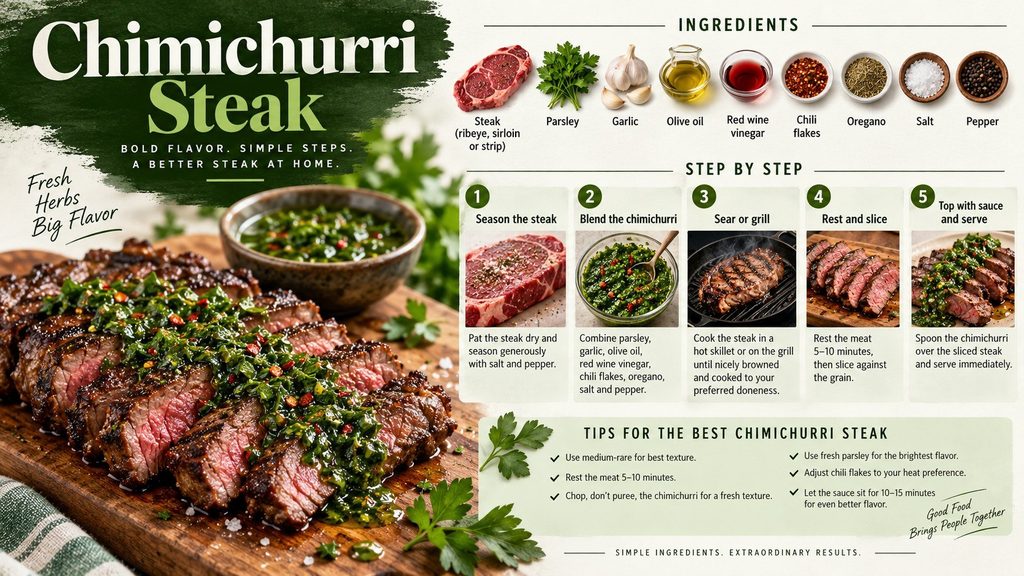
A balanced chimichurri sauce recipe for 4 servings uses:
- 1 packed cup flat-leaf parsley, finely chopped;
- 2 tablespoons fresh oregano leaves, finely chopped;
- 3 garlic cloves, minced;
- 3 tablespoons red wine vinegar;
- 1/2 teaspoon red pepper flakes;
- 1/2 teaspoon kosher salt;
- 1/4 teaspoon black pepper;
- 1/2 cup extra-virgin olive oil.
Combine the parsley, oregano, garlic, vinegar, pepper flakes, salt, and black pepper first. Add the olive oil afterward and stir rather than whisking aggressively. This keeps the mixture textured instead of turning it into an emulsion. Let the sauce stand for 15–30 minutes before serving so the garlic and vinegar can season the oil. Taste it again before it reaches the steak. A flat-tasting chimichurri usually needs either more salt or another small splash of vinegar.
Choosing the right steak
There is no single mandatory cut for steak with chimichurri. What matters more is thickness, marbling, and how the meat will be sliced. A steak around 1–1.5 inches thick is easier to brown without overcooking than a very thin piece.
Ribeye carries enough fat to withstand intense heat. New York strip offers a firmer bite and strong beef flavor. Sirloin is less fatty but works especially well because chimichurri supplies richness from olive oil. Skirt and flank have pronounced grain, so cutting technique becomes critical.
The differences are practical rather than decorative:
| Steak cut | Texture | Fat level | Best cooking method | Serving note |
|---|---|---|---|---|
| Ribeye | Tender, rich | High | Pan or grill | Serve in thicker slices |
| New York strip | Firm, tender | Medium-high | Pan or grill | Slice across the grain |
| Sirloin | Leaner, meaty | Medium | Pan or grill | Good everyday option |
| Skirt steak | Loose, fibrous | Medium | Very hot grill or pan | Slice thinly |
| Flank steak | Firm, pronounced grain | Low-medium | Grill | Rest well before slicing |
A fattier steak needs less oil in the pan because some fat renders during cooking. Lean sirloin benefits from a thin film of neutral high-heat oil. Skirt steak cooks quickly because it is comparatively thin. Flank steak can become chewy when sliced parallel to the muscle fibers. Ribeye and strip are more forgiving, although excessive heat can still burn their exterior before the center reaches the desired temperature. Whatever the cut, drying its surface before cooking improves browning.
For anyone tracking food purchases or restaurant-style menu costs, a receipt-making tool for expense records provides a simple way to keep those figures organized.
“Cook all food to these minimum internal temperatures, as measured with a food thermometer, before removing food from the heat source.”
This guidance comes from the U.S. Department of Agriculture Food Safety and Inspection Service in its official safe temperature chart. The agency lists 145°F, or 62.8°C, with a 3-minute rest as the minimum safe temperature for whole beef steaks, chops, and roasts.
How to cook chimichurri steak in a skillet
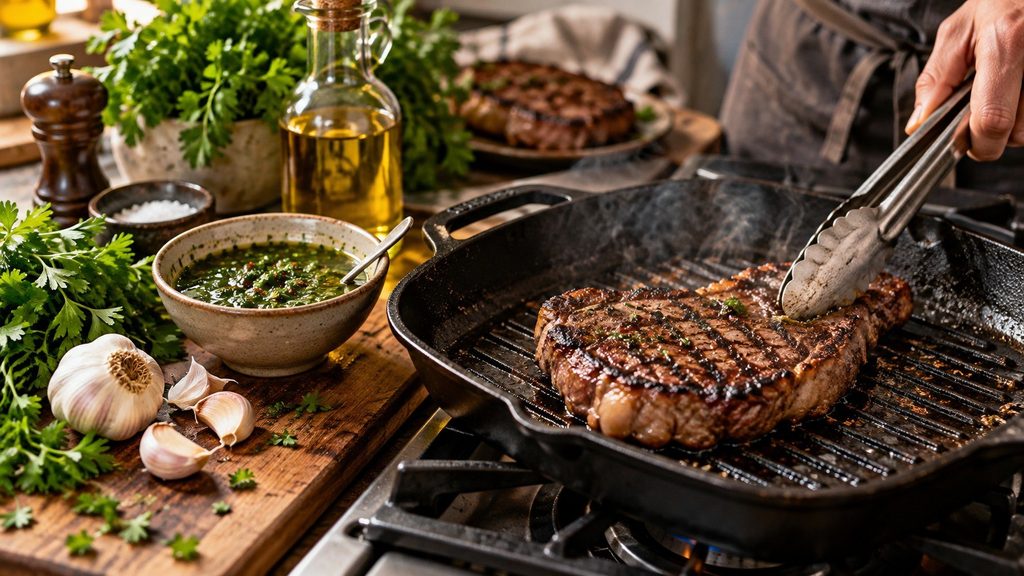
A heavy cast-iron or stainless-steel pan gives the most reliable crust indoors. The steak should be dry before it touches the metal. Surface moisture must evaporate before browning can begin.
The following how to cook chimichurri steak method suits steaks about 1–1.5 inches thick:
- Remove excess surface moisture with paper towels.
- Season both sides with salt and freshly ground black pepper.
- Heat a heavy skillet until thoroughly hot.
- Add a thin layer of high-heat cooking oil.
- Place the steak in the pan without moving it immediately.
- Turn once a dark crust develops, then cook the second side.
- Check the center with an instant-read thermometer.
- Transfer the steak to a clean board and rest before slicing.
- Slice across the grain and spoon chimichurri over the meat.
Cooking time cannot be reduced to one fixed number because thickness, starting temperature, pan material, and burner output differ. A thermometer gives more useful information than a stopwatch. Avoid repeatedly piercing the steak with a fork while it cooks. Tongs make turning easier without tearing the surface. The resting period also gives the temperature time to equalize through the meat. Add chimichurri after slicing rather than frying the sauce in the steak pan, since prolonged heat dulls the herbs.
For the cleanest flavor, keep the beef seasoning minimal. Chimichurri already brings salt, acidity, garlic, chile, herbs, and olive oil to the plate.
How to grill steak with chimichurri
Grilling adds smoke and char that a skillet cannot fully reproduce. Start with clean grates and strong direct heat. Oil the steak lightly instead of pouring large amounts of oil over the grill.
A good grilled chimichurri steak depends on several small details:
- keep one cooler section of the grill available for thicker steaks;
- avoid coating the meat in wet chimichurri before high-heat cooking;
- use a thermometer rather than judging doneness only by color;
- rest the meat on a clean board;
- slice skirt and flank steak sharply across the visible grain.
The cooler grill zone provides control if the exterior darkens too quickly. Wet herb sauce can drip into flames and burn before the beef finishes cooking. Checking internal temperature at the thickest point reduces guesswork. A clean board prevents cooked meat from contacting raw juices. Cutting against the grain shortens the muscle fibers and makes firmer cuts easier to chew. Spoon the sauce over the steak only when the meat is ready to serve.
Why chimichurri should not become a marinade by default
It is tempting to pour the entire sauce over raw beef several hours before cooking. That approach changes both the meat and the chimichurri. Vinegar begins affecting the steak surface, while herbs and garlic can scorch over intense heat.
A better system separates the sauce into 2 portions. One portion remains untouched for serving. The other may be used briefly on raw meat if a marinade is wanted, but it must never return to the serving bowl afterward.
For a classic Argentinian chimichurri steak, chimichurri works particularly well as a condiment because it preserves contrast. The steak stays browned and savory. The sauce remains cool, herbal, acidic, and slightly spicy.
USDA food-safety guidance recommends keeping raw meat separate from other foods and refrigerating perishable foods promptly.
The full handling guidance appears in the USDA FSIS resource on keeping food safe. It also states that most cooked leftovers should be used within 3–4 days when properly refrigerated.
Common mistakes that weaken the dish
The first mistake is blending chimichurri until completely smooth. Finely chopped herbs release enough flavor without becoming a puree. The second is using weak heat and allowing the steak to steam in its own moisture.
Another problem is slicing the beef immediately after cooking. A short rest improves the final texture and makes carving cleaner. Cutting direction matters particularly with flank and skirt steak.
Garlic also needs restraint. Adding more does not automatically produce a better sauce. Raw garlic becomes increasingly dominant as chimichurri rests, so 2–3 cloves are normally enough for a medium bowl.
The most frequent problems can be reduced to 5 points:
- wet steak prevents fast browning;
- overcrowding lowers pan temperature;
- excessive blending damages the sauce texture;
- slicing with the grain makes firm cuts harder to chew;
- flooding the plate with sauce hides the flavor of the beef.
None of these errors requires special equipment to correct. Drying the steak takes less than a minute. Cooking in batches solves overcrowding when several steaks are needed. Hand-chopping provides more control over chimichurri texture. Grain direction is easiest to identify before cooking, when the fibers remain clearly visible. Serving extra sauce at the table lets each portion keep a sensible meat-to-sauce balance.
What to serve with chimichurri steak
The sauce already contains oil and acidity, so side dishes can remain comparatively simple. Roasted potatoes absorb juices without competing with the herbs. Grilled peppers and onions reinforce the charred flavors.
A fresh tomato salad works particularly well with richer ribeye. For sirloin, roasted vegetables or beans make the meal more substantial. Crusty bread can collect the mixture of steak juices and chimichurri left on the plate.
Avoid adding several heavily dressed sides at once. The meal works best when one rich component, one acidic component, and one neutral side remain distinct.
FAQ
What is chimichurri made from?
Classic versions center on parsley, garlic, vinegar, olive oil, oregano, salt, and chile. Exact proportions vary by recipe and region.
Which steak is best with chimichurri?
Ribeye gives the richest result, while strip steak balances tenderness and beef flavor. Sirloin, flank, and skirt steak are also strong choices.
Should chimichurri be blended?
It can be pulsed briefly, but a completely smooth puree loses the coarse texture associated with the sauce. Hand-chopping gives the most control.
Can chimichurri be used as a steak marinade?
Yes, but reserve a separate clean portion for serving. Sauce that contacted raw beef should not be spooned directly over cooked steak.
What internal temperature should steak reach?
USDA FSIS lists 145°F, or 62.8°C, followed by at least 3 minutes of rest as the safe minimum for whole beef steaks.
When should chimichurri be added to steak?
Add it after cooking and resting the beef. Spoon it over whole or sliced steak immediately before serving so the herbs keep their fresh character.
Earlier we wrote about How to Make Broccoli Barley Bean Soup Without Cream