 Frank Rondel

Crispy Rice Omelet turns leftover rice and ordinary eggs into a golden breakfast with a crunchy crust and tender center. The secret lies in browning the rice before adding the eggs, creating contrasting textures without complicated techniques. This skillet recipe takes approximately 20 minutes and requires just a handful of everyday ingredients, as customreceipt.com notes in its coverage of practical food ideas.
Unlike a traditional omelet, this version uses rice as part of its structure rather than simply as a filling. Each bite combines toasted grains, softly set eggs, and savory seasonings. The result resembles a cross between a Japanese rice dish, a breakfast pancake, and a classic omelet.
The method works particularly well with properly refrigerated leftover rice. It also offers flexibility for adding vegetables, cheese, chicken, or mushrooms without changing the basic cooking process.
What Is a Crispy Rice Omelet and Why Does It Work?
A crispy rice omelet is a pan-cooked dish combining cooked rice, beaten eggs, and seasonings. Its defining feature is a browned rice layer that remains distinct from the softer egg mixture.
The texture develops when rice contacts a lightly oiled, sufficiently hot skillet. Moisture evaporates from the surface of the grains, allowing browning to begin. A relatively thin layer exposes more rice to direct heat, producing a stronger crust.
Eggs provide moisture and help hold the rice together. Their proteins set during cooking, creating a cohesive dish that can be sliced or folded.
The best crispy rice omelet has a firm, golden underside and a tender center that never becomes rubbery.
The dish also fits the growing preference for practical meals built around ingredients already available at home. Rice delivers substance, while eggs add protein and richness. Vegetables, herbs, and sauces can change the flavor without requiring a different recipe.
Its appeal is similar to other inexpensive breakfast combinations built around familiar pantry staples. Recent interest in convenient breakfast foods and cereals also reflects the importance of simplicity and everyday preparation.
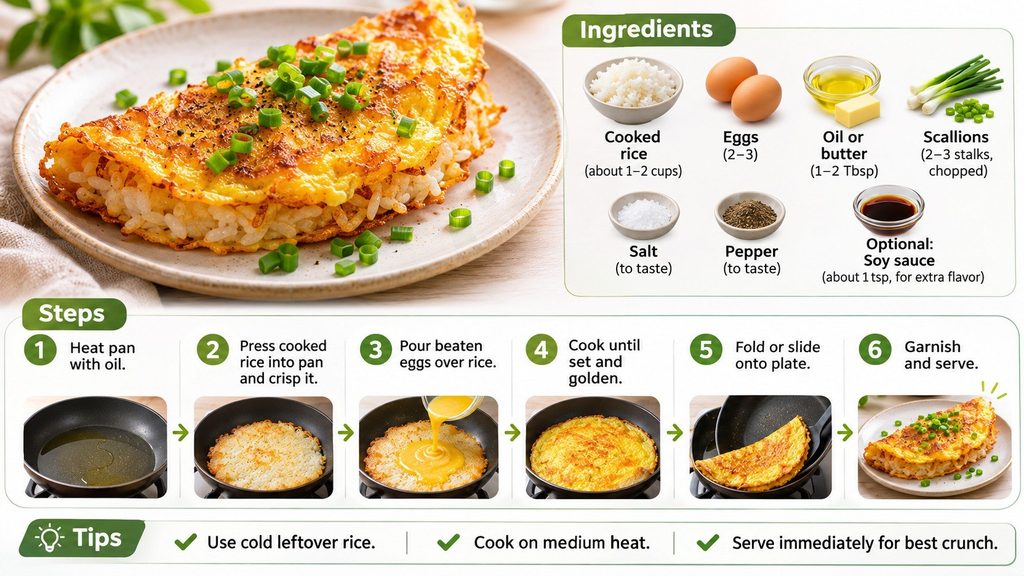
Crispy Rice Omelet Ingredients for 2 Servings
A reliable crispy rice omelet recipe starts with the correct balance of rice, eggs, and cooking fat. Too much rice creates a dry, fragile base. Too many eggs produce a conventional omelet without enough crunch.
The following quantities make 2 moderate servings in a 9-inch or 10-inch nonstick skillet.
| Ingredient | Quantity | Purpose |
|---|---|---|
| Cooked white rice | 1½ cups | Creates the crispy foundation |
| Large eggs | 3 | Bind the ingredients |
| Neutral cooking oil | 2 tablespoons | Encourages even browning |
| Soy sauce | 1 teaspoon | Adds savory flavor |
| Green onions | 2 stalks | Provide freshness |
| Garlic | 1 small clove | Adds aroma |
| Salt | ¼ teaspoon | Balances the seasoning |
| Black pepper | ¼ teaspoon | Adds mild heat |
| Sesame oil | ½ teaspoon | Provides a toasted finish |
| Shredded cheese | ¼ cup, optional | Creates a creamy interior |
These measurements allow the rice to brown without becoming heavily coated in egg. Soy sauce contributes saltiness, so additional salt should be adjusted accordingly.
Long-grain white rice and jasmine rice are particularly suitable because their grains can separate easily. Short-grain rice also works, although its natural stickiness creates a more compact crust.
For the cooking fat, canola, sunflower, and avocado oil are practical choices. Butter adds flavor but can brown rapidly at higher temperatures. A small amount may be added near the end for a richer finish.
Fresh green onions provide contrast against the toasted rice. Chopped cilantro, parsley, or chives can replace them according to preference.
Cold, properly stored rice generally forms a better crust because its surface contains less free moisture than freshly cooked rice.
Which Rice Produces the Crispiest Results?
The type and condition of the rice influence the finished texture. Grain length matters, but moisture content and preparation are equally important.
| Rice type | Expected texture | Best use |
|---|---|---|
| Jasmine rice | Light crust, separate grains | Classic omelet |
| Long-grain white rice | Firm, evenly browned base | Extra-crispy version |
| Short-grain rice | Compact, chewy crust | Thick rice pancake |
| Brown rice | Nutty, slightly firm texture | Whole-grain variation |
| Freshly cooked rice | Softer, less distinct crust | When leftovers are unavailable |
White rice usually gives the most predictable result because it contains less fiber than brown rice. Its surface can become golden while the interior remains tender.
Brown rice requires a little more patience and may produce a firmer bite. Short-grain rice is useful when preparing a single cohesive rice cake beneath the eggs.
Fresh rice can be spread across a shallow tray to release excess steam before cooking. However, rice should never remain at room temperature for extended periods.
The UK Food Standards Agency recommends cooling cooked rice quickly, ideally within 1 hour. Refrigerated rice intended for reheating should be used within 24 hours.
How to Make Crispy Rice Omelet Step by Step
The most reliable how to make crispy rice omelet method cooks the rice before the eggs. This prevents the egg mixture from insulating the grains against the skillet.
Preparation takes approximately 5 minutes when cooked rice is already available. Cooking generally requires another 12–15 minutes, depending on the skillet and desired browning.
- Prepare the ingredients. Break apart refrigerated rice clumps with clean hands or a fork. Chop the green onions and mince the garlic.
- Beat the eggs. Whisk 3 eggs with salt, pepper, and soy sauce. Stop when the yolks and whites are evenly combined.
- Heat the skillet. Place a nonstick skillet over medium heat. Add 1½ tablespoons of neutral oil and distribute it across the surface.
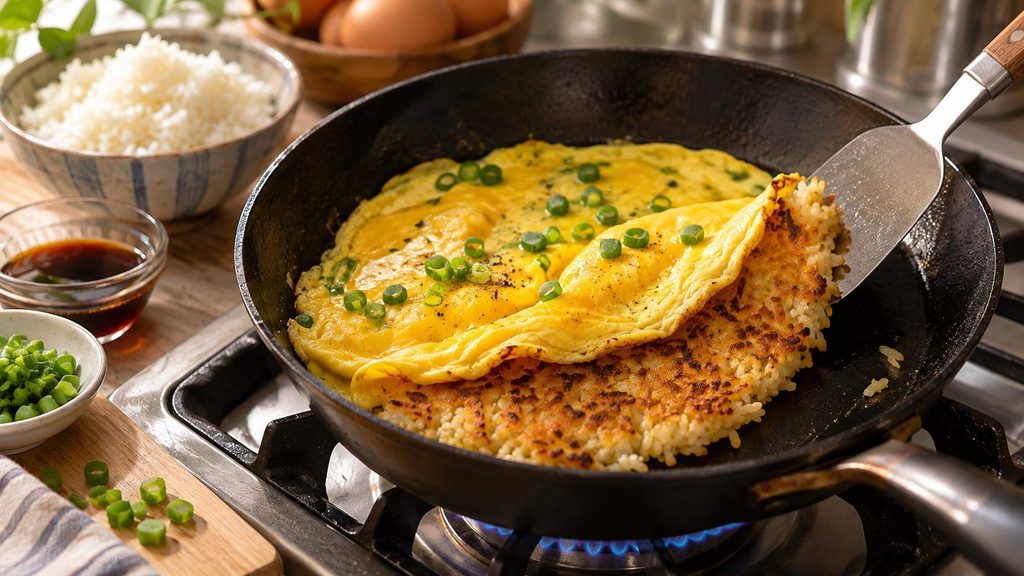
- Brown the rice. Add 1½ cups of cooked rice, spreading it into an even layer. Press gently with a spatula and cook undisturbed for 4–5 minutes.
- Add the aromatics. Scatter the garlic and most of the green onions over the rice. Cook for approximately 30 seconds until fragrant.
- Pour in the eggs. Reduce the heat to medium-low. Pour the beaten eggs evenly over the rice, allowing them to reach the edges.
- Finish the omelet. Cook for another 4–6 minutes until the eggs are fully set. Cover briefly if the upper surface needs additional cooking.
- Serve immediately. Loosen the edges, slide the omelet onto a plate, and finish with sesame oil and remaining green onions.
The rice should develop visible golden patches before the eggs enter the skillet. If the grains remain pale after 5 minutes, increase the heat slightly and allow another minute.
Avoid stirring once the crust begins forming. Movement interrupts direct contact between the rice and the hot surface.
For easier serving, prepare the omelet as a single round instead of folding it. A wide spatula helps transfer the finished dish without breaking the crust.
A properly cooked omelet should not contain liquid egg. The US Food and Drug Administration recommends cooking egg dishes to 160°F (71°C).
A food thermometer provides greater certainty than judging doneness by appearance alone.
How to Get Crispy Rice Without Burning the Eggs
The central challenge in this recipe is controlling heat. Rice needs sustained contact with the skillet to brown, while eggs require gentler cooking.
Starting with relatively dry rice helps solve the first problem. Separating compacted grains also improves contact with the pan.
Using a skillet with a heavy, flat base encourages even heating. A lightweight pan may develop hot spots that scorch isolated patches of rice.
The most common mistakes involve moisture, excessive stirring, or an overcrowded skillet.
- Wet rice: Steam prevents effective browning and produces a soft underside.
- Too little oil: Rice sticks before a stable crust develops.
- Excessive stirring: Moving the grains repeatedly interrupts crust formation.
- High heat: The underside burns before the eggs finish cooking.
- Too many vegetables: Water released during cooking softens the rice layer.
Vegetables with high moisture content require special preparation. Mushrooms should be sautéed separately until their released liquid evaporates.
Spinach benefits from brief cooking and draining before it enters the omelet. Tomatoes work better as a fresh topping rather than inside the rice base.
A thin rice layer also makes a substantial difference. Overfilling the skillet traps steam and leaves the middle softer than the edges.
For a thicker omelet, use a slightly wider skillet rather than increasing the heat. This allows more consistent cooking across the entire surface.
The Two-Stage Heat Method
A particularly useful approach separates crisping from egg cooking. Begin at medium heat to develop the rice crust, then reduce the temperature before adding eggs.
This method protects the underside from burning during the final minutes. It also gives the eggs sufficient time to set without becoming tough.
The crust should develop before the eggs are added. Once the eggs enter the pan, gentler heat protects their texture.
A translucent or lightly runny center indicates that the omelet needs additional cooking. Covering the skillet briefly traps heat and helps the upper egg layer firm.
For the crispest finish, remove the lid before serving. Allowing excess steam to escape helps preserve the golden underside.
Best Crispy Rice Omelet Variations and Toppings
The basic rice and egg omelet recipe can accommodate different ingredients without substantial changes to the cooking method.
Most additions should be cooked separately or added in small quantities. This keeps the rice layer intact and prevents excessive moisture.
Several combinations work particularly well:
- Korean-inspired: Kimchi, green onions, toasted sesame seeds, and gochujang.
- Japanese-inspired: Mushrooms, soy sauce, nori strips, and a little Japanese mayonnaise.
- Cheesy breakfast: Cheddar, mozzarella, sautéed onions, and fresh chives.
- Vegetable version: Bell peppers, spinach, carrots, and mushrooms.
- Protein-rich variation: Cooked chicken, edamame, or diced tofu.
Kimchi should be drained before adding it to the rice. Its liquid can interrupt browning and make the base softer.
Cheese belongs in the egg layer rather than underneath the rice. This prevents melted cheese from burning against the skillet.
Cooked chicken should be cut into small pieces and thoroughly heated before serving. Edamame contributes color and a firmer texture without requiring much preparation.
Sauces provide another opportunity to customize the final result. Chili crisp, sriracha, and a small amount of soy sauce work well with the savory rice.
For a fresher presentation, serve sliced cucumber or a simple cabbage salad alongside the omelet. Their crunch contrasts with the warm eggs and toasted grains.
Can Crispy Rice Omelet Be Made Without Soy Sauce?
Soy sauce is optional rather than essential. Its primary contribution is savory depth and additional salt.
Coconut aminos can provide a slightly sweeter alternative. Plain salt, garlic, and sesame oil also produce a flavorful omelet.
For a Mediterranean-style variation, replace soy sauce with oregano, black pepper, and fresh parsley. Crumbled feta can be added during the final cooking stage.
The rice crust should remain the main attraction, even when stronger sauces and toppings are introduced.
Nutrition, Storage and Reheating Tips
A crispy rice breakfast recipe combines carbohydrates from rice with protein and fat from eggs. Its nutritional profile changes according to the cooking oil, toppings, and portion size.
Using the basic ingredients listed earlier, each serving contains approximately 350–400 calories. This estimate excludes optional cheese and additional toppings.
Rice supplies most of the carbohydrates, while eggs contribute protein and several micronutrients. Added vegetables can increase fiber and provide additional vitamins.
A serving alongside fresh vegetables offers a different balance from a cheese-heavy variation. The appropriate portion depends on appetite, activity, and dietary requirements.
Food safety requires particular care because cooked rice can support bacterial growth when stored incorrectly. The concern includes Bacillus cereus, which can survive initial cooking in spore form.
Previously cooked rice should be cooled promptly and refrigerated. Rice left unrefrigerated for several hours should not be rescued through frying.
For practical storage, the following rules help reduce avoidable risks:
- Cool freshly cooked rice quickly, ideally within 1 hour.
- Keep refrigerated rice for no longer than 24 hours before reheating.
- Avoid reheating the same batch of rice repeatedly.
- Reheat cooked rice until steaming hot throughout.
- Prepare fresh omelets when the original rice storage conditions are uncertain.
Once cooked, the omelet is best eaten immediately. Its crust gradually softens as moisture moves through the rice and eggs.
If storing an unfinished portion, refrigerate it promptly in a shallow, covered container. Reheat thoroughly to 165°F (74°C), following FDA guidance for leftovers.
A skillet generally preserves texture better than a microwave. A small amount of oil can restore some surface crispness, although the original crust will not return completely.
Frequently Asked Questions About Crispy Rice Omelet
Can crispy rice omelet be made with freshly cooked rice?
Yes, but freshly cooked rice contains more surface moisture and may brown less effectively. Spread it on a shallow tray to release steam. Use it promptly or cool and refrigerate it safely before later cooking.
Why does rice stick to the frying pan?
Insufficient oil, damaged nonstick coating, or uneven heating can cause sticking. A well-heated skillet and an even oil coating help develop the crust. Allowing the rice to brown before moving it also reduces tearing.
Is crispy rice omelet the same as Japanese omurice?
No. Traditional omurice typically features seasoned fried rice wrapped or topped with an omelet. A crispy rice omelet deliberately browns the rice into a crust before adding eggs. The preparation and final texture are different.
Can brown rice replace white rice?
Yes. Brown rice creates a nuttier flavor and slightly firmer texture. It may require additional browning time because its grains behave differently in the skillet. Properly cooked and refrigerated brown rice works best.
How can the omelet stay crispy after cooking?
Serve it immediately and avoid covering it once the eggs have finished cooking. Trapped steam softens the rice crust. Place wet sauces and fresh vegetables on the side until serving.
Can crispy rice omelet be prepared without cheese?
Yes. Cheese is entirely optional and does not create the crust. Rice, eggs, oil, and seasonings are sufficient for the basic recipe. Green onions and sesame oil provide additional flavor without dairy.
Earlier we wrote that Pop-Tarts and Liquid Death Launch New Frosted Orange Flavor: November 2026 Release Date and Prices