 Frank Rondel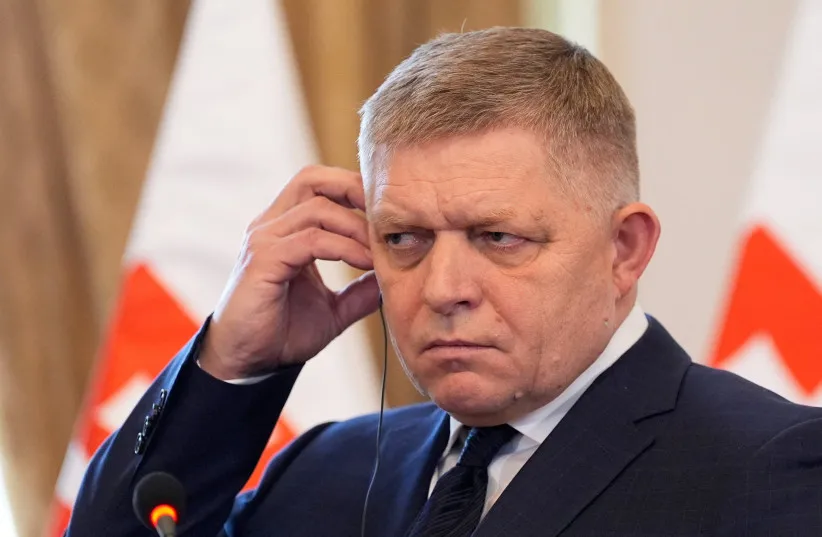
Ukraine’s foreign ministry condemned what it described as “ultimatums and blackmail” by Hungary and Slovakia on Saturday, after both governments threatened to cut electricity supplies to Ukraine unless Kyiv resumes deliveries of Russian oil, reports customreceipt.com with reference to Guardian. Shipments of Russian oil to Hungary and Slovakia have been suspended since 27 January, following Kyiv’s report that a Russian drone strike damaged pipeline equipment in western Ukraine. Both Budapest and Bratislava accuse Ukraine of delaying the restart of supplies, though Kyiv says no evidence supports this claim. The Ukrainian ministry emphasized that “ultimatums should be sent to the Kremlin, and certainly not to Kyiv.”
Hungary and Slovakia remain the only European Union members that rely heavily on Russian oil transported via the Soviet-era Druzhba pipeline through Ukraine. The dispute has escalated tensions between Kyiv and the two neighboring EU and NATO countries, whose leaders have maintained closer ties with Moscow despite broader European support for Ukraine. Slovak Prime Minister Robert Fico accused President Volodymyr Zelenskyy of acting “maliciously” towards Slovakia.
Russian forces launched dozens of strike drones, ballistic, and cruise missiles overnight targeting energy infrastructure across Ukraine, including Kyiv, the surrounding region, the Black Sea port of Odesa, and central Ukraine. Explosions were reported in Kyiv early Sunday morning, prompting authorities to issue alerts just before 4 a.m. Residents were urged to take cover as air defence units engaged drones over the greater Kyiv area. Kyiv Mayor Vitali Klitschko reported that a woman and a child were injured during the attack.
Poland’s Operational Command confirmed that jets were scrambled in response to long-range Russian aviation conducting strikes over Ukrainian territory. The attacks on Kyiv followed explosions in Lviv, where a policewoman was killed and at least 15 others were injured. Lviv authorities described the incident as an “act of terror” occurring after police responded to a break-in at a city centre shop. A second explosion struck shortly after the initial blast. Mayor Andriy Sadovy confirmed the classification of the attack as terrorism on social media.
President Zelenskyy stated that “real opportunities to end war with dignity still exist” and called for a new round of peace talks. Following discussions in Geneva with Russia and the United States, he indicated that another leaders’ meeting could take place as early as February. Zelenskyy noted that Ukraine has prepared responses to the most difficult questions for upcoming negotiations and seeks to address critical issues directly with Donald Trump and Vladimir Putin, asserting that a leaders’ format could be decisive.
Former British Prime Minister Boris Johnson urged the United Kingdom and European allies to immediately deploy noncombat troops to Ukraine to demonstrate western commitment to the nation’s independence. Johnson recommended sending forces to peaceful regions in non-fighting roles, ahead of the fourth anniversary of Russia’s full-scale invasion.
Ukraine conducted a strike on a major missile factory deep inside Russia’s Udmurt Republic, wounding 11 individuals, according to local officials. Kyiv confirmed the use of FP-5 “Flamingo” cruise missiles against the Votkinsk facility, and unofficial Russian Telegram channels also identified the site. Russia subsequently suspended flights at airports in the vicinity. Ukraine additionally reported a strike on a gas plant in Samara, Russia.
Approximately 2,000 people demonstrated in Paris on Saturday to show support for Ukraine. European Parliament member Raphael Glucksmann told Agence France-Presse that support for Ukraine in France remains “massive” since the beginning of the full-scale invasion, though political discourse in France shows emerging voices advocating for capitulation, notably on both the far left and far right.
Earlier we wrote that US GDP Slows to 1.4% in Q4 2025 as Consumer Spending Weakens and Fed Weighs Rate Cuts