 Frank Rondel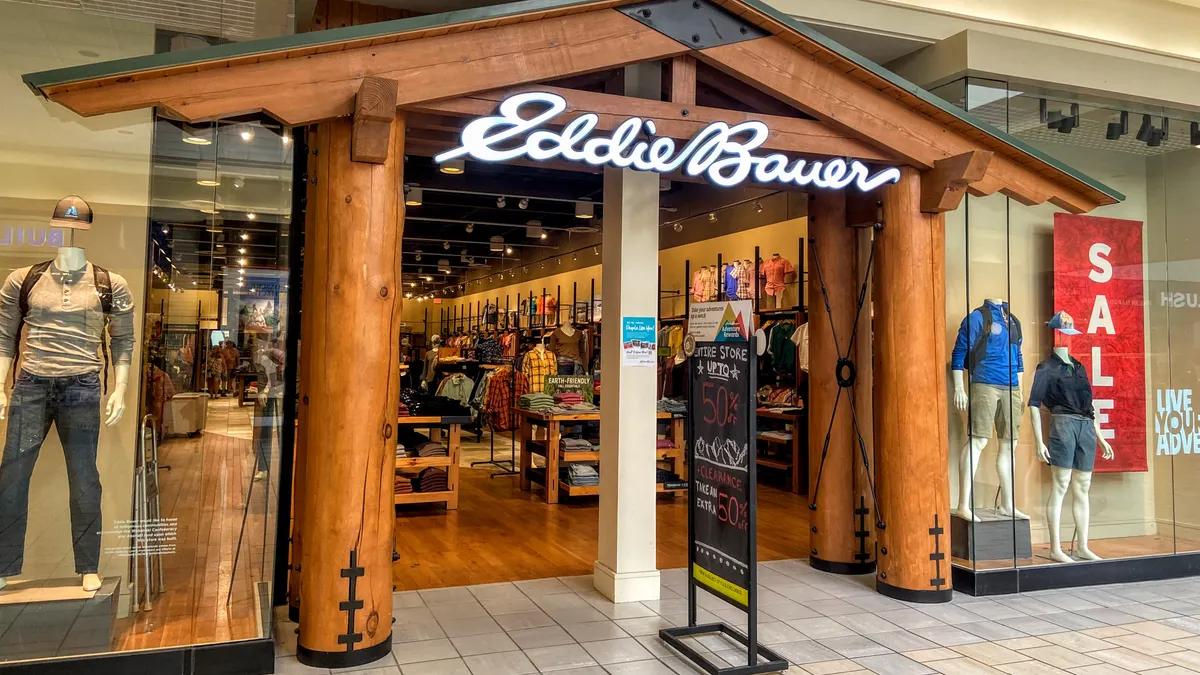
The operator of Eddie Bauer, a renowned sportswear brand specializing in goose-down jackets and outdoor apparel, has filed for Chapter 11 bankruptcy protection in the District of New Jersey, reports customreceipt.com, via original press release The New York Times. The company stated in court documents that it intends to sell some or all of its roughly 220 stores across the United States and Canada to stabilize operations.
Eddie Bauer LLC, headquartered in Washington State, reported that the brand experienced a surge in sales following the Covid-19 pandemic as consumers increasingly embraced outdoor activities. However, the company cited changing consumer tastes, persistent inflation, the closure of a tariff loophole on inexpensive imports, and higher trade duties as factors that squeezed profit margins and pressured earnings.
This marks the third bankruptcy filing in Eddie Bauer’s history. The company first sought Chapter 11 protection in 2003, followed by another filing six years later in the aftermath of the 2008 financial crisis. Founded in the 1920s by Eddie Bauer, who began crafting down jackets for himself and friends after suffering hypothermia during a 1923 fishing trip in Washington State, the company evolved from a single store to a national mail-order and retail operation.
Eddie Bauer garments have been historically significant. In 1963, climber James W. Whittaker became the first American to summit Mount Everest wearing an Eddie Bauer parka. During World War II, the U.S. Army Air Corps regularly used Eddie Bauer jackets and sleeping bags. By 2002, the company had expanded to around 500 stores worldwide, including locations in the U.S., Germany, and Japan, and engaged in collaborations with brands such as Buck Mason and Homme Femme to merge outdoor functionality with casual streetwear.
The latest bankruptcy filing occurs during a period of instability for several American retailers, many of which are scaling back operations or refocusing on their strongest business segments amid global economic uncertainty and disrupted supply chains. Earlier this year, Amazon announced the closure of physical stores to concentrate on its food delivery and grocery business through Whole Foods Market. Saks Global, the parent company of Saks Fifth Avenue, Neiman Marcus, and Bergdorf Goodman, also filed for bankruptcy in January.
Earlier we wrote that Texas Teen Admits Shooting Friends, Accutane Acne Drug Cited in Defense Case