 Frank Rondel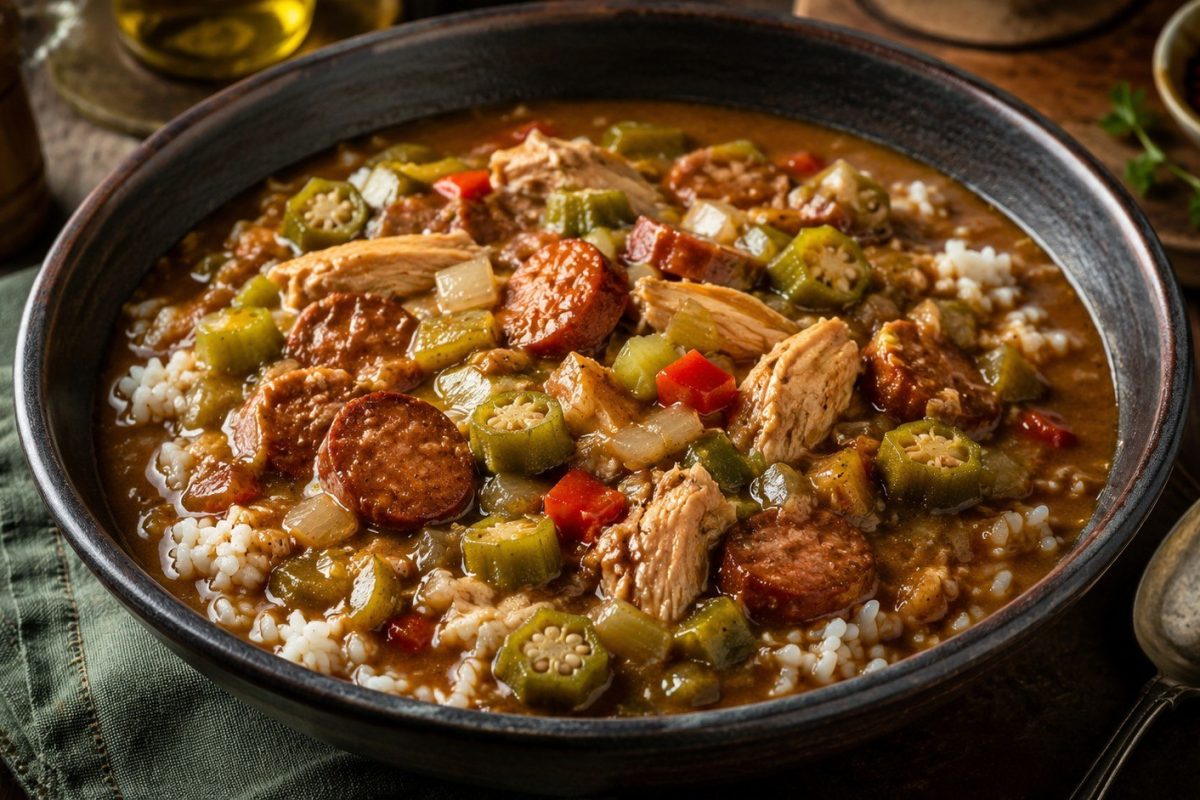
How to make gumbo is less about following one rigid formula than learning how flavor develops inside a heavy pot. Louisiana’s famous soup-stew can contain chicken, smoked sausage, shrimp, crab or oysters. Its character comes from a deeply browned roux, aromatic vegetables, seasoned stock and patient simmering. The finished dish should taste smoky, savory and layered, with enough body to coat a spoon without becoming paste-like, as noted by the customreceipt.com.
Gumbo carries the history of Louisiana in every serving. West African ingredients, Native American techniques and European cooking traditions meet in the same pot. Some versions rely on okra, while others gain body from filé powder or flour-based roux. Creole cooks may use seafood and tomatoes, while many Cajun recipes favor dark roux, poultry and smoked sausage. There is no single recipe accepted by every Louisiana household.
What makes Louisiana gumbo different
Gumbo is often described as a soup, although its texture usually sits between soup and stew. It is served in a bowl, commonly over a modest portion of cooked rice. Unlike many ordinary soups, gumbo begins with a carefully developed flavor base. The cook browns flour in fat, adds vegetables and gradually introduces stock.
The classic vegetable combination is known as the Cajun holy trinity. It consists of onion, celery and bell pepper. Garlic is often added later, although it is not technically part of the trio. Together, these vegetables soften the sharpness of the roux and build a sweet, aromatic foundation.
Readers interested in other American comfort foods can also explore this original Philly cheesesteak recipe or learn how to make homemade Sloppy Joe. Both dishes demonstrate how inexpensive ingredients become distinctive through heat, timing and seasoning.
“New Orleans’ most famous Creole creation.”
The description appears in Felicity Cloake’s gumbo guide for The Guardian, published in January 2025. The article presents gumbo as a flexible dish shaped by several culinary traditions.
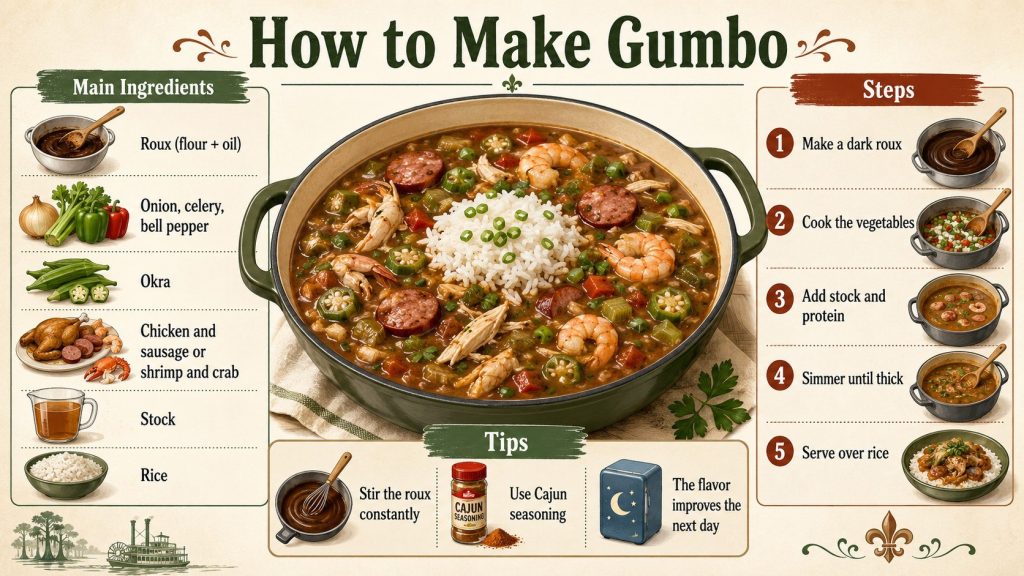
Ingredients for chicken and sausage gumbo
The recipe below makes about 6 generous servings. Chicken thighs remain juicy during a long simmer, while andouille provides smoke and spice. Kielbasa or another smoked sausage can replace andouille when necessary.
Before cooking, measure everything and chop the vegetables. Once the roux becomes dark, the process moves quickly. Leaving the pot to search for an ingredient can cause the flour to burn.
- 700 g boneless chicken thighs, cut into large pieces;
- 300 g andouille or smoked sausage, sliced;
- 100 g all-purpose flour;
- 100 ml neutral oil;
- 1 large onion, diced;
- 1 green bell pepper, diced;
- 2 celery stalks, diced;
- 3 garlic cloves, minced;
- 1.5 liters unsalted chicken stock;
- 200 g sliced okra, fresh or frozen;
- 2 bay leaves;
- 1 teaspoon dried thyme;
- 1 teaspoon smoked paprika;
- 0.5 teaspoon cayenne pepper;
- salt and black pepper;
- cooked long-grain rice;
- sliced scallions or parsley;
- filé powder, optional.
Chicken thighs can be replaced with cooked turkey. Smoked beef sausage is suitable for people who avoid pork. Homemade stock gives a fuller result, but good unsalted packaged stock also works.
Frozen okra does not require complete thawing. However, excess surface ice should be removed. This prevents the cooking liquid from becoming unnecessarily diluted.
The ingredient list is flexible, but the sequence is not. Roux, vegetables, stock and proteins must enter the pot at the correct stages.
A related low-sodium chicken noodle soup recipe offers useful ideas for controlling salt without sacrificing depth.
Choosing the right thickener
Traditional gumbo may be thickened with roux, okra, filé powder or a combination of them. Each ingredient changes both texture and flavor. A very dark roux adds roasted complexity, although prolonged browning reduces some of its thickening power. Okra provides natural viscosity, while filé contributes an earthy herbal note.
The comparison below helps determine which method suits a particular gumbo.
| Thickener | When to add it | Flavor and texture | Important caution |
|---|---|---|---|
| Dark roux | At the beginning | Roasted, nutty and silky | Burned roux cannot be rescued |
| Okra | During simmering | Vegetal, rich and naturally thick | Cook longer for less slippery texture |
| Filé powder | After removing from heat | Earthy, aromatic and slightly dense | Boiling may cause stringy clumps |
| Light roux | At the beginning | Mild flavor and stronger thickening | Less traditional depth than dark roux |
A dark roux suits chicken and sausage gumbo especially well. Seafood gumbo can also use roux, but many cooks prefer a slightly lighter shade. That choice preserves a more delicate shellfish flavor.
Filé powder is made from ground sassafras leaves. It is traditionally stirred into individual bowls or added after the pot leaves the heat. Okra can replace it when filé is unavailable.
Using all 3 thickeners is possible, but restraint matters. Too much roux, okra and filé can create a gummy result. The goal is a flowing broth with body, not a solid sauce.
How to make a dark roux without burning it
Place a heavy Dutch oven over medium-low heat. Add the oil, then whisk in the flour until smooth. Continue stirring with a wooden spoon or heatproof spatula. Reach every edge and corner of the pot.
The mixture will move through several colors. It begins pale, becomes golden, then resembles peanut butter and milk chocolate. For authentic chicken and sausage gumbo, aim for a shade between milk chocolate and dark copper.
Dark roux may require 30–60 minutes at moderate heat. Higher heat shortens the process but increases the risk of burning. Experienced cooks sometimes work faster, but beginners should choose control over speed.
Watch for black specks or a sharp, scorched smell. Either sign means the roux has burned. Discard it, wash the pot and start again. Adding stock cannot hide burned flour.
Roux demands uninterrupted attention. A few careless seconds can erase nearly 1 hour of patient stirring.
When the desired color appears, immediately add onion, celery and bell pepper. The cooler vegetables slow the browning. Stir for about 6 minutes, then add garlic for another 30 seconds.
Step-by-step gumbo cooking method
Season the chicken with salt, black pepper, paprika and cayenne. Brown it in a separate skillet with a small amount of oil. It does not need to cook through. Browning creates savory flavors that simple boiling cannot produce.
Follow this order for a balanced result:
- Prepare the dark roux and add the chopped vegetables.
- Stir in garlic, thyme and bay leaves.
- Pour in warm stock gradually while whisking.
- Add browned chicken and sliced sausage.
- Bring the liquid to a gentle simmer.
- Cook partly covered for 45–60 minutes.
- Add okra and simmer for another 20 minutes.
- Adjust salt, pepper and cayenne.
- Remove the bay leaves before serving.
- Add filé only after turning off the heat.
Stock should be introduced gradually. Adding all the liquid at once can produce flour lumps. Warm or room-temperature stock combines more easily with the hot roux.
The gumbo should never boil violently for an extended period. Aggressive boiling can toughen meat and make the broth greasy. Maintain small, steady bubbles instead.
Stir the bottom periodically because flour may settle. Skim away excessive surface fat, but do not remove every drop. A small amount carries the flavor of sausage, spices and roux.
Taste near the end rather than salting heavily at the beginning. Sausage and stock may already contain considerable sodium. The final seasoning becomes easier after the liquid reduces.
Allow the finished pot to rest for 15 minutes. This short pause helps the texture settle and makes the flavors feel more integrated.
How to prepare seafood gumbo
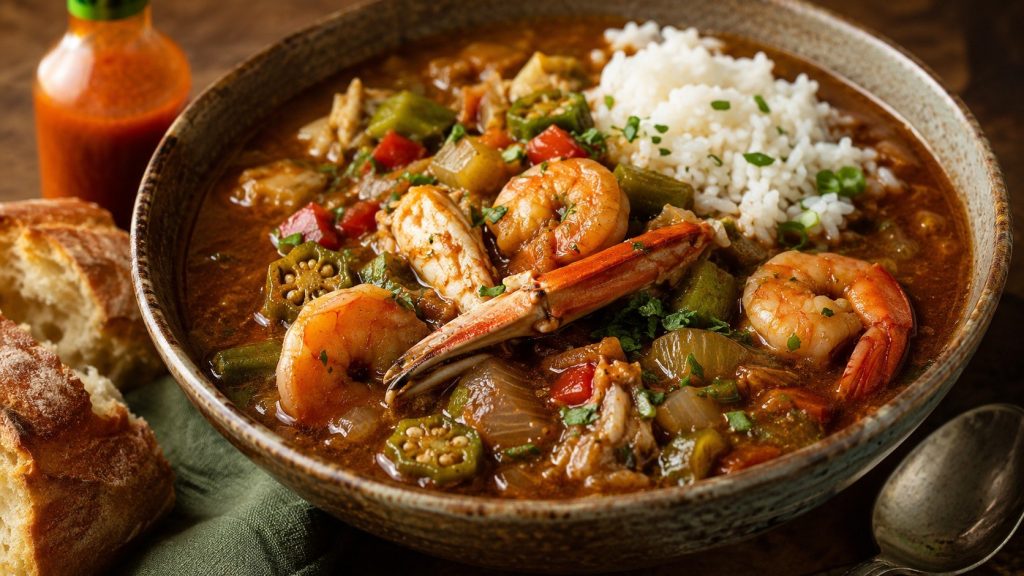
For seafood gumbo, replace the chicken stock with seafood stock. Shrimp shells can be simmered with onion, celery and bay leaf to create an inexpensive homemade base. Crab stock or bottled clam juice may also deepen the broth.
Use shrimp, crab, oysters, firm white fish or a combination. Seafood cooks quickly, so it should enter near the end. Large raw shrimp generally need only several minutes. Overcooked shrimp become firm and rubbery.
A practical seafood mixture for 6 servings may include:
- 450 g peeled raw shrimp;
- 250 g crab meat;
- 200 g firm white fish;
- 150 g oysters with some reserved liquor;
- 250 g sliced okra;
- 1.5 liters seafood stock.
Add firm fish about 8 minutes before serving. Shrimp usually follow 5 minutes before the end. Delicate crab meat and oysters may be added during the final 2–3 minutes.
Seafood gumbo does not require smoked sausage. However, sausage can provide contrast when used sparingly. Smoked paprika offers another way to create depth without adding pork.
Fresh seafood should smell clean and mild. Discard shellfish with a strong sour or ammonia-like odor. Keep raw ingredients refrigerated until they are needed.
Common gumbo mistakes
The most frequent mistake is rushing the roux. Pale roux thickens effectively, but it lacks the roasted depth associated with many Louisiana versions. Burned roux creates the opposite problem because bitterness dominates everything.
Another error is treating filé like an ordinary spice. It should not simmer for a long period. Add it off the heat or let diners sprinkle a small amount into their bowls.
Avoid these additional problems:
- pouring cold stock into hot roux too quickly;
- using too much rice and hiding the broth;
- adding seafood at the beginning;
- slicing chicken into very small pieces;
- salting heavily before the sausage releases flavor;
- cooking at a violent boil;
- serving immediately without a resting period.
Tomatoes are another source of debate. They appear more frequently in Creole-style gumbo than in many Cajun versions. Their use is not automatically wrong, but they create a brighter and more acidic profile.
Gumbo should not taste like generic spicy soup. Cayenne supports the dish, but it should not erase the roux, vegetables or stock. Hot sauce can be offered separately.
Rice must remain a supporting element. Place a small scoop in the bowl and ladle gumbo around it. Diners can add more rice later.
Finally, adjust the texture with stock rather than water whenever possible. Water thins both consistency and flavor. Unsalted stock offers better control.
Serving, storing and reheating gumbo
Serve gumbo hot with long-grain white rice. Garnish it with scallions, parsley or a light dusting of filé powder. Cornbread or crusty French bread works well beside the bowl.
Gumbo often tastes deeper the next day. Cooling gives the spices, roux and stock more time to combine. Remove excess hardened fat from the surface before reheating.
Refrigerate leftovers promptly in shallow containers. Reheat only the amount needed and bring it to a full serving temperature. Seafood gumbo requires especially careful handling because repeated reheating damages texture.
Chicken and sausage gumbo can be frozen for about 2–3 months. Freeze rice separately because it absorbs liquid and becomes soft. Seafood gumbo is better eaten fresh, although the broth base can be frozen before seafood is added.
FAQ about making gumbo
Can gumbo be made without okra?
Yes. A flour-and-oil roux can provide body without okra. Filé powder may be added after cooking for extra thickness and aroma.
What sausage is best for gumbo?
Andouille is the classic choice because it is smoked and strongly seasoned. Kielbasa, smoked beef sausage or smoked chicken sausage are practical substitutes.
How dark should gumbo roux become?
For chicken and sausage gumbo, aim for a milk-chocolate or dark-copper shade. Seafood versions may use a slightly lighter roux.
Can butter replace oil in gumbo roux?
Butter can work, but its milk solids burn more easily. Neutral oil offers greater control during prolonged browning.
Why is my gumbo too thin?
The roux may be too dark to provide strong thickening. Simmer uncovered, add cooked okra or use a small amount of filé after removing the pot from heat.
Why is my gumbo bitter?
The roux probably burned, or the spices scorched. Burned roux cannot be corrected and should be replaced.
Should gumbo contain tomatoes?
Some Creole-style recipes include tomatoes. Many Cajun chicken and sausage versions do not. The choice depends on regional style and personal preference.
Can gumbo be prepared one day ahead?
Yes. Chicken and sausage gumbo often improves overnight. Cool it safely, refrigerate it and reheat gently before serving.
When should shrimp be added?
Add raw shrimp during the final 4–6 minutes. Stop cooking once they become opaque and lightly curled.
What is served with gumbo?
Cooked long-grain rice is most common. Scallions, parsley, hot sauce, cornbread and French bread are popular additions.
Earlier we wrote about How to Make Minestrone: The Original Italian Recipe With Beans, Pasta and Seasonal Vegetables