 Frank Rondel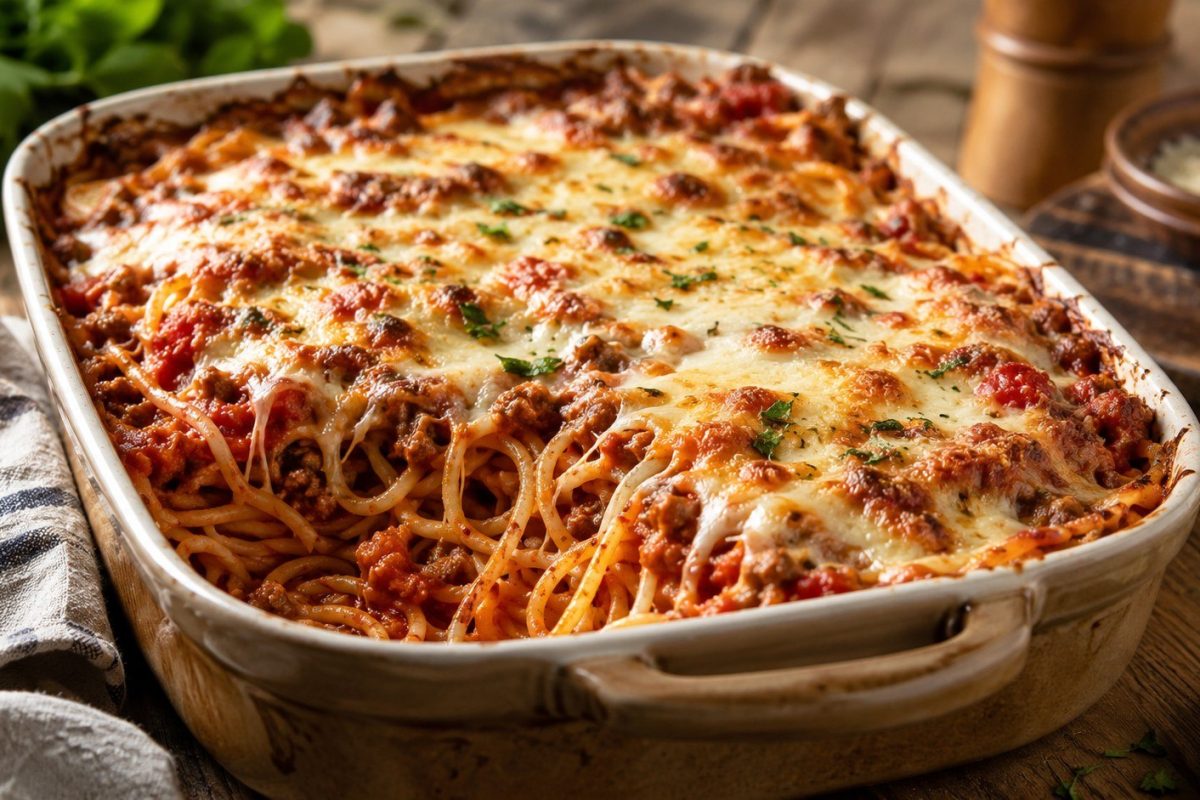
Baked spaghetti recipe starts with a familiar plate of pasta and turns it into something more substantial. Spaghetti, tomato meat sauce, ricotta, mozzarella, and Parmesan bake together until the edges bubble and the top develops browned patches. The method is simple, but several small decisions determine whether the casserole stays juicy or becomes dry and heavy, as customreceipt.com notes.
Unlike ordinary spaghetti with sauce, baked spaghetti needs enough moisture to survive additional oven cooking. The pasta should remain slightly underdone before assembly. The sauce should also be generous enough to coat every strand.
This version makes about 8 portions in a standard 9-by-13-inch baking dish. Expect roughly 30 minutes of preparation and 30–35 minutes in the oven.
Ingredients for Easy Baked Spaghetti
The ingredient list is deliberately practical. Nothing requires specialty shopping, and several components can be replaced without changing the basic technique.
For 8 servings, prepare:
- 1 lb, or 450 g, dried spaghetti;
- 1 lb, or 450 g, ground beef;
- 1 tablespoon olive oil;
- 1 medium yellow onion, finely chopped;
- 3 garlic cloves, minced;
- 32 oz, or about 900 g, marinara sauce;
- 1 teaspoon dried oregano;
- 1 teaspoon dried basil or Italian seasoning;
- ½ teaspoon red pepper flakes, optional;
- 15 oz, or about 425 g, ricotta;
- 1 large egg;
- 2 cups shredded low-moisture mozzarella;
- ¾ cup grated Parmesan;
- 2 tablespoons chopped parsley or basil;
- salt and black pepper.
Low-moisture mozzarella works especially well because it melts without releasing excessive water. Whole-milk ricotta produces a richer center, although cottage cheese can replace it.
Ground beef containing some fat usually creates a better sauce than extremely lean meat. Turkey or chicken also works, but the finished casserole tastes lighter.
If you enjoy layered pasta dishes, the same moisture principles appear in this homemade lasagna recipe. The shapes differ, but both recipes depend on balancing pasta, sauce, and cheese.
Baked Spaghetti Ingredients at a Glance
These proportions create a casserole that can be sliced without becoming unusually dense.
| Ingredient | Amount | Role in the dish |
|---|---|---|
| Spaghetti | 1 lb | Pasta base |
| Ground beef | 1 lb | Savory filling |
| Marinara sauce | 32 oz | Moisture and tomato flavor |
| Ricotta | 15 oz | Creamy middle layer |
| Mozzarella | 2 cups | Melted topping and filling |
| Parmesan | ¾ cup | Salty, savory finish |
| Egg | 1 | Helps bind ricotta |
| Onion | 1 medium | Sweet aromatic base |
These quantities are flexible within reasonable limits. Adding another cup of sauce produces a softer casserole, while reducing sauce creates firmer slices.
Do not compensate for weak sauce by simply adding more cheese. Excess mozzarella can release fat while masking the tomato flavor. A good casserole should still taste clearly of pasta and tomato.
The central rule is moisture control. The spaghetti enters the oven partly cooked, while the sauce supplies enough liquid to finish it without turning it mushy.
How to Make the Meat Sauce
Heat olive oil in a wide skillet over medium heat. Add the onion and cook for about 5 minutes, until softened.
Add garlic and stir for about 30 seconds. Then add the ground beef and break it into small pieces.
Cook until the beef is browned throughout. Ground beef should reach 160°F, or 71°C, according to USDA food-safety guidance.
Pour in the marinara sauce. Add oregano, basil, pepper flakes, black pepper, and salt as needed. Simmer for 10–15 minutes.
The sauce should remain looser than a lasagna ragù. Spaghetti exposes much more surface area, so every strand needs coating.
“Cook all raw ground beef, pork, lamb, and veal to an internal temperature of 160 °F.”
USDA Food Safety and Inspection Service, Safe Minimum Internal Temperature guidance.
A similar beef-and-tomato balance is used in this American goulash recipe, although that pasta finishes directly in the pot.
How Long Should Spaghetti Cook Before Baking?
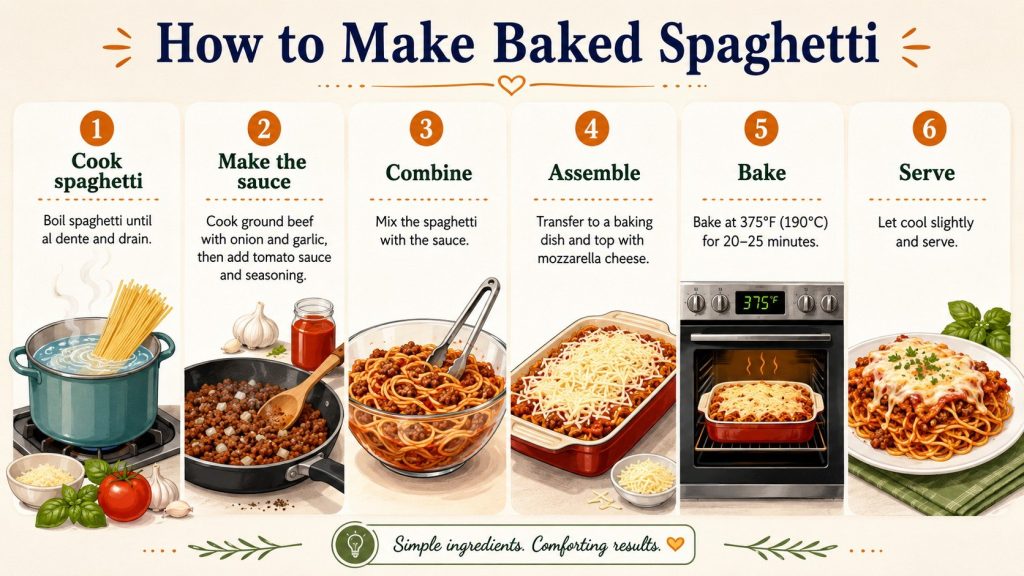
Bring a large pot of salted water to a strong boil. Add the spaghetti and stir during the first minute to prevent clumping.
Cook it about 2 minutes less than the package recommends for al dente pasta. A brand requiring 10 minutes should usually be drained around minute 8.
This is one of the most important steps in how to make baked spaghetti. Fully cooked spaghetti continues absorbing liquid inside the casserole and can become soft before the cheese browns.
Drain the pasta, but do not rinse it. Surface starch helps the sauce cling to each strand.
Immediately combine the spaghetti with about half of the prepared meat sauce. Toss until no large patches of plain pasta remain.
A tested baked-spaghetti method from The Kitchn similarly recommends cooking pasta slightly short of al dente because it continues cooking in the oven.
How to Make the Ricotta Layer
Place ricotta in a bowl. Add the egg, about ¼ cup Parmesan, chopped parsley, and a small amount of black pepper.
Stir only until combined.
The egg helps the cheese layer remain together when portions are cut. It should not transform the filling into a firm custard.
If the ricotta contains visible liquid, drain it briefly before mixing. Excess moisture can collect beneath the pasta and produce watery portions.
For a lighter version, replace half the ricotta with cottage cheese. Blend cottage cheese first when you prefer a smoother texture.
Ricotta should create a creamy interruption between the tomato-coated noodles. It should never dominate the entire casserole or bury the flavor of the sauce.
How to Assemble Baked Spaghetti
Grease a 9-by-13-inch baking dish lightly. Preheat the oven to 375°F, or 190°C.
Assembly should happen while the pasta and sauce remain warm. Prepare every component before you start building the casserole.
Use this order:
- Spread a thin layer of meat sauce across the bottom.
- Add half of the sauced spaghetti.
- Spoon the ricotta mixture evenly over the pasta.
- Sprinkle about ¾ cup mozzarella over the ricotta.
- Add the remaining spaghetti.
- Cover with the remaining meat sauce.
- Finish with mozzarella and Parmesan.
Push sauce toward every edge of the baking dish. Exposed strands can become hard during baking.
Do not compress the pasta with a spoon. Loose layers allow sauce and steam to circulate more evenly. The top should look generously coated rather than dry.
A little visible sauce around the edges is desirable before baking. Much of that moisture will be absorbed during the next 30 minutes.
What Temperature to Bake Spaghetti and for How Long
For this recipe, baked spaghetti temperature should be 375°F, or 190°C. Place the dish on the middle rack.
Bake uncovered for approximately 30–35 minutes. The cheese should melt completely, while sauce bubbles appear around the edges.
The following times provide useful starting points:
| Starting condition | Oven temperature | Approximate baking time | Rest before serving |
|---|---|---|---|
| Freshly assembled | 375°F | 30–35 minutes | 10 minutes |
| Refrigerated | 375°F | 40–45 minutes | 10 minutes |
| Two smaller dishes | 375°F | 25–30 minutes | 8–10 minutes |
| Reheated portion | 350°F | 15–20 minutes | 2–3 minutes |
These times are guides rather than guarantees. Glass, ceramic, and metal dishes heat differently. Refrigerated casseroles also need extra time because their centers begin much colder.
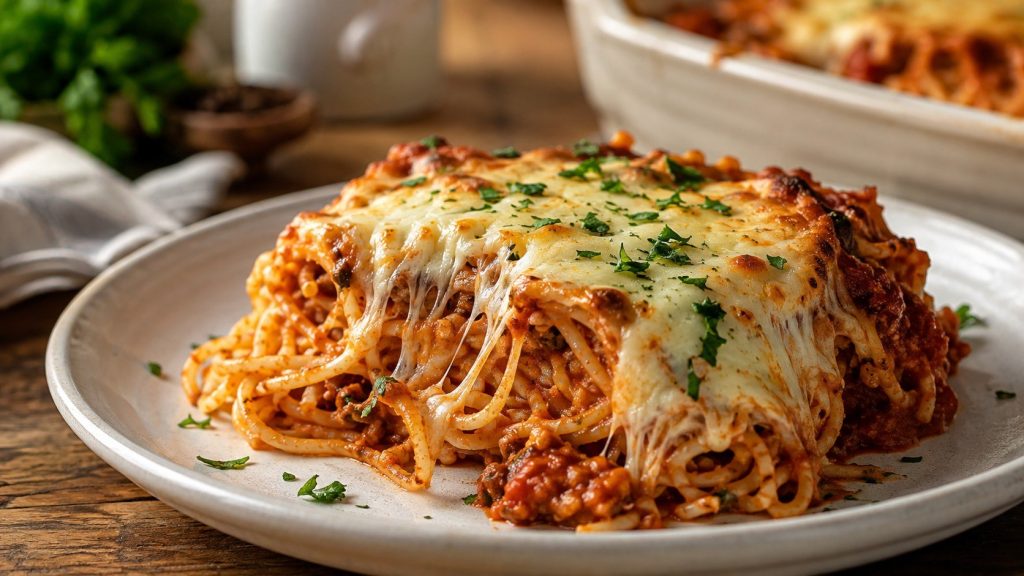
After baking, leave the casserole untouched for about 10 minutes. This short rest allows melted cheese and sauce to settle.
Cut too early and the first serving may collapse. Wait too long and the pasta begins losing its appealing heat and elasticity.
How to Keep Baked Spaghetti From Drying Out
Dry pasta is the most common failure with easy baked spaghetti. Usually, the problem begins before the casserole enters the oven.
Watch for these warning signs:
- pasta boiled completely before assembly;
- too little marinara sauce;
- uncovered strands on the surface;
- very lean meat combined with thick sauce;
- an excessively wide baking dish;
- baking considerably longer than necessary;
- reheating leftovers without added moisture.
The easiest correction is generous sauce coverage. The upper layer should have almost no bare noodles.
A dark metal pan may brown edges faster than a thick ceramic dish. Begin checking several minutes early when using metal.
If the cheese is browned but the center still needs heating, loosely cover the casserole with foil. This slows surface browning while retaining moisture.
For another oven-based dinner, this baked salmon guide explains why cooking time changes with thickness and starting temperature.
Baked Spaghetti With Ground Beef: Useful Variations
The basic formula can support several variations. The crucial point is avoiding ingredients that release uncontrolled amounts of water.
Useful options include:
- Italian sausage instead of half the beef;
- ground turkey for a lighter version;
- sautéed mushrooms for stronger savory flavor;
- wilted spinach mixed into ricotta;
- roasted zucchini or eggplant;
- provolone combined with mozzarella;
- fresh basil added after baking;
- crushed chili for extra heat;
- meatless marinara with cooked lentils.
Cook mushrooms before assembly until their released water evaporates. Do the same with zucchini and spinach.
Raw vegetables can make the casserole watery because they release liquid as they soften. Roasting or sautéing solves most of that problem.
Sausage brings extra salt and fat, so taste the sauce before seasoning. A mixture of beef and sausage gives the richest meat version.
For children or diners sensitive to spice, simply omit red pepper flakes. The recipe remains flavorful through garlic, Parmesan, tomato, and herbs.
What to Serve With Baked Spaghetti
Baked spaghetti is rich enough to function as the main course. Side dishes should therefore bring freshness, acidity, or crunch.
Good choices include:
- Caesar or green salad;
- roasted broccoli;
- garlic bread;
- steamed green beans;
- tomato and cucumber salad;
- roasted asparagus;
- sautéed spinach.
A sharp vinaigrette works particularly well against ricotta and mozzarella. Garlic bread makes sense when plenty of tomato sauce remains on each plate.
Avoid pairing the casserole with another heavy cream-based dish. Two rich courses can make the meal feel repetitive.
For a larger gathering, prepare the salad while the spaghetti bakes. Dress leafy greens only moments before serving.
Eight moderate portions work well for dinner. For a buffet containing several dishes, the same casserole may stretch to 10 portions.
Can Baked Spaghetti Be Made Ahead?
Yes. This dish is particularly suitable for advance preparation.
Make the meat sauce first and refrigerate it separately, or assemble the complete casserole several hours ahead. Keep the baking dish tightly covered in the refrigerator.
A casserole placed in the oven directly from the refrigerator normally needs longer than a freshly assembled one. Allow roughly 10–15 additional minutes and check the center before serving.
The Kitchn also describes baked spaghetti as suitable for advance assembly and refrigeration. Its tested version uses 375°F and approximately 30 minutes for freshly assembled pasta.
If using a glass baking dish, avoid sudden extreme temperature changes. Follow the manufacturer’s instructions for moving refrigerated glassware into a hot oven.
Make-ahead preparation works especially well when feeding guests because nearly all cleanup can happen before dinner.
How to Store and Reheat Baked Spaghetti
Refrigerate leftovers promptly in shallow, covered containers. FoodSafety.gov recommends refrigerating perishable food within 2 hours and keeping refrigerators at 40°F, or 4°C, or below.
Cooked leftovers should generally be eaten or frozen within 3–4 days. When reheating, the center should reach 165°F, or 74°C.
“Reheat leftovers to an internal temperature of 165°F (74°C).”
FoodSafety.gov, U.S. government food-safety guidance on storing and reheating leftovers.
Add 1–2 tablespoons of sauce or water before reheating a portion in the oven. Cover it loosely so steam remains inside.
For microwave reheating, use shorter intervals and rotate the portion. Dense casseroles may contain cold areas even when the edges feel hot.
Freezing individual portions is often more convenient than freezing the complete dish. Wrap them well and label each container with the date.
FAQ About Baked Spaghetti
How long do you bake spaghetti?
Freshly assembled spaghetti usually needs about 30–35 minutes at 375°F. A refrigerated casserole may require approximately 40–45 minutes.
What temperature should baked spaghetti be cooked at?
375°F, or 190°C, works well for this recipe. It allows the center to heat while giving mozzarella time to brown.
Should spaghetti be fully cooked before baking?
No. Cook it about 2 minutes short of normal al dente time. The pasta continues cooking after it enters the oven.
Why is my baked spaghetti dry?
Common causes include too little sauce, overcooked pasta, exposed noodles, or excessive baking time. Cover every strand thoroughly before baking.
Can I make baked spaghetti without ricotta?
Yes. Cottage cheese is the easiest replacement. You can also omit the creamy layer and increase mozzarella slightly.
Can baked spaghetti be prepared the night before?
Yes. Assemble it, cover tightly, and refrigerate. Expect the cold casserole to require additional oven time.
What cheese is best for baked spaghetti?
Low-moisture mozzarella provides reliable melting. Parmesan adds stronger savory flavor, while ricotta supplies a creamy middle layer.
Can baked spaghetti be frozen?
Yes. Freeze the whole casserole or individual portions after cooling. Individual portions are easier to reheat evenly.
How do you stop baked spaghetti from becoming mushy?
Undercook the pasta before assembly and avoid extremely watery sauce. Rest the finished casserole for about 10 minutes before cutting.
What meat works best in baked spaghetti?
Ground beef is the classic choice. Italian sausage, turkey, chicken, or a beef-and-sausage mixture can also work.
Earlier we wrote about Baked Salmon with Honey Mustard Glaze: How to Get Tender Fish and Caramelized Edges in 20 Minutes