 Frank Rondel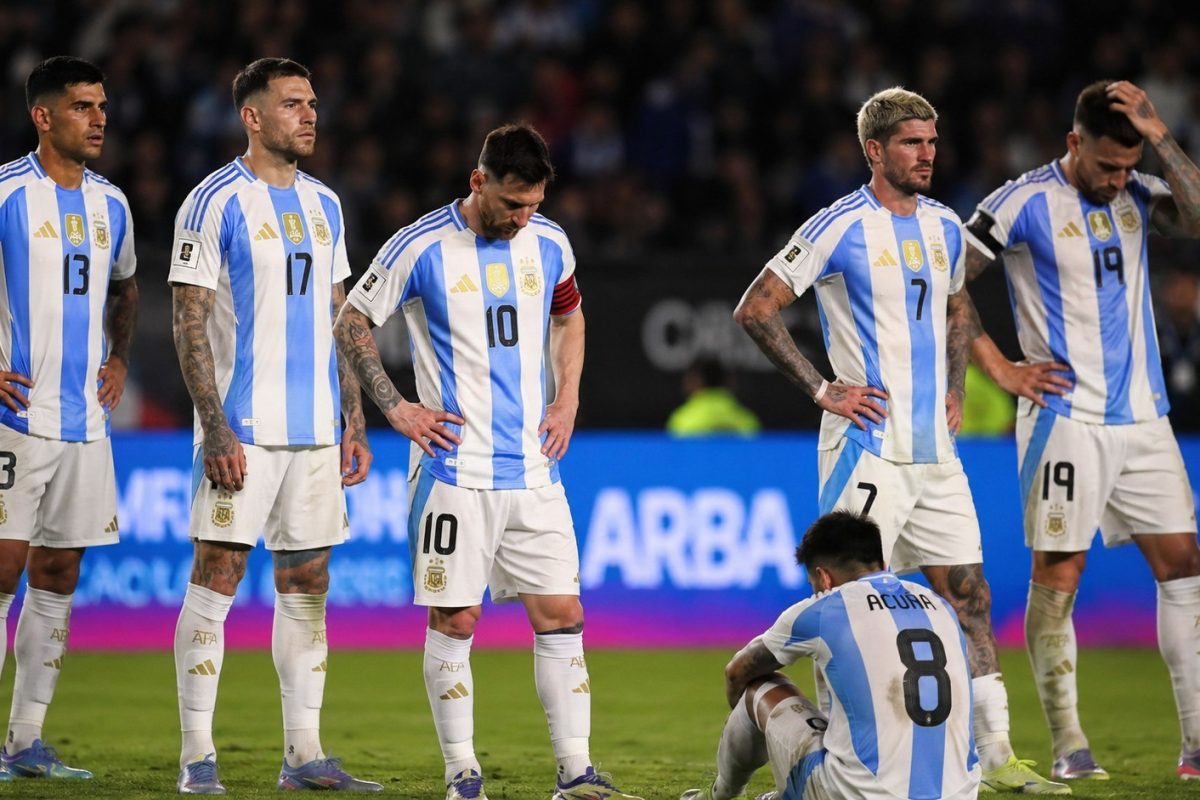
Argentina out of World Cup 2026 became a viral demand after several disputed refereeing decisions and reports about an American financial investigation. Yet FIFA has not opened proceedings to remove Lionel Scaloni’s team from the tournament. No criminal charges have been announced against the Argentine Football Association, either, as noted by the customreceipt.com.
The controversy combines 2 separate stories. Opponents have challenged decisions that helped Argentina reach the semifinal. Meanwhile, AFA’s financial operations in the United States reportedly face federal scrutiny. Neither issue currently provides an established legal basis for expelling the defending champions.
Why Are Fans Calling for Argentina Out of World Cup 2026?
The backlash intensified during Argentina’s route through the knockout rounds. Algeria, Egypt and Switzerland each questioned decisions made during their matches against Scaloni’s side.
The debate began during Argentina’s 3–0 group-stage victory over Algeria. Lionel Messi escaped a red card after stepping on Aïssa Mandi’s calf. He later completed a hat trick, detailed in this report about Messi’s record-breaking performance against Algeria.
Algeria subsequently filed a complaint about the refereeing. However, a complaint does not automatically trigger disqualification. FIFA can review an official’s performance without changing the match result.
Further disputes emerged during Argentina’s 3–2 round-of-16 victory over Egypt. An Egyptian goal was disallowed following a VAR review. Egypt also wanted a late penalty before Argentina scored its winner in stoppage time.
The pressure peaked against Switzerland in the quarterfinal. Breel Embolo received a second yellow card for simulation after VAR intervention. Swiss coach Murat Yakin described the decision as “unacceptable.”
The central complaints include:
- Messi was not dismissed against Algeria.
- Egypt had a goal ruled out following a VAR check.
- Egypt’s late penalty appeal was rejected.
- Embolo was sent off after an expanded VAR review.
- Several decisions appeared to benefit Argentina.
- FIFA’s explanations did not satisfy opposing supporters.
These incidents created the “VARgentina” label across social media. They also encouraged claims that FIFA wanted Messi in the final. No verified evidence proves such an arrangement.
Former FIFA referee Christina Unkel told Reuters that fan confidence had become “completely eroded.” However, she did not identify clear refereeing misconduct in the Algeria or Egypt matches. Her main criticism concerned VAR’s growing authority.
The anger is real, but public anger is not a disciplinary verdict. FIFA requires evidence, jurisdiction and a defined regulatory breach.
Argentina remained scheduled to face England in the semifinal on July 15. The wider World Cup 2026 semifinal schedule also listed the defending champions as active participants.
What Happened in Argentina’s Controversial Matches?
The disputed episodes involved different rules and procedures. They cannot be treated as one proven conspiracy.
| Match | Disputed incident | Official outcome | Current consequence |
|---|---|---|---|
| Argentina vs Algeria | Messi challenge on Mandi | No red card shown | Algeria filed a complaint |
| Argentina vs Egypt | Egyptian goal disallowed | Foul identified during buildup | Result remained unchanged |
| Argentina vs Egypt | Late penalty appeal rejected | Play continued | Egyptian FA challenged decisions |
| Argentina vs Switzerland | Embolo booked for simulation | Second yellow and dismissal | Switzerland criticised VAR protocol |
| Tournament-wide dispute | Claims of pro-Argentina bias | FIFA rejected outside influence | No case to expel Argentina announced |
The incidents differ in both legal meaning and available remedies. A refereeing error can lead to an internal assessment. It rarely produces a replay or disqualification.
Football bodies generally protect the finality of match decisions. Results are usually overturned only in exceptional circumstances. Examples include an ineligible player, match manipulation or a major procedural breach.
None of the published complaints has established those conditions. Algeria and Egypt challenged officiating, not Argentina’s eligibility. Switzerland criticised the application of a new VAR protocol.
The protocol allowed intervention in cases involving mistaken identity and disciplinary errors. Critics argued that the review changed more than the player receiving punishment. It also reversed the original interpretation of the incident.
Pierluigi Collina, FIFA’s chief refereeing officer, rejected the suggestion of external control. “We are not influenced by anyone,” FIFA quoted him as saying on July 9.
That statement does not end the debate about transparency. It does clarify FIFA’s official position. The organisation has not accepted claims of systematic favouritism.
Could the AFA Financial Investigation Put Argentina Out?
A separate scandal concerns the Argentina Football Association investigation in the United States. Reports say American authorities are examining possible fraud and money laundering involving AFA-linked commercial activity.
CBS Sports reported that the inquiry began in 2025 and expanded during 2026. The investigation reportedly followed an alert from Argentina’s Ministry of Security. It remained preliminary as of July 11.
According to the report, investigators are examining transactions linked to AFA operations in Miami. At least $260 million reportedly moved through the American financial system. Another $57 million in transfers allegedly lacked a clearly identified purpose.
Investigators are reportedly studying the relationship between AFA and TourProdEnter LLC. The American company handled overseas commercial agreements and sponsorship activity. Producer Javier Faroni owns the business.
The reported areas of scrutiny are:
- International sponsorship payments.
- Media-rights revenue moving through American banks.
- Transfers involving TourProdEnter LLC.
- The commercial purpose behind specific payments.
- Possible links between American and Argentine investigations.
- Testimony from people connected to the transactions.
No American authority had announced criminal charges against AFA leaders at the reporting date. A preliminary inquiry also does not establish guilt. Investigators may examine records without filing a criminal case.
AFA president Claudio Tapia and other officials have denied wrongdoing in related Argentine disputes. They argue that political opponents are targeting the organisation. Those denials remain part of the unresolved case.
The inquiry concerns institutional finances rather than player eligibility. That distinction is decisive. A criminal investigation into executives does not automatically invalidate the national team’s tournament results.
Even serious financial allegations would require a separate FIFA process before sporting sanctions could affect Argentina’s World Cup campaign.
Argentina’s progress also continued alongside Messi’s individual performances. Earlier tournament coverage placed him prominently in the World Cup 2026 Golden Boot race.
What Would FIFA Need to Remove Argentina?
FIFA cannot expel a team because a hashtag becomes popular. Its judicial bodies must identify a breach under applicable statutes, competition regulations or disciplinary rules.
The FIFA Disciplinary Committee can impose sanctions on associations, clubs, officials and players. Suspension or expulsion of a member association requires a higher institutional process. Such measures differ from removing one team during an active competition.
An Argentina World Cup ban would require a formal legal foundation. Several scenarios could theoretically create that foundation:
- Fielding an ineligible player.
- Proven match manipulation.
- Bribery connected to tournament results.
- Refusal to comply with binding FIFA decisions.
- Serious government interference in the federation.
- A competition-specific regulatory violation.
- Suspension of AFA’s FIFA membership.
No official announcement confirms any such case against Argentina. Refereeing complaints target decisions made by officials. They do not prove that Argentina manipulated those decisions.
A financial investigation might eventually uncover misconduct. Even then, FIFA would need evidence connecting the conduct to its rules. Criminal and sporting proceedings follow different standards.
Any disciplinary decision could also face an appeal. FIFA’s Appeals Committee reviews eligible cases. Further challenges may reach the Court of Arbitration for Sport.
This process would require documents, hearings and a reasoned decision. It could not credibly happen through anonymous claims alone. Removing a semifinalist would also require immediate procedural clarity.
Why “Argentina Out” Is Currently Misleading
The phrase Argentina out suggests that an expulsion process already exists. Available official information does not support that conclusion.
The more accurate description is that Argentina faces a crisis of confidence. Opposing teams question refereeing consistency. Supporters suspect preferential treatment. AFA’s leadership also faces uncomfortable financial questions.
Those problems are substantial, but they remain separate:
| Issue | Responsible body | What has been confirmed | Effect on World Cup status |
|---|---|---|---|
| Refereeing complaints | FIFA and its refereeing department | Complaints and public criticism | No removal announced |
| Expanded VAR protocol | FIFA and IFAB framework | Protocol applied during matches | Results remain valid |
| AFA financial inquiry | Reported US investigators | Preliminary scrutiny reported | No direct eligibility effect |
| Argentine legal disputes | Argentine authorities | Investigations and complaints reported | No current tournament sanction |
| Social media campaign | Fans and commentators | Calls for Argentina’s expulsion | No legal authority |
The distinction protects both accuracy and due process. A team can benefit from controversial decisions without directing them. A federation can face financial scrutiny without losing sporting membership.
Supporters may still demand greater transparency. FIFA could publish fuller VAR explanations. It could also disclose whether formal complaints were dismissed or remain under review.
Independent review would help address mistrust. Clear communication would also protect referees from unsupported corruption claims. Silence allows speculation to replace evidence.
The strongest current criticism concerns governance, not confirmed cheating. FIFA must explain how its new protocol operates. AFA must answer questions about its international finances.
Until either process produces evidence, saying Argentina kicked out of World Cup 2026 presents speculation as fact.
What Happens Next in the Argentina Scandal?
Several developments could change the situation. FIFA could issue disciplinary decisions after reviewing complaints. American investigators could also announce charges or close their inquiry.
Readers should monitor:
- Statements published through FIFA’s official channels.
- Decisions from the FIFA Disciplinary Committee.
- Verified announcements from American prosecutors.
- Court filings naming AFA or its officials.
- Responses from the Argentine Football Association.
- Any appeal submitted to the Court of Arbitration for Sport.
Social media posts should not be treated as official rulings. Headlines using “Argentina expelled” require confirmation from FIFA. Claims about arrests or charges require confirmation from a court or prosecutor.
Match complaints also need careful wording. A federation can complain without requesting disqualification. It can also challenge refereeing while accepting the final score.
The immediate sporting position remains straightforward. Argentina has not been expelled. Its results remain valid. Its players remain eligible.
The broader scandal will continue because 2 sensitive subjects overlap. One concerns trust in refereeing. The other concerns the flow of football money.
Both deserve investigation. Neither currently proves that Argentina should lose its place at the 2026 FIFA World Cup.
FAQ
Is Argentina out of World Cup 2026?
No. FIFA has not announced Argentina’s removal, suspension or disqualification from the tournament.
Why do some fans want Argentina removed?
They cite disputed decisions against Algeria, Egypt and Switzerland. Some supporters believe VAR repeatedly favoured Lionel Messi’s team.
Did Algeria file a complaint against Argentina?
Algeria reportedly filed a complaint concerning refereeing during its 3–0 defeat. The complaint did not overturn the result.
Is the FBI investigating the Argentina Football Association?
Media reports describe a preliminary American investigation into possible fraud and money laundering. No criminal charges had been announced by July 11.
Can a financial investigation lead to a World Cup ban?
Not automatically. FIFA would need a separate regulatory case, evidence and a formal decision affecting AFA’s membership or team eligibility.
Could FIFA replay Argentina’s disputed matches?
That outcome appears highly unlikely. Football results are rarely changed because of disputed judgement calls by referees or VAR officials.
Has FIFA admitted favouring Argentina?
No. FIFA refereeing chief Pierluigi Collina publicly rejected claims that officials were influenced by outside parties.
What would justify removing a national team?
Potential grounds include ineligible players, proven match manipulation, regulatory breaches or suspension of its national association. None has been established against Argentina.
Earlier we wrote about World Cup 2026 semifinals schedule: Match dates, final time and where to watch online in the USA