 Frank Rondel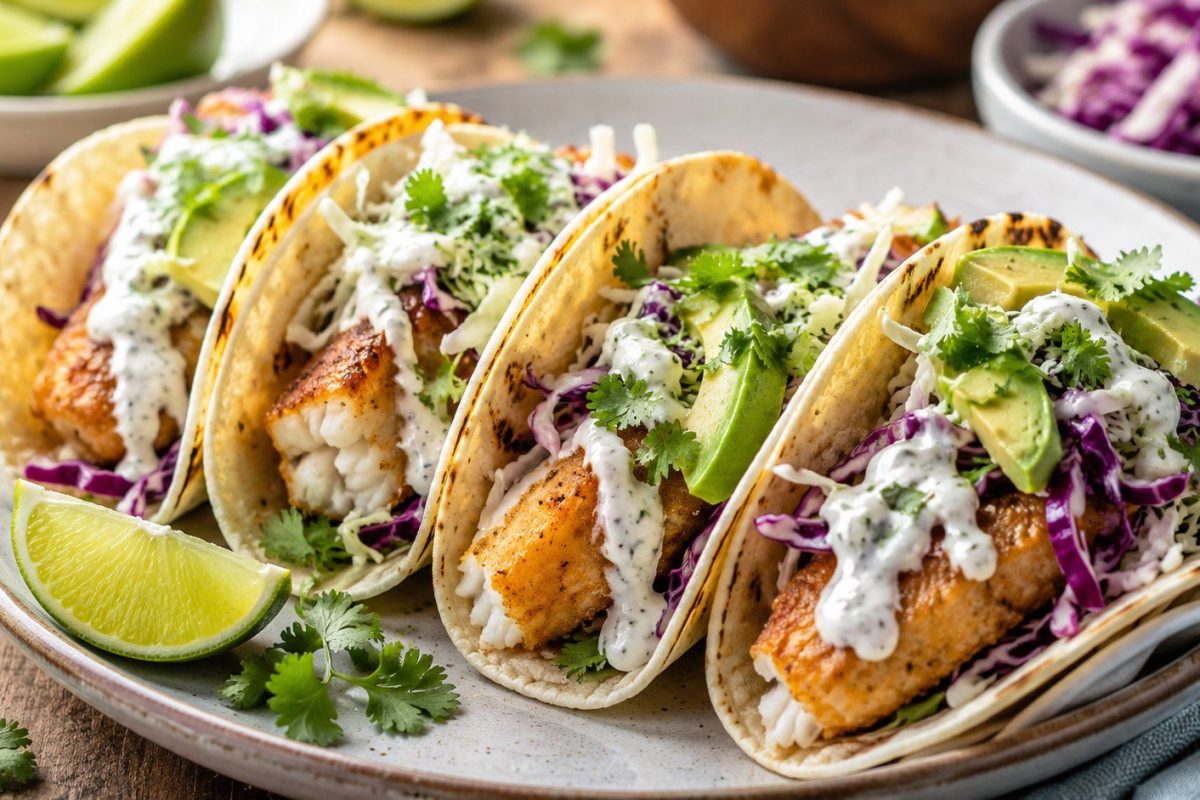
How to make fish tacos begins with 3 decisions: choose firm white fish, control the cooking temperature, and balance richness with acidity. This recipe combines seasoned fish, warm tortillas, crunchy cabbage, lime crema, avocado, and fresh salsa. The complete meal takes about 35 minutes, as the customreceipt.com editorial team notes.
Fish tacos can be fried, grilled, baked, or cooked in a skillet. Pan-searing remains the most practical home method. It creates browned edges without requiring a deep fryer or outdoor grill.
The recipe below serves 4 people and produces 8 substantial tacos. Double the quantities for a larger gathering.
What Makes a Good Fish Taco
A successful fish taco needs contrast. The fish should be hot and tender. The cabbage should remain cold and crisp. The sauce should add moisture without drowning the tortilla.
Corn tortillas provide a toasted flavor and firmer structure. Flour tortillas are softer and easier to fold. Both work, although small 6-inch tortillas offer better proportions.
Firm white fish is usually the safest choice for beginners. Cod, haddock, pollock, mahi-mahi, and halibut hold their shape during cooking. Tilapia is affordable and mild, but thinner fillets require closer attention.
Readers planning a seafood menu may also use the same temperature principles from this Maryland-style crab cakes recipe. Both dishes depend on controlled heat and careful handling.
The best fish tacos are not overloaded. Each ingredient should provide texture, acidity, heat, or freshness.
Ingredients for Homemade Fish Tacos
The quantities below produce 8 tacos. Prepare every topping before cooking the fish. The fillets need only several minutes in the skillet.
| Ingredient | Quantity | Purpose |
|---|---|---|
| Cod or other white fish | 1½ pounds | Main filling |
| Small tortillas | 8 | Taco base |
| Olive or avocado oil | 2 tablespoons | Browning |
| Chili powder | 1 teaspoon | Warm spice |
| Ground cumin | 1 teaspoon | Earthy flavor |
| Smoked paprika | ½ teaspoon | Color and smokiness |
| Garlic powder | ½ teaspoon | Savory depth |
| Salt | ¾ teaspoon | Seasoning |
| Black pepper | ¼ teaspoon | Mild heat |
| Lime juice | 2 tablespoons | Acidity |
| Shredded cabbage | 3 cups | Crunch |
| Avocado | 1 large | Creaminess |
| Cilantro | ½ cup | Freshness |
| Red onion | ½ small | Sharp contrast |
| Cotija or feta | ½ cup | Salty finish |
Choose skinless fillets with an even thickness. Frozen fish also works when thawed completely inside the refrigerator. Pat every piece dry before seasoning.
Water on the surface prevents browning. It also causes hot oil to spit from the skillet. A dry fillet develops a stronger crust and cleaner flavor.
Cotija cheese gives the tacos a distinctly salty finish. Feta offers a widely available substitute. The cheese can be omitted when the sauce already tastes rich.
For another structured family meal, the site’s American goulash recipe explains how preparation order affects texture.
How to Make Lime Crema
The sauce should taste bright, lightly salty, and slightly tangy. It needs enough body to remain inside the taco.
Mix these ingredients in a small bowl:
- ½ cup sour cream or plain Greek yogurt;
- 2 tablespoons mayonnaise;
- 1½ tablespoons fresh lime juice;
- ½ teaspoon lime zest;
- 1 small garlic clove, finely grated;
- ¼ teaspoon salt;
- 1 teaspoon hot sauce, optional.
Stir until completely smooth. Add 1 teaspoon of water when the sauce feels too thick. Taste it before adding more salt.
Greek yogurt creates a lighter, sharper sauce. Sour cream produces a rounder and richer result. Mayonnaise improves texture but should not dominate.
Prepare the crema up to 24 hours ahead. Keep it refrigerated in a sealed container. Lime flavor becomes slightly stronger during storage.
Do not pour the sauce over hot fish before assembly. Early contact softens the browned surface. Add it only after the fish enters the tortilla.
How to Prepare the Cabbage Slaw
A simple slaw prevents the tacos from feeling heavy. Cabbage also remains crisp longer than lettuce.
Combine the following:
- 3 cups finely shredded red or green cabbage;
- 2 tablespoons lime juice;
- 1 tablespoon olive oil;
- ¼ teaspoon salt;
- 2 tablespoons chopped cilantro;
- 2 tablespoons thinly sliced red onion.
Massage the mixture gently for 20 seconds. The cabbage should soften slightly but retain its crunch. Leave it for 10 minutes before serving.
Green cabbage tastes mild and clean. Red cabbage provides stronger color and a firmer bite. A mixture of both creates the best visual contrast.
Do not prepare the slaw several hours early. Salt gradually draws water from the cabbage. Excess liquid can make tortillas soggy.
Drain any visible moisture before building the tacos. Keep the slaw cold until the fish is ready. Temperature contrast is part of the dish’s appeal.
How to Season the Fish
Cut the fillets into pieces measuring about 2 inches. Similar portions cook more evenly and fit inside small tortillas.
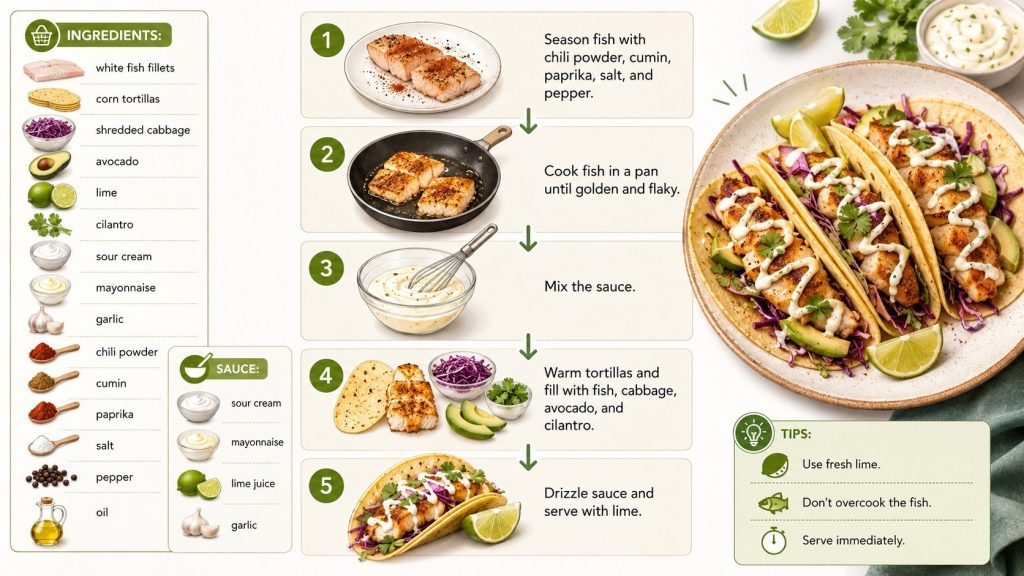
Combine chili powder, cumin, paprika, garlic powder, salt, and pepper. Sprinkle the mixture across every surface. Press gently so the seasoning adheres.
Then drizzle the fish with 1 tablespoon of oil and 1 tablespoon of lime juice. Leave it for 10 minutes at room temperature.
Avoid marinating fish for several hours. Strong citrus acidity changes the protein structure and creates a soft surface. A brief marinade provides flavor without damaging texture.
“Most seafood should be cooked to an internal temperature of 145°F.”
— U.S. Food and Drug Administration, seafood safety guidance for home cooks.
The FDA advises cooking most seafood to 145°F or 63°C. Without a thermometer, check whether the flesh is opaque and separates easily with a fork. Full guidance appears in the FDA seafood safety recommendations.
How to Cook Fish for Tacos in a Skillet
A heavy skillet produces more even browning. Cast iron and stainless steel both work well.
Follow this sequence:
- Heat the skillet over medium-high heat for 2 minutes.
- Add 1 tablespoon of oil.
- Place the fish in one uncrowded layer.
- Cook the first side for 2–3 minutes.
- Turn each piece once.
- Cook the second side for 2–3 minutes.
- Check the thickest piece for doneness.
- Rest the fish for 3 minutes.
- Break it into large flakes.
Do not move the fish immediately after it reaches the skillet. The surface releases more easily after a crust forms. Early movement can tear delicate pieces.
Cook in 2 batches when the skillet feels crowded. Overcrowding lowers the temperature and traps steam. The fish then becomes pale and wet.
The precise cooking time depends on thickness. Thin tilapia may need only 2 minutes per side. Thick cod can require 4 minutes on the second side.
Remove the fish as soon as it reaches the safe temperature. Continued cooking makes lean white fish dry. Resting distributes heat without destroying its texture.
Other Ways to Cook Fish Tacos
Different methods create different textures. Choose according to available equipment and desired richness.
| Method | Temperature | Approximate time | Expected result |
|---|---|---|---|
| Pan-searing | Medium-high heat | 4–7 minutes | Browned edges |
| Baking | 425°F or 220°C | 10–14 minutes | Soft, even texture |
| Air frying | 400°F or 205°C | 7–10 minutes | Crisp surface |
| Grilling | Medium-high heat | 3–4 minutes per side | Smoky flavor |
| Deep-frying | 350°F or 175°C | 3–5 minutes | Crunchy coating |
Baking is useful for cooking several portions together. Place the fish on an oiled metal tray and leave space between pieces. A fully heated oven improves browning.
Air frying uses little oil and gives the edges a firmer texture. Spray the basket lightly before adding the fish. Turn thicker pieces halfway through cooking.
Grilling works best with dense fish, including mahi-mahi and halibut. Delicate fillets can break across wide grill grates. A perforated grill tray reduces that risk.
Deep-frying produces Baja-style tacos but requires batter and careful oil management. It also creates a heavier meal. Pan-searing remains faster for ordinary weeknight cooking.
How to Warm Tortillas Without Drying Them
Cold tortillas split and mute the flavor of the filling. Warm them shortly before assembly.
Use one of these methods:
- heat each tortilla in a dry skillet for 20–30 seconds per side;
- place tortillas directly over a low gas flame for several seconds;
- wrap the stack in damp paper towels and microwave for 30 seconds;
- wrap them in foil and heat at 300°F for 10 minutes.
A dry skillet gives the best combination of flexibility and toasted flavor. Small brown spots are desirable. Blackened edges can taste bitter.
Keep warmed tortillas beneath a clean kitchen towel. Trapped steam prevents them from becoming brittle. Serve them within 15 minutes.
Corn tortillas sometimes split when used individually. Stack 2 tortillas for heavily filled tacos. This approach also creates a more substantial serving.
Do not overheat flour tortillas. Their surface becomes stiff as moisture evaporates. Gentle warming is enough to restore flexibility.
Warm tortillas, cold slaw, hot fish, and sharp lime create the central rhythm of the recipe.
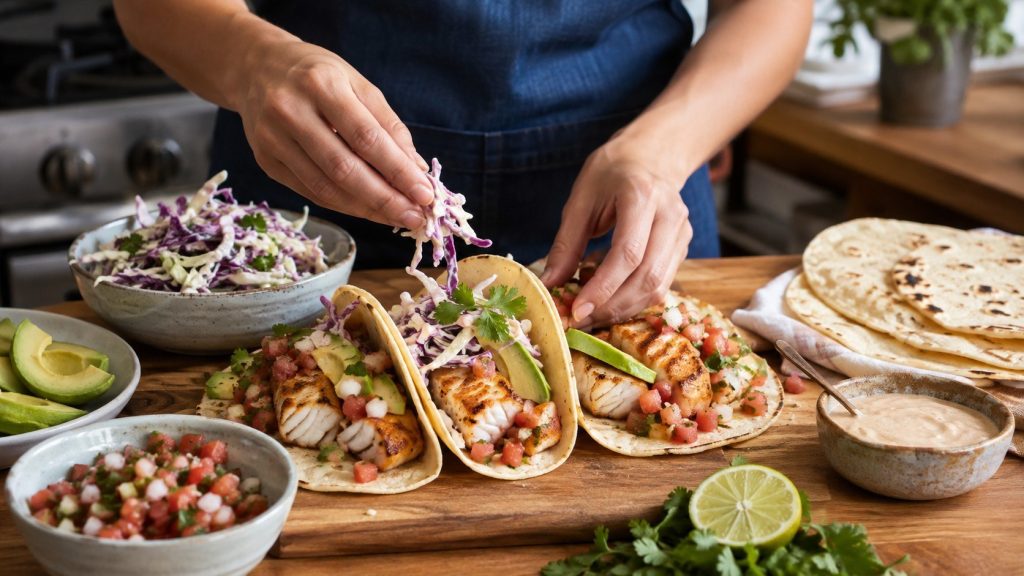
How to Assemble Fish Tacos
Build each taco immediately before serving. Prepared tacos become soft when left standing.
Use this order:
- Place a warm tortilla on the plate.
- Add a small layer of cabbage slaw.
- Arrange 2 or 3 pieces of fish.
- Spoon lime crema across the fish.
- Add avocado slices.
- Finish with onion, cilantro, and cheese.
- Serve with a fresh lime wedge.
The slaw creates a barrier between the tortilla and the fish. This reduces moisture absorption. It also keeps the filling from sliding.
Avoid adding too much sauce. One tablespoon per taco is usually sufficient. Extra crema can remain on the table.
For dessert, a light portion of this classic banana split recipe can turn taco night into a complete casual menu.
Serve the tacos immediately. Place extra cabbage, lime, hot sauce, and cheese in separate bowls. Diners can adjust every portion without compromising the base recipe.
Best Toppings and Flavor Variations
The basic recipe accepts several controlled variations. Choose 2 or 3 toppings rather than using every available option.
Suitable additions include:
- pico de gallo;
- pickled red onions;
- sliced jalapeños;
- roasted corn;
- mango salsa;
- crumbled Cotija;
- guacamole;
- radish slices;
- chipotle mayonnaise;
- tomatillo salsa.
Mango salsa works especially well with spicy seasoning. Its sweetness softens chili heat. Use firm mango pieces rather than a liquid purée.
Pickled onions provide sharper acidity than raw onions. They can be prepared several days ahead. Keep them refrigerated beneath their pickling liquid.
Roasted corn adds sweetness and a lightly smoky flavor. Char it in the same skillet after removing the fish. This also captures remaining spices.
Avoid combining mango, corn, guacamole, cheese, crema, and salsa in one taco. Too many toppings hide the fish. A restrained combination tastes more deliberate.
Common Fish Taco Mistakes
Most disappointing tacos fail because of moisture, timing, or excessive filling.
Watch for these problems:
- using wet fish without drying it;
- placing fish into a cold skillet;
- crowding the cooking surface;
- marinating too long in lime juice;
- turning the fish repeatedly;
- serving cold tortillas;
- adding sauce before serving;
- overfilling each taco;
- skipping acidic ingredients;
- cooking fish beyond 145°F.
The most common error is overcooking. White fish contains little fat and loses moisture quickly. Check it before the expected cooking time ends.
Another problem is weak seasoning. Tortillas and cabbage dilute the fish’s flavor. Season every surface rather than only the top.
Large fish chunks can make tacos difficult to eat. Break the cooked fish into broad flakes. Do not crush it into small dry fragments.
Finally, keep wet ingredients controlled. Drain salsa, slaw, and pickled vegetables before serving. The tortilla should bend without becoming soaked.
How to Store and Reheat Leftovers
Store every component separately. Mixed tacos deteriorate quickly and cannot be reheated evenly.
Refrigerate cooked fish in a sealed container within 2 hours. Use it within 3–4 days. Keep slaw, sauce, tortillas, and garnishes in separate containers.
Reheat the fish in a 350°F oven for 6–8 minutes. An air fryer needs approximately 3–5 minutes at 350°F. A microwave works but softens the surface.
Do not reheat the fish repeatedly. Warm only the portion needed for one meal. Repeated temperature changes reduce quality and increase handling risks.
Cold leftover fish also works in a taco salad. Combine it with cabbage, avocado, corn, and lime dressing. This avoids drying the fish during reheating.
FAQ About Fish Tacos
What is the best fish for fish tacos?
Cod is the most reliable option. It has mild flavor, firm flakes, and enough thickness for skillet cooking. Haddock, pollock, mahi-mahi, halibut, and tilapia also work.
Are corn or flour tortillas better?
Corn tortillas provide stronger flavor and traditional texture. Flour tortillas are softer and less likely to split. The choice depends on personal preference.
How long should fish cook for tacos?
Most pieces require 2–4 minutes per side. Thickness, pan temperature, and fish variety affect timing. Cook the center to 145°F or 63°C.
Can frozen fish be used?
Yes. Thaw it overnight inside the refrigerator. Pat it completely dry before seasoning and cooking.
Can fish tacos be prepared ahead?
The sauce, slaw vegetables, and garnishes can be prepared ahead. Cook the fish and warm the tortillas immediately before serving.
How do I make fish tacos less spicy?
Reduce chili powder and omit hot sauce. Use mild paprika, avocado, and plain lime crema. Serve jalapeños separately.
What sides go with fish tacos?
Suitable sides include black beans, Mexican rice, roasted corn, cucumber salad, tortilla chips, and fresh fruit. Choose one light side and one substantial side.
How many tacos should I serve per person?
Plan 2–3 tacos per adult. Children may need 1–2. Larger tortillas or substantial side dishes can reduce the required number.
Can fish tacos be made without dairy?
Yes. Replace sour cream with dairy-free yogurt or avocado sauce. Omit Cotija cheese or use a plant-based alternative.
Why does my fish fall apart?
The fillet may be too thin, wet, or frequently moved. Dry it thoroughly and wait for a crust before turning it once.
Earlier we wrote about How to Make Sweet Potato Casserole With a Creamy Filling and Crisp Pecan Topping