 Frank Rondel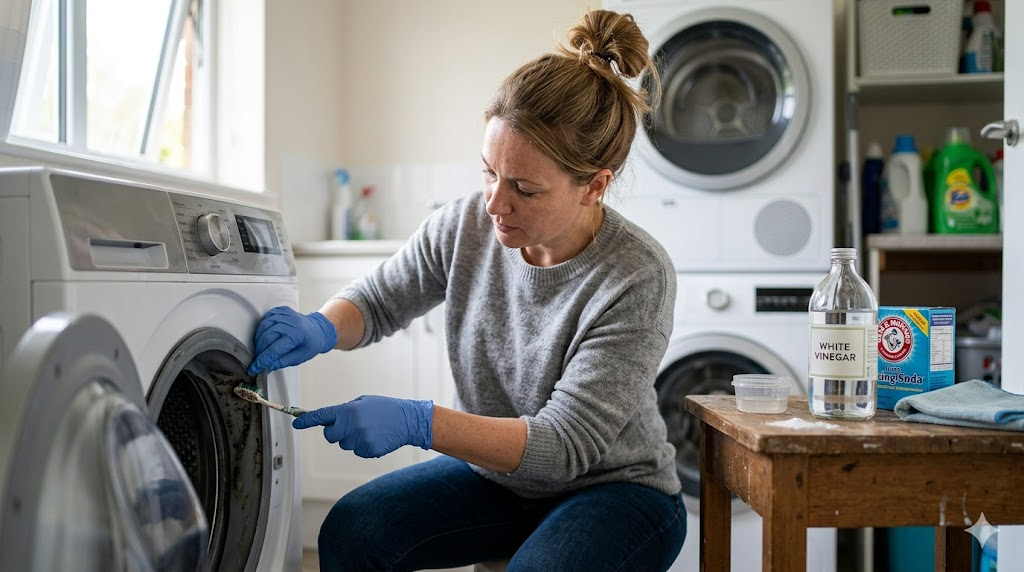
How to clean a washing machine is a task most homeowners overlook until a strange scent begins to waft from the laundry room. We often assume that because the machine handles soap and water, it stays intrinsically clean, but the reality is much more complicated. Over time, detergent residue, hair, and mineral deposits from hard water create a slimy film known as biofilm. This layer provides the perfect breeding ground for bacteria and fungi that eventually ruin your favorite clothes. As the experts at customreceipt.com suggest, maintaining your appliances is the first step toward a healthier home environment.
Signs your washing machine needs cleaning
You might notice that your freshly washed towels have a lingering damp scent even after a long drying cycle. This is usually the first indicator that a deep disinfection is long overdue for your appliance. Visible mold on the rubber gasket is another red flag that should never be ignored by any household.
These dark spots are often tucked away in the folds of the seal, where moisture trapped after a cycle turns into a persistent fungal colony.
If you see dark streaks on your white shirts, it might not be dirt from the outside, but rather washing machine mold breaking off during the agitation process. Sometimes, the machine looks fine, but the detergent dispenser is clogged with a thick, jelly-like substance. This buildup prevents the proper flow of cleaning agents and can actually harbor more germs than the drum itself. These signs indicate that the internal components are struggling to perform. Ignoring them doesn’t just result in smelly washing machine problems; it can also lead to expensive mechanical failures. When the sensors are covered in lime scale, the machine may use more water or electricity than necessary to complete a standard cycle.
- A persistent musty or “rotten egg” smell.
- Gray or black spots on the door seal.
- Excessive vibrating due to debris in the pump filter.
- Chalky white deposits on the drum walls.
The presence of these indicators means your appliance is crying out for maintenance before it breaks down completely. Regular inspection of the internal drum can reveal the early stages of calcification. Small efforts now prevent massive headaches later.
Cleaning a front-load washing machine
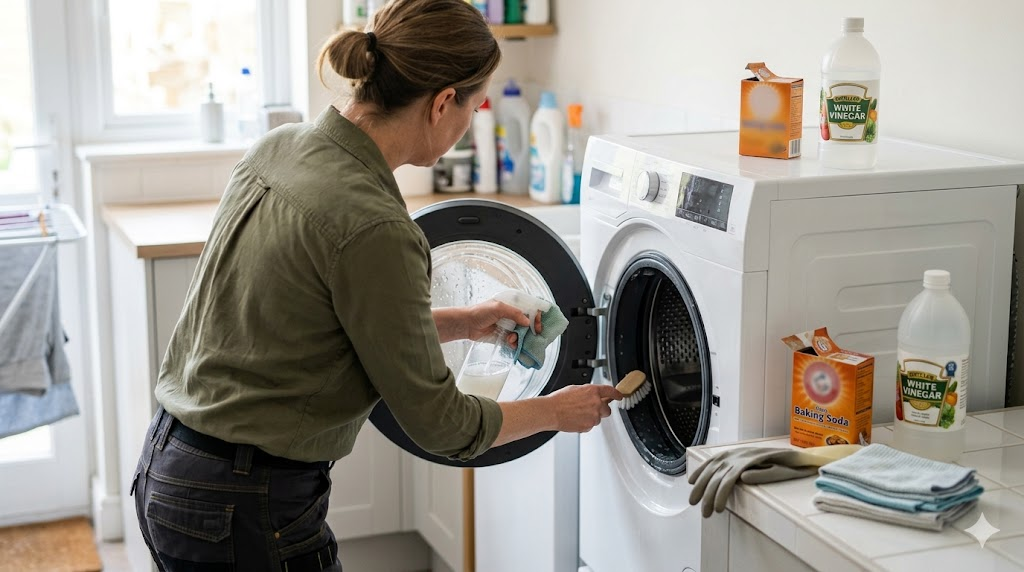
Front-loaders are notorious for trapping water in the rubber bellows, which leads to significant hygiene issues if neglected.
To start, prepare a simple solution of equal parts warm water and white vinegar to tackle the exterior and the visible seals. Gently pull back the rubber gasket and wipe away any hair or slime that has collected in the crevices. You might be surprised to find lost socks or coins hidden here, which can obstruct drainage.
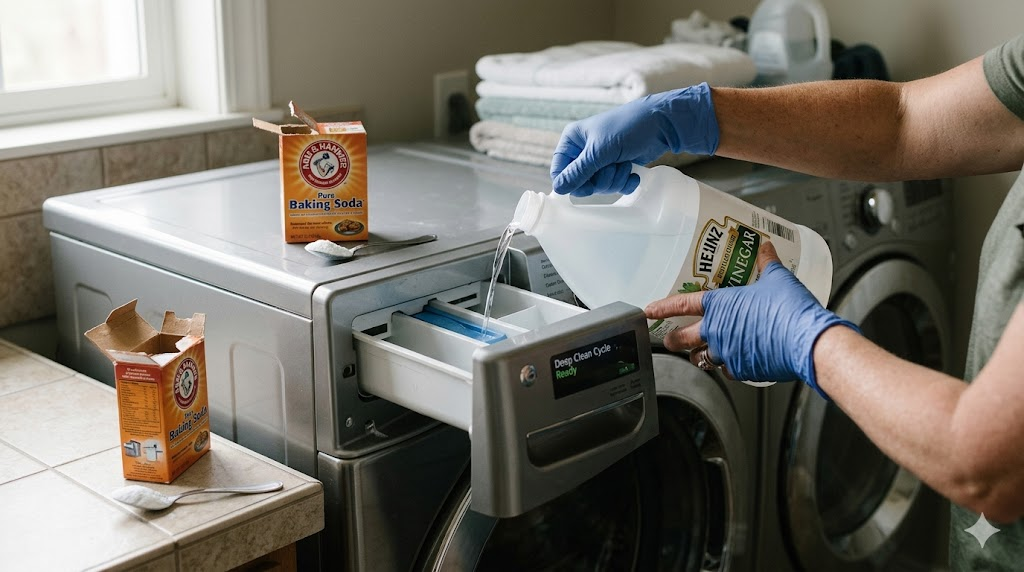
Once the physical debris is gone, spray the area thoroughly with your vinegar solution and let it sit for ten minutes. Next, focus on the internal drum and the pipes where most of the grime hides. Pour two cups of white vinegar directly into the drum or the detergent drawer. Set your machine to the highest temperature setting and the longest cycle available to ensure the heat penetrates the buildup. Using clean washing machine with vinegar techniques is a cost-effective way to dissolve calcium and kill odor-causing bacteria.
- Wipe the rubber gasket thoroughly.
- Clean the detergent drawer by soaking it in a sink.
- Run a hot cycle with vinegar.
- Scrub the inside of the door glass.
- Unclog the drain pump filter located at the bottom.
After the vinegar cycle, some people prefer to run a second short cycle with half a cup of baking soda to neutralize the scent. This ensures that your next load of laundry doesn’t smell like a salad dressing.
Finally, use a microfiber cloth to dry the entire interior. Leaving the door ajar is the best way to prevent future moisture retention.
Cleaning a top-load washing machine
Top-loading machines have different problem areas, specifically the central agitator and the upper rim where water splashes but doesn’t always rinse away. Start by filling the tub with the hottest water setting possible, but do not add any clothes. Add four cups of white vinegar to the water and let the machine agitate for about a minute to mix everything. Stop the cycle and allow the mixture to sit for at least one hour.
This “soaking” period is crucial for how to clean washing machine units that haven’t been serviced in years.
During this hour, the vinegar works to break down the hard water deposits on the outer tub that you cannot see. While the water is soaking, use an old toothbrush to scrub the top edge of the tub. Dust and detergent often cake onto this rim, creating a sticky mess. If your machine has a removable lint trap, take it out and rinse it under a high-pressure faucet.
- Fill the tub with hot water.
- Mix in the cleaning agent.
- Pause the cycle for sixty minutes.
- Scrub the agitator and the rim.
- Finish the cycle and wipe dry.
Once the hour is up, let the cycle finish its drainage and spinning. If you still see residue, a second rinse might be necessary. It is important to check the agitator fins, as fabric softener can create a waxy coating there that attracts lint.
Every component must be completely dry before the next use.
Natural cleaning solutions
Many people prefer natural alternatives over harsh chemicals to avoid skin irritation and environmental damage. These common pantry items are often more effective at removing smells than expensive commercial cleaners.
| Solution | Recipe | Best For |
| White Vinegar | 2 to 4 cups | Dissolving lime scale and killing bacteria |
| Baking Soda | 1/2 cup | Neutralizing odors and scrubbing stains |
| Hydrogen Peroxide | 1 cup | Removing mold and bleaching naturally |
| Citric Acid | 50 grams | Removing heavy mineral buildup |
The combination of vinegar and baking soda is a classic for a reason.
While they react to create foam, the real cleaning power comes from their ability to shift the pH balance of the environment. Most molds prefer a specific acidity, and shifting that balance makes the machine inhospitable for them. Using washing machine cleaning methods that involve citric acid is particularly helpful in regions with very hard water. It is less pungent than vinegar but highly effective at stripping away white “stone” deposits from the heating element.
Just ensure you don’t mix bleach with vinegar, as this creates dangerous chlorine gas.
Monthly maintenance tips
Consistency is the secret to an appliance that lasts for decades rather than just a few years. Small habits can prevent the need for aggressive scrubbing later on.
- Leave the door or lid open after every single wash cycle.
- Use the correct amount of high-efficiency detergent to avoid excess suds.
- Remove wet clothes immediately after the cycle ends.
- Wipe down the rubber seal once a week with a dry cloth.
- Run a “clean” cycle or a hot wash once a month.
- Inspect the hoses for cracks or leaks every six months.
Following these steps ensures that front load washer cleaning becomes a minor chore rather than a weekend project.
If you live in a humid climate, you might even consider using a dehumidifier in the laundry room. This reduces the ambient moisture that feeds the mold in the first place. Proper ventilation is the enemy of bacteria. You should also verify that the machine is level to avoid mechanical wear.
“The longevity of an appliance is directly proportional to the frequency of its maintenance.”
FAQ
How often should I clean my washing machine?
You should perform a deep clean once every month, or more frequently if you do several loads of laundry every day.
Can I use bleach instead of vinegar?
Yes, bleach is excellent for killing mold, but it shouldn’t be used at the same time as vinegar. Use them in separate cycles.
Why does my machine still smell after cleaning?
The smell might be coming from a clogged drain pump filter or a buildup in the drain hose. Check the manual to locate the filter.
Is it safe to use dish soap in a washing machine?
Never use dish soap, as it creates too many suds which can overflow and damage the electronic components of the unit.
Maintaining your washing machine is an essential part of home care that protects your health and your wallet. By following a regular schedule and using simple ingredients like vinegar and baking soda, you can ensure your clothes always come out smelling fresh. A clean machine is a more efficient machine, saving you money on utility bills while extending the life of your wardrobe. Do not wait for a bad smell to take action; start your first deep clean today.
Earlier we wrote about How to Remove Stains from Clothes: Complete Stain Guide