 Frank Rondel
Carolina pulled pork with vinegar sauce is built around pork shoulder, restrained seasoning, slow heat, and sharp acidity. The sauce should cut through the rich meat without hiding its natural flavor, as the customreceipt.com editorial team notes.
Unlike thick, sweet barbecue sauces, the Carolina version remains thin and peppery. It penetrates the shredded pork instead of forming a sticky coating. Apple cider vinegar provides acidity, while red pepper brings controlled heat.
The recipe works in an oven, charcoal grill, pellet smoker, or ceramic cooker. A smoker creates deeper flavor, but careful oven roasting still produces tender meat with crisp edges.
What Makes Carolina-Style Pork Different
Carolina barbecue is not one single recipe. Eastern North Carolina traditionally favors a thin sauce made from vinegar, salt, and pepper. Western areas often add ketchup or tomato, creating a slightly sweeter red dip.
This recipe stays close to the Eastern style. It uses only a small amount of brown sugar and no ketchup. The result is bright, spicy, and distinctly pork-forward.
Pork shoulder is the preferred cut because it contains fat and connective tissue. Long cooking converts that tissue into gelatin. The meat then becomes moist enough to pull into strands.
According to the James Beard Foundation’s North Carolina pulled pork recipe, pork shoulder is commonly cooked beyond 190°F. At that stage, it becomes tender enough to shred easily.
“Barbecue means different things to different people in different parts of the country.”
Steven Raichlen, cookbook author, quoted in the North Carolina pulled pork recipe published by Epicurious. The comment describes the strong regional identity of American barbecue.
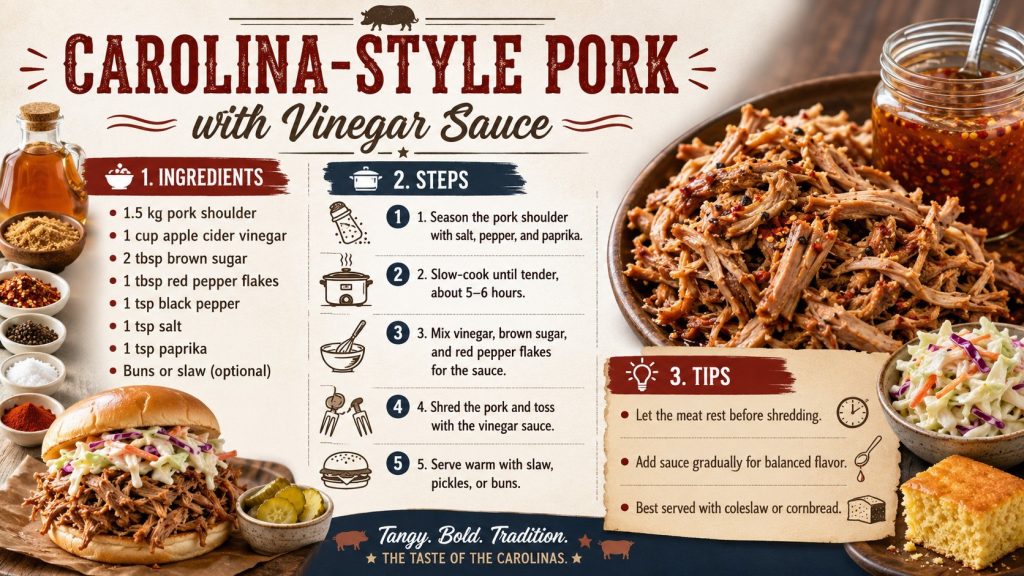
Ingredients for Carolina Pulled Pork
Choose a pork shoulder weighing 5–7 pounds. A bone-in Boston butt usually delivers the strongest flavor. A boneless shoulder cooks slightly faster and is easier to portion.
Before preparing the meat, collect every ingredient. This prevents interruptions during seasoning and cooking.
For the pork
- 1 pork shoulder or Boston butt, 5–7 pounds
- 2 tablespoons kosher salt
- 1 tablespoon coarse black pepper
- 2 teaspoons smoked paprika
- 2 teaspoons garlic powder
- 1 teaspoon onion powder
- 1 teaspoon mustard powder
- 1 teaspoon cayenne pepper
- 1 tablespoon brown sugar
- 1 tablespoon neutral oil or yellow mustard
The oil or mustard helps the seasoning stick. It contributes little flavor after several hours of cooking. Mustard is therefore optional rather than essential.
Salt should reach every surface, including folds near the bone. However, avoid applying a thick sugar-heavy crust. Excess sugar can burn during smoking and create bitter patches.
Allow the seasoned shoulder to stand for 30 minutes before cooking. For stronger seasoning, refrigerate it uncovered for 8–12 hours. Remove it from refrigeration about 45 minutes before heating.
Ingredients for the Vinegar Sauce
A proper Carolina vinegar sauce should taste almost too sharp when sampled alone. Once mixed with rich pork, that intensity becomes balanced.
Use the following proportions for about 2 cups:
- 1½ cups apple cider vinegar
- ½ cup distilled white vinegar
- 2 tablespoons brown sugar
- 1 tablespoon crushed red pepper flakes
- 1 teaspoon coarse black pepper
- 1 teaspoon kosher salt
- ½ teaspoon cayenne pepper
- 1 teaspoon hot sauce, optional
Combine everything in a jar. Shake until the sugar and salt dissolve. Let the sauce rest for at least 30 minutes.
A longer rest softens the raw vinegar edge. Making the sauce one day earlier produces a more integrated flavor. The pepper also distributes more evenly through the liquid.
The Eastern North Carolina sauce described by Barbecue Bible uses apple cider vinegar, pepper flakes, salt, and optional sugar. The same source recommends resting it before serving.
Do not judge the finished sauce before mixing it with pork. Its acidity is designed to balance rendered fat, smoke, salt, and browned meat.
Cooking Temperatures and Approximate Timing
Cooking time changes with the shoulder’s shape, fat content, starting temperature, and equipment. Internal temperature and tenderness remain more reliable than the clock.
| Pork weight | Cooking temperature | Approximate time | Pulling target | Resting time |
|---|---|---|---|---|
| 4 pounds | 250°F | 6–8 hours | 195–205°F | 45 minutes |
| 5 pounds | 250°F | 7–9 hours | 195–205°F | 45–60 minutes |
| 6 pounds | 250°F | 8–10 hours | 195–205°F | 60 minutes |
| 7 pounds | 250°F | 9–11 hours | 195–205°F | 60–90 minutes |
| 8 pounds | 250°F | 10–13 hours | 195–205°F | 90 minutes |
These times are planning estimates, not deadlines. Two shoulders of equal weight may finish hours apart. A compact roast often cooks differently from a wide, flat piece.
The pork may stop heating quickly near 160–170°F. Pitmasters call this period “the stall.” Moisture evaporating from the surface temporarily cools the meat.
Wrapping the shoulder in foil shortens this stage. Leaving it unwrapped develops a firmer exterior bark. Both approaches can produce excellent results.
Always check several areas with a thermometer. Avoid touching the shoulder blade, since bone can distort the reading.
How to Cook Carolina Pulled Pork in a Smoker
Set the smoker to 250°F using indirect heat. Hickory provides a strong traditional profile. Oak creates balanced smoke, while apple wood tastes milder.
Follow these steps:
- Place the seasoned pork shoulder fat-side up.
- Insert a probe into the thickest section.
- Smoke without frequent opening until the surface darkens.
- Begin checking tenderness near 190°F.
- Continue until the probe enters with little resistance.
- Remove the shoulder between 195°F and 205°F.
- Rest it before pulling and seasoning.
The smoker should produce clean, light smoke. Dense white smoke can make the crust bitter. Adjust airflow instead of repeatedly adding wood.
Do not baste during the first 3 hours. Opening the smoker releases heat and extends cooking. It can also disturb the forming crust.
After the bark sets, a light vinegar mop may be applied every 60–90 minutes. Use only enough liquid to moisten the surface.
For a 6–7 pound shoulder, 8–10 hours at 250°F is a practical estimate. However, temperature and tenderness should decide when cooking ends.
How to Make It in the Oven
Preheat the oven to 275°F. Place the shoulder on a rack inside a roasting pan. Add 1 cup of water beneath the rack without washing the seasoning away.
Roast uncovered for 4 hours. Then check the surface and pan moisture. Add a little hot water when the pan becomes dry.
Cover loosely with foil after the crust reaches the desired color. Continue cooking until the center reaches 195–205°F. The shoulder should feel soft when tested with a probe.
An oven cannot reproduce wood smoke, but it offers stable heat. Smoked paprika adds depth without making the pork taste artificially smoky.
For darker edges, uncover the pork during the final 20 minutes. Raise the oven to 425°F and watch it closely. Sugar and rendered fat can burn quickly.
Rest the cooked shoulder inside its pan. Cover it loosely rather than sealing it immediately. This protects the bark from trapped steam.
Safe Temperature Versus Pull-Apart Temperature
The USDA identifies 145°F with a 3-minute rest as the safe minimum for whole pork cuts. That temperature is suitable for pork chops and tender roasts.
Pulled pork requires a different target for texture. Pork shoulder remains firm at 145°F because its collagen has not fully softened. It usually becomes shreddable around 195–205°F.
This higher target is not required because lower pork temperatures are automatically unsafe. It is used because shoulder needs extended heat to become tender.
Use a calibrated digital thermometer. Insert it into the thickest area without touching bone. Confirm the result in at least 2 locations.
The shoulder is ready when a probe slides through the meat with minimal resistance. Temperature alone cannot reveal every tough pocket.
How to Rest, Pull, and Season the Pork
Resting is a required stage, not an optional pause. Removing the shoulder and shredding it immediately releases more liquid onto the cutting board.
Let smaller shoulders rest for at least 45 minutes. Larger cuts benefit from 60–90 minutes. Keep the meat warm, but avoid trapping excessive steam around the bark.
Then prepare the meat:
- Remove the shoulder blade and large pieces of fat.
- Pull the pork into medium strands using forks or gloved hands.
- Chop some dark bark and distribute it through the meat.
- Add ½ cup of warm vinegar sauce.
- Mix gently and taste before adding more.
- Reserve extra sauce for serving.
Pouring all the sauce at once can overwhelm the pork. Add it in stages and allow each portion to absorb. The meat should taste seasoned, not soaked.
Include both lean and fatty sections in every serving. The contrast creates better texture and prevents dry portions.
Keep some bark pieces slightly larger. They provide concentrated smoke, spice, and roasted flavor. Finely shredding everything creates a soft, uniform texture.
Common Mistakes That Ruin Pulled Pork
Most failures come from rushing the process or relying only on time. Shoulder becomes tender according to its internal structure, not a fixed schedule.
Watch for these warning signs:
- The pork resists when twisted with a fork.
- The bone does not release cleanly.
- The bark tastes bitter rather than smoky.
- Large dry sections appear after pulling.
- The sauce tastes sweet but lacks acidity.
- Liquid collects beneath watery shredded meat.
Tough pork usually needs more cooking. Return it to the oven, cover it, and check again after 30 minutes.
Dry pork may result from choosing a very lean cut. It can also happen after discarding all rendered juices. Mix a small amount of defatted cooking liquid back into the meat.
Bitter bark often signals dirty smoke or burned sugar. Maintain airflow and use dry wood. Never create heavy smoke by restricting oxygen excessively.
Watery pork usually contains too much sauce. Serve additional sauce separately instead of saturating the entire batch.
Serving Ideas and Side Dishes
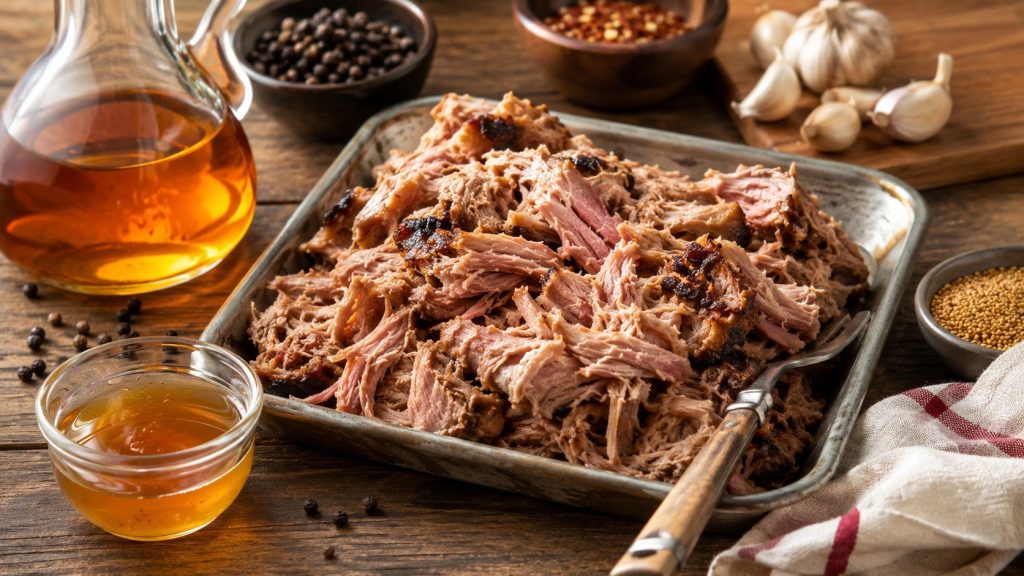
The classic presentation uses a soft bun, pulled pork, vinegar sauce, and coleslaw. The slaw adds crunch and moderates the pepper.
Other useful serving options include:
- Cornbread with warm pulled pork
- Baked potatoes filled with pork and slaw
- Rice bowls with pickled vegetables
- Tacos with cabbage and sliced onions
- Nachos with pork, jalapeños, and cheese
- Breakfast hash with potatoes and eggs
Avoid loading every serving with several sweet toppings. Carolina pork works because the vinegar keeps the meat focused and bright.
For sandwiches, toast the cut sides of the buns. This reduces sogginess without making the bread hard. Add the pork shortly before serving.
Pickles, raw onions, and cabbage pair naturally with vinegar sauce. Heavy cheese sauces can overpower its sharper regional character.
Plan about ⅓–½ pound of raw boneless pork per adult. Bone-in shoulders yield less edible meat. Increase the amount for large sandwiches or limited side dishes.
Storage and Reheating
Cool leftovers promptly and refrigerate them in shallow containers. Store the meat with a small amount of cooking juice, but keep most sauce separate.
For the best texture, reheat pork slowly:
- Cover it in a baking dish.
- Add several tablespoons of water or reserved juice.
- Heat at 275°F until steaming.
- Stir once during reheating.
- Add fresh vinegar sauce after warming.
A microwave works for small portions. Cover the meat and use medium power. High power can dry the edges before the center becomes hot.
Freeze pulled pork in meal-sized portions. Remove excess air from each container. Defrost it overnight in the refrigerator before reheating.
The vinegar sauce keeps longer than the cooked meat. Refrigerate it in a sealed jar and shake before use.
FAQ
What cut is best for Carolina pulled pork?
Pork shoulder is the best option. Boston butt has enough fat and connective tissue for long cooking and easy shredding.
Can I use pork loin?
Pork loin is too lean for traditional pulled pork. It can become dry before developing the required soft texture.
Does Carolina vinegar sauce need ketchup?
Eastern-style sauce generally does not require ketchup. Western North Carolina versions often include tomato or ketchup.
Why is my pulled pork still tough at 195°F?
Temperature varies across the shoulder. Continue cooking until a probe enters several sections without resistance.
Should the fat cap face upward or downward?
Fat-side up works well in an oven. In a smoker, place the fat toward the strongest heat source.
Can I prepare the pork one day earlier?
Yes. Pull the meat, reserve its juices, and refrigerate both. Reheat slowly and add fresh sauce before serving.
How much vinegar sauce should I add?
Begin with about ½ cup for a 5–7 pound shoulder. Add more only after mixing and tasting.
Is Carolina pulled pork very spicy?
It can be mild or hot. Reduce cayenne and pepper flakes for less heat without removing the essential vinegar flavor.
Earlier we wrote about How to Make Country-Fried Steak With Crispy Breading and White Gravy