 Frank Rondel
Back pain affects nearly 80% of adults at some point in life.
For some people, the discomfort appears suddenly after lifting a heavy object. Others develop stiffness gradually from long hours at a desk, poor posture, weak muscles, or lack of movement. Modern work routines have made spinal discomfort increasingly common because many adults spend most of the day sitting with limited physical activity. Learning how to relieve back pain at home can help reduce stiffness, improve mobility, and prevent recurring flare-ups without invasive treatment. In many mild cases, the body responds well to gentle movement, stretching, heat therapy, and posture correction. Small daily habits often have a greater impact than occasional intensive treatments, as reported by the customreceipt.com.
Stress can also worsen muscular tension.
People who regularly experience anxiety or poor sleep often hold tension in the neck, shoulders, and lower back throughout the day without realizing it. Articles about daily meditation and stress reduction may help support relaxation habits that indirectly improve muscle recovery.
Common Causes of Back Pain
Back pain rarely develops without a reason.
Most cases come from repeated physical strain placed on muscles, joints, and ligaments over time. Even routine activities like sitting, driving, bending, or carrying bags can contribute to spinal stress when posture and movement patterns are poor. Poor posture remains one of the most common causes. Slouching over a computer screen or constantly looking down at a phone places additional pressure on the neck and lower spine. Over time, muscles become tight, fatigued, and inflamed. Muscle strain is another frequent trigger for discomfort. Sudden twisting movements, heavy lifting, or awkward exercise technique may overstretch muscles and ligaments, creating pain that ranges from mild soreness to sharp spasms.
Weak core muscles also affect spinal stability. The abdominal muscles support the lower back during movement. When those muscles are weak, the spine receives less support and surrounding muscles compensate by working harder. Long periods of sitting tighten the hip flexors and reduce circulation through the lower body. This combination often increases stiffness and pressure in the lumbar spine.
Stress contributes as well.
Many people unconsciously tense their shoulders and back muscles during stressful situations, which may lead to chronic tightness and discomfort.
| Cause | Type of Pain | When to Worry |
|---|---|---|
| Poor posture | Dull aching or stiffness | Pain becomes constant |
| Muscle strain | Sharp pain during movement | Severe swelling or bruising |
| Sitting too long | Tightness in lower back and hips | Numbness develops |
| Weak core muscles | Recurring lower back discomfort | Pain affects walking |
| Heavy lifting | Sudden shooting pain | Pain radiates down the legs |
| Stress and tension | Muscle spasms and tightness | Pain disrupts sleep regularly |
People searching for back pain relief often focus only on symptom management instead of identifying the daily habits causing the discomfort.
Several small adjustments may help reduce strain on the spine:
- Standing every hour
- Stretching after long sitting periods
- Improving desk posture
- Sleeping in supportive positions
- Strengthening abdominal muscles
Lifestyle habits connected to overall health also influence spinal comfort. Articles about healthier grocery shopping habits may indirectly support healthier body weight and nutrition, both of which affect joint and muscle health over time.
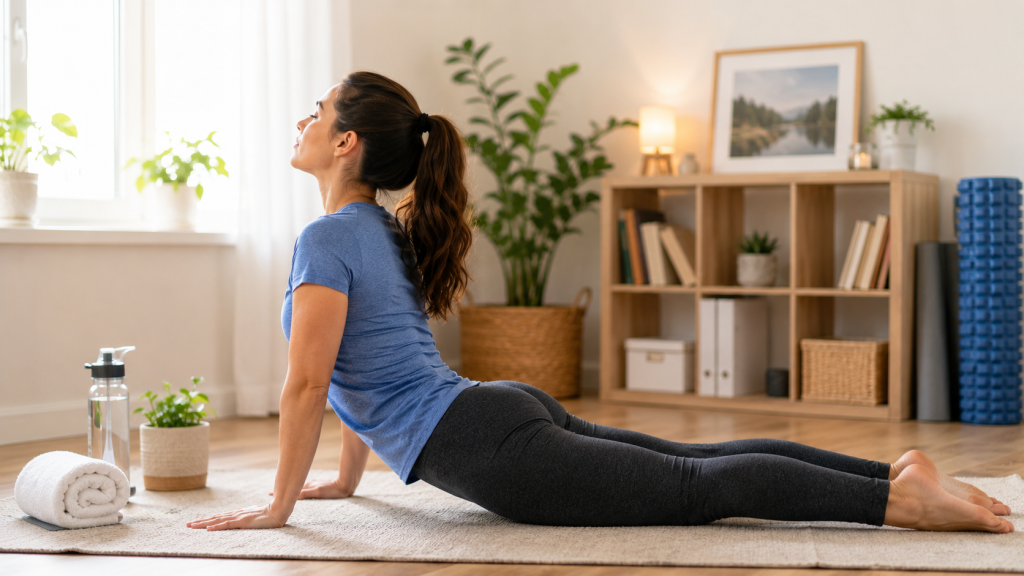
6 Gentle Stretches for Back Pain Relief
Stretching helps improve flexibility, increase circulation, and reduce tension around the spine. These stretches for back pain are beginner-friendly and can usually be performed at home without special equipment.
The goal is not aggressive exercise.
The goal is consistent movement that gradually restores mobility while reducing stiffness.
1. Knee-to-Chest Stretch
This stretch relaxes the lower back and hips.
It is especially useful after long periods of sitting because it gently decompresses the lumbar spine.
- Lie flat on the back with knees bent.
- Pull one knee toward the chest.
- Keep the opposite foot flat on the floor.
- Hold for 30 seconds on each side.
- Repeat 2–3 times.
This movement frequently appears in lower back pain exercises because it reduces tension without placing heavy pressure on the spine.
2. Cat-Cow Stretch
The cat-cow stretch improves spinal mobility and warms up stiff muscles.
- Start on hands and knees.
- Arch the back upward while tucking the chin.
- Lower the belly slowly while lifting the chest.
- Move smoothly between positions.
- Perform 10 repetitions.
Slow breathing during this exercise may help reduce muscular tension throughout the shoulders and lower back.
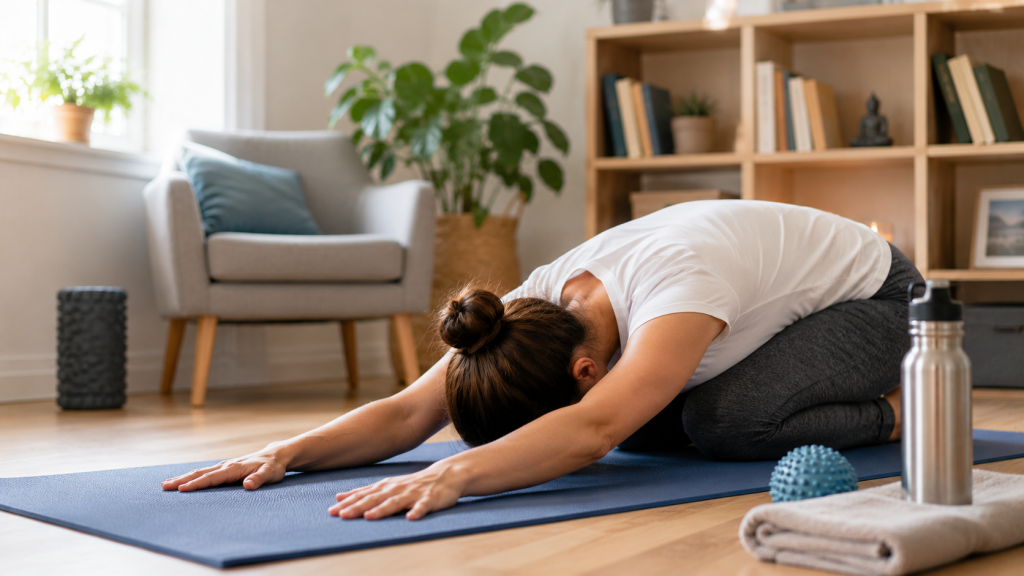
3. Child’s Pose
Child’s pose stretches the hips, shoulders, and lower back simultaneously.
- Kneel on the floor.
- Sit back onto the heels.
- Extend the arms forward.
- Lower the chest toward the floor.
- Hold for 1 minute.
People who spend most of the day sitting often find this stretch especially relaxing because it lengthens tight muscles around the hips and spine.
4. Piriformis Stretch
Tight hip muscles may contribute to lower back discomfort and sciatic irritation.
- Lie on the back with knees bent.
- Cross one ankle over the opposite knee.
- Pull the uncrossed leg gently toward the chest.
- Hold for 30 seconds on each side.
- Repeat twice.
This movement targets deep muscles around the hips that influence pelvic alignment and spinal stability.
5. Pelvic Tilt
Pelvic tilts strengthen the abdominal muscles while improving lower back support.
- Lie on the back with knees bent.
- Tighten the abdominal muscles.
- Flatten the lower back against the floor.
- Hold briefly.
- Repeat 15 times.
These controlled movements remain one of the safest back pain remedies for beginners because they strengthen supporting muscles gradually instead of aggressively.
6. Seated Spinal Twist
This stretch improves flexibility through the middle and lower back.
- Sit upright with legs extended.
- Bend one knee and place the foot outside the opposite leg.
- Twist gently toward the bent knee.
- Hold for 30 seconds on each side.
- Repeat twice.
The movement should remain slow and comfortable.
Avoid forcing the twist aggressively because excessive rotation may worsen existing tension.
“Gentle movement is often more effective than prolonged bed rest for uncomplicated back pain because muscles stay flexible and circulation improves.”
People researching how to relieve back pain at home often expect immediate results. Most cases improve gradually through consistent daily movement instead of intense short-term effort.
Home Remedies for Quick Relief
Simple home treatments often help reduce discomfort during a flare-up. Combining several methods usually produces better results than relying on only one solution. Ice therapy works best during the first 24 to 48 hours after a strain because cold temperatures help reduce inflammation and swelling.
Heat therapy is generally more effective for chronic stiffness and muscular tension. Many people alternate between both methods depending on the type of pain they experience.
Common heat therapy options include:
- Heating pads
- Warm showers
- Heated wraps
- Hot water bottles
- Warm compresses
Warm Epsom salt baths remain one of the most common home remedies for back pain because warm water encourages relaxation while improving circulation. Topical creams containing menthol or capsaicin may also create temporary cooling or warming sensations that ease soreness. Over-the-counter pain relievers sometimes help reduce inflammation and discomfort.
They should support recovery rather than replace movement and healthy habits. Rest matters after a flare-up, but remaining in bed for several days may actually worsen stiffness.
Light movement is usually more beneficial.
Helpful recovery habits include:
- Taking short walks
- Stretching gently
- Staying hydrated
- Avoiding heavy lifting
- Maintaining supportive sleep posture
Indoor comfort can also affect physical well-being. Guides about improving bathroom cleanliness and removing mold safely may help create a healthier home environment that supports recovery and overall comfort.
Lifestyle Changes to Prevent Back Pain
Long-term prevention depends on daily consistency.
Temporary relief matters, but recurring pain usually improves only when movement patterns and posture habits change over time. Core strengthening remains one of the most effective prevention strategies because the abdominal and hip muscles stabilize the spine during movement.
Maintaining a healthy body weight also reduces pressure on the lower back and spinal discs.
Workstation ergonomics play a major role as well. People who spend long hours sitting should pay attention to chair support, screen height, and body positioning throughout the day.
A healthier workspace should include:
- Feet flat on the floor
- Monitor positioned at eye level
- Relaxed shoulders
- Lumbar support
- Frequent standing breaks
Improper lifting technique causes many preventable injuries.
Safe lifting habits include:
- Bend at the knees instead of the waist.
- Keep objects close to the body.
- Tighten the core muscles before lifting.
- Avoid twisting during movement.
- Lift slowly and steadily.
Sleep posture also affects spinal alignment.
Side sleeping with a pillow between the knees often reduces pressure on the lumbar spine, while back sleepers may benefit from placing a pillow beneath the knees.
“Long-term prevention strategies are usually more effective than relying only on temporary symptom relief.”
People searching for how to relieve back pain at home should focus on prevention as much as treatment.
When to See a Doctor
Most mild cases improve gradually within several weeks. Some symptoms, however, require immediate medical attention because they may indicate nerve involvement or more serious spinal conditions.
Seek medical evaluation if back pain includes:
- Numbness or tingling
- Muscle weakness
- Fever
- Pain after an accident
- Loss of bladder or bowel control
- Unexplained weight loss
- Symptoms lasting more than 6 weeks
Sharp pain traveling down one leg may suggest nerve compression or sciatica. Persistent pain that interferes with walking, sleeping, or daily activities should also be evaluated professionally.
Doctors may recommend:
- Physical therapy
- Imaging tests
- Prescription medication
- Posture correction programs
- Additional neurological evaluation
Medical disclaimer: This article is for informational purposes only and does not replace professional medical advice, diagnosis, or treatment.
FAQ
Can walking help relieve back pain?
Yes.
Gentle walking improves circulation, reduces stiffness, and keeps muscles active without placing excessive pressure on the spine.
Is heat or ice better for lower back pain?
Ice usually works best for recent injuries and inflammation. Heat is often more effective for chronic stiffness and muscular tightness.
How often should stretches be done?
Most people benefit from stretching once or twice daily. Consistency matters more than intensity.
Can stress worsen back pain?
Yes. Stress frequently increases muscle tension in the shoulders, neck, and lower back.
Are lower back pain exercises safe during flare-ups?
Gentle movement is often helpful, but severe pain or neurological symptoms should be evaluated by a healthcare professional before continuing exercise.
When does back pain become serious?
Pain associated with numbness, weakness, fever, bladder issues, or symptoms lasting longer than six weeks requires medical attention.
Learning how to relieve back pain at home usually begins with simple daily habits. Gentle stretching, regular movement, heat therapy, posture improvement, and better recovery routines often reduce discomfort significantly without invasive treatment. Long-term consistency matters more than quick fixes. Daily mobility work, supportive sleep posture, ergonomic improvements, and gradual strengthening exercises may help reduce recurring pain episodes while improving overall spinal health.
Earlier we wrote about How to Get Rid of Ants in the House: Natural and Chemical Methods